Knot Rigger asked me to make this method public. It is my method for tying the Zeppelin Bend. It is foolprough enough for me to be able to tie it even with my eyes closed.
The principle is that I make sure that every part of the knot is in a fixed and unmoveable position while I tie the knot. So while tying, every part of the knot is gripped, nothing is hanging loose.
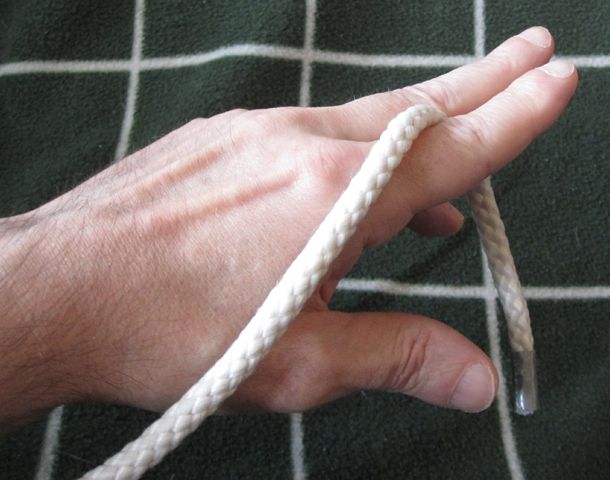
Grip the end of one rope between the fore and middle fingers like in picture 1.
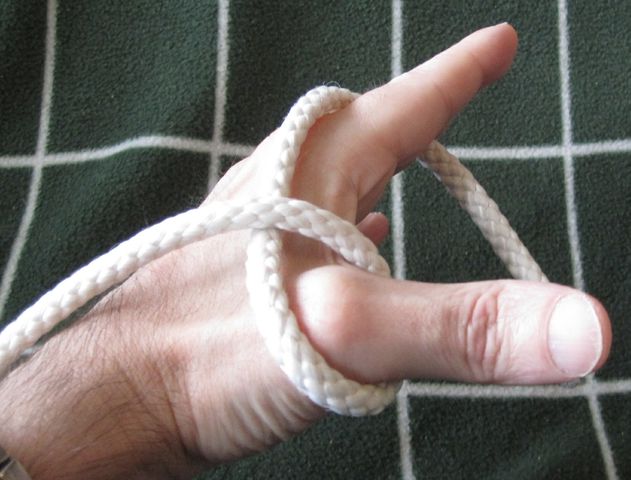
Secure the standing end to your hand with a Blackwall hitch around the thumb (picture 2)
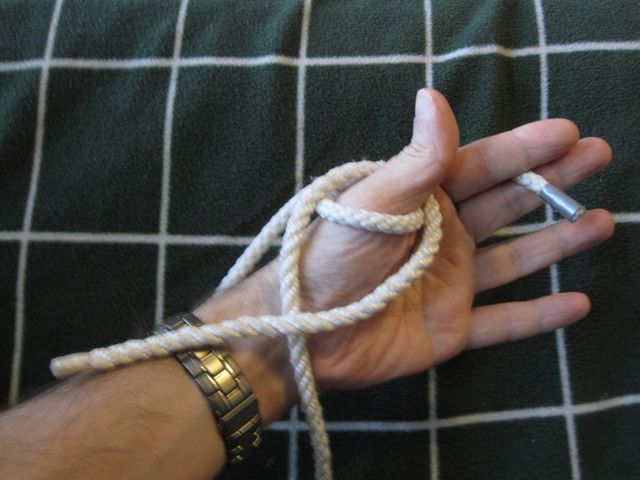
It shows it, but the user should better memorize the difference, because he can easily place the Tail End segment “under” the Standing End segment. He will not carry a picture of the method with him all the time !
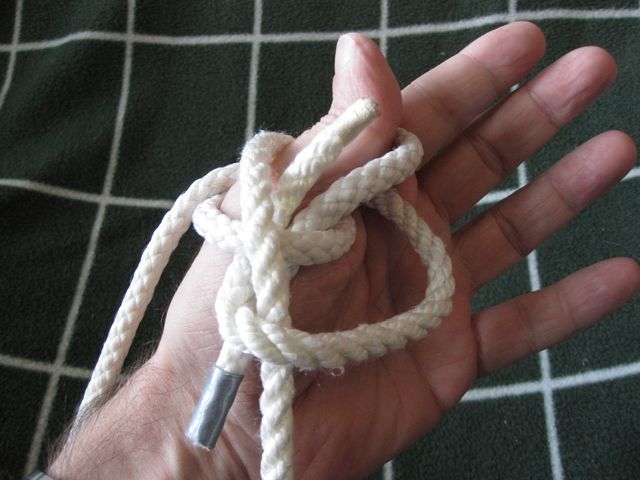
No, it is not. It involves the palm and the fingers of the knot tyer, and a certain sequence of moves, which can not be “reversed”, as the b-q method can ( because the b-q method is symmetric, in relation to the two links ).
I clearly see a b and a q in there. So, it’s basically the b-q method for me. In fact, I did not tie this correctly until I identified the b-q.
If I didn’t tie this for a year, I would forget the hand movements. (That happened to me with the Carrick Bend.) If I didn’t tie the b-q method for 10 years, I would still be able to firgure it out quickly.
This is like arguing about when a knot IS a different knot. It’s a useless argument. Yes there are b’s and q’s there and in most methods if you look hard enough you can see them. This is A b and q method if you want to see it that way, but it’s a distinct one and I don’t think that’s the useful element of this method.
I think it’s a useful set of motions and I actually agree with Xarax in that sense. If you follow the MOTIONS you can’t really mess it up, but some people do better with geometries than with motions probably. In this case you could mess it up by geometry, with the wrong tail on top or bottom (you wouldn’t get a knot). I think if you tie a knot often, motion methods get easier and geometry methods don’t, but I still use geometry usually at first. I can get confused about the motions someday if I don’t know the geometry first.
I posted it elsewhere but the discussion correctly moved here and I’ll post again, not steal Twine’s thunder but just to add information for anyone looking here and show what I like:
Somewhere I found a more clear depiction of the second motion but this one is more realistic of how the motion will become with a little practice. I like to put my little finger between the standing ends to keep them from getting twisted. It helps in the second half.