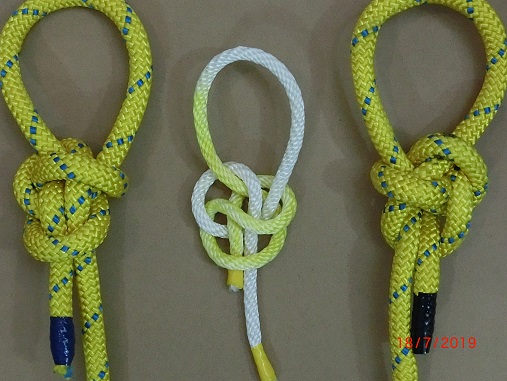
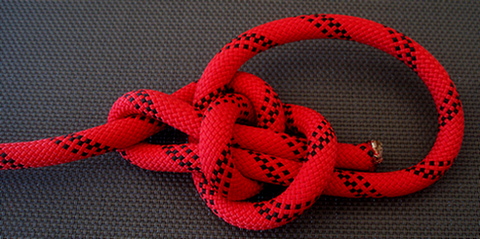
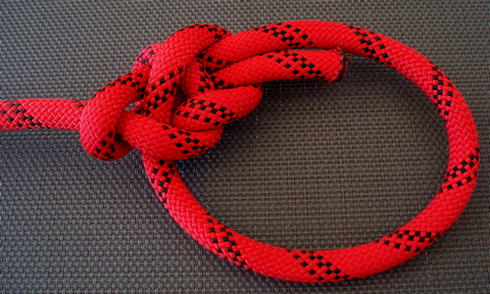
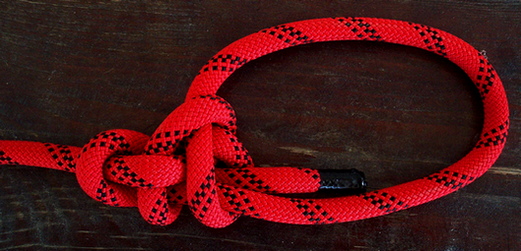
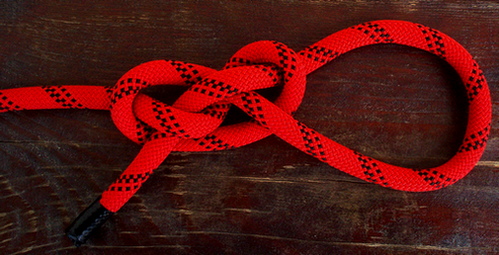
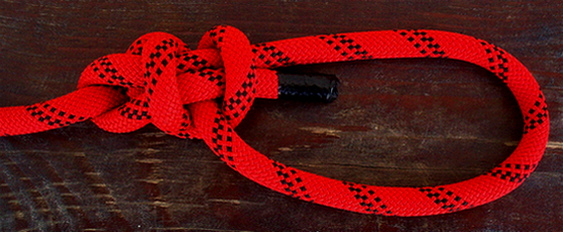
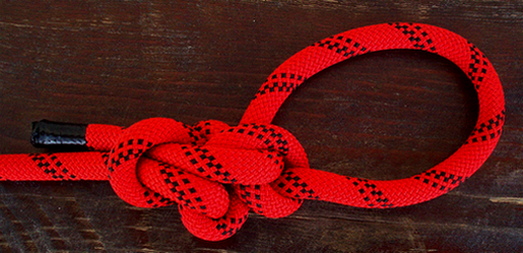
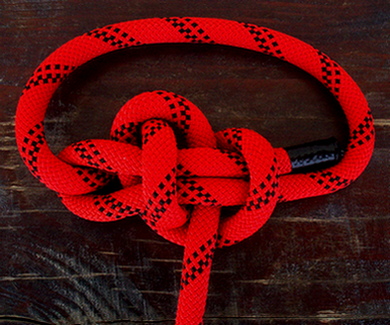
Indeed, i had problems to classify various knot structures, but your clever concept of `virtual bowlines`, is more appropriate for nipping structures with geometry that deviates from the simple helical nipping loop, but retains the jam resistance property, serving me well enough, as it extends the scope of the bowline variable, including more structures that would fit in.
I would add that a qualifying requirement is that the nipping structure must also be ‘TIB’.
The full suite of qualifying requirements for a nipping structure being:
TIB
loaded at both ends
jam resistant (although this requirement might be problematic with complex structures such as the #1188 Constrictor hitch).
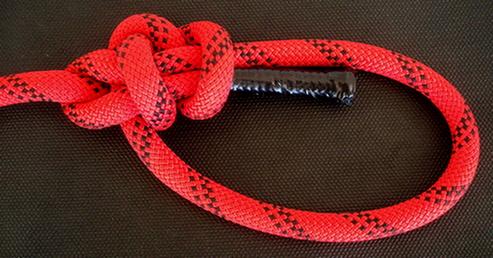
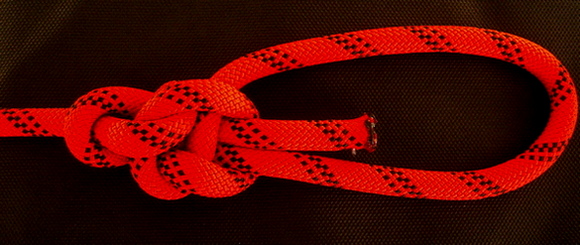
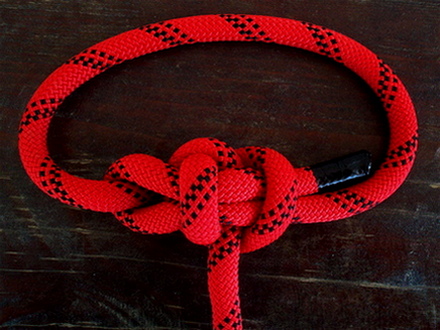
But the question still stands!! Would i have to strangle the WE to the SPart? In other words, is this knot inherently secure? You claim that it is not, but i want to know which is the crucial factor that excludes it from being so. I have tied all the inherently secure bowlines depicted in your paper, which are based on a simple nipping component, and a more complex collar structure that secures and buries the tail. But what about the opposite, when it comes to a more complex nipping structure and a simplified collar structure, like the one presented here?[i] I do not wish to add more complexity to the knot with extra tail maneuvers,[/i] but i can't help wοndering, if a direct first line of defence would enhance the safety factor, producing an inherently secure knot!!
If the bight structure is left in the standard form of #1010 (where the legs of the collar are straight and continue on to form a parallel bight structure) - retardation of tail slippage is reliant only on the nipping structure.
In my view, additional tail maneuvers are required to boost security.
Examples of such tail maneuvers are found in the EBSB Bowline, Lees Link Bowline and Scotts locked Bowline - all of which are inherently secure.
If further tail maneuvers are required to achieve security beyond the base knot form - for example, an additional strangle around the SPart, this implies the base structure is not secure.
For example, Lees link Bowline does not require further tail maneuvers to boost security - it is inherently secure in its native form.
I am of the view that a ‘Bowline’ with a parallel bight structure in the form of #1010 will (in all likelihood) not be inherently secure.