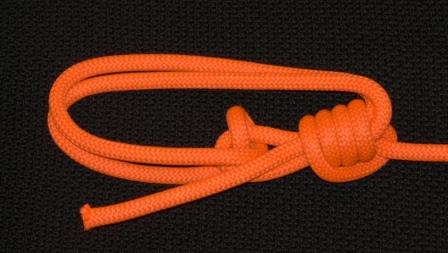
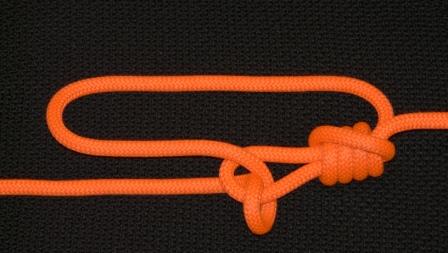
I have tried to combine three elements here :
- A sufficiently long coil “tube”, that :
a . accumulates constricting forces around the line(s) that go through it, (as in the case of the climbing hitches). In the fight to secure the tail, this serves as a third line of defence.
b. keeps the second leg of the inverted “U” of the tail in place, properly oriented towards the bight side of the loop. This serves as a second line of defence. - An “anchor bight”, that takes the place of the loop(s) we meet at tucker s hitch and Versatackle binder.
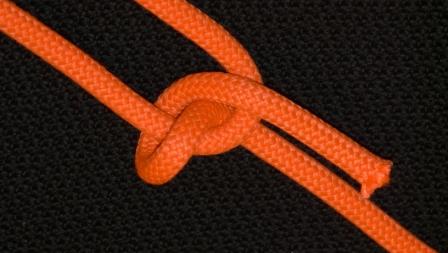
- A very simple blocking mechanism, that makes the slippage of the rope towards the one end much more difficult than towards the other. The second end, “the blocking end”, can slip through the mechanism, and so can be pulled to tighten the loop, but the first end, “the blockied end”, is blocked by the second end and the anchor bight, and so it can not slip at all. This serves as the first line of defence.( For the time being, I call this mechanism a “one way tensioning mechanism”, until somebody will come up and suggest a decent name.)
To adjust / tighten this loop, we have, first, to pull the proper second “blocking” end of the rope that goes through the “one way” mechanism, and, second, to pull the tail so that any slack rope is eliminated. The tensioned tail leg of the bight keeps the second, “blocking” end of the “one way” mechanism aligned with the first, “blocked” end, so the whole mechanism will not fall apart.


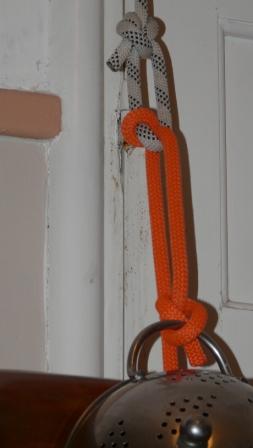
 Ahhhhh, at last, the cook’s in the kitchen-lab !
