;D
Yes, okay, I owe you.
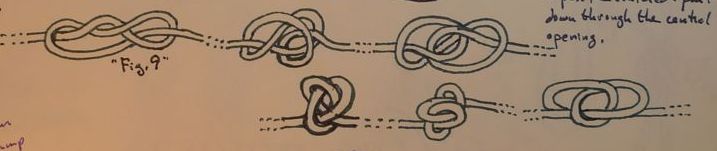
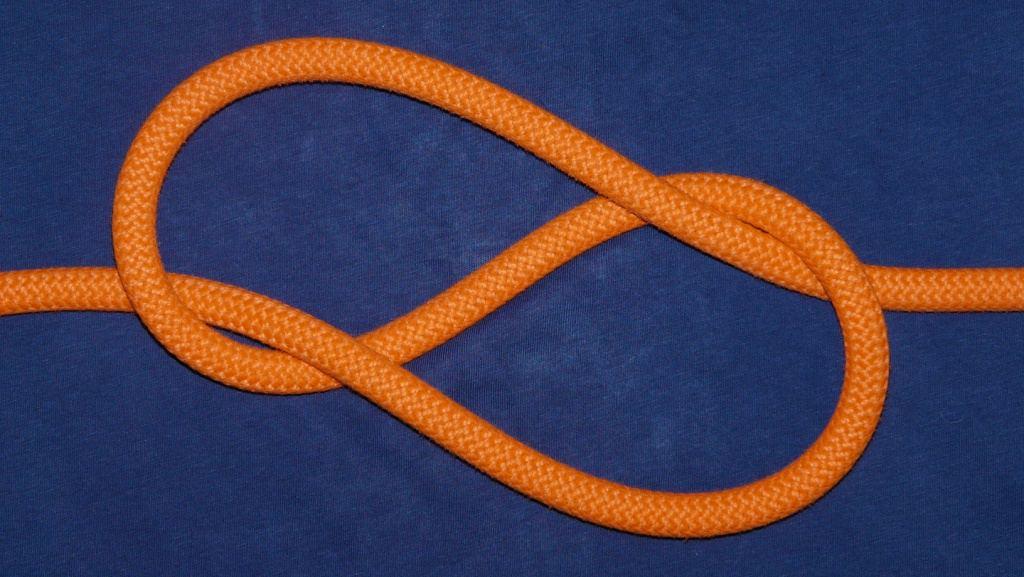
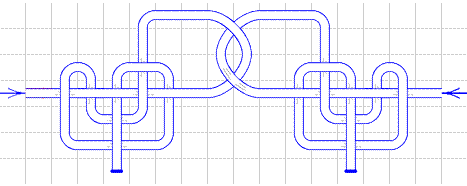
But go back to that “symmetric fig.9” end-2-ender
(by which I mean using Ashley’s #525 stopper form)
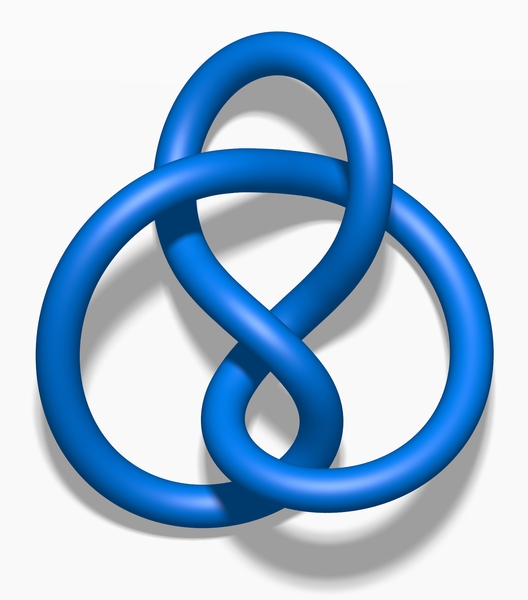
which I equated to THIS #1425 interlocking of two
overhand (~= 9-1  ) and you advised me not to try
to win others to this notion of equivalence !
The eyeknot makes half-way redress of my casual
equivalence in that the SPart’s through path to eye
leg IS a symmetric fig.9, leaving only the tail
to have a convenient abbreviation to overhand.
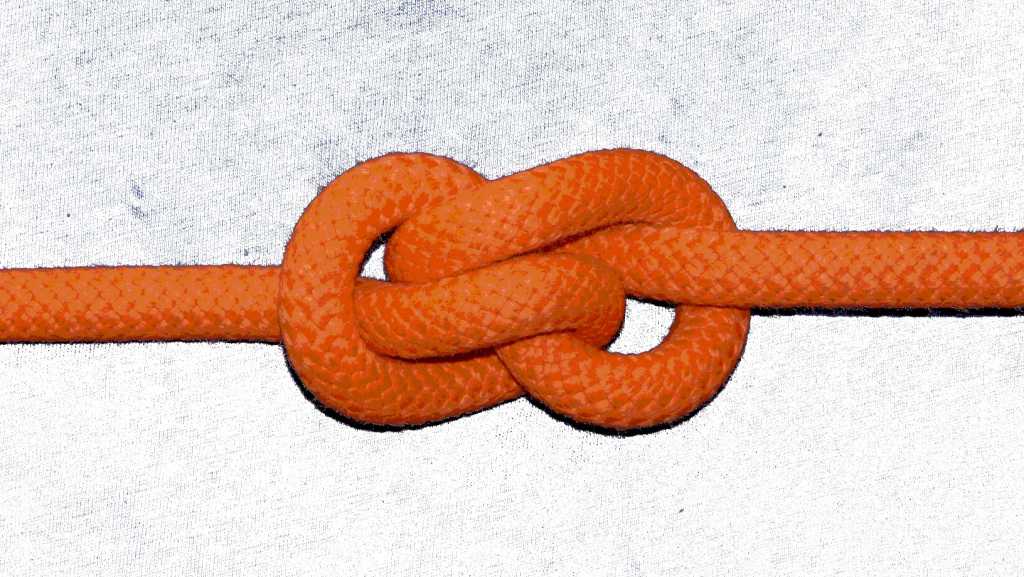
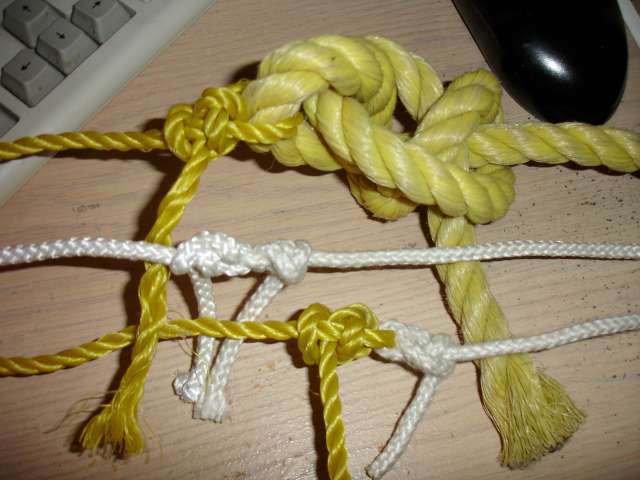
In the attached photo of the (snugly set) stopper form
of #525, consider the left end as the S.Part and
segment-1, flowing anti-clockwise into (next visibly
delineated) segment-2a..-2b (“b” end of segment-2
diving back through a loop), and down to the bottom
segment-3, which penetrates the loop formed by 1-2
to continue as segment-4 and exit into right-side eye.
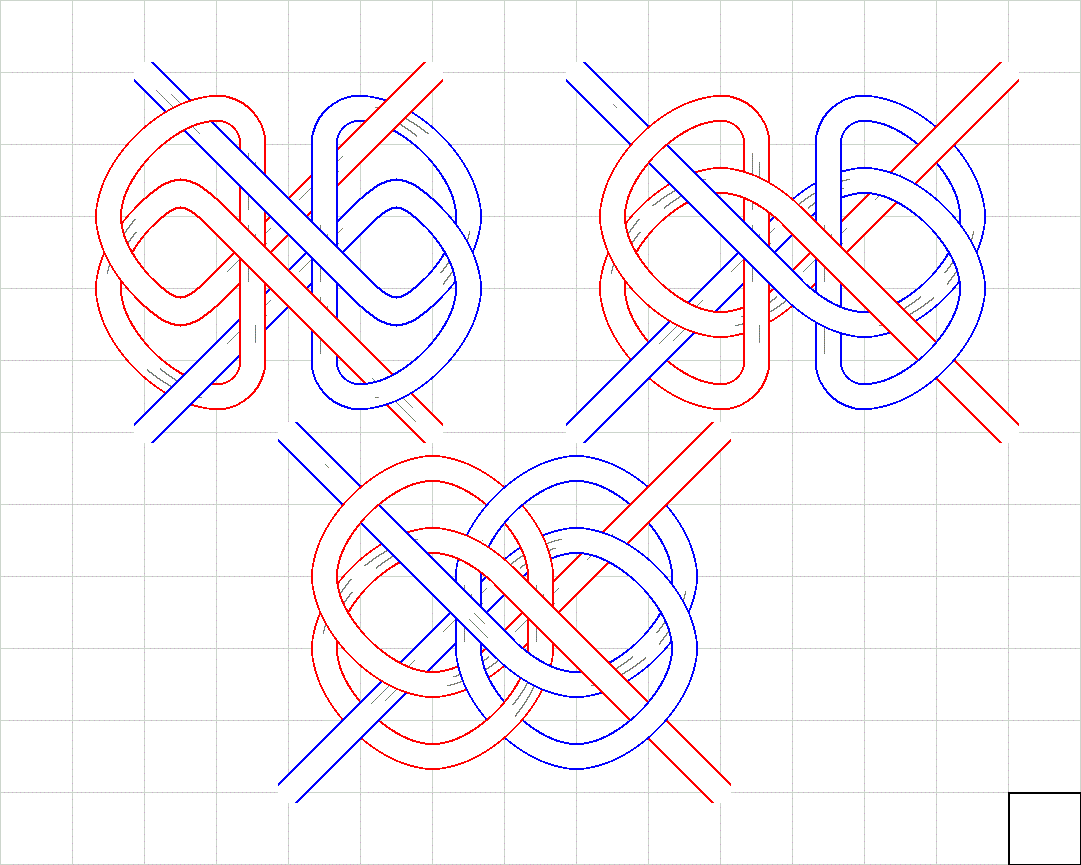
For the “TIB” eyeknot(s), form 1-2 and then
make a bight of the working end and lay the tail leg
alongside the span from s-2 to 2-3 (so, vertical, given
photo’s orientation). NB : 3 options occur here :
the tail leg can be to the left, or to the right & in
front of 2b-2a, or … behind; in all cases, the tail leg
is adjacent the S.Part part 2b-3, vertically oriented.
Now, simply complete the tying of the shown single-strand
stopper but using this just-formed bight. The tail-side of
the eye flows into an overhand and the S.Part’s full
passage into the eye forms the fig.9 ; I regard #1425
as capturing the spirit of this general knotted geometry,
of the loaded part passing though those “binding wraps”
and up around parts, and not pulling directly against each
other. (One could of course tie #525 with a bight and so
have a fully “sym.fig.9” eye knot; but I see benefit to
keeping the tail side from making the full journey. It
can even be that the tail’s path is further shortened,
to a mere turn, but … . .:. horses for courses.