It would be interesting to test the “double” Bell Ringer s loop ( ABoK#1148 ) as a double Trucker s hitch loop, in the spirit of (1). Is it as easy to untie as the Span loop ( ABoK#1049 ) ?
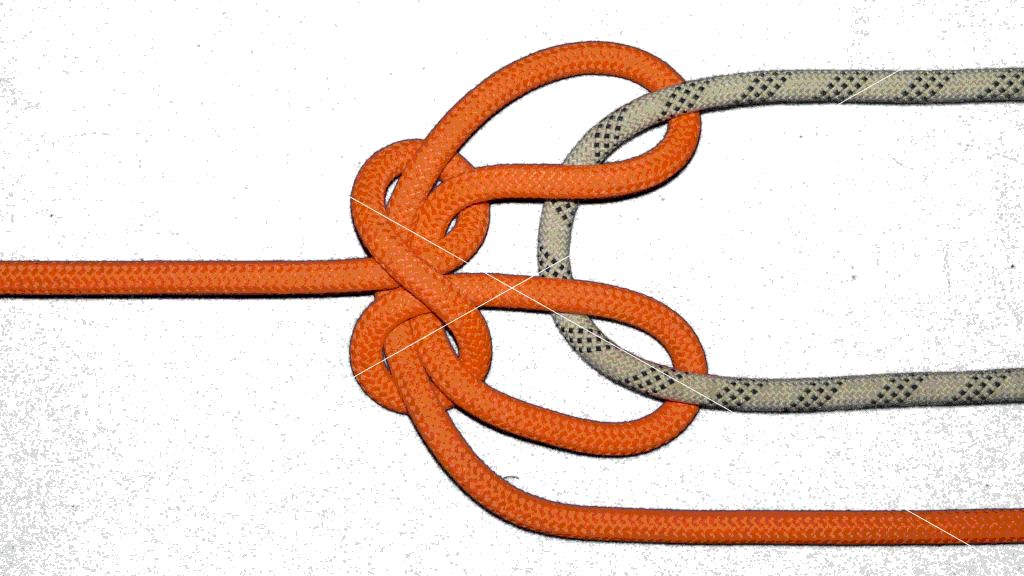
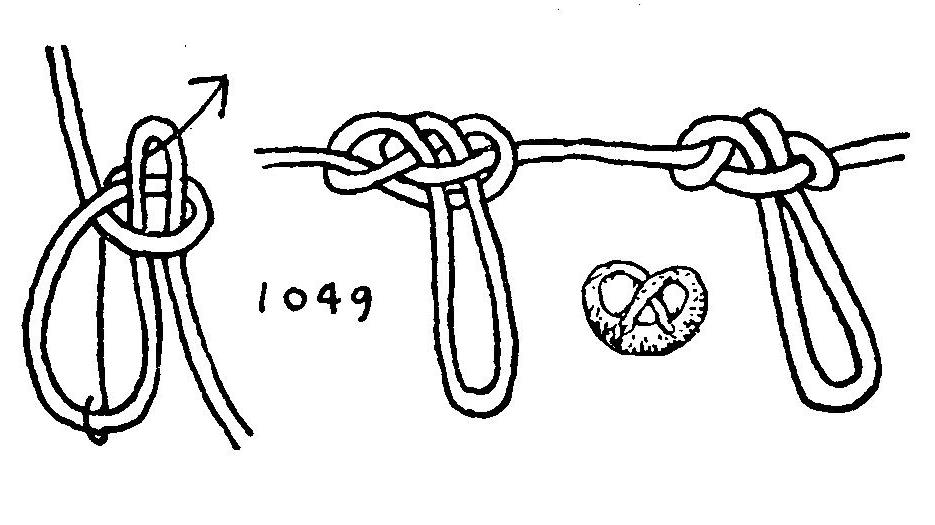
It would be interesting to test the “double” Bell Ringer s loop ( ABoK#1148 ) as a double Trucker s hitch loop, in the spirit of (1). Is it as easy to untie as the Span loop ( ABoK#1049 ) ?
I’m not following what is said, what is going on, here.
Can you give an example of this characteristic,
of where the bell ringer succeeds and some other
knot fails?
The tying method of the Bell Ringer automatically places the WE inside the loop once finished, that’s all he’s saying. You don’t have to reeve the WE through the loop like you do in knots such as the Lineman’s Loop or Directional Fig 8 etc.
I couldn’t follow this at first but then realised that I have tied most trucker hitches using a hook at the WE where the loop doesn’t matter whereas with no access to the end of the anchor point as would be the case with a bar or roof rack then the bellringer or midspan sheet bend (the latter I rather like for this) do make life easier. I’m grateful to knot4u for pointing this out.
Barry
I’m still lost.
When I see a bellringer’s loop I see an eye devoid of anything
in it (as in Xarax’s copied double version). Can you explain some
example --showing where this I-don’t-see-it difference matters–
in slow motion, as it were.
Okay, the infinitely long rope has been tossed over the load
on the lorry, and we’re to put in a trucker’s hitch.
We grab the rope, and … ?
There must be just a hook for our anchorage, or else
the endlessness of the rope challenges us if a ring. OR is
this the key? --that one can reeve a bight through a ring
and then form the leveraging sheave via bellringer ?
(One can go further than bellinger into a full bowline
with the working bight-end, btw, and get twin eyes,
to boot, plus the more stable knot.)
Both directions of pull will work, although I might have a slight preference to having the U-shaped part of the knot associated with the tensioning side of the line.
Another clever way to tie a TH using the SheepShank version is to tie the Constrictor in the Bight and then push your bight up through both HH’s and cinch down. It essentially does the same thing as the Bell Ringer HH lock does, rendering the Sheep Shank version secure. I’d love to take credit for this tying method because I simply have looked EVERYWHERE on the computer and haven’t seen any signs of anyone tying a TH this way. It works just as well as the HH lock on the Bell Ringer and it dresses almost exactly like the Bell Ringer. It unties easily too and I’m pleased to report this finding.
If you’re a lover of the SheepShank version, often called the Truckie Hitch, this should be attractive to you. I think I’ll start using this method, although I like the Bell Ringer HH lock. I’ll call this one the Bell Ringer Constrictor…
Pushing a bight through two nipping loops, resembles the tying method of the four loops described at Reply#92 (also shown at Reply#96) right ?
Yes, your pics show basically the same theory as what I’m tying. I’m just using the Constrictor on the Bight method and pushing the loop through them as you did. Your pictures don’t show the Constrictor method or do they?
I may do a YouTube video of this method as I’ve never seen or read about it on the internet. This is a really cool way to tie a TH IMO.
Wait a minute Xarax, the more I studied your pics the farther apart we are here. Your pics show a slipped OH that’s beefed up with another HH. My work is the Constrictor on the Bight as the midline knot but it also utilizes key features of the Bell Ringer. It’s a Ringer Constrictor in essence.
I believe a series of carefully chosen sketches and/or pictures can show any tying method of any practical knot, sufficiently well. ( There is no real need for videos… ). I admit I prefer to see nipping loops where others see half hitches, and I always try to analyze and describe complex knots by using a reduced set of simple knot elements ( and not a set of not simple knots, as the Constrictor …). Analyzing and describing knots and knot-tying methods by other, well known knots and methods , although it seems an easy and natural thing to do, is often a source of mistakes, because practical knots are simple knots, and simple things are very sensitive to even one minuscule difference… Yes, some pictures will help (me) :)!
It does capsize and it’s desirable in this case as you already mentioned. I can probably dress it to where it doesn’t capsize but then again if I do that, it’ll be much harder to untie. I pulled on that ear and it’s definitely secure, my 275lbs couldn’t budge it.
Here’s the deal with this knot. I’ve been looking for alternatives to the regular Bell Ringer TH because I happen to really like the style of the BellRinger and how it just falls apart. We’ve got the BellRinger HH lock which was the main improvement to this style until right now…at least that appears to be the case. The Constrictor Ringer just falls apart too and is probably more secure than the Bell Ringer HH lock IMO. It’s extremely fun to tie, and is cool in it’s ability to improve upon the Bell Ringer which basically went for years without much improvement. Let’s also remember that the Bell Ringer is probably the “original trucker’s hitch/wagoner’s hitch” from back in the day. We’ve seen many modifications to the TH because of slippery rope…that’s the main reason we see it tied with slipped knots and fixed knots. The original method was good for coarse rope. Now we can use the original method with a slick modification.
I’m sure I could tie it with gloves on but gloves would complicate the tying process of darn near any knot IMO.
I’ve found another way to secure the Bell Ringer in the TH, just tie ABOK 1244 in the Bight and it operates just like the Constrictor does. I’ll have to fool around with it to see whether or not I like it better than the Constrictor. It might be better because it may untie just a little easier. Either way, they both give plenty of security to the TH and could be used as either quickie’s or semi-permanent tie downs.
I can’t see myself ever using a fixed loop again.
Do you guys have any good suggestions for the finishing hitch of the TH?
Two half hitches seems to jam horrible if there’s a lot of tension, or one of the object or cord is soft or springy. A slipped single half hitch may not be secure enough for some situations…
!! If 2HH jams, then so too would a slipped single hitch
–though this implies a lot of load (or a too-small line).
Still, I often like to tie off with a friction hitch to the multiple
lines (two, at least) leading to the anchor point --possibly,
if jamming is a risk, with a guard half-hitch (turn) (or double),
and then a rolling hitch or clove hitch (the latter being
adequate in rough cordage and with the guard doing work).
Sometimes, one can put in a tight half-hitch(turn) and then
jam the tail between the just-nipped lines beyond & then
behind this turn (which behind placement spreads the two
tensioned lines immediately before the half-hitch and thus
gives it some better bite).
I’ll try to explain the Two Half Hitches problem:
When finishing off with Two Half Hitches, the inner half hitch is pressed against the loop. The outer half hitch is easily removed, but the inner one is much more difficult if there’s a lot of tension. If the object is soft or springy, it will expand when the tension decreases. When you try to work some rope through the remaining half hitch, the object will expand and then pull rope through the loop and further tightens the half hitch you just tried to open.
One solution would be to choose a hitch which can be untied under tension at the first anchor point. Untie this one first and then deal with the two half hitches at the mid-loop afterwards.
I do however like your solution with the rolling hitch. It can be used even in situations where there is no “first anchor point”, and the TH is tied with just an end loop.
First, pass the working end through the loop for a second time and lock it there, in between the two bights, as shown in Reply#43 (1), then tie the half hitch around the one, two or all three lines coming from the anchor. This way the half hitch serves now as your second line of defense against slippage, it bears almost no load, so it will never jam.
I have found that, if the rope is elastic enough and long enough, the slack is consumed. With my nylon-based ropes, the line remains tensioned for a long time. I keep tensioned vertical lines from the ceiling to the floor ( 3.3 m, 10 ft) - to test friction hitches around loaded lines. A minimum ammount of slippage through the first, Versatackle-type lock is in fact welcomed, because it keeps the second, half hitch lock under tension as well.
Why ? The two bights (around the second anchor) communicate, so, eventually, sooner or later, the tensions within them will be equalized, however great the friction forces on the first and/or the second anchor points will be. And it would be safer to have the loads distributed on two points and three lines, rather than one point and two lines, would nt it?
With my somewhat springy nylon-based ropes, and with the lengths I have mentioned, I have not noticed that effect. The tensioned rope remains tensioned, probably because the slack is negligible compared with the length of the rope.
Wrong example. In the case you describe, the rope is in touch with the object along its entire length, so the friction ( with the surface of the object) does not let the slack of the one wrap be distributed evenly at each and all other wraps. I suppose that, most of the times, the three short lines that connect the (single or double) tucker s hitch loop with the anchor point are not in touch with the object - and I suspect that you can not make them be so, even if you try, because they are three tensioned parallel lines that not in the same lever.
Right. My mistake - I have called the tip of the trucker s hitch loop as an anchor. I was talking about the three lines that connect this point with the (second) anchor.
Again, why ? An already tensioned rope of some length, has enough room to give, and yet remain tensioned, even after the consumption of the small amount of slack we are talking about.