I am grateful that I had been offered the rare chance to tie this beauty… Thanks, dear KnotGod. 
( The parallel ends do not mean that this loop is EEL. This has to be examined by further trials.)
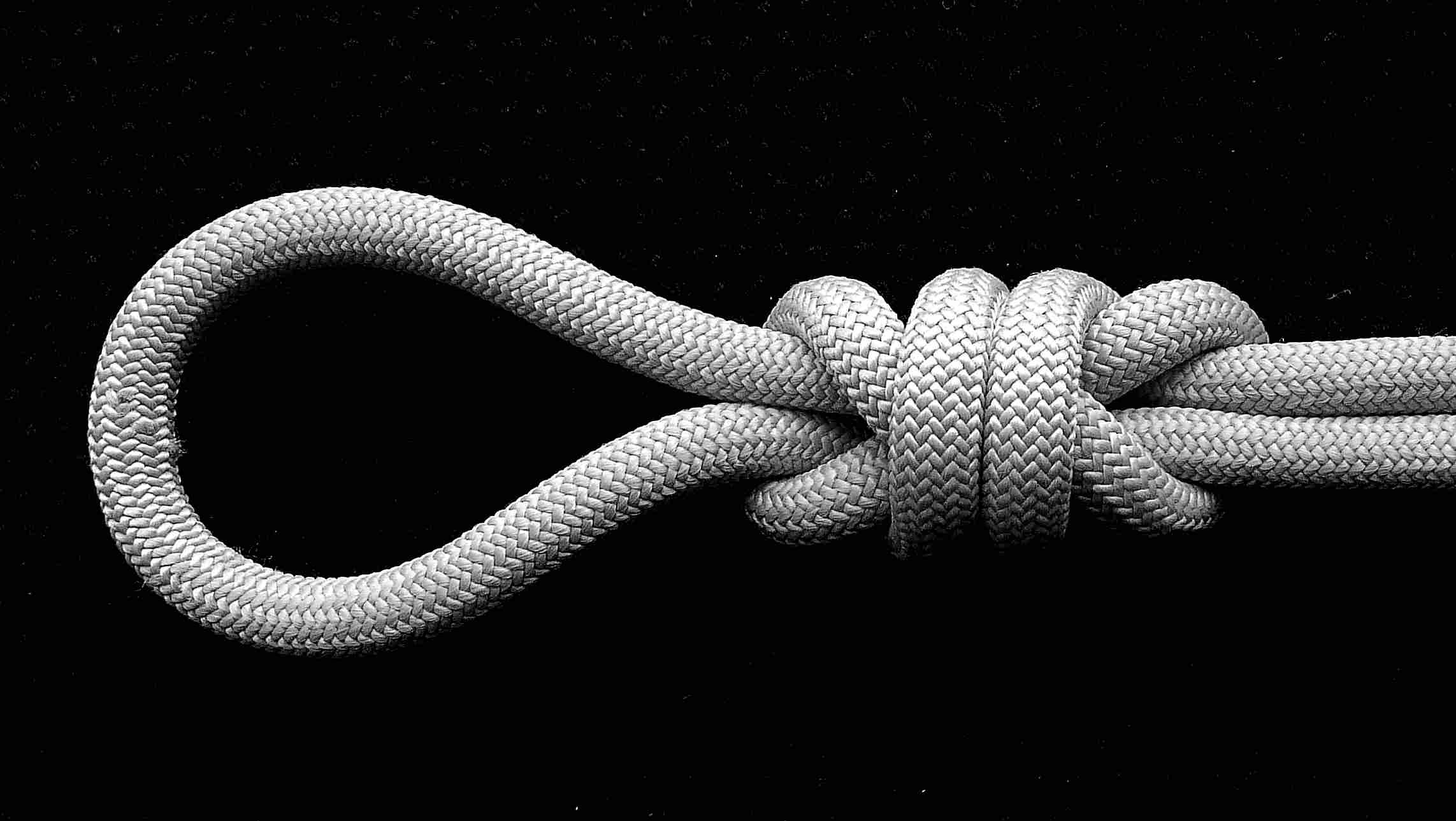
I am grateful that I had been offered the rare chance to tie this beauty… Thanks, dear KnotGod.
( The parallel ends do not mean that this loop is EEL. This has to be examined by further trials.)
I believed that I would never find a simple and easy method to tie it in-the-bight - and I had found how in 3 1/2 seconds ( after 3 1/2 years ! )
Better late than never…
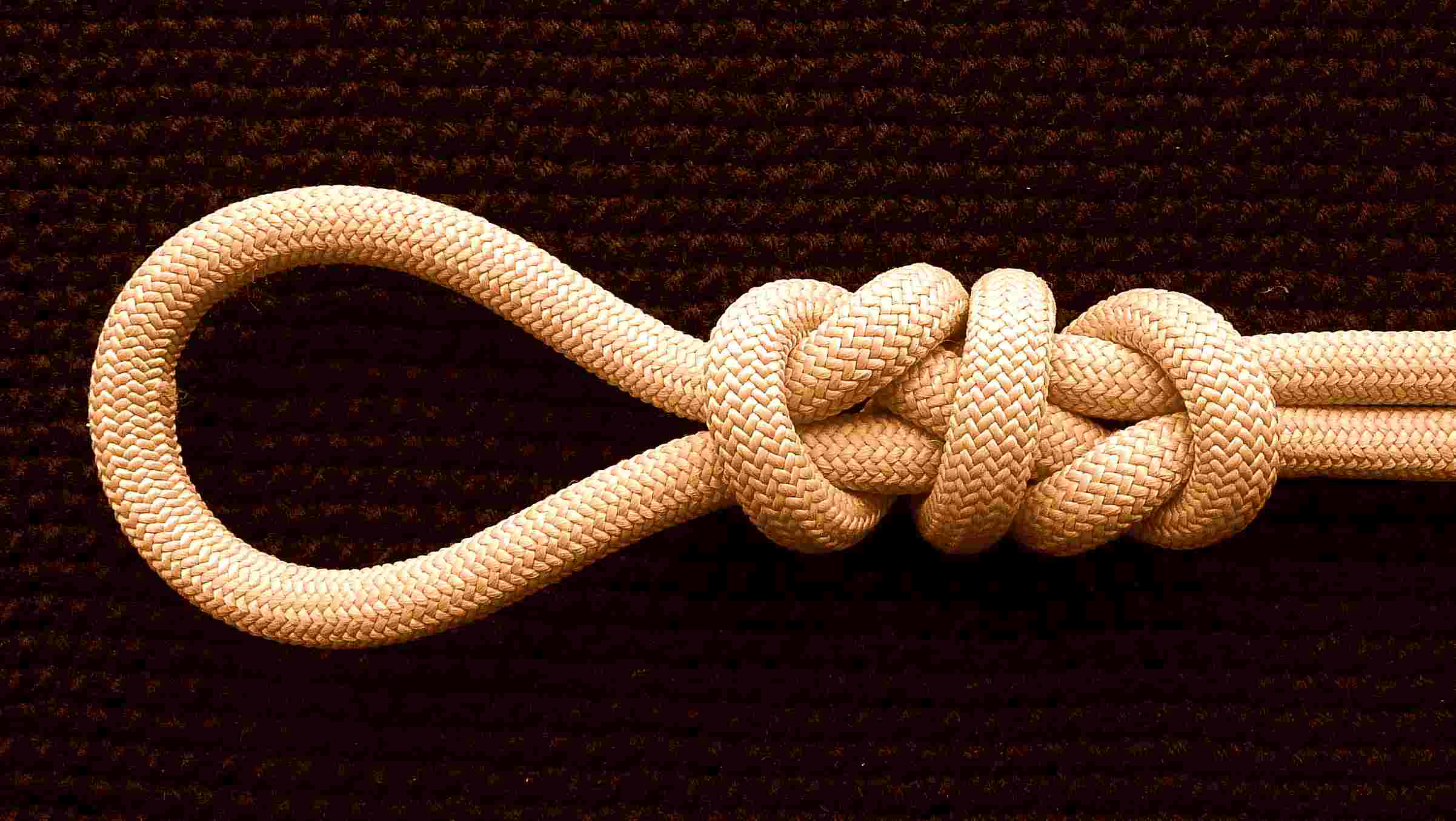
Impressive!
Cant wait to see to photos of the tying method.
And what is the bowline ( and all the bowline-like loops ) ? Just a Helical loop with a helical coil of one turn, only twisted around its crossing point
Totally verifiable and easy to understand.
I had already described the method, at Reply#19. One has just to read it slowly, to decipher it - because, evidently, my English are much worse than my knots, that is for sure !
In the “haltering collar” method, the knot tyer should “see” the TIB loop as if the collar does not encircle the ends yet, neither it is inserted into the “nipping tube”. ( See the pictures of (1), where this is shown, and explained. ) The tying method of the TIB Girth hitch bowline, and of many other TIB bowlines, the moment we “see” it this way, becomes immediately obvious.
Now, something like this happens here, too. We have only to “see” the Helical Loop with 0 number of turns - that is, where the helical coil has been degraded into a straight segment, entering-into and exiting-from the very same openings of the nub as the ends of the helical coil did. That is a MUCH simpler loop, which can be tied very easily.
Then, after we have tied the “simplified” Helical loop with 0 number of turns, we can drag those “turns” out of the nub, we can multiply them by twisting the straight segment, and then place the twisted, now, ex-straight segment ( which became a helical coil ) back in its initial position.
The simple idea, and the trick derived from it, is that a Helical loop with X number of turns and a Helical Loop with Z number of turns are topologically equivalent, and we may easily turn the one into the other, by simply dragging the coil out of the nub, twisting or untwisting it, and inserting the nub again inside it, as a “core”. So, we first tie the loop with 0 turns, then we add more turns, and so we end with a loop with as many number of turns we wish.
That is also very useful, for yet another reason : We may decide, after we have already tied the loop, that the number of turns is not adequate, because the rope slips more than we had anticipated, the load is heavier, etc. Then, we can easily increase the number of the already existing turns, and add one more, at an instant.
P.S. The simplest similar case I could imagine, is the one shown in my " Three and a half seconds puzzle " :
http://igkt.net/sm/index.php?topic=5310.
Pictures of the Helical loop shown in the previous posts, with one helical turn less.
As one can see, the knot looks much simpler now, and its structure much more transparent. If we try to imagine it with 0 turns ( when the curvilinear direct continuation of the Standing Part will become a straight segment, without any other change : it will enter-into and exit-from exactly the same openings of the rest of the nub, as it did before the further “untwisting” of its helical coil ), it will become VERY simple, and its structure and method of tying will become obvious immediately.
That is the whole idea I try to explain in the previous posts. The Helical loops should first be “seen” as having 0 number of helical turns, and then they should be enhanced with as many added turns we want/need. Their TIBness, if it exists when their helical coils have 0 turns, will remain, when those coils will aquire no matter how many turns more.
Going back to 2012 and the thread about mid-span bends (1), we can simply apply, to the very first genuine Helical loop presented there, the topological trick described at (2) : " Retuck the Tail end through the collar - you may end up with a TIB bowline ". This first “Constrictor”-based Helical loop was not TIB, but if we re-tuck its Tail thorough its collar, it becomes TIB. This means that we have to add a half-turn = 180 degrees more to the helical coil of the Standing Part, which will now enter into the opening of the “lower” or the “higher” collar by its other side.
Since the ends of the structure of the inner core ( which I had called “Constrictor” back then ) leave its nub towards directions almost parallel to the axis of the loop, I now prefer to call it by a less knotechnical name : 8 ! It looks like an “8”, so let us simply call it an 8…
As I had noticed elsewhere, any “Helical loop” which happens to be TIB, will remain TIB if we add or subtract more turns to its helical coil, or if we replace the left-handed helical segment with a left-handed helical segment, or vice versa ( just as it happens with the TIB bowlines and their number and/or handedness of their nipping loops/turns ). Therefore, there are two versions of this loop - I had not been able yet to decide which is better and which I like more, but, most probably, their differences regarding slippage, strength and easiness to be tie and untied would be very small. ( See the attached picture ).
I think that this Helical 8 TIB loop is much simpler than the Strangle-based one, without being inferior / less secure, and, since it is based on an “open”, 8-shaped knot, it is PET -2 - which may be considered as a bonus regarding its versatility. As we add mote turns, its advantage regarding the adjustability of the size of the eye disappears, but still it can transported “up” and “down” its Standing Part more easily than a secure bowline. The really important and very interesting question, is if it will be stronger than such a bowline, because the path of its Standing Part, as it enters into the nub, is smoother, without any sharp turns - but this can be answered only by systematic tests/experiments.
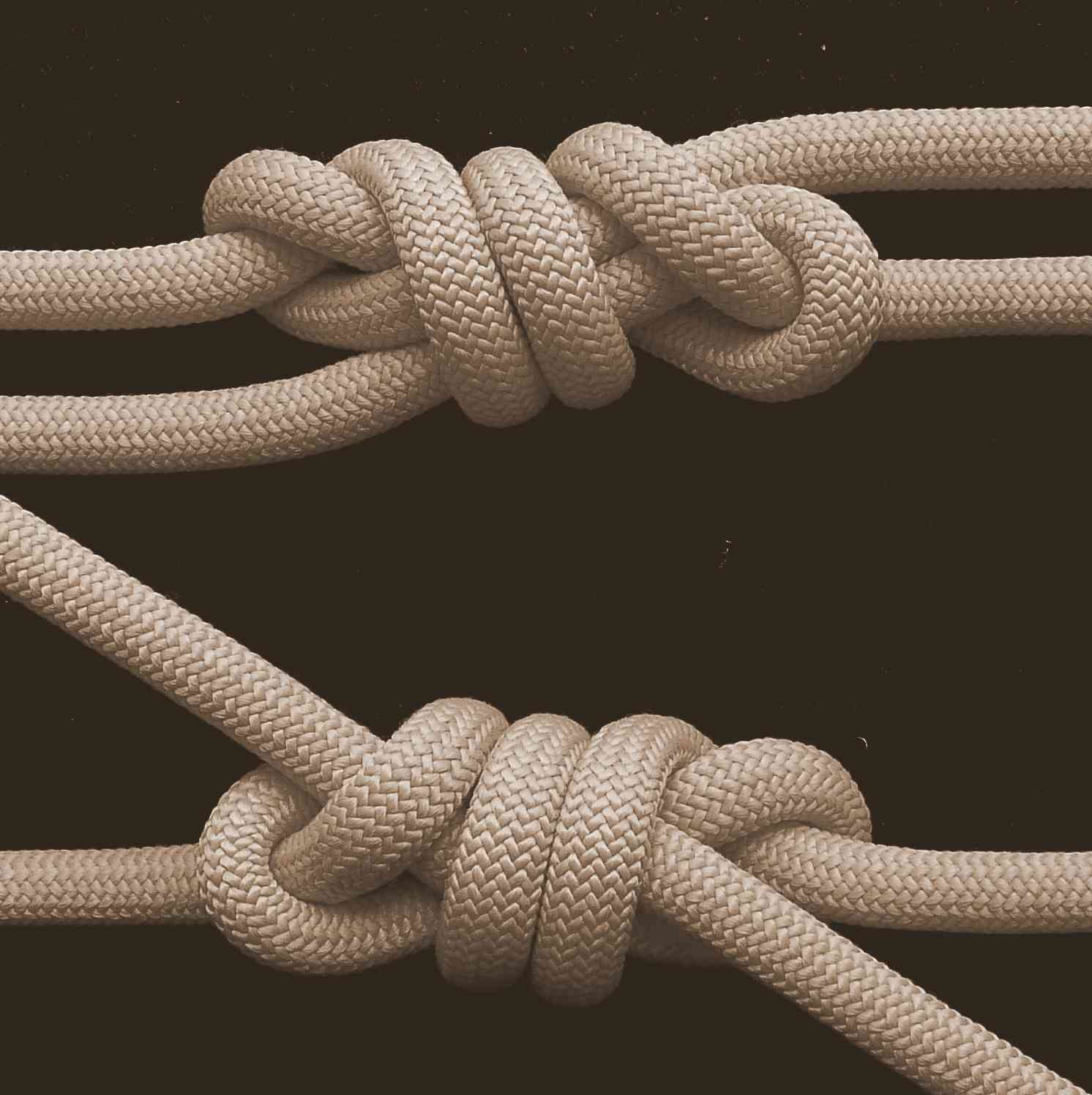
The same Helical loop(s), with fewer turns.
The knot shown in the last two pictures is very simple, yet it is surprisingly stable and secure. Such a simple knot should had been tied on purpose or by accident many times, but I do not remember to have seen it published anywhere. Myself, I had tied it for the first time only recently :
http://igkt.net/sm/index.php?topic=4965.msg33814#msg33814
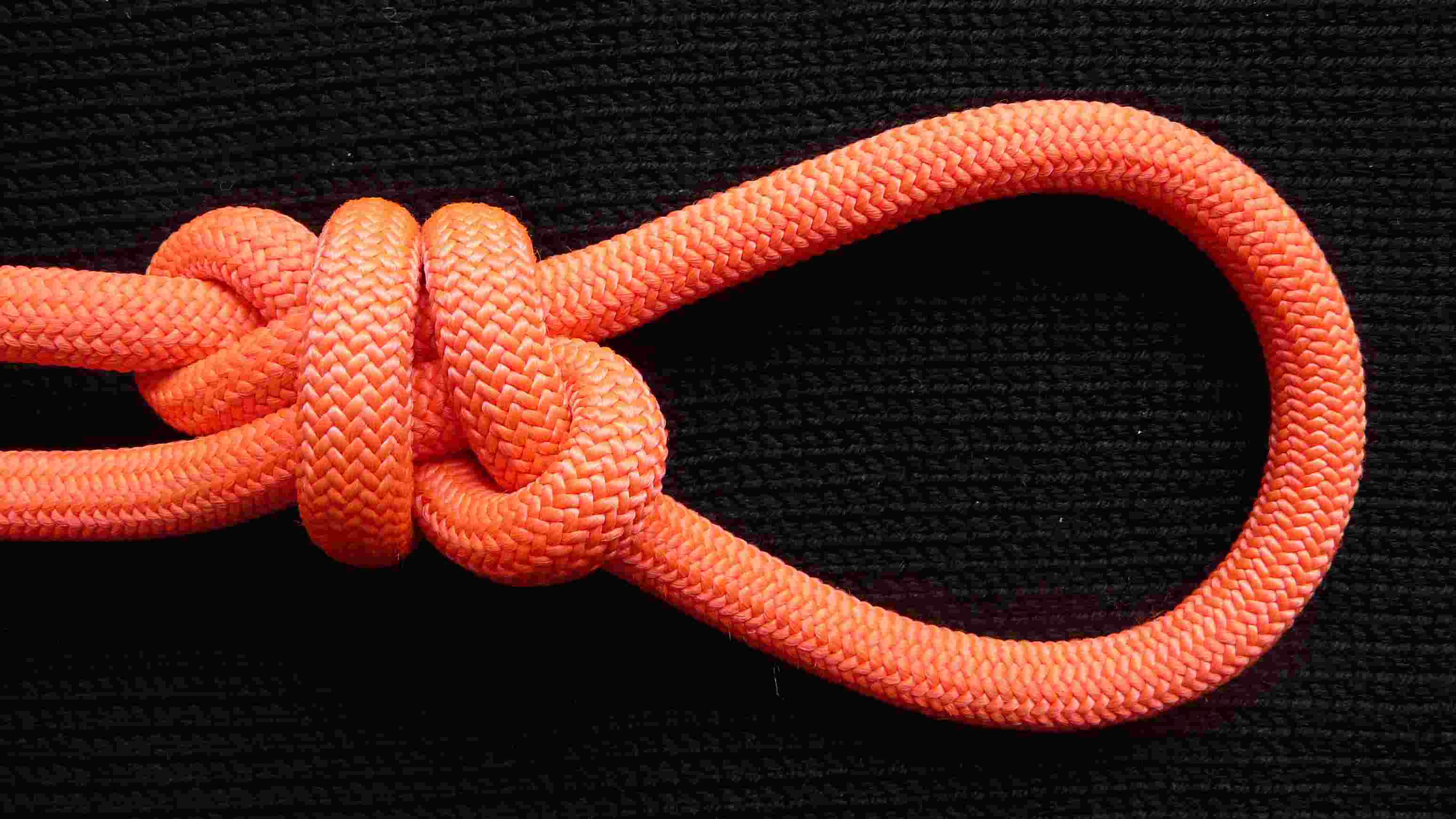
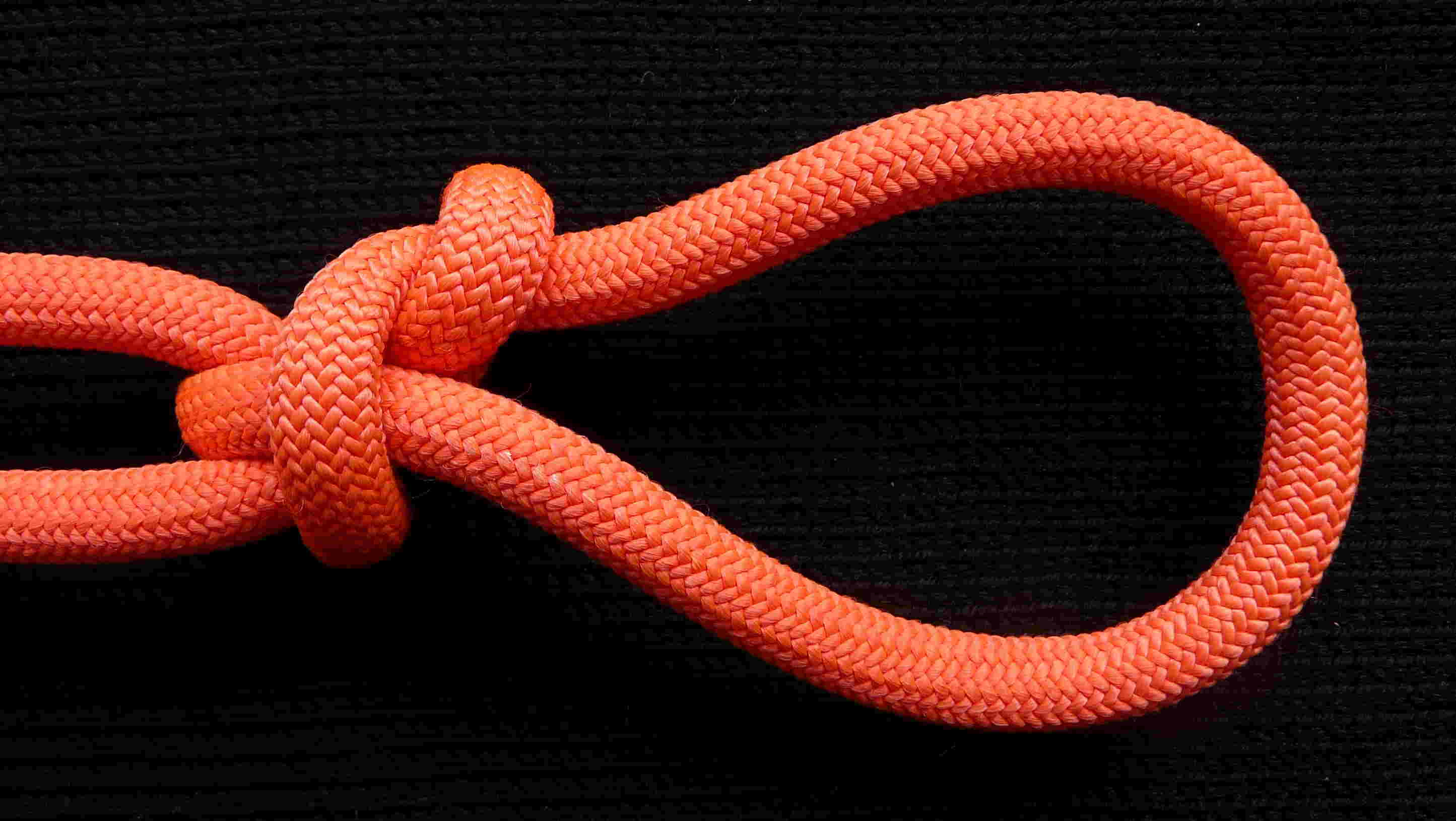
Another view of the nub of the simple Helical loop shown in the third and fourth pictures at the previous post.
I do not know which pair of ends should better be used as ends and which as eyelegs - because there is some ( slight ) difference between the two options (the nub is not symmetric ), but I have not decided yet if it is important or not. See the third attached picture for the one of the two possible options.
The one Helical 8 loop, with a one-and-a-half-turn helical coil.
I am not saying that such a few-turns helical coil will be sufficient in all applications - it may be, it may be not. I just can not tell, because I have not loaded it very heavily. I show those pictures just to show a typical representative of this class of knots, which, due to the symmetry of the 8-shaped core, it is very easily inspected and it is also quite nice. I prefer it from the its corresponding same-number-of-turns / opposite-handedness Helical 8 loop, for example.