# how do you finish knots with half hitches?
**URL:** https://discourse.igkt.net/t/how-do-you-finish-knots-with-half-hitches/4384
**Category:** Knotting Concepts & Explorations
**Created:** [3 April 2012 06:36 UTC](https://discourse.igkt.net/t/how-do-you-finish-knots-with-half-hitches/4384 "2012-04-03T06:36:48Z")
**Posts on this page:** 10
**Page:** 1
### Author:  [@little\_green\_bird](https://discourse.igkt.net/u/little_green_bird)
#### Post date: [3 April 2012 06:36 UTC](https://discourse.igkt.net/t/how-do-you-finish-knots-with-half-hitches/4384/1 "2012-04-03T06:36:48Z")
Hello again!
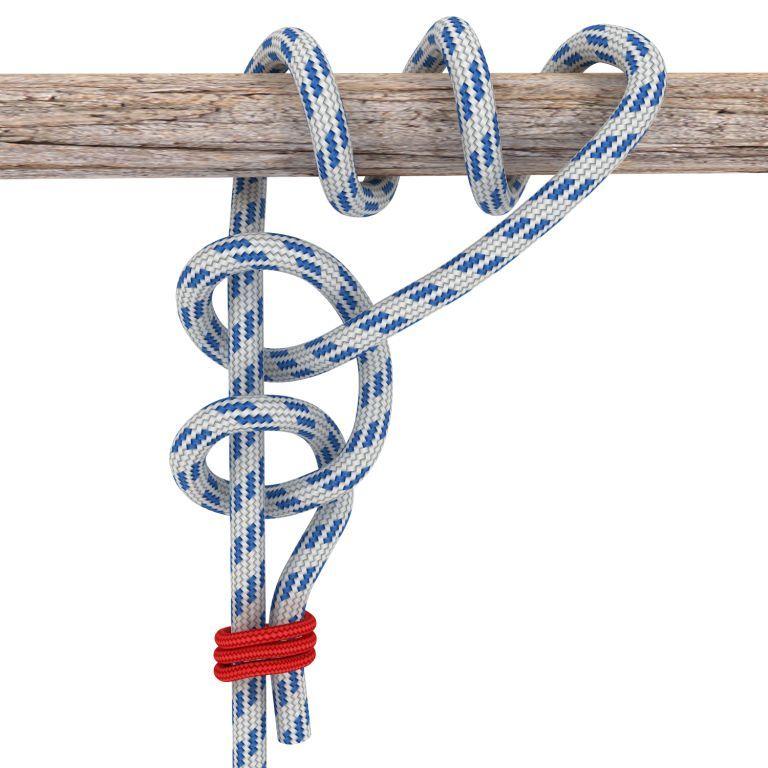
I have another question concerning the Russian knot tying tradition. In Russian traditional classification by Skryagin we have a family of so-called “non-tightening” knots, which includes Two Half Hitches, Round Turn & 2 Half Hitches, Rolling Hitch, Backhanded Hitch (ABOK #1851), Anchor Bend and other similar knots with half hitches. Skryagin says that when finished they all look like this Rolling Hitch on the picture. That means, that Skryagin recommends just to seize the ends with a twine and leave the knot untightened. But in all foreign video tutorials these knots are being tightened, e.g. this Anchor Bend by Grog: [http://www.animatedknots.com/anchor/index.php?Categ=boating&LogoImage=LogoGrog.jpg&Website=www.animatedknots.com](http://www.animatedknots.com/anchor/index.php?Categ=boating&LogoImage=LogoGrog.jpg&Website=www.animatedknots.com)
So my question is, does anyone in Western countries leave these knots untightened? 🙂 Or is it considered incorrect to leave them in the state that is on my second picture?
* * *
---
### Author:  [@Sweeney](https://discourse.igkt.net/u/Sweeney)
#### Post date: [3 April 2012 08:28 UTC](https://discourse.igkt.net/t/how-do-you-finish-knots-with-half-hitches/4384/2 "2012-04-03T08:28:52Z")
> [@little green bird post:1](#):
>
> So my question is, does anyone in Western countries leave these knots untightened? 🙂 Or is it considered incorrect to leave them in the state that is on my second picture?
I have never seen this done in practice nowadays in the UK, hitches are always drawn tight for security (and modern rope is much thinner than rope would have been on a sailing ship). Incidentally your picture shows a couple of round turns not a rolling hitch.
Barry
---
### Author:  [@Dan\_Lehman](https://discourse.igkt.net/u/Dan_Lehman)
#### Post date: [3 April 2012 15:52 UTC](https://discourse.igkt.net/t/how-do-you-finish-knots-with-half-hitches/4384/3 "2012-04-03T15:52:42Z")
> [@Sweeney post:2](#):
>
> > [@little green bird post:1](#):
> >
> > So my question is, does anyone in Western countries leave these knots untightened? 🙂
> > Or is it considered incorrect to leave them in the state that is on my second picture?
>
> I have never seen this done in practice nowadays in the UK, … .
> Incidentally your picture shows a couple of round turns not a rolling hitch.
> Barry
BUT, do you see BEING done all of the tying?!
Consider my surprise about the lobster fishing snood hitches
just posted to Knots in the Wild --where I found quite
loose near-groundline hitches left loose as they were
hauled into position aboard the boat! And, in another case
from that commercial-fishing region (Cape May, NJ), I was
surprised when a fellow putting together a net, in using
a spiral wrap with reverse groundline hitches , would
only gently tug on the line to set the hitches into shape,
but NOT tighten them (as I would expect); now, in this
case, the knots might’ve been tight enough that with
the shrinking of nylon in water (my surmise), they
achieve the tightness in what tied knots I observed!?
–whereas in those loose snood hitches, I would fear
that in-use loading would NOT necessarily set them
well (though they could still hold).
That said, I’m surprised at the OP’s information, which
seems to go beyond a misreading, if indeed the well
loose finished knot is really intended to be the result
(as opposed to just clearly showing the construction,
but really intending that it then be drawn tight).
And, I should point out that the OP’s shown structures,
as well as those I describe above, are only viable in their
loose forms because of their ends being separately
secured --by seizing, tucking through the lay, or having
both ends qua SParts (bearing load, or at least not free).
# –dl\*
---
### Author:  [@squarerigger](https://discourse.igkt.net/u/squarerigger)
#### Post date: [5 April 2012 01:26 UTC](https://discourse.igkt.net/t/how-do-you-finish-knots-with-half-hitches/4384/4 "2012-04-05T01:26:19Z")
Greater security is obtained by adding a seizing to the tail and we practice as such when we are to leave the knot attached for a long time (\< 1 month) or when it is subjected to flogging about in the breeze. If we just wish to get the knot secure for the immediate future we will forgo the seizing and perhaps even, if we are pushed, add a piece of electrical tape for security of the tail.
SR
---
### Author:  [@little\_green\_bird](https://discourse.igkt.net/u/little_green_bird)
#### Post date: [5 April 2012 09:40 UTC](https://discourse.igkt.net/t/how-do-you-finish-knots-with-half-hitches/4384/5 "2012-04-05T09:40:30Z")
> [@Dan\_Lehman post:3](#):
>
> …if indeed the well
> loose finished knot is really intended to be the result
> (as opposed to just clearly showing the construction,
> but really intending that it then be drawn tight).
My first guess also was that Skryagin is just showing the structure of the knot. But then I found several pictures, where he shows the knot in use, and the knot is loose:
[http://www.skitalets.ru/books/knot\_skryagin/Images/image244.gif](http://www.skitalets.ru/books/knot_skryagin/Images/image244.gif)
[http://www.skitalets.ru/books/knot\_skryagin/Images/image252.gif](http://www.skitalets.ru/books/knot_skryagin/Images/image252.gif)
[http://www.skitalets.ru/books/knot\_skryagin/Images/image243.gif](http://www.skitalets.ru/books/knot_skryagin/Images/image243.gif)
Furthermore, the name of the family - “non-tightening knots” - also confirms that these knots are to be used untightened.
Thank you all for the information. As I can see, this way of finishing knots with half hitches is not common and is used rather seldom.
---
### Author:  [@knot4u](https://discourse.igkt.net/u/knot4u)
#### Post date: [5 April 2012 17:59 UTC](https://discourse.igkt.net/t/how-do-you-finish-knots-with-half-hitches/4384/6 "2012-04-05T17:59:54Z")
What’s the point of leaving the knot untightened? Does the user plan on moving the knot lengthwise along the object? Other than that, I don’t see the point. Frankly, that solution looks like the person’s knot vocabulary is limited. So, they tie that monster.
Regarding attaching the working end to the tail, that doesn’t seem like an option that would be readily available if the user has the rope and nothing else. The user must plan beforehand to have the needed equipment.
If more security is desired, there seems to be better options than a loosely tied “Round Turn and Two Half Hitches w/ Secured Working End”. Securing the working end in that manner effective forms a loop in the rope, so why not just solve that problem with the rope itself, rather than electrical tape, twine, glue, fishing line, or whatever?
One better option may be Round Turn(s) and a Zeppelin Loop (or any other secure loop). You get the idea. That still seems undesirable, but more practical than the knot in the original post. Anyway, if I want something permanent, it probably won’t be a Round Turn & Two Half Hitches, nor variations thereof.
---
### Author:  [@Dan\_Lehman](https://discourse.igkt.net/u/Dan_Lehman)
#### Post date: [5 April 2012 19:10 UTC](https://discourse.igkt.net/t/how-do-you-finish-knots-with-half-hitches/4384/7 "2012-04-05T19:10:50Z")
> [@little green bird post:5](#):
>
> > [@Dan\_Lehman post:3](#):
> >
> > …if indeed the well
> > loose finished knot is really intended to be the result
> > (as opposed to just clearly showing the construction,
> > but really intending that it then be drawn tight).
>
> My first guess also was that Skryagin is just showing the structure of the knot. But then I found several pictures, where he shows the knot in use, and the knot is loose:
> [http://www.skitalets.ru/books/knot\_skryagin/Images/image244.gif](http://www.skitalets.ru/books/knot_skryagin/Images/image244.gif)
> [http://www.skitalets.ru/books/knot\_skryagin/Images/image252.gif](http://www.skitalets.ru/books/knot_skryagin/Images/image252.gif)
> [http://www.skitalets.ru/books/knot\_skryagin/Images/image243.gif](http://www.skitalets.ru/books/knot_skryagin/Images/image243.gif)
> Furthermore, the name of the family - “non-tightening knots” - also confirms that these knots are to be used untightened.
First of all, many of the images in this book are simply
copies from others --notably, from [ABOK](https://discourse.igkt.net/t/9845) (Ashley). So,
one can wonder if this book itself is showing anything
uniquely.
Secondly, none of the images you cite is evidence of
how the knot is to be used --they are clearly just keeping
an _exploded_ view for the sake of clarity of the structure.
(And clearly many/most of those structures won’t look
that way after the first loading!) It would take some
express wording, or --as I show in the lobster-pot photos–
knots IN USE and so loose, to be convincing as evidence.
# –dl\*
---
### Author:  [@knot4u](https://discourse.igkt.net/u/knot4u)
#### Post date: [5 April 2012 20:39 UTC](https://discourse.igkt.net/t/how-do-you-finish-knots-with-half-hitches/4384/8 "2012-04-05T20:39:43Z")
> [@little green bird post:5](#):
>
> > [@Dan\_Lehman post:3](#):
> >
> > …if indeed the well
> > loose finished knot is really intended to be the result
> > (as opposed to just clearly showing the construction,
> > but really intending that it then be drawn tight).
>
> My first guess also was that Skryagin is just showing the structure of the knot. But then I found several pictures, where he shows the knot in use, and the knot is loose:
> [http://www.skitalets.ru/books/knot\_skryagin/Images/image244.gif](http://www.skitalets.ru/books/knot_skryagin/Images/image244.gif)
> [http://www.skitalets.ru/books/knot\_skryagin/Images/image252.gif](http://www.skitalets.ru/books/knot_skryagin/Images/image252.gif)
> [http://www.skitalets.ru/books/knot\_skryagin/Images/image243.gif](http://www.skitalets.ru/books/knot_skryagin/Images/image243.gif)
> Furthermore, the name of the family - “non-tightening knots” - also confirms that these knots are to be used untightened.
> Thank you all for the information. As I can see, this way of finishing knots with half hitches is not common and is used rather seldom.
Some of those knots in those diagrams must be tightened against the object in order to hold. I’m thinking those diagrams are more for showing the topographies of the knots, not how the knots look in use.
---
### Author:  [@little\_green\_bird](https://discourse.igkt.net/u/little_green_bird)
#### Post date: [6 April 2012 04:13 UTC](https://discourse.igkt.net/t/how-do-you-finish-knots-with-half-hitches/4384/9 "2012-04-06T04:13:51Z")
> [@Dan\_Lehman post:7](#):
>
> First of all, many of the images in this book are simply
> copies from others --notably, from ABOK (Ashley). So,
> one can wonder if this book itself is showing anything
> uniquely.
>
> Secondly, none of the images you cite is evidence of
> how the knot is to be used --they are clearly just keeping
> an _exploded_ view for the sake of clarity of the structure.
> (And clearly many/most of those structures won’t look
> that way after the first loading!) It would take some
> express wording, or --as I show in the lobster-pot photos–
> knots IN USE and so loose, to be convincing as evidence.
>
> # –dl\*
The book I am using is considered to be the best Russian book on knotting, but yes, it is just a collection of materilas from foreign books, first of all “Ashley Book Of Knots”. However, all Russian manuals, handbooks, sites on knotting are based on Skryagin’s book. And the author insists, that these knots should not be pulled tight. Here are some of his statements:
about the Half Hitch: “Fasten the running end to the standing one with seizing. The Half Hitch tied this way can hold a serious strain. It can move closer to the object, but it will never tighten itself.@”
about the Two Half Hitches: “The half hitches of a correctly tied knot should resemble a Clove Hitch, not a Cow Hitch. … If the half hitches are tied in the opposite directions, the knot will tighten itself.”
I’m afraid, I can’t provide you any photos as a tangible proof, because on all russian sites I find only diagrams from Skryagin’s book which I have already posted. I also find difficulty in replying what is the point of leaving the knot loose, because you see, I’m a newbie in knot tying. But I personally think that you guys are right. I also can’t see the point in leaving the knot untightened. I’d better ask some Russian sailors or fishermen if they really tie these knots according to the book.
---
### Author:  [@Dan\_Lehman](https://discourse.igkt.net/u/Dan_Lehman)
#### Post date: [6 April 2012 18:53 UTC](https://discourse.igkt.net/t/how-do-you-finish-knots-with-half-hitches/4384/10 "2012-04-06T18:53:58Z")
> [@little green bird post:9](#):
>
> … . And the author insists that these knots should not be pulled tight.
> Here are some of his statements:
>
> about the Half Hitch: “Fasten the running end to the standing one with seizing.
> The Half Hitch tied this way can hold a serious strain.
> It can move closer to the object, but it will never tighten itself.@”
I was going to separate this case, but saved the words,
as I almost don’t see how this structure can be tied
tightly. Yes, forming an eye as was shown will have the
HH un-tight. (And it’s an interesting thought experiment
to figure out how it could be better/stronger than just the
seizing alone --must be something about the _give_ that
the HH offers under load, giving some material to the
seized tail such that it has less tension than the parallel
SPart!)
> about the [i]Two Half Hitches[/i]: "The [i]half hitches[/i] of a correctly tied knot should resemble a [i]Clove Hitch,[/i] not a [i]Cow Hitch[/i]. ... If the [i]half hitches[/i] are tied in the opposite directions, [b]the knot will tighten itself.[/b]"
I don’t understand this. It seems to be ONLY distinguishing
the orientation of HHs –clove-vs-cow–, and in that
case, the “will tighten itself” really makes on sense (is wrong)!?
If the tail is NOT seized/secured, the finishing HH will likely
loosen and come untied; depending on other factors, the
initial one might also. (Consider : I have loaded 2HH tied
in 8mm nylon low-elongation kernmantle rope around a 'biner
(smooth metal about 10mm dia.) and watched this knot
slowly slip --material flowing out w/tension, loaded w/approx.
180# at 2:1 or some higher MA !
> ... personally think that you guys are right. I also can't see the point in leaving the knot untightened. I'd better ask some Russian sailors or fishermen if they really tie these knots according to the book.
Great, if you can (and ask/observe other knotting they
do)! As I said, above, I was surprised at some of the
non-tightening I found. In some cases, one can see
that in-use forces will pull things together; in other
cases, though --i.p., that “rolling hitch”–, it’s hard to see
how problems of a loose structure could be avoided.
# –dl\*