Congratulations !! --you're writing a book that I hope
to write. Maybe now I can cheap out and just kabitz
(er, contribute).
- "kernmantle" : I believe that this is defined
in (USA-based?) Cordage institute to cover
--essentially, seems the intent-- those ropes
much made for rockclimbing, caving, & SAR.
Which is a use-based definition rather than
a structural one.
IMO, a "kernmantle" rope is one in which the
mantle (sheath) is needed in order for the rope
to have integrity --i.e., absent the mantle, the
kern can't function. In climbing (and to my
surprise, caving also), the core is a multiple
of laid cords, and not --as in "Dbl. Braid"--
a potential stand-alone structure.
IMO, this is a reasonable definition/distinction,
and should be adopted. But then there is I
think some further distinctions between cores
--some just "parallel fibre" multitudes, others
in other arrangements.
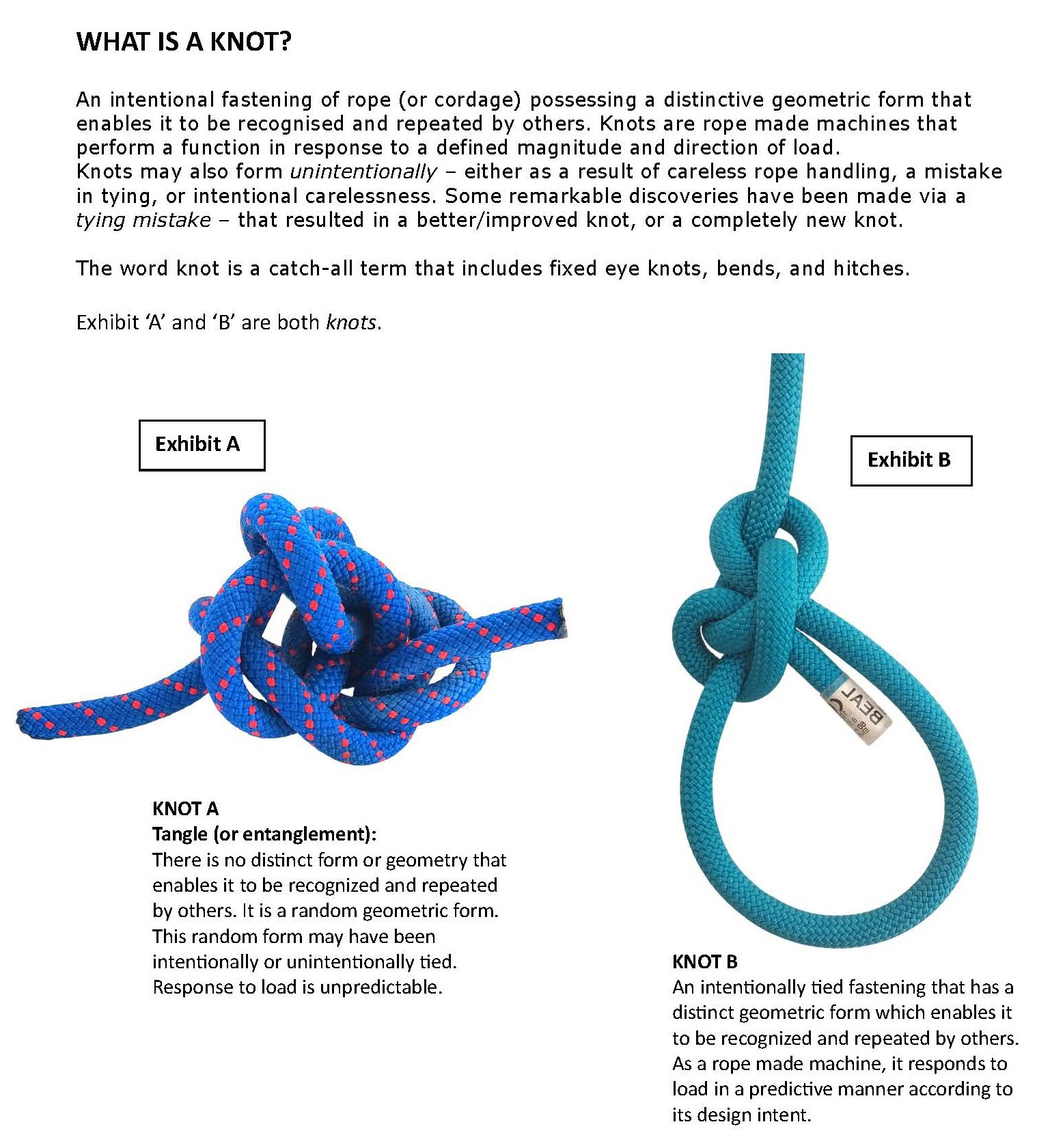
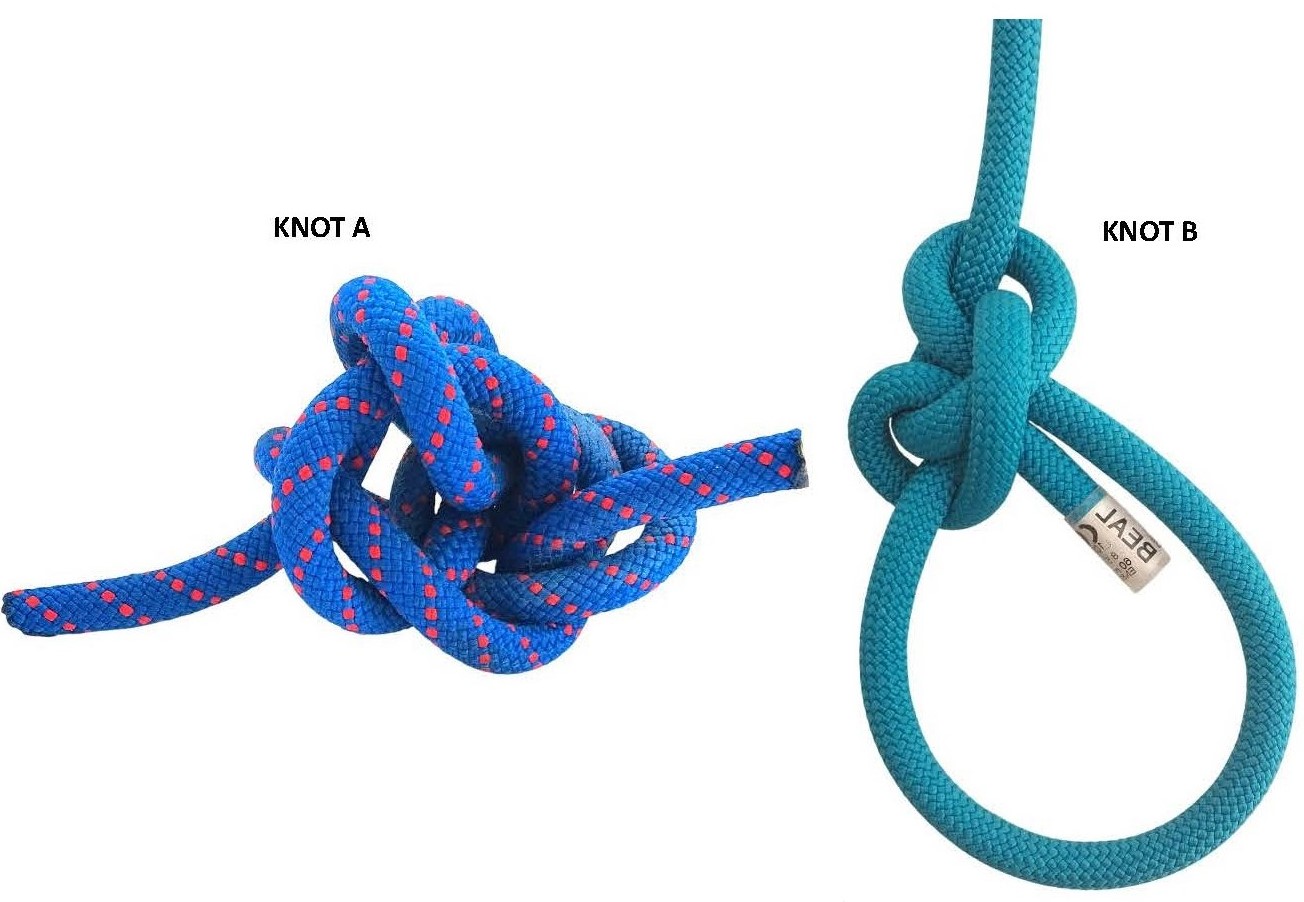
"tangle" means what one would define it to mean,
and it's silly to grab your only misguided sense of
this and cling to it into a technical discussion that
uses the given technical definition --which in this
case, as already seen light in topology via the late
John Horton CONWAY and a method of analysis
he developed.
For me, it's simply shorthand for "entanglement"
--six characters shorter--, which denotes the
knot's structure devoid of any particular loading.
You might see it as much for what you mean by "core".
Alas, there is a can of worms in dealing with some
tangles and loading and ... wanting some more
boundaries to deal with shape/geometry changes
that should lead one to ask (or one loading of the
"same" tangle vs. another) "Is this the same tangle?!".
.:. very tough issue.
But I find it nonsense to presume/require that
intent be a determinant in "knot" :: that shoots
away most field research --finding Knots In The
Wild and being clueless (but for presumption!)
about any tyer (vs. nautural entanglement & loading)
and intention. (I have mis-tied knots into unintended ones.)
"working end" = "tail" No, it well might not --after it has well knotted!
Putting on a snood to a ground line might well entail working from
the tail-side outwards, and, well, one would be working (in one odd
sense of terms) with the standing part, per definition.
I've long sensed a problem using terms who stand in best
definition only during the tying, but have no real bearing
upon the tied knot. I want to refer to the tied knot, but
must admit then that my use of the terms is having
a finish already --for loading-- that isn't manifest at
tying time & term usage! (I.e., to be accurate, I'd need
to say "the to-become Tail is then ..." --not appealing.
"bitter end" was defined --not sure if first?-- in Ashley to be
the part of the rope ending at the bitts --and not some
sort of right-at-or-nigh the physical end of the material.
And I'd rather keep w/Ashley and see for the most part
"b.e." go away. There is anyway a challenge in precise
meaning of "end" --that last-of-it-all sense or the "over
in that part" sense (like "West End" of a city).
"crossing" Ack, topology hurts my head re this.
if I hold my arms up facing you and have each
one inclined so to make an "X" at you,
someone looking from our side might see no
"crossing" --say I'm not pressing arms together.
In knots, the same is true often enough : the
visual crossing is of parts that will NOT touch
--and by another perspective not cross, either.
(Consider the case of a capsized-form Carrick bend.)
"bight" is pretty sharply defined to mean opposite
things, so please do away with this as you've defined
it and use "U-fold" --which is precise & perspicuous.
The between-ends sense can be picked up with
"noue' sans extremites (NSE)" (vice "TIB"), or "endless".
Really, trying to work with a contradictorily defined
IN THE KNOTS FIELD term is a frustration well worth avoiding.
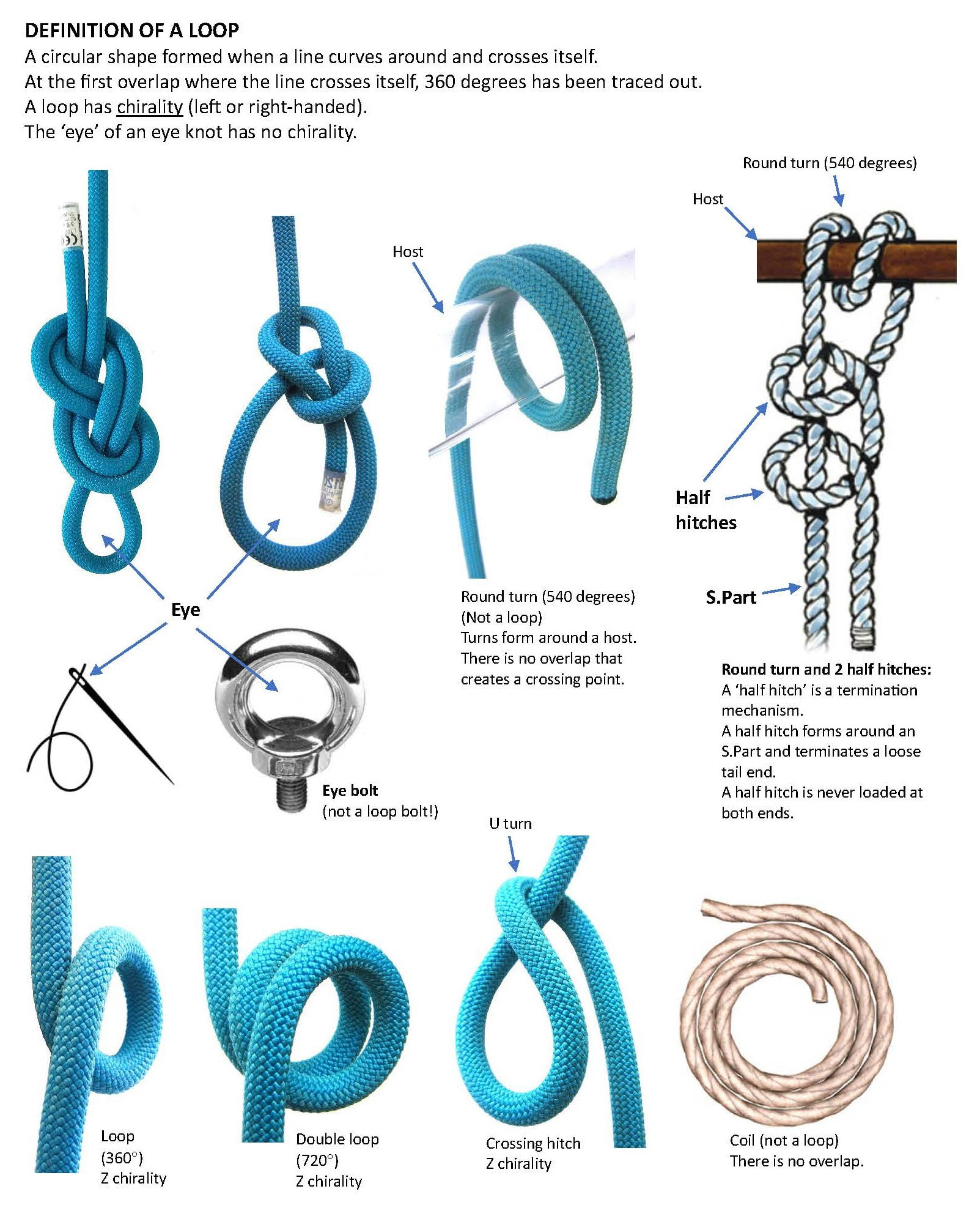
"Loop" should be e.g. the "central nipping loop" of the Bwl,
et cetera; eye is that extended U-fold from the knot,
legs crossing or not, who cares. The essence of "loop"
is surrounding, emphasis "round".
BEWARE of having things defined by behavior --that
might want then to see your eye change to a noose
and so on. (See a Bwl suppsed "fixed" loop(eye)
draw down around some machine anchor pin
in break testing! Is the Bwl not an eye knot,
maybe not a knot at all? !!)
Btw, I find the supposed lookalikeness of Reef/Granny
to be over done : properly dress & set, these knots well
enough differ visually --the former fitting nicely into
a planar state, the latter not. (Yes, there is an MIT article
making a big fuss of this, and humans' inability to assess
knot strength (which turns out mostly to be security).
"bend" ::Ashley and some others go overboard on this,
as historical names show --and VERBS : "bending" isn't
restricted to joining two ends; why then "bend"?!
IMO, use "JOINT".
"knot" in its narrow sense :: please, NO, no narrow sense
--this is our catch-all term; and the distinction given in
traditional knots books isn't all so natural/seemly.
"can be transformed into each other" :: hmm, there is
the case of having the same tangle, but this doesn't
allow transformation but for a re-shaping that keeps
the tangles ends out as ends; whereas e.,g. in transforming
a Bwl one might collapse the Returning & Outgoing eye
legs (thanks to Mark for these terms!) into the knot and
then getting dressed around.
OK, that's my quick take.
Again, THIS is just the sort of book/discussion NEEDED !
One more thing : webbing is much knotted, but it's
excluded from things "cordage" in current jargon;
well, it would be nice to broaden "cordage" to be
"knottable materials" --ha, and then face various
boundary cases ... !
Cheers,
--dl*