I think that this is a very debatable issue.
When someone, that does not know anything about ropes and knots, learn for the first time that a knot diminish the strength of the rope to about two thirds of the initial value, he can not but consider it a great disadvantage for knotting. With time, we are getting accustomed with this sad fact of life…like with everything other unavoidable limitation of our existence. And some people, confronted with the unavoidable, pretend they do not care any more. We are all going to die, so, why bother ? 
However, when we learn that this situation can be improved to a substantial degree, and we can arrive at a better situation, we feel that we are obliged to explore any road that might leads us there. We modify the old knots we use, or choose some new ones, hoping that we can achieve better numbers than this horrible 66%…
The strength of the knotted rope is the first priority by definition, because that is what a rope is supposed to do : Do not break. Fishermen, who are the people that use more knots than every other category of knot users, know this very well. The problem is that knot tyers do not know much about fishing knots ! And they tend to abandon the battle for knots with greater strength, even before they fire the first bullet…
The scientists and industrial engineers that design ropes, take great pains in improving their strength. A 5 % improvement might justify a multiplication of the material cost, besides all the research that was devoted searching ways to achieve this. Why a 5% improvement of the strength of a knot is important ? In most critical situations, like rescue, for example, we would consider ourselves very lucky if we could get a 5 %, even if we should pay a high price for this : multiplication of the cost of the material chosen, of the time needed to learn the knot, and of the time needed to tie and dress it. Why ? Because we place life pretty far up the list of our priorities. And life can be lost in a snap.
Is it the wisest choice ? No. Many other things matter in life, quality is more important than quantity. However, we are but the descenders of living machines that survived enough to breed and multiply their genes, and we can not escape from the past immortalised into them.
I have discussed another pretty good reason that it pays to search for strong knots. Economy of our knot toolbox size. With so many possible choices, strength considerations can help us get rid of many knots, in favour of a few others.
I tie the Zeppelin bend almost all of the times. If one teaches me a knot that has a 5% greater strength than the Zeppelin, I am ready to tie it, even if it needs double time to form it, and triple time to dress it. After some time, the tying difficulties will disappear, and I will not bother tying a more complex knot - EVEN IF I NEVER EVER USED more than a tiny fraction of the maximum allowed strength of my ropes. But who knows how much strength would be needed in advance ? You tie something somewhere, and it is OK. Then, there came a rain, a strong blow of wind, an impurity built into the rope you had no idea of…and suddenly the 100% of the rope strength is needed, and then some !
As long as knots will exist, strength of knots would be a high priority, even if there are not much we can do about it.
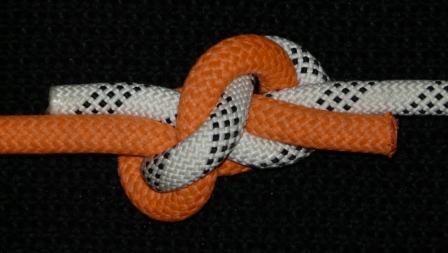
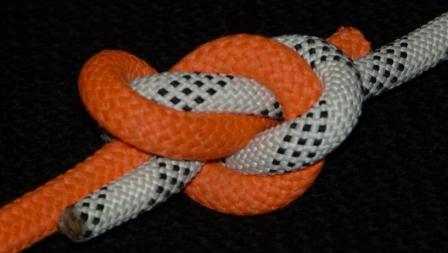
“Re-tucking simple bends, to get wider first curves”, addresses this fact, explores one of the offered roads. Most people will not bother, that is for sure, and the great majority of them will buy a mechanical fastener, a clip-on tie, a pair if slip-on shoes, or be happy parotting a ready-made recipe for some knots, from roo s web site… (Just kidding…)