The thief knot - when tied on most modern materials - is an insecure, dangerous bend, but a bend that can very easily be greatly improved by re-tucking. What is perhaps the most interesting thing about this retucking of the thief knot, is that the particular way we retuck it does not matter : all derived bends are greatly safer, much more secure bends than their parent, untucked knot. ( See the attached pictures for those once-retucked thief-knot-based bends.)
(A different way to retuck the thief knot was shown in (1).
Notice that the B3 bend is the “inverted” Zeppelin bend (interchanged standing ends / tails) It should perhaps be expected that the thief knot is somehow related to the Zeppelin bend, because of their symmetry.
The Thief Knot is not secure because of “positive cogging” much like the Grief Knot. The Reef Knot is considered more dangerous than either of these two knots because, in part, it gives the appearance of security which it does not have. This is not true to anywhere near the same extent with the Thief and Grief Knots. Obviously, another reason would be that the Thief and Grief Knots are difficult to tie by mistake.
I was able to easily find a retucked Thief Knot (first one I tried) which gave the appearance of additional security but when tied in series with a Grass Bend, it completely pulled apart while the Grass Bend did not. The retucked Thief Knot I chose was one of those which least mitigated the original positive cogging in the Thief Knot, but, was able to support 200 pounds of load. A very dangerous bend indeed and not nearly as safe as the original Thief Knot in my opinion.
If the retucking produces an overhand knot and is done symmetrically, one has a bend which is interlocked overhand knots with central inversion symmetry just as is found in the Zeppelin bend.
There are not any once-re tucked thief knots other than the ones shown in this thread - except from the “double thief knot” which is formed by retucking through the central opening. Besides this central opening, there are 4 openings from which the working ends can pass for another time, so there are four once-re tucked thief knots. ( A1-A4). If we further allow our working ends to pass through those openings from the other side of the knot, we have 4 more bends, two of which are completely unstable, and, of course, do not give ANY appearance of security whatsoever ! I suggest you tie all those knots shown here, and compare them to the parent thief knot, as I have done here, and not to other bends…You will easily find that all are greatly more secure than the original parent knot, although some are better than the others. ( I prefer the A3). Tie the knots as shown, and tell me, please, about your findings, for each one of them.
P.S.1. It is pre-supposed that the re tucking should be done in a way that retains the symmetry of the original knot I have not explored not-symmetrical re tuckings, because symmetric bends are always better, more secure and stronger, than similar non symmetric ones. The uneven distribution of forces into the knot s nub produces, as a consequence, weak spots, where the local curvature of the rope strands is much greater.
P.S 2 . I have also not mentioned the “double thief knot” that is formed by retucking the working ends through the central opening, because I have thought that it would only multiply the existing situation of the original, parent thief knot.
There are others, see below. This knot has the same symmetry as the original Thief Knot and is misleadingly secure upon a careful setting of the knot. I am specifically addressing your claim that “all derived bends are greatly safer, much more secure bends than their parent”. First, I point out that additional security does not always equate with safety. In the example I give, the additional security makes the retucked knot considerably more dangerous than the original knot.
As far as the use of the Thief Knot (or its “improvements”) as a binding knot, I find it to be a non-starter given the difficulty in tying and the fact that we have the Reef Knot.
OK, I have reread your post. Unless I am missing something here, the bend I show is retucked ONCE and illustrates that your statement of simple fact is incorrect.
No, you have miscounted. Below I show the original retucked knot and then I show it with each working end untucked ONCE. THE UNTUCKED KNOT IS A THIEF KNOT. I then again show the knot after retucking each working end ONCE. I have demonstrated the concept forwards and backwards. Surely you can now see and understand this simple concept.
I have edited my previous posts, that might have been/ have sounded a little harsh…I would be glad if we discuss the bends shown in this thread, as well as any other bends that might be considered as improvements of the thief knot. I admitt I have never really understood the working of this “positive cogging” effect, so it came as a surpise to me that all those different modification of the parent knot, were able to cancel it out !
I don’t recognize the term positive cogging. I have done a search within the forum and found only this thread. Since I am a junior member and may plead ignorance, may I ask for an explanation of this term.
Thanks,
Mike
edit: it seems that if I click Search while looking at this thread, the search engine searches only this thread. I didn’t expect that. Also, the cogging demonstration with the grief knot is very informative.
Mike, I am a not-so-junior a member, but I, too, feel that I may plead ignorance about this characteristic of knots, since so little is written about it, and much less is explained, or predicted, by the use of this notion.
Have a look at : http://igkt.net/sm/index.php?topic=1597.msg10962#msg10962
(This particular subject belongs to the “Theory of Practical knots” Forum.)
Your style of editing leaves many things to be desired. To hold and argue stubbornly a particular (wrong) position and then, upon realizing your mistake, to make additions and subtractions to previous posts to mitigate your obvious foolishness is disappointing. I am speaking specifically of your additions of comments regarding the “double thief knot” and subtractions of your insistence that I was not able to count a number of retucks (which, as it turns out, was your miscounting).
A simple, “I was mistaken” would have been a much better way to go.
I encountered some difficulty in reproducing the bend shown. In part, I believe it is because I was using pieces of the same rope (same color, markings, etc) to tie the bend. Likely, it would be simpler with two distinct ropes, but, unlikely to be as simple as producing the Figure 8 Bend (which I would consider the Gold Standard for retucked Thief Knots).
The bend became somewhat jamming as I applied moderate load. I find this to be true for many of the retucked single carricks in which interlocked overhand knots are produced1. This may be a general behavior and differs from the non-jamming retucked Reef or Thief Knots which are interlocking figure 8 knots2. I did not increase the load on A3 due to its already perceived jamming and cannot speak to its security at high loads (i.e. capsizing, slippage or the like).
Now you are talking ! You should not have any difficulties in setting and dressing those knots, if you start from the loose thief knot as shown in the attached picture.( Notice that I have placed the yellow-red marble into the 3 rd opening, for the A3. I have followed this simple notation for all those bends. For the B series, one has to pass the working end(s) from the other side.) May be I should have posted this picture from the beginning, to save us from exchanging meaningless bits and bytes.
Regarding the “jamming” issue, I am the least qualified person to speak about it…I do not understand if the “jamming” of a knot is a quality that exists or not, or a quantity that varies continuously, in relation to the loading and/or the slippage characteristics of the knotted material. ( There might also be a relation between the jamming of a knot, and the resistance of the rope material to compression…) I, too, have made the vague observation that pretzel shaped interlocked-overhand-knot bends have a greater jamming tendency than “8” shaped ones. ( So, there is already a difference between the members of the class of the overhand-based bends, before the difference between the overhand-based, and the figure 8 -based bends.) I can only guess that the more effective compression of the encircled central nub, achieved by a pretzel shaped overhand knot, is what makes the difference.
Go on, try the rest of those bends. You could also compare them to the differently re tucked thief knots presented at (1), that are not so prove to jamming, I believe.
The main problem that made me post those bends of this thread remains : How, on earth, the “clogging” effect is cancelled so effectively, however we retuck the thief knot ? We pass the working end(s) from whatever opening, very different bends are produced, but anything we do makes this “clogging effect” disappear ! When I will understand why is this so, I would have understood something about this effect.
Unfortunately perhaps, there is not ONE “Figure 8 Bend”, but plenty of them ! That is an “inflationary” defect of the “Gold Standard”… See the most simple ones, with some “8” ( or Pretzel) shaped interlocked overhand-knot bends, at (1). It would be nice if somebody will test and compare all those bends someday…
By Figure 8 Bend, I was referring to ABOK 1411. Many of the bends you point to, although they may be interlocking figure 8 bends, are not ABOK 1411. Although any of the few ABOK 1411 bends would serve admirably as a Gold Standard for retucked Thief Knots, the two easiest to tie and identify in my estimation are the “perfect” forms1 of ABOK 1411.
ABoK 1411 is a fine, symmetric figure 8 bend, like so many others…I believe we should not restrict our knowledge to the study of the knots that happened to be published in the ABoK, should we ? This is not the IGABoKKT forum ! There is a tradition in the knot tying world, to refer to even the most simple knots, by their ABoK number, ( like the ABoK X overhand knot, for example… :)), and then believe that those are the only knots possible, or worth knowing, or worth studying, or practical - or whatever false belief gets into our minds by the tendency we all have, as members of the human species and communities. to follow, repeat, parrot, etc.. I hope we will not continue to do the same mistake here.
Now, which are those “few” (plural) ABoK 1411 bends you are referring to ?
There is a tradition in the knot tying world, to refer to even the most simple knots, by their ABoK number
This is at least the most comprehensive catalog for internationally identifying that we have to my knowledge. Great tool for communicating amongst those with access/ownership. So until we have better it is the best tool for the job. (Though member specific pictures/graphics can eliminate questions at times.)
But I disagree with the notion that this in any way limits the seeking of more and improved tangles. More so a fairly stable base.
I believe you have misunderstood what I have said. I was talking about the tendancy to refer to the most simple knots by their ABoK numbers. I am sure you do not mention the ABoK number of the overhand knot, each time are refering to the overhand knot !
There can be no question that ABoK will serve the purpose of identifying knots for a long time…UNLESS the IGKT members do something about it, and produce a better, up to date contemporary catalogue, with virtual reality pictures, computerized drawings, and all that !
I believe that many people tend to believe that every non-decorative knot that is in the ABoK, is a “practical knot”, and vice versa : that “practical knots” are easy to identify, because they are in the ABoK. Nooope. Many not-decorative knots in the ABoK have only a theoretical or historical value, and many practical knots are not in the ABoK. So, ABoK des not solve the "What is a “Practical knot” that should be posted in the “Practical knots” Forum " question/problem, I am afraid.
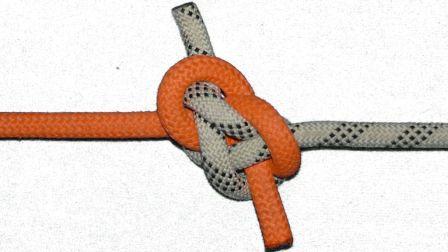
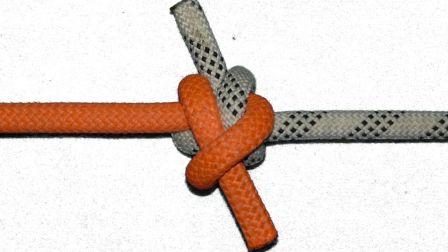
 I suggest you tie all those knots shown here, and compare them to the parent thief knot, as I have done here, and not to other bends…You will easily find that all are greatly more secure than the original parent knot, although some are better than the others. ( I prefer the A3). Tie the knots as shown, and tell me, please, about your findings, for each one of them.