Hi knot4u,
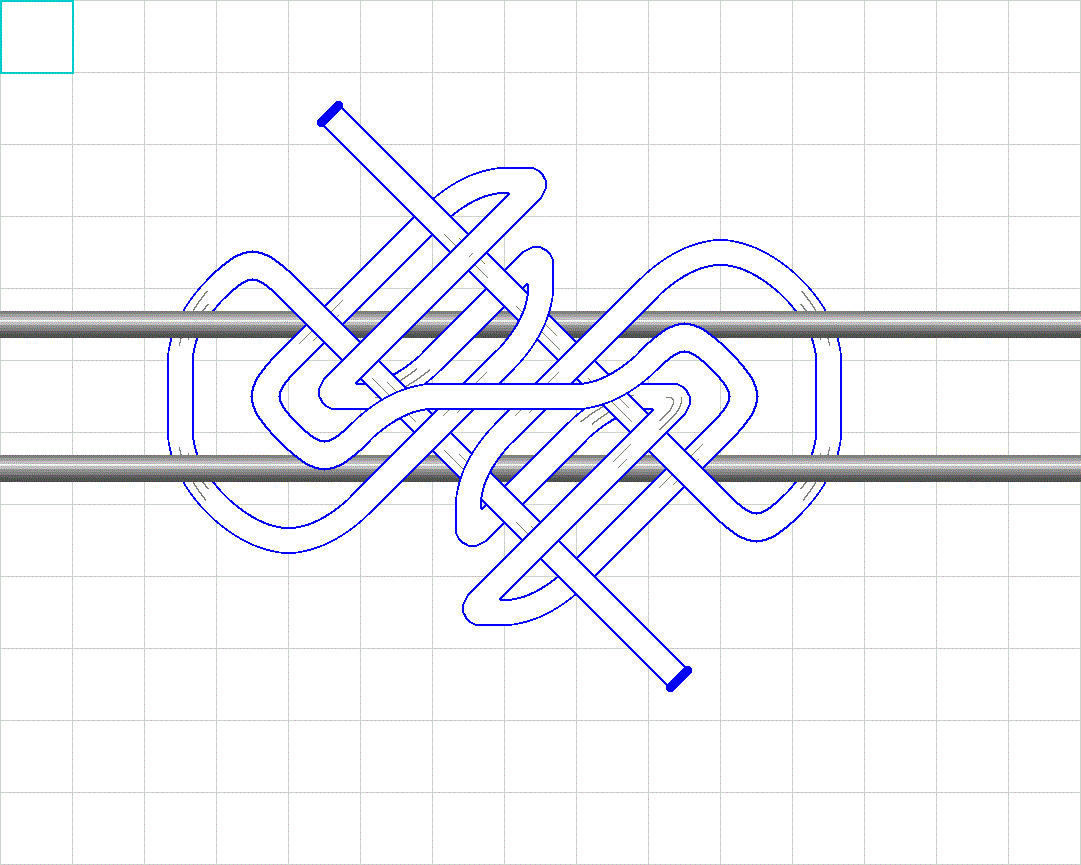
It is true, the knot is not exactly fast to tie, but is designed for a certain situation in which it can be repeatedly reused,once removed from the object that wraps, without having to repeat each time the operation of tie it. One can imagine wanting to keep it completely tight around himself,to use it quickly,when the occasion arises,simply enlarging the two wraps used to envelop the object. Anyway thank you for having the patience to decipher my diagram!(below there is another that shows a version based on the “doubled” Clove hitch, on the model of of how it seemed to me that described by Dan Lehman (although it seems that in fact I did misread his words!))
_ _ _
Hi Dan,
I’ve probably made a so-called “epic fail” in interpreting your description:excuse me,I beg you for having comprehension for me.
I think it’s likely that what you mean in your description is something better than what I’ve shown in the diagram;however, what I have shown is not entirely meaningless, as binding knot still seems to me close to decency, the binded object in the diagram is the gray “pole” , while the “handle” is the large bight with the two arrows above it (the arrows in the diagram indicate the directions for pull to fix and tighten the knot,as I (not)understood;it is from this that,in my case,is formed the “handle”,of which in fact you do not talk, since I have not found something better for well tighten the coils of the initial Prusik directly connected to it).Forgive me if I insist below with a diagram that shows the Clove hitch version(seems better,and is symmetric) of what I(not) understood. But at this point, I join the exhortation by knot4u for an illustration! Because I have to say that I also still can not entirely figure out the knot that you described.
Bye!