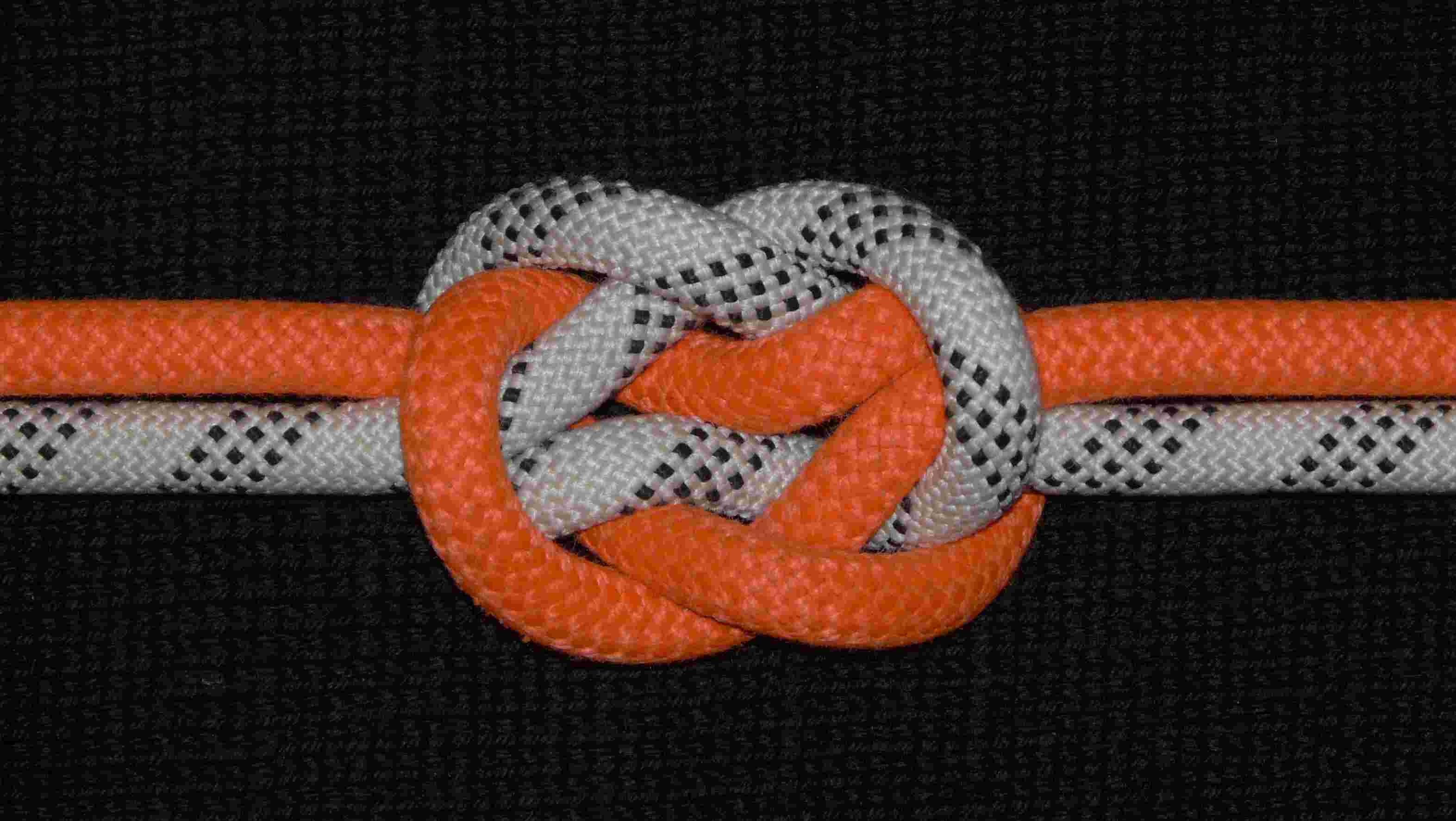
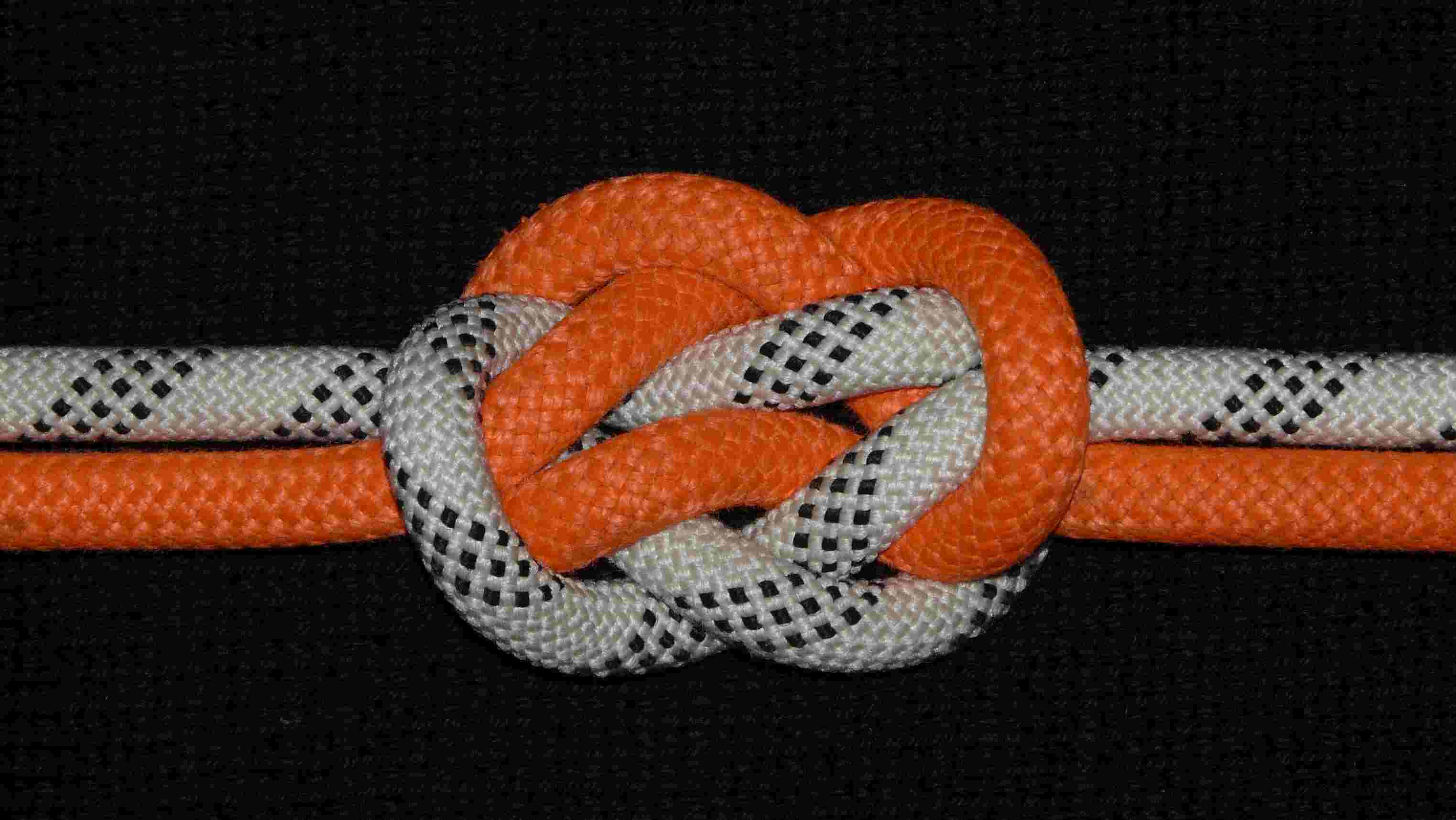
The interweaved Pretzel-shaped links of the bend shown at the first and second attached pictures are “symmetric” (S) - in the sense that the two legs leave the central bight from different sides. On the contrary, each Pretzel at the similar bend presented some time ago ( shown at the thirsd and fourth attached pictures ), is “one-sided” / “a-symmetric” (aS). For other a-symmetric Pretzel-to-Pretzel bends, see (1), Replies#7, #8 and #9. ( Mike s “fancy bend”, Axis knot (M. A22), Axis B knot ). Another similar bend is one ( the first, bend B ) of the two bends shown at (2).
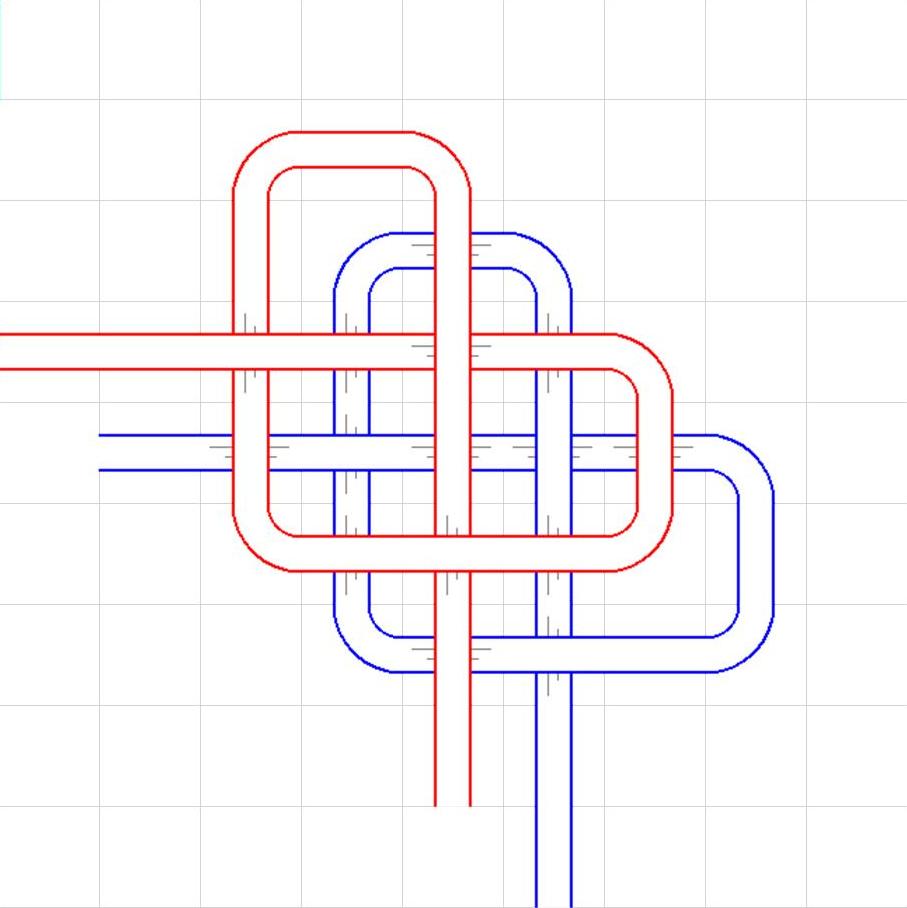
The representation of the pattern of a relatively simple side-by-side Pretzel-to-Pretzel bend can have two forms - as shown at the attached pictures. In contrast to the more convoluted side-to-side fig.8-to-fig.8 bends (1), these bends can not be perfectly symmetric, because, although the topology of the links can be the same, the geometry can not but differ : if the Standing parts are placed symmetrically to each other, their path through the knot s nub would be slightly different (2). ( This is the reason I had always placed the Pretzel-to-Pretzel links face-to-face - in the same way as the Jug sling bend / Axis knot / Mike s fancy bend, for example ).