2 keys knot - Noeud a deux clefs

Hello,

I hope you’ll find this “two keys knot” and its declinations interesting and will test them.

It usually takes me a few seconds to tie the regular knot ( between 3 and 8 ), employing a method wich also reduces risks of wrong tying I presume. Will you figure out how ? :slight_smile:

B.

Here’s the list of some versions/usages of the knot :

Basics
Bases

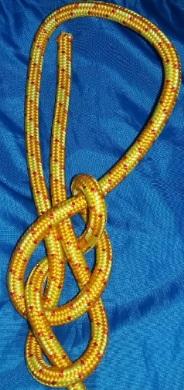
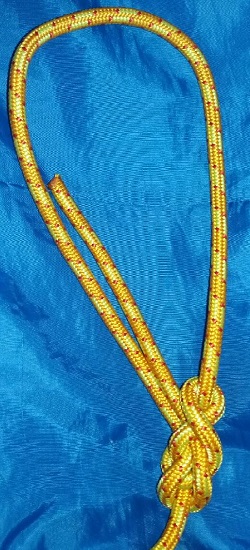
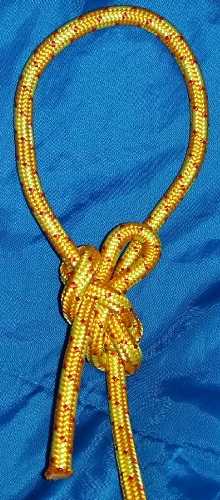
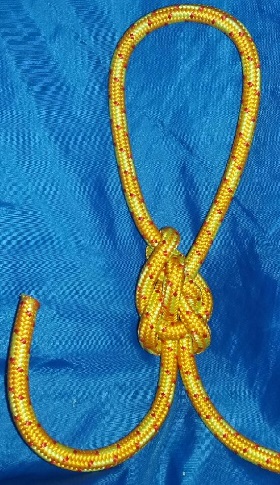
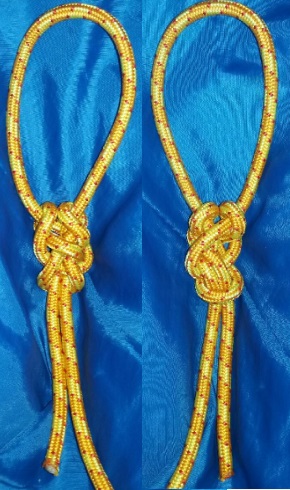
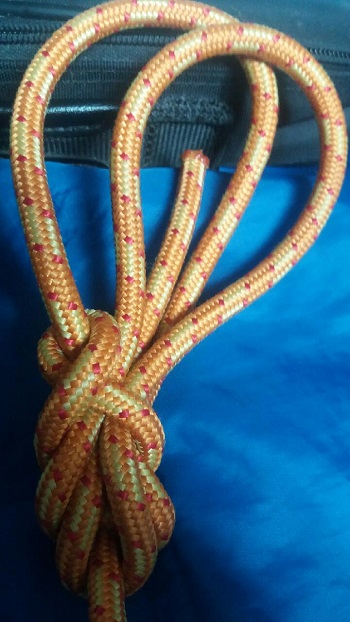
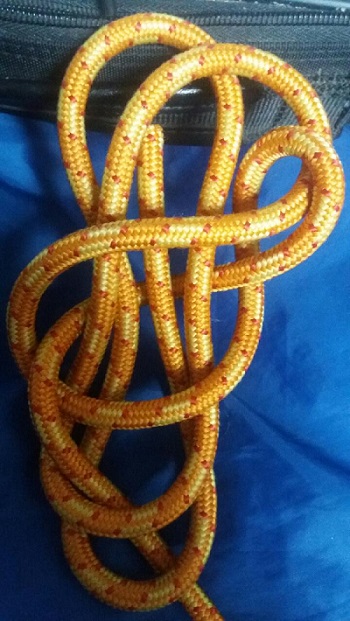
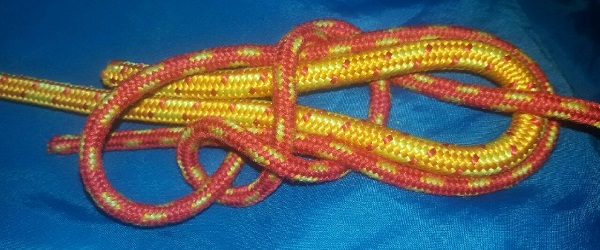
1.1.1.
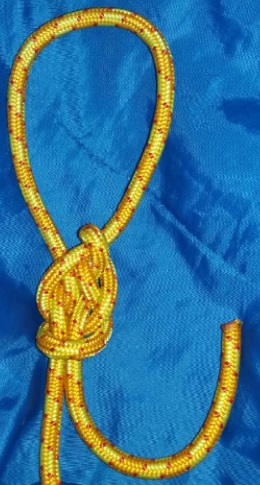
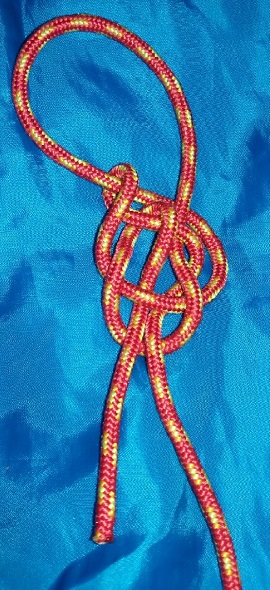
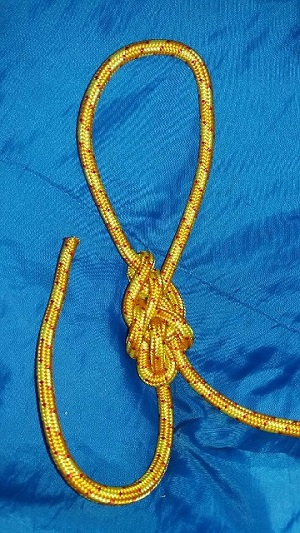
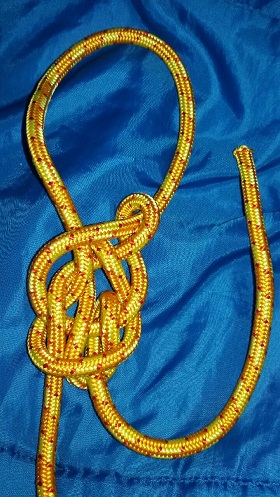
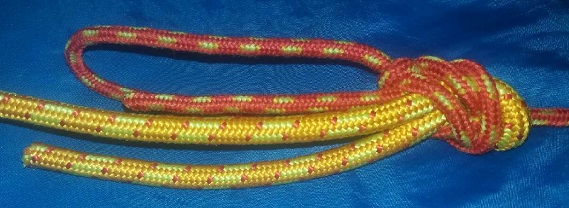
Two keys knot
Noeud a 2 clefs
4 Pictures

1.1.2.
Mirror
Miroir
1 Picture

1.2.
Quick release
Avec ganse
1 Picture

1.3.
Running
De laguis
1 Picture

Finishes
Finitions

2.1.
Ring
Finition anneau
1 Picture

2.2.1.
Cross
Finition croix
3 Pictures

2.2.2.
Cross, quick release with working end in the extra bight
Finition croix avec ganse, avec courant repassant dans la ganse supplementaire
3 Pictures

2.3.
Yosemite
1 Picture of 2 views
1 Photo de 2 vues

Multiloops
Multiboucles

3.1.
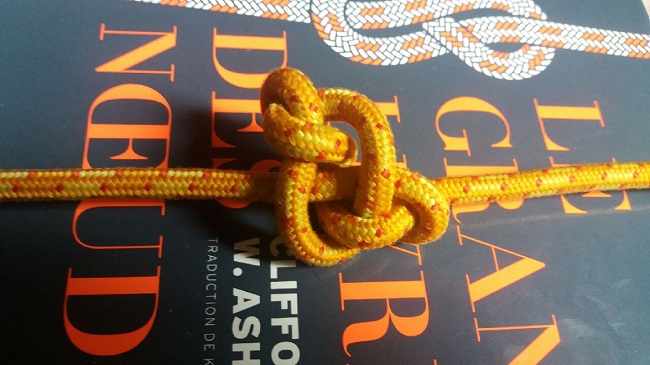
2 loops
Deux boucles
4 Pictures

3.2.1.
3 loops (T.I.B.)
Trois boucles (sur le double)
2 Picture

3.2.2.
2+1 loops (T.I.B. cross finish)
Deux boucles plus une (sur le double finition croix)
2 Pictures

Bend
Ajut

4.1.
Twin bend
D’agui
1 Picture ( posted with pictures of 1.1.2., 1.2 and 1.3 )

4.2.
Sheet bend
D’ecoute
4 Pictures

Binding or hitch
D’accroche
4 Pictures

(
French is my language, so please pardon the english of this post, translated from this :

Bonjour,
J’espere que vous trouverez de l’interet a ce “noeud a deux clefs” ainsi qu’a ses declinaisons et que vous les testerez.

Cela me prend en general quelques secondes (entre trois et huit) pour dresser le noeud de base, utilisant une methode qui reduit aussi me semble-t-il les risques de mauvais nouage. Verrez-vous comment ? :slight_smile:
)

1.1.1.
Two keys knot
Noeud a 2 clefs
4 Pictures


noeud_?_2_clefs_1.1.1.1.jpg

noeud_?_2_clefs_1.1.1.4.jpg

1.1.2.
Mirror
Miroir
1 Picture

1.2.
Quick release
Avec ganse
1 Picture

1.3.
Running
De laguis
1 Picture

4.1.
Twin bend
D’agui
1 Picture


noeud_?_2_clefs_miroir.1.1.2.jpg

noeud_?_2_clefs_finition_gans?e.1.2.jpg

2.1.
Ring
Finition anneau
1 Picture

2.2.1.
Cross
Finition croix
3 Pictures


noeud_?_2_clefs_finition_croix_2.2.1.1.jpg

noeud_?_2_clefs_finition_croix_2.2.1.2.jpg

noeud_?_2_clefs_finition_croix_2.2.1.3.jpg

2.2.2.
Cross, quick release with working end in the extra bight
Finition croix avec ganse, avec courant repassant dans la ganse supplementaire
3 Pictures

2.3.
Yosemite
1 Picture of 2 views
1 Photo de 2 vues


noeud_?_2_clefs_finition_croix_gans?e_2.2.2.1.jpg

noeud_?_2_clefs_finition_croix_gans?e_2.2.2.3.jpg

noeud_?_2_clefs_finition_yosemite.2.3.jpg

3.1.
2 loops
Deux boucles
4 Pictures


noeud_?2_clefs?_2_boucles_3.1.1.jpg

noeud_?2_clefs?_2_boucles_3.1.4.jpg

3.2.1.
3 loops (T.I.B.)
Trois boucles (sur le double)
2 Pictures

3.2.2.
2+1 loops (T.I.B. cross finish)
Deux boucles plus une (sur le double finition croix)
2 Pictures

4.2.
Sheet bend
D’ecoute
4 Pictures

yellow cordage : 7mm
red cordage : 4mm


noeud_a_2_clefs_d-ecoute_4.2.2.jpg

noeud_a_2_clefs_d-ecoute_4.2.4.jpg

Binding or hitch
D’accroche
4 Pictures

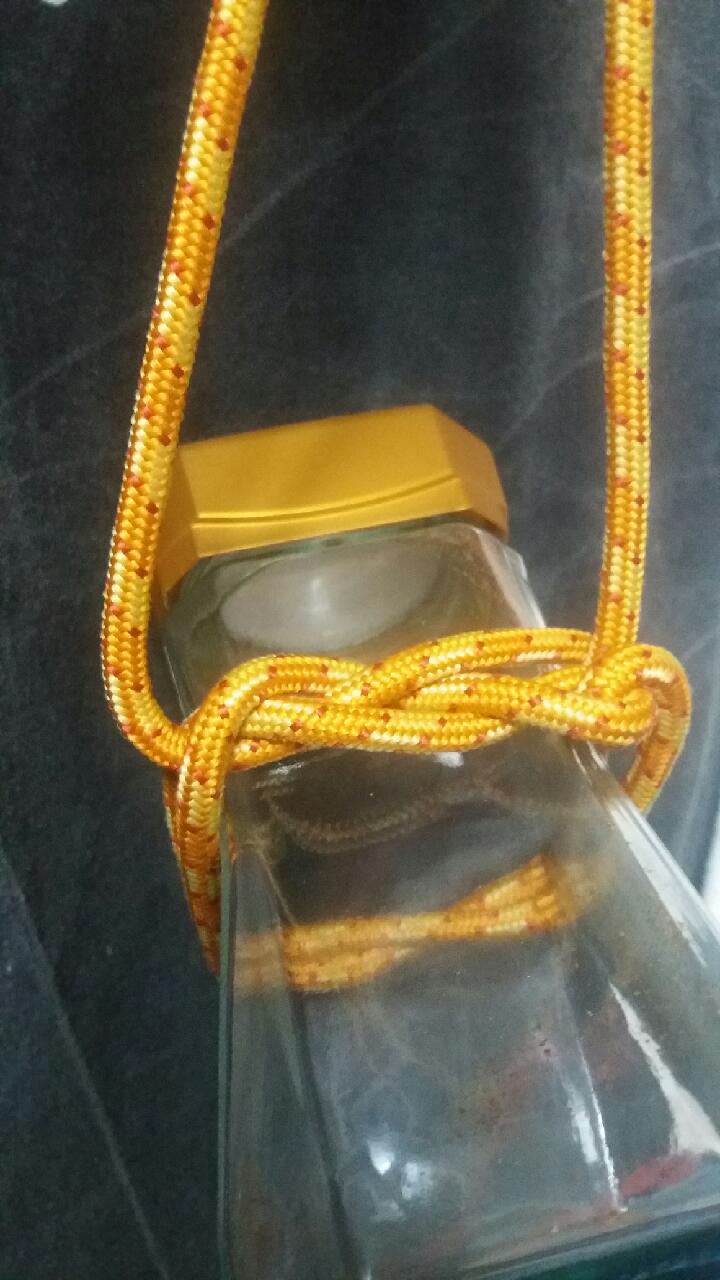
I didn’t test it much in this way but would say that it’s between the clove hitch and the constrictor knot.
Je ne l’ai pas beaucoup teste de cette facon mais dirais que c’est entre le cabestan et le constricteur.

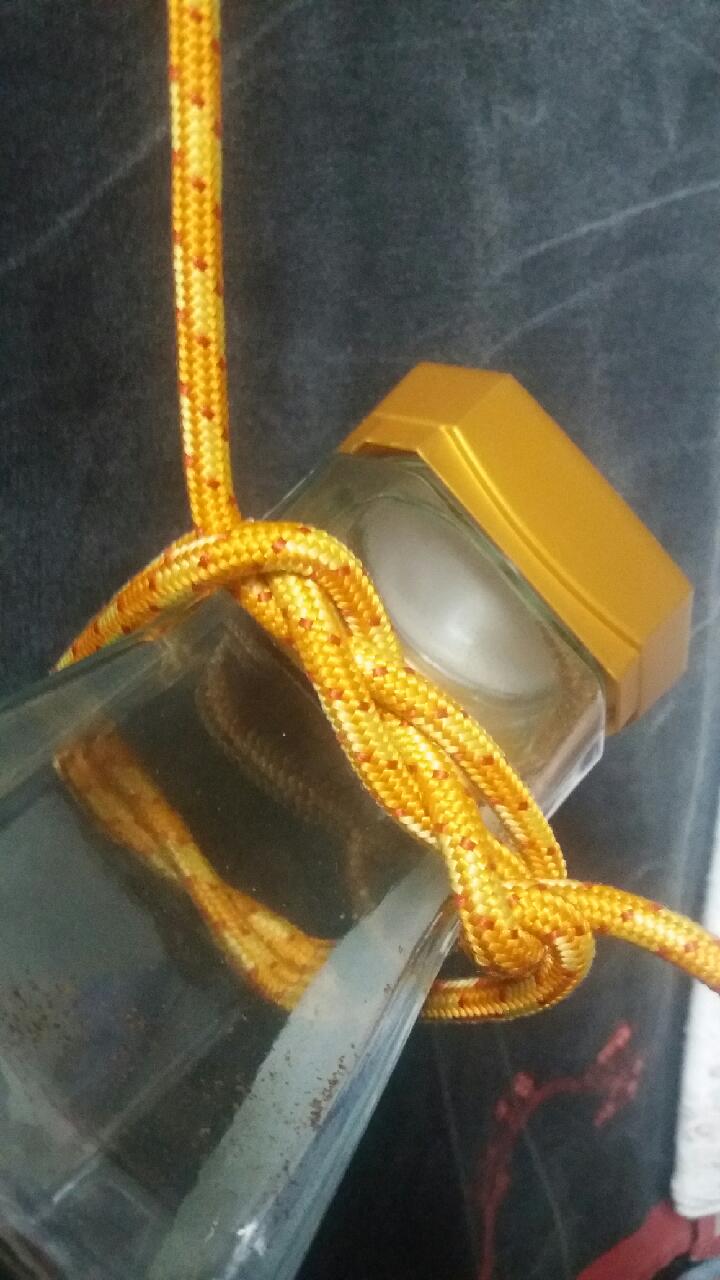
noeud_a_2_clefs_d-accroche_2.jpg =
Object hanged from the working end
Objet suspendu par le courant

noeud_a_2_clefs_d-accroche_3.jpg =
Object hanged from the standing part
Objet suspendu par le dormant

noeud_a_2_clefs_d-accroche_3.jpg =
Object hanged from both ends
Objet suspendu par les deux brins


noeud_a_2_clefs_d-accroche_3_.jpg

noeud_a_2_clefs_d-accroche_4.jpg

An anchor point based on the 2 keys knot.

On one of the attached pictures the working end is on the left and a red cord is passed through the central collar (key).


2_keys_knot_as_an_anchor_2.jpg

Hello B.P. and welcome,
for the moment only a note on the tying method:
you can (and I think you do) tie the eye by tying a Marlingspike Hitch using a bight as a marlinspike and then back-flip the bight as in the Bowline on th bight

Ciao,
s.

Hello knotsaver,

Thank you very much :slight_smile:

About the tying method, I’m not sure to understand what you wrote but my guess would be that it’s not “my” solution.

I can naturally tie the knot by an obvious way, like described by agent_smith :

https://lh3.googleusercontent.com/jTnY9shzYxkYamyzFs_DcClHVMKomVOZqqK5tvyATxYES9_6Qw5vtQ11k6rpbHkIyhg8OCVp76JJm-u-3xKjhXVzGpMEooHqjAYmI8NdB2KjpXFgv63YSH6AL0tzJpPLT4bJgXrf=w797-h418-no

(
original picture :
titled Bowline_559_Virtual_comparison.jpg
posted there https://igkt.net/sm/index.php?topic=6231.msg41996#msg41996

other messages of agent_smith and siriuso about what they called a “virtual bowline” or “Mark’s knot” :
https://igkt.net/sm/index.php?topic=6223.msg42005#msg42005

https://igkt.net/sm/index.php?topic=6111.msg42011#msg42011

https://igkt.net/sm/index.php?topic=6232.msg42024#msg42024

https://igkt.net/sm/index.php?topic=3233.msg42055#msg42055
)

but I also tie the knot by a less obvious way.

When I posted my first message of this thread I was hopping that some of the members of the forum would enjoy trying to find how.

I’ll probably publish at some point the explanation, but for the moment here’s a simple kind of proof that this knot can be tied very quickly and in, according to me, an easy way :

p.s. : images attached to the precedent messages of this thread no longer appear, I don’t know why and if it will be fixed, so as a reminder here are photos of the knot :

https://lh3.googleusercontent.com/-gsZpog-d0xVqXjlnMOT-wi6vudbX86SP5g_Ht8Re9nMBsltEohikXlW2e97K2N4JhZ3BDVpWIk1VMCud9qTSjmpe1px2zl9-2T9wdY1OCvMyA8PAm-FTAcHFS5nSXbXm8vTdlV7=w296-h525-no

https://lh3.googleusercontent.com/az-DpwPjoUZFbwIXsf7xckg4QHeUKK1MR4SpdJsJovGM-ygmv6v25mgsgsXPOU5Phr4fB-qQzcCaBabysedasKqh0nf38ykKXfcLb8f8DymBm5R0zPHdF-j9Fp5WbBphDN-v28nS=w296-h525-no

https://lh3.googleusercontent.com/1MUsZf1rD3cCRAgqVDaMUoIN3vrED9XCHJ5BBwMyeCI3zl8IktMIAmnUcjLw6JuZgO-1iS8N-hRbM8wWyKXJsfQzQ1eSuQ5k4LoxMCRp9QXHvj42QgQHUM2jhGy-wrByi15cztZK=w296-h525-no

https://lh3.googleusercontent.com/t517DgitW6xuZgLiQAoi4fIj2LEeoi9QmvYn9FjLvX3iADY9-NOwvPCdTQv8xBcl2SKmQ_dPHlZ66-JqDw5vEm3J2XznqI5AqB24ZkmJ-n2y8eLWvOsZhNefbpM60FFOBkpRzs0i=w388-h130-no

Bonjour B.P.

And merci for posting your work here at the IGKT forum.
It is very much appreciated :slight_smile:

My French speaking skills are shockingly poor - and my 17 year old daughter took French lessons at school so she assisted me a little.

I am very interested in how you and yChan have used #559 Marlinspike hitch as the basis for creating your ‘virtual Bowlines’.

I have intended that the phrase ‘virtual Bowline’ denotes:
Almost or nearly as described, but not completely or according to a strict definition.
Almost a particular thing or quality.
Almost, but not exactly or in every way.

I am aware that my introduction of this phrase could attract undue negative attention - and any detractors should be aware that it is a ‘work-in-progress’.
Xarax has criticized the use of the word ‘virtual’ because he feels that in the modern era - it has come to be associated with computer generated imagery (virtual reality).
But, I think as long as I provide a glossary of my intended meanings, it should be understood in the way that I intended.

Another phrase that I have introduced is; ‘First order Bowlines’ (or; Bowlines of the first order).
What I mean by ‘first order’ is:
Of major importance or significance.
Used to denote something that is excellent or considerable of its kind.
A thing having the highest status in a group.

In my view, the illustrations depicted by Ashley at #1010, #1012, #1013, #1034 1/2, #1080 and #1087, are ‘first order Bowlines’ (or Bowlines of the first order).
Without exception, all of these Bowlines have nipping structures based directly on a helix (or double helix).

For me, where things get interesting is when you use a nipping structure that isn’t based directly on a helix - for example, a TIB non-jamming hitch such as #206 or #559.
Provided that all other requirements of a ‘Bowline’ are met, I think that these structures could be regarded as ‘virtual Bowlines’ (with the word virtual having the meaning I tendered above).

…

I like your particular creation very much - it has an elegant geometry.
Of note is that in your creation (in comparison to yChan) - is that both legs of the collar are encircled and clamped by the #559 nipping structure. In comparison, in yChans creation - one of the legs is displaced.
I had advanced that a nipping structure must freely encircle and clamp both legs of the bight (NOTE: Some will prefer to conceptualize the collar and its 2 legs as a ‘bight’ component).

Your creation:

  1. Has a collar that performs a U turn around the SPart
  2. Has a nipping structure that is loaded at both ends, is TIB and jam resistant
  3. Is PET (post eye tiable) - which some would prefer to identify as post ‘loop’ tiable
  4. Has a fixed ‘eye’ (which some would prefer to identify as a ‘loop’)

For these reasons, I believe that it is deserving of the title ‘Virtual Bowline based on #559’.

I am not clear about its stability when ‘ring-loaded’ - we’ll see. I am also unclear how well virtual Bowlines built from #559 will remain ‘stable’. If I find some spare time, I’ll perform a load test to assess stability…

NOTE: I think Geoffrey Budworth (a prolific author who some would regard as an ‘expert’ on knots), defines a ‘loop’ as being formed by the overlap of one rope segment over (or under) the other so as to create a helix. The resulting helix can have either S or Z chirality.
I have formed this view based on examination of some of his books where he attempts to illustrate his conceptualization of a ‘loop’.

Au revoir,
Mark
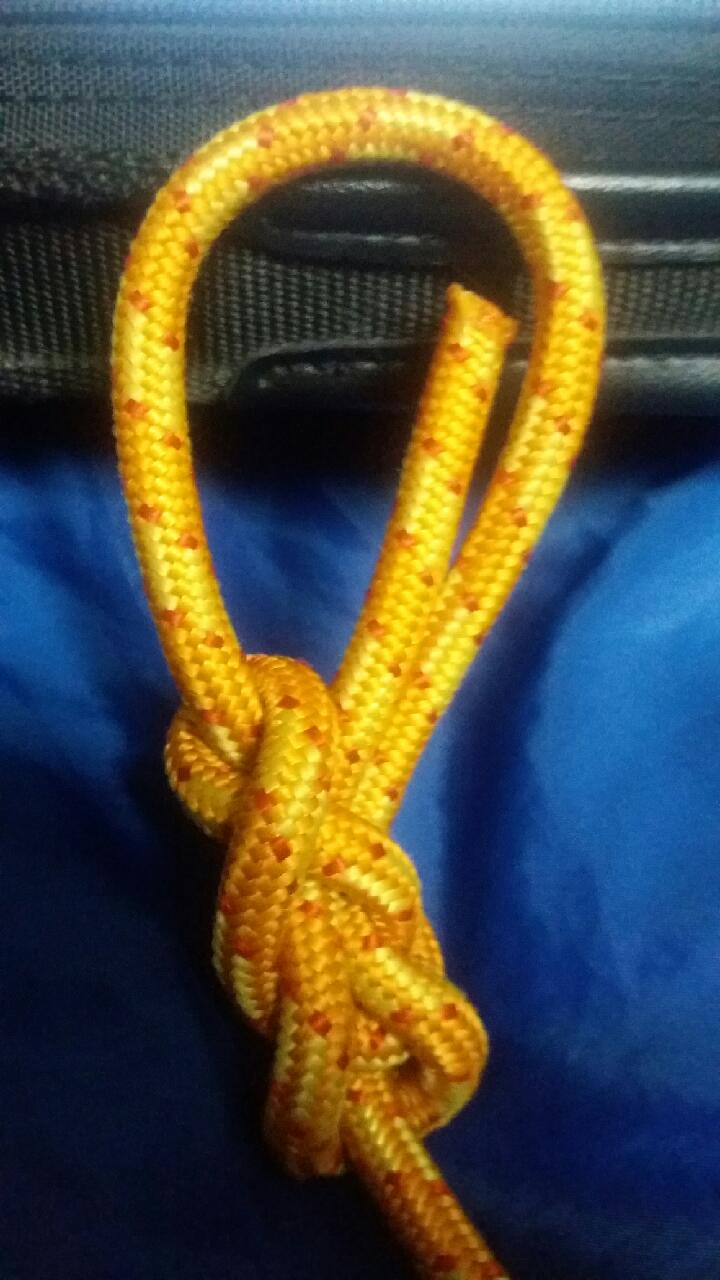
Hi B. P.,

Your knot in the photo in red cord is a bowline. It is a mirror image of Mark’s Knot (I have mentioned together with my Yia Loop Knot. But of Mark’s, it is a bowline, he also calls it a virtual bowline).

yChan

https://lh3.googleusercontent.com/t517DgitW6xuZgLiQAoi4fIj2LEeoi9QmvYn9FjLvX3iADY9-NOwvPCdTQv8xBcl2SKmQ_dPHlZ66-JqDw5vEm3J2XznqI5AqB24ZkmJ-n2y8eLWvOsZhNefbpM60FFOBkpRzs0i=w388-h130-no

I would grant that this is one of Mark’s ‘Virtual Bowlines’, as in : Virtual - not existing in reality.

However, we really should post a Warning Note with any knot that is presented as an open lacing, because lacings may be dressed into a number of working conformations, and we are dealing with working knots here rather than artforms.

So, before commenting on the virtual Bowlinesqueness or not for this knot, could you please post the intended dressing for the final working knot. I request this because I have just dressed it into a Carrick component with a bight based nipping helix, and another form that I would not even try to categorise, other than to say it is not a Bowline even in the most virtual of realities.

Derek

per Derek:

However, we really should post a Warning Note with any knot that is presented as an open lacing, because lacings may be dressed into a number of working conformations, and we are dealing with working knots here rather than artforms.

I think there is an alternative viewpoint available.
I would suggest that B.P. was presenting a loosened dressing to aid in observing its structure - and not necessarily intending to present a purely art form as such - its a technical discussion.
I think he is interested in reading carefully considered replies - from a theoretical perspective. It is implied from his posts that he is open to new ideas and learning. His mind is not closed to new concepts.

per Derek:

So, before commenting on the virtual Bowlinesqueness or not for this knot, could you please post the intended dressing for the final working knot.
Derek, he already did! There are apparent technical issues with some images at the moment with this forum but, a fully dressed version of his presentation was already tendered. That image is visible to me on my computer at the moment.

per Derek:

I request this because I have just dressed it into a [b]Carrick component with a bight based nipping helix[/b], and another form that I would not even try to categorise, other than to say[b] it is not a Bowline even in the most virtual of realities[/b].

Your use of the phrase ‘carrick component’ is arbitrary.
One could also tender a view that your so-named ‘carrick component’ has the form of #206 Crossing hitch (or ‘knot’ depending on context). The alternative view is that #206 makes use of the capstan effect - and that the transitory dressing state of the uniform weave pattern of #1439 is but one way to arrive at the final form. One could also arrive at the final form of #1439 by directly inter-linking 2 ‘Crossing hitches’ (so as to bypass the transformation step).
And yet another view is that #559 is topologically equivalent to the ‘unknot’ (an inherent property of its TIB status) - and in B.P.'s presentation, it is loaded at both ends.

Your statement that it is not [a] ‘Bowline’ (of a virtual type - or not) - appears to be a declaration of fact.
And in who’s reality are we imagining?

B.P. is simply presenting a knot structure based on a #559 Marlinspike hitch - which is a functional nipping component (it is TIB, freely encircles and clamps both legs of the collar, is loaded at both ends, and is jam resistant). The collar performs a U turn around the SPart (upon which it is braced). The knot is also ‘PET’ (a term advanced by Dan Lehman and Xarax).
I think B.P. has presented a creation that is very interesting and worthy of further investigation (eg load testing).

Edit note: Computer issues happening…

Hi Mark,

Please do not mix up with Marlingspike Hitch #559 with Crossing Knot #206. The insertion of an foreign object to this individual knot to form the knot is different. B. P.'s uses Marlingspike Hitch to his bowline, so as yours too, not in the form of a Crossing Knot.

yChan

Hi BP,

Welcome, and thank you for bringing us this knot and (when we see it) an impressive tying method.

I don’t believe for one moment that you are suggesting that your knot is a bowline, so please ignore my previous comments re bowlines, virtual or otherwise.

The knot is interesting and should be quite strong with its long SP feed-in right through the heart of the knot, shedding load gradually, up to a nice SImple hitch Component around its own loop leg.The loop itself being formed by the WE being fed through the loop of a slipped OH, around the SP and back through the slip. If there is a principle weakness in this structure, it is the lack of a primary SP clamp around the WE, the consequence of this is that if there is any ring loading, the hub will transform, relaxing the clamp across the Bight component legs. The clamp is critical to provide negative linear cogging, without this the WE will be at risk of being pulled through and out of the nub. It is a specific set of events needed to produce this failure - ring loading followed by Bight leg loading, so the risk might be deemed small. However, risks such as this are normally designed out of a knot, even at the risk of reducing MBS.

Although the knot contains the Slipped OH which is capable of providing the XL Carrick component, renouned for being jam ‘proof’, the component has not been implemented. Consequently the knot may have a tendency to jam.

So, thank you, and keep them coming.

PS does anyone have any idea why all the linked images cause 404 errors?

Derek

Good day Derek and all.

The database is unreachable at this time and the cause is being looked into.
Hopefully it will be taken care of in short order.

SS

per yChan:

Please do not [b]mix up[/b] with Marlingspike Hitch #559 with Crossing Knot #206.
?? What causes you to believe that I dont know the difference between #206 and #559 (ie per 'mix up?)?
The insertion of an foreign object to this individual knot to form the knot is different.
?? Yes, and there is also an 'insertion' (or forming around) occuring in #206. The same could be argued for all 'hitches' - eg #1763 Prusik hitch, or the #206 based 'Munter hitch' in a climbing context. All of these structures form around a 'foreign object' (a better term may simply be 'object') - so to speak. Whether you insert, or clip into, or place over, doesn't alter the fact that there is a on 'object' around which the hitch [i]conforms to[/i] and operates. I am unclear as to why you feel that you need to state the obvious?
B. P.'s uses [b]Marlingspike Hitch[/b] to his bowline, so as yours too, [b]not [/b]in the form of a [b]Crossing Knot[/b].
?? Yes, B.P. has used the #559 structure to serve as the 'nipping structure' in his presentation. I am aware of that. And I have uploaded images of 'Virtual Bowlines' built from #559 [i]and [/i]#206. Are there specific words that I typed that lead you to believe that I am somehow 'mixing' up one for the other?

When I use the term #206, it is the 3D geometry that I refer to. I dont show #206 with an object (eg a carabiner or a post) inserted. The 3D geometry involves a rope segment performing a U turn around its own SPart which invokes a capstan effect.
In #559, the 3D geometry does not invoke a capstan effect. A ‘bight’ segment is drawn into a ‘loop’ - and as load is applied, that bight segment tries to straighten out (ie the bight segment attempts to withdraw from the ‘loop’). The insertion of an ‘object’ through the ‘bight’ segment occludes it - preventing it from withdrawing from the ‘loop’.

In any case, both #206 and #559 can function as ‘nipping structures’ when loaded at both ends. They are both ‘TIB’, jam resistant and capable of freely encircling and clamping both legs of a ‘bight’ component.

Which part of this is causing your perceived mix up?

Happy to discuss with you :slight_smile: