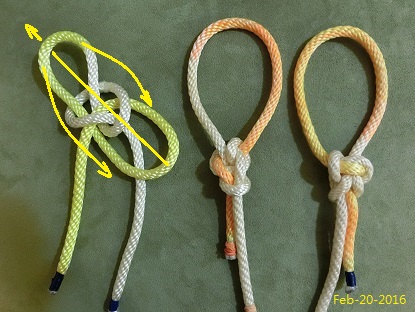
Thanks, I was almost sure the knot I came up with was one I had seen before… one of yours
Is the ‘Triple overhand knot-based adjustable loop’ the best one you found? If not, what was better?
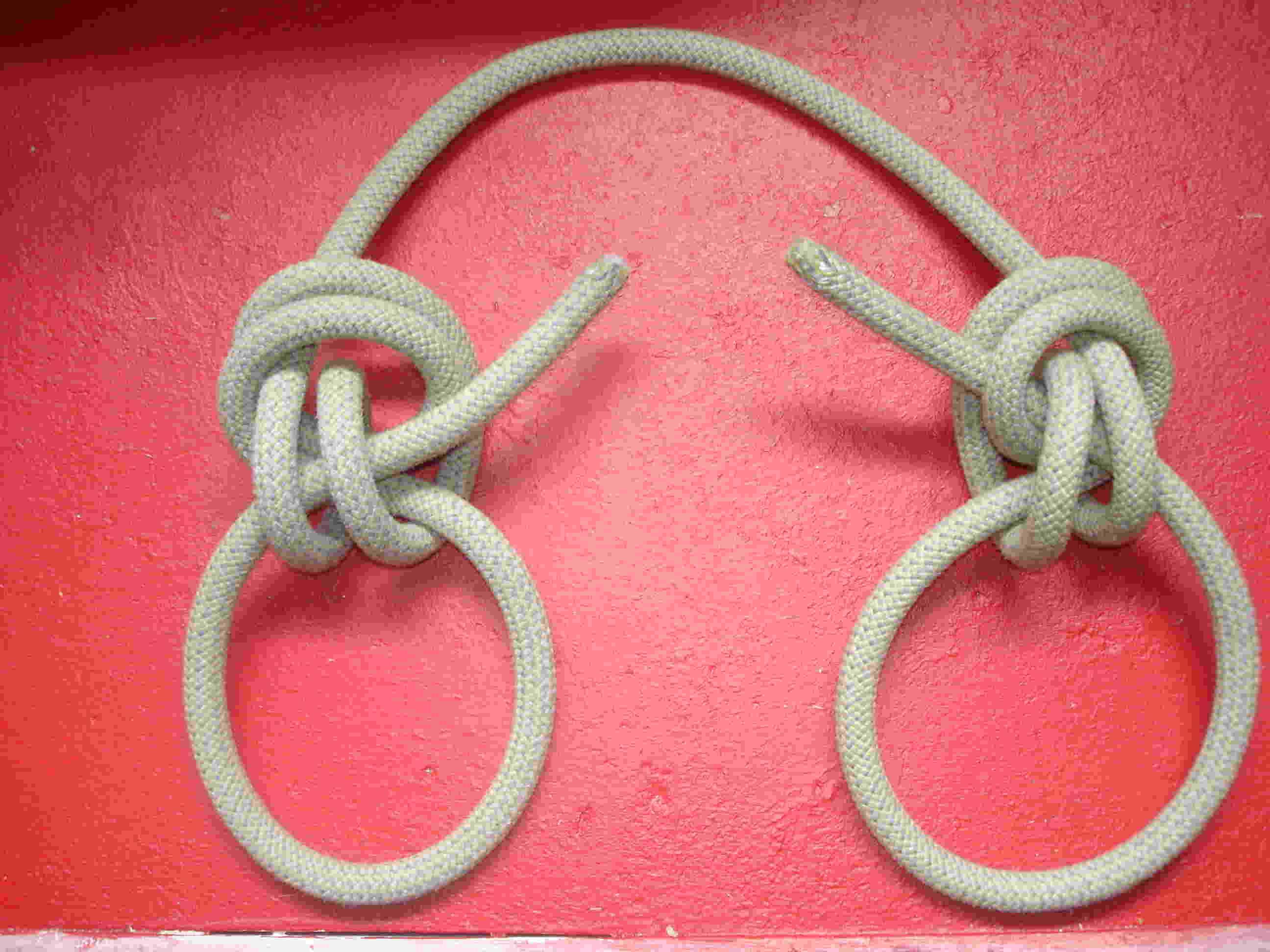
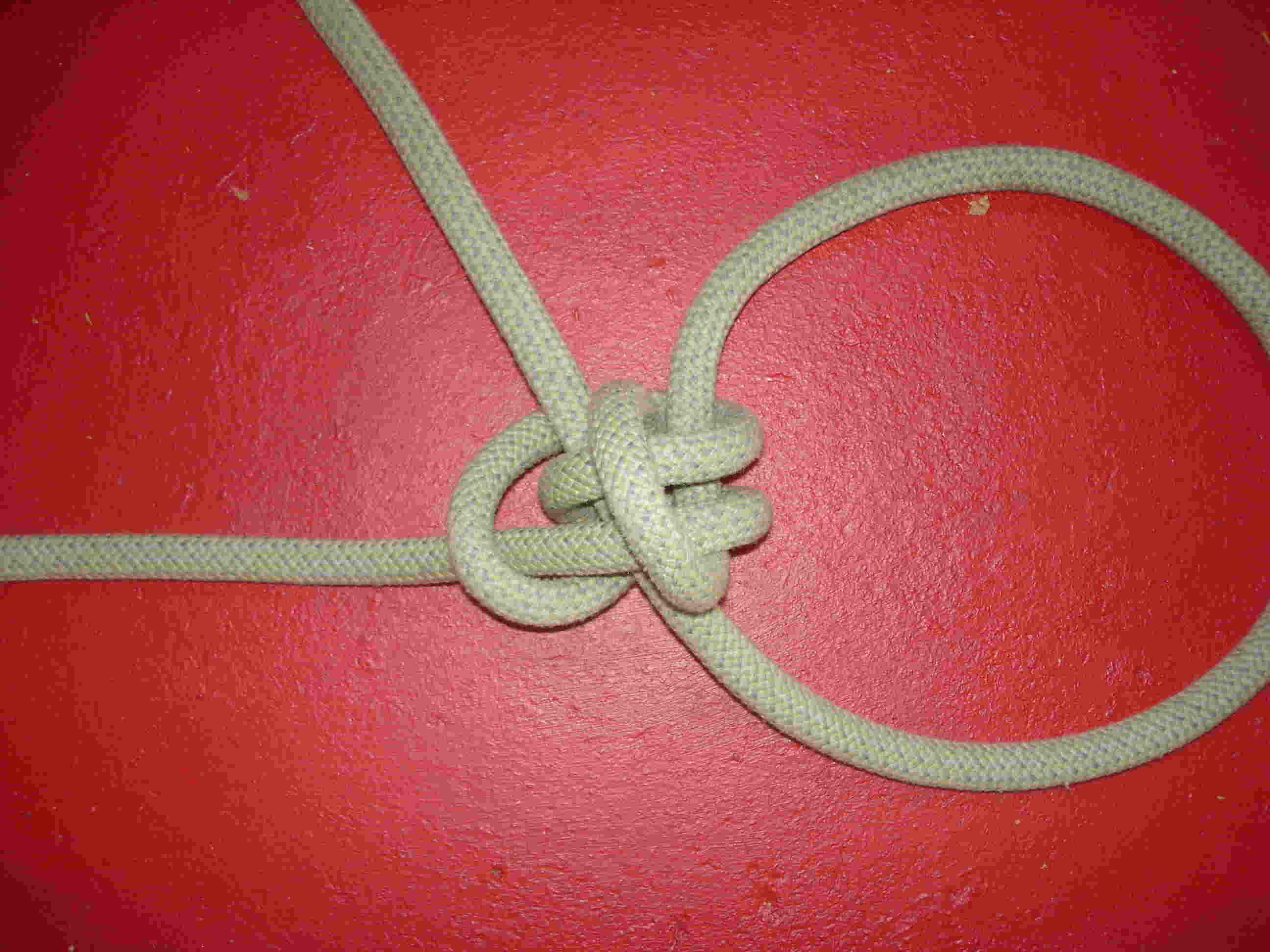
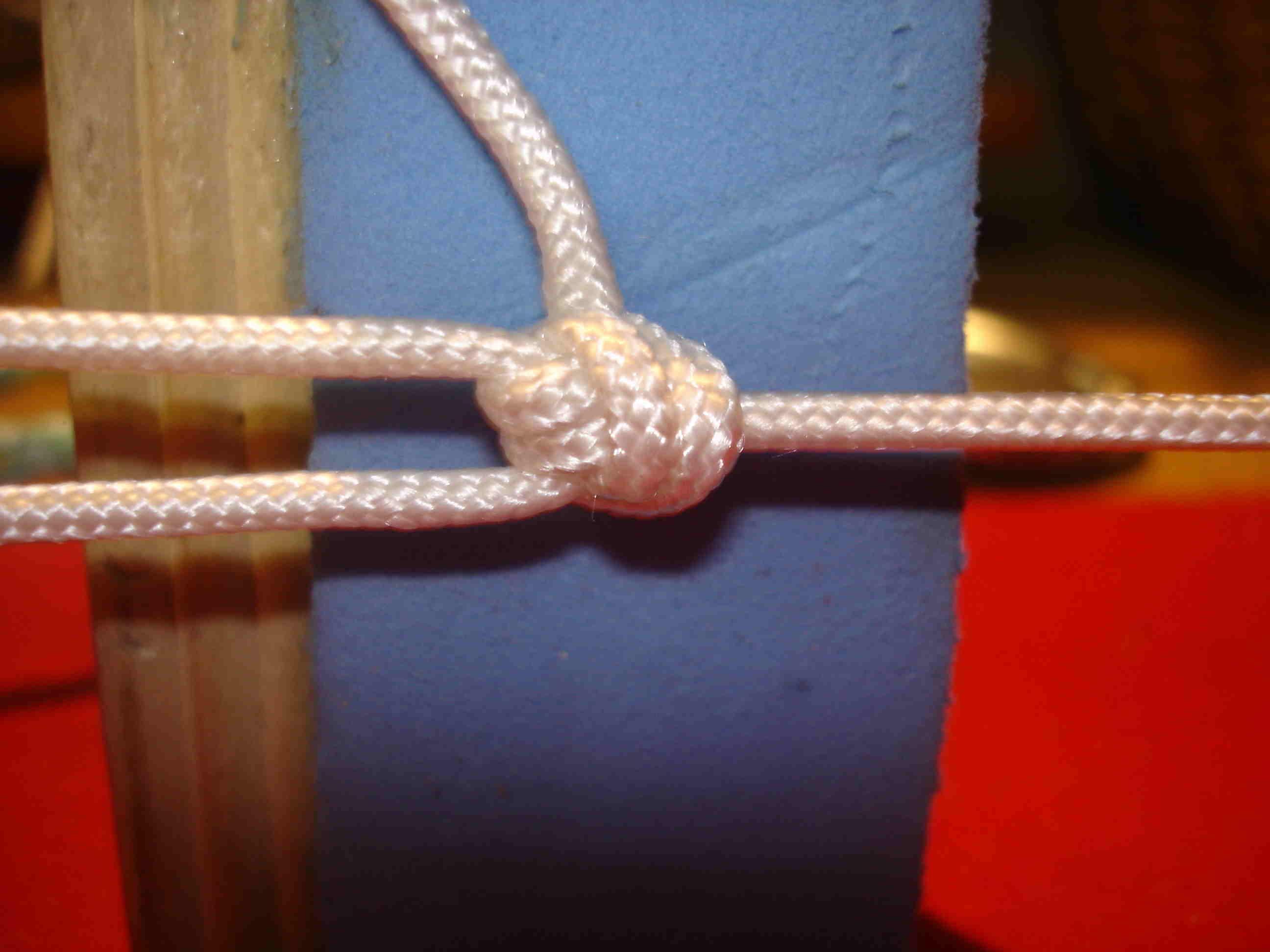
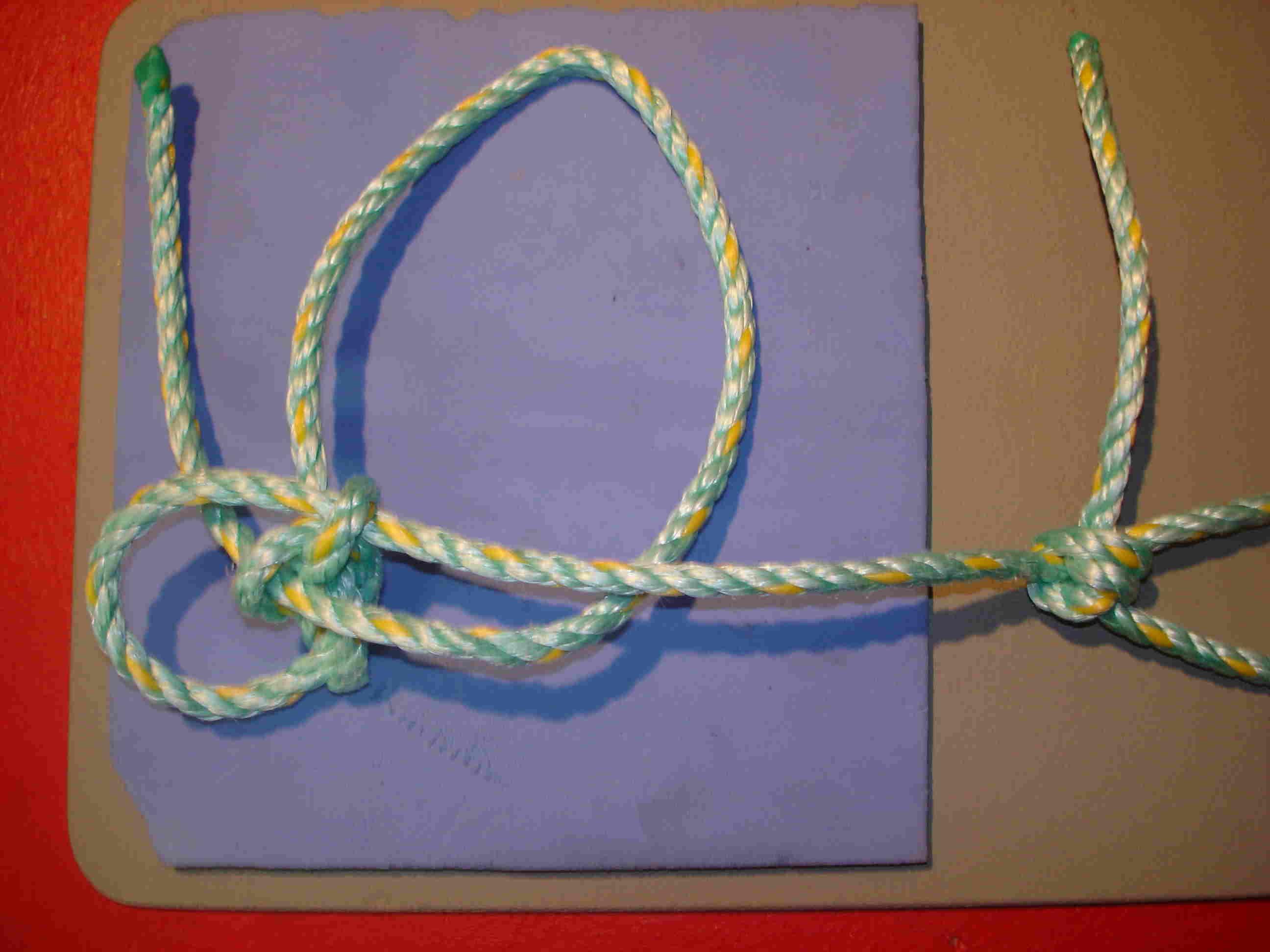
I played some more with the Double overhand style loop you first showed us and added a second collar. The collar is more about introducing a 3rd diam through the turNip to see if that lessened the double overhands jamming potential while still allowing enough nip. Here is what I found happened:
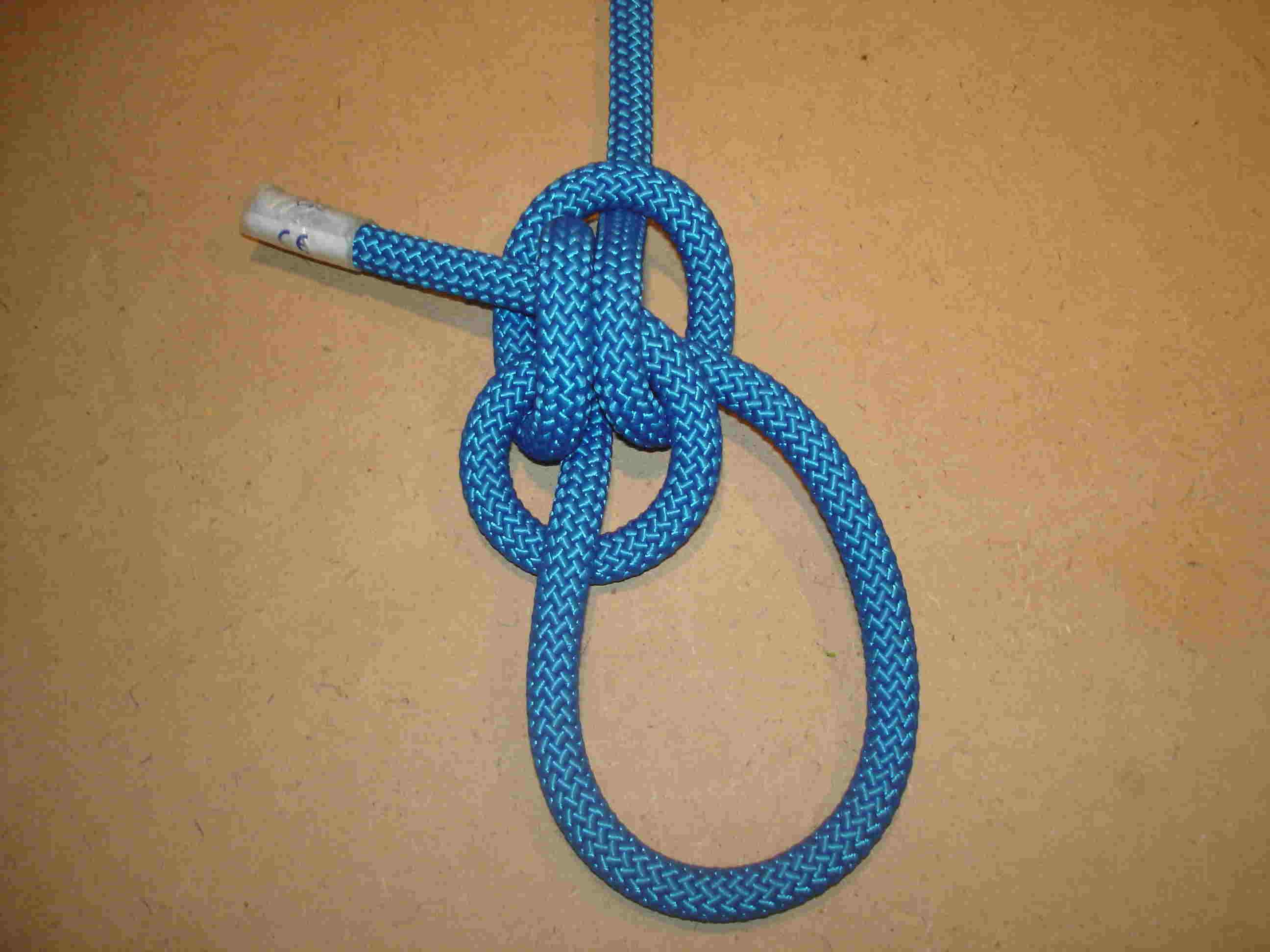
Image 1 left: A simple double overhand double collar which slips, so reject this one. The 3rd diam did not look promising
Image 1 right: The tail is tucked in one of several possible ways. The knot tails loads to an ‘L’ shape at 500kg and didn’t jam. However the collar closest the eye was too loose for my liking so I reject this one too. The 3rd diam. idea seems to work better this time
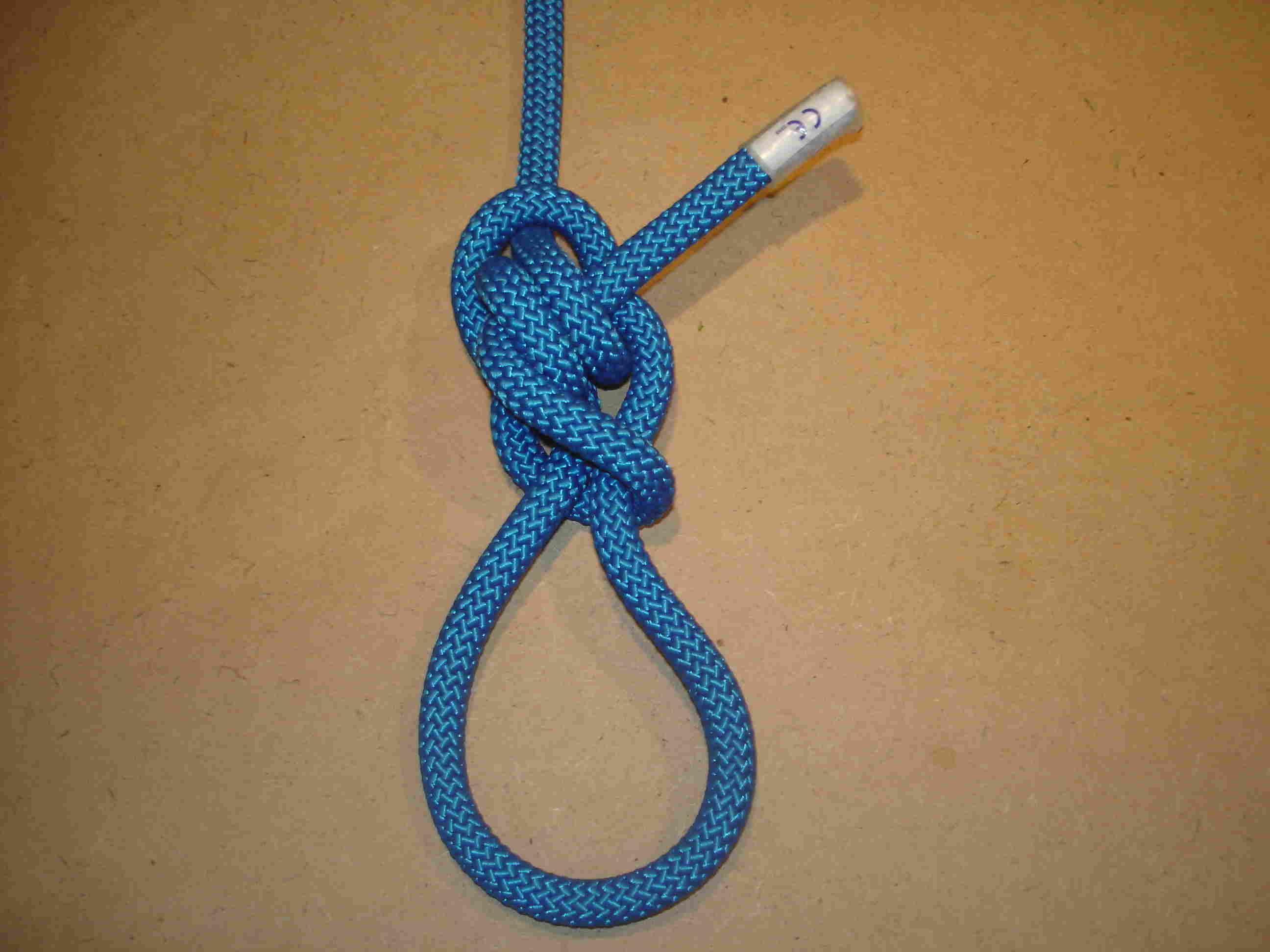
Image 2: Another try at re-tucking the tail. The tail becomes an ‘L’ under load
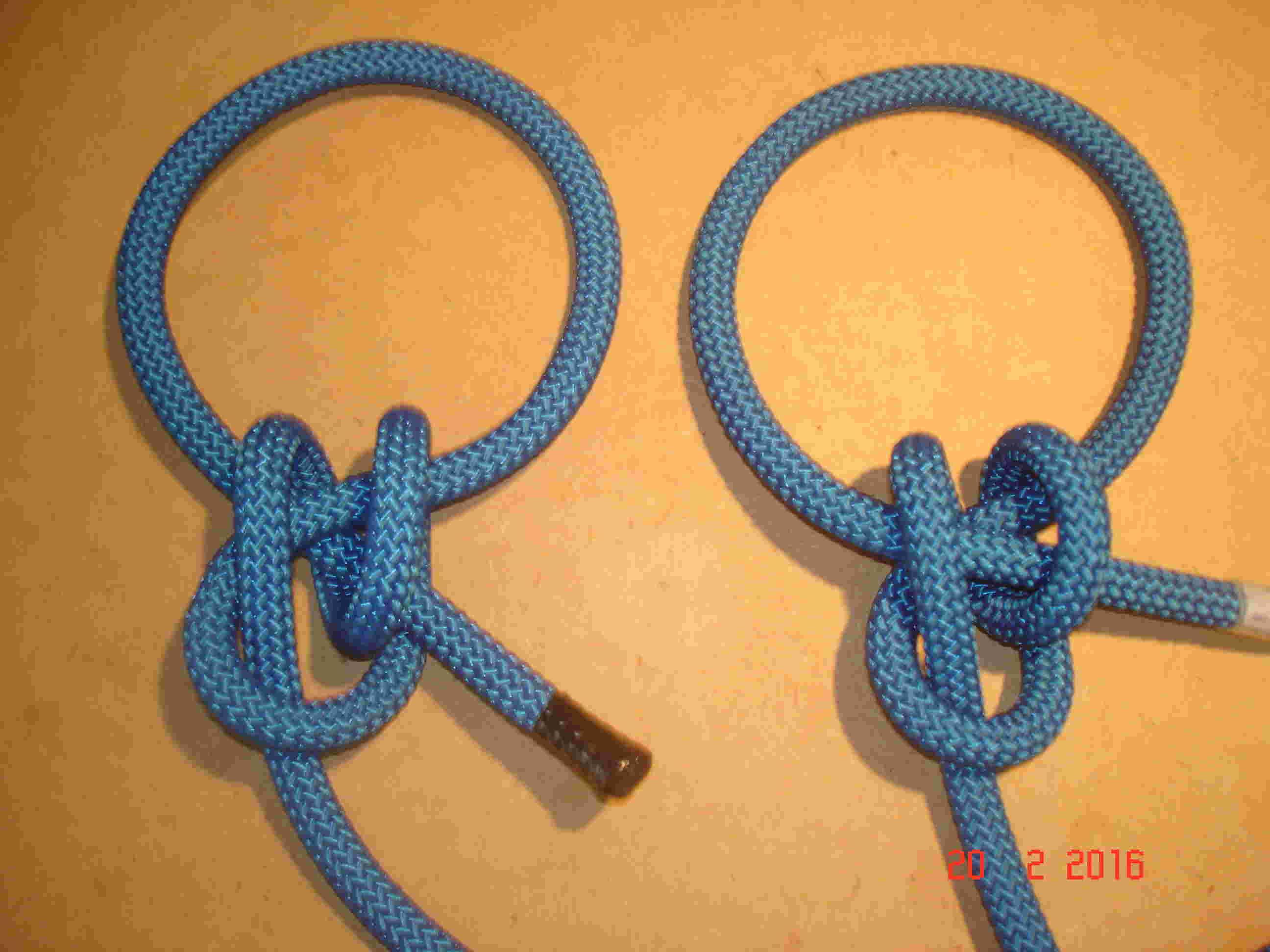
Image 3: Under load at 500kg. It untied easily in my rope (messed up the focus a bit, sorry). There are no loose bits in the nub, the collars and other loops are doing something load wise and nub form looks good to me. The 3rd diam through the turNip need not be dismissed it seems.
Seen any of these double overhand adjustable loops before Alan? The last one looks ok, what do you think?
Cheers,
mobius
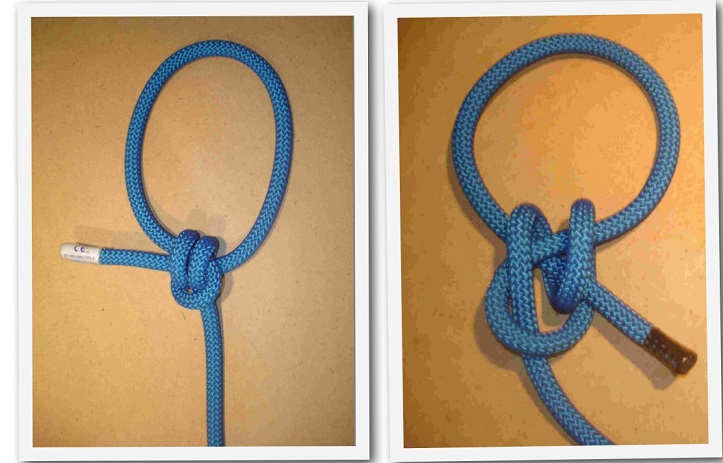
Edit: added a 4th Image, much better focus of the same knot as Image 3 at 500kg
Hi All,
Mobius Thank you very much for fixing the thread problem. Since you ask me about you knot, and I owe you a favour.
I try my best to answer you. The additional collar will lengthen the collar near the standing part
and also the three rope diameter on the nipping loop can push the main collar more upward,
that mean we have a nice main collar and easy to untie.
Now the main collar is fine, but there is a problem, additional collar will lock on the the nipping loop.
When you load the loop,for softer rope it will lock on early, for stiffer rope can hold better, but it will jam on heavy load.
unless you dress the additional collar loosely,then it will not jam on you.
My own opinion any good knots should dress it as tight as you can before you use.
謝謝 alan lee.
Thanks for the feedback. I will try my double collar knot (the last one shown) in both my 3mm poly braid and 6mm marine grade pe/pp blend and see if it jams. The 3mm poly braid I use likes to jam (it’s size makes it hard to untie even if it is smooth and stiff) and so does the frictive surface of the 6mm marine 3ply (very stiff). I don’t test in soft rope, so lots of knots would jam in softer rope that otherwise would not in stiffer rope I suppose.
We may need different knots for different ropes, especially when it comes to adjustable loops.
Hi All,
Yes or no, knots would jam in softer rope that otherwise would not in stiffer rope, knots also would jam in stiffer rope
that otherwise would not in softer rope.
Just to follow up on what I said I would do. Below are some ‘other material’ trial images of the double overhand, double collar adjustable loop I proposed earlier.
It actually works far better than I thought it would when I first started playing with it. That the 3 diams allow the turNip to hold as well as it does was a surprise. Then I was pretty sure Alan would be right and the eye collar would jam once I got it under heavy relative load (50% mbs) rather than the 500kg (20% mbs) load I tried before. However, the knot still looks very good to me: Doesn’t slip, doesn’t jam, doesn’t deform under load.
The 3mm poly I use is shown at >100kg and the 6mm pe/pp is >300kg. Both images 2 & 3 show the knots were tight. I could get both knots apart by hand after these loads with relative ease. The collar closest the eye was the hardest to loose (as Alan said it would be), however I still think the knots were what I consider as being ‘easy to untie’.
I have some reasons why this DODC Loop seems to work as well as it does, however those can wait for now.
Hi All,
Mobius, let said we have a standard bowline here, we add one or two tuck or may be a second collar to the nub, by doing that,
we have to gain something, have to be better then the standard bowline, otherwise it don’t make sense to have though those unnecessarily
parts add in to the nub. Any way I like your effort.
謝謝 alan lee
Hi All,
Happy New Year
Here is another variation of loop that belong to the same class and I didn’t post it the last time,
see here reply #128http://igkt.net/sm/index.php?topic=5383.120 , because the last three loops their rope flow in to the nub are smooth
then this one here.
Now I have more free time to look at it again,I think this loop is not that bad at all. this loop is well secure and easy to untie,
and the tail of this loop was nipped by the top collar with full force, make it little more secure.
It is important have the last defend as Xarax alway said.
Heinz Prohaska proposed using the anchor bend structure
qua eye-knot base some decades back, in response to the
infamous Lynn-Hill accident (where she was distracted from
tying in and simply didn’t tie her intended (per her book) bowline, but which some (mis)took as the case where
a left-in-rope-for-next-tying fig.8 (single-strand, SPart)
awaited the new tyer-in person’s “rethreading” to complete).
So , Heinz thought that this base is one that could
work even if only the first tucking-tail-into-knot was done
and nothing further!
(IMO, that is fine-tuning an error point to a too-small range.)
Perhaps if the additional loop around the SPart is made away from the eye --so that it will press into the other–,
jamming will not occur (or as much) ?!
Yes, thank you --and may it be so!
(but rumblings all over this world are worrying)
... this loop is well secure and easy to untie,
and the tail of this loop was nipped by the top collar with full force, make it little more secure.
Hmmmm, the severe curves in the S.Part worry me,
and it stands thus in sharp contrast to a somewhat
similar-looking “locktight” eye knot --and one that
Alpineer also formed, naming it “…tresse…”. Although
the knots I present here
show a pretty sharp U-turn for the S.Part, so too does the blood knot which nevertheless seems to fare well
in nylon monofilament --and breaks, per Barnes, not at
those turns but in the center where S.Parts pass on either
side of the nipped tails (!).
(One of those locktights has a broader collar for the sake
of stiff, low-elongation ropes (I think I was fiddling with some
well-used Bluewater II, which resists bending!).’ I like to put
the tail so that IT is what the severe turn of the S.Part bites
into (as the tail lacks tension and so can deform under such
pressure, which I presume is beneficial to the SPart).
)
I think the first image below is one way to revise the double collar knot I showed a few posts ago. A good suggestion from DL I believe, I will trial this revised knot in due course. I like the way I feed the tail through the nipping turn, but there may be better ways to do it. I don’t think this knot will jam as I show it.
Image number two is a PET eye knot that to my mind can still be called ‘adjustable’. A moot point perhaps. I have trialled this knot in a preliminary fashion and it does hold at 200Kg in dynamic rope so far. The collar around the eye can be left loose, the knot appears to be secure regardless.
Image three is both PET and TIB. It holds at 200Kg in dynamic rope as well. Note that for TIB to be a significant attribute, I believe an easy TIB tying method also needs to be available. Easy to me means: the knot can be held in your hands and tied in total darkness in less than 30 secs (eye knot). 30 secs is probably generous, but I hope you get the idea of what i mean by ‘easy’.
None of these images I claim as new… Alan Lee (in particular) has a lot of knots out there, some of which I recollect as at least being similar
(I think my camera is playing up, nothing I do achieves focus… sigh)
The first left-hand image is the one Alan first proposed. The second right-hand one is a variation that may also have been shown by Alan Lee. Regardless of where the knot version started I thought I would share with you that the image on the right is probably better to use.
I have used this style of adjustable knot a lot on my rig. The knot on the left has jammed under 200-400 kg load in dynamic rope while the version on the right has always behaved itself to date. Possibly jamming was an aberration, however I am not in a hurry to waste good rope finding out for sure.
From a practical user’s perspective, I only use the right-hand version now.
Thanks for the advice, though it did not work for me (see image in my ‘offset’ post). Maybe I just need an idiot-proof camera
With that in mind, I asked for an early birthday present and my wife is getting me a new Nikon Coolpix 840. Good? I don’t know, however it has to be better than what I have been struggling with to date, a 10 year old Sony 5.1 3X Cyber-shot.
Hi All,
Mobius ,I have put together a few pictures here, you will find which one have a better collar near the standing part.
A loop will jam or not, most of the time is govern by how the main collar set up (if there is the only collar with the loop).
   Fourth picture is TIB Adjustable loop, it can be tie in one continuous motion like the "Quick tie TIB Scott's locked bowline",
   with half a step less effort.  This loop may find little hard to tie it with PET method.
   I only test it with medium load and it perform very well, I think it will do well with heavy load.
   Related links, Reply #31 and Reply #34  http://igkt.net/sm/index.php?topic=5444.msg37446#msg37446
                         Reply #13  http://igkt.net/sm/index.php?topic=5322.0
                         https://www.youtube.com/watch?v=cfgN2EPfxH8
   This loop also can transform to Quick tie TIB Scott's locked bowline.
    謝謝  alan lee.
Memory has played tricks on me it seems. Alan came up with the version that does not appear to jam, whereas the other one might have more problems (and maybe the one I came up with, lol).
I will try xarax’s version sometime soon.
Is there a simple PET (post eye tiable) adjustable knot? We were shown one somewhere I think (that does not fall apart). If not, I will work on one.
One can see this, conceptually, at least, in two knots:
the venerable “midshipman’s loop” --which is a noose
hitch (hoped to be non-sliding, though) formed by
tying the tail to the structure’s S.Part with some
variation of rolling hitch;
then one could put a Prusik hitch coil in the S.Part
and reeve the tail through this (surety could come
by tying off the tail further (stopper, e.g.) after
adjusting the size of the eye (which in a sense
is indefinitely adjustable given that the overall
knotted structure is PET and so can await the
rough sizing of the eye to do anything tying-wise).
In the books already is something called “the crabber’s eye
knot” in which a (I might be mistaken in recall here!) marlinespike hitch --or similar-- is formed with the tail
around the S.Part and only set into secure form upon
reaching the desired eye size. (The harsh bending of
the S.Part doesn’t appeal to me.)