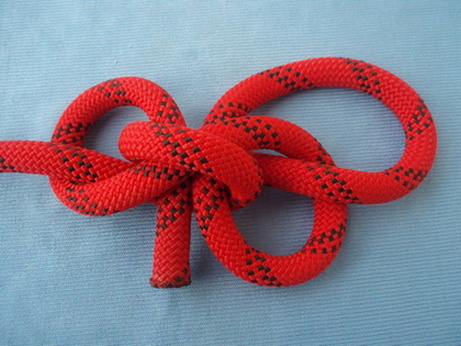
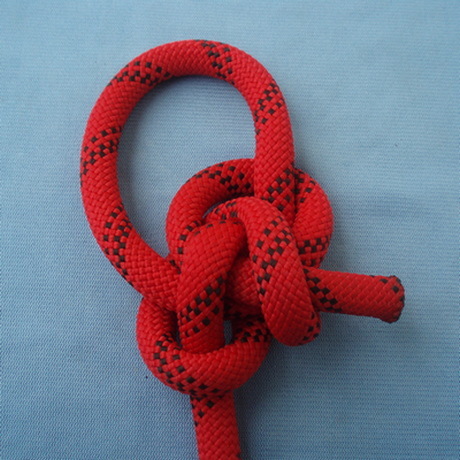
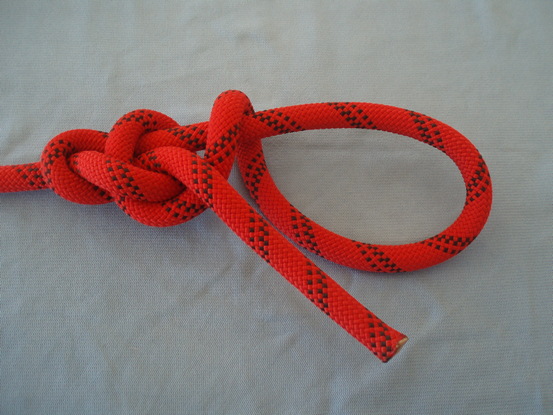
Bowline stabilization of cascading helical/simple loop nipping structures

This eyeknot is inspired by the work of three individual knotting experts.

Xarax, spotted and shed light on the mechanism of some of Siriuso’s bend projects, opening as always a new investigation field, and prompted me to devise a loopknot out of this very mechanism.

Siriuso, of course takes credit for his interesting elongated, two myrtle nub bends (for example, shaft beta bend, shaft alpha bend and all the others of the same concept), who is prompted to upload at least one related photo here, if he wishes, because i couldn’t directly link them.

Finally, Alan Lee opened the way, with his smart, super simple, easy to form helical eyeknot.

Link : https://igkt.net/sm/index.php?topic=6822.msg45077#msg45077

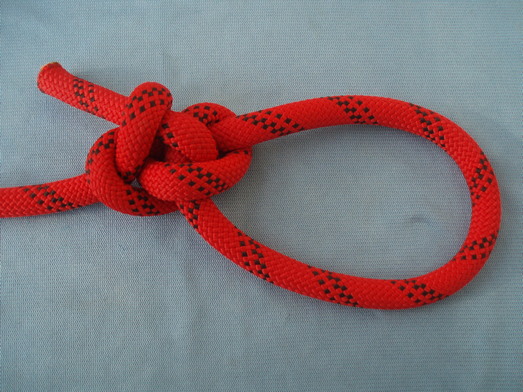
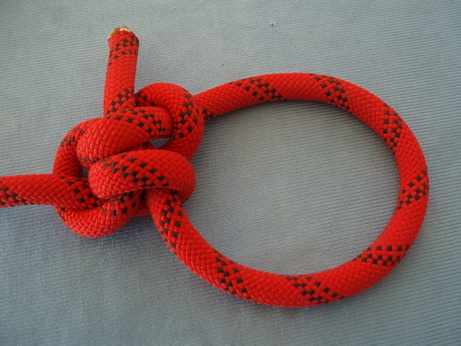
The key component here, is the last stage tail tuck (first image), which operates as a dual-function stabilizator hinge, of both helical/simple loop nipping components.

While it contributes to retain the helical SP’s shape, (see what happens if not tucked under SP), it actually blocks most of the tension to diffuse through the next stage nip (the nipping loop), hence reducing its vice function.

My first experimental trials showed that this is probably a jam proof knot, right up to its MBS yield point, but more work needs to be done especially with EN rated ropes, loaded at extreme critical loads.

For the record, i almost destroyed a small diameter rope during tensioning process, but the knot opened very easily.

It also appears to be very stable, with a fine cross loading profile, retaining its form at peak loads.

What more to ask from a bowline?

Hi tsik_lestat

I have tried their corresponding Loop Knots after the bends discovered and found that they are not jamming, but rather loosening. Am not really much dig deep in Loop Knots. Here are the link for the relevant bends.

https://drive.google.com/drive/folders/1FU5PD_HHpeNKGEU_seEqNWEl2cgjQcZe?usp=sharing

yChan

Thanks a lot, for the link Ychan, i’m pretty sure, some inquiring knotting minds, have already tried such mechanisms before and found that they work.

I am of the view that this amendment works in every bowline instance, even with the more complex structures which might be more prone to jamming, but i am not going to include them in this demonstration, i will rather keep it in the simplest level.

How about swapping the nip stages, with the helical SP formation, located now on the on-going eye leg continuation segment?

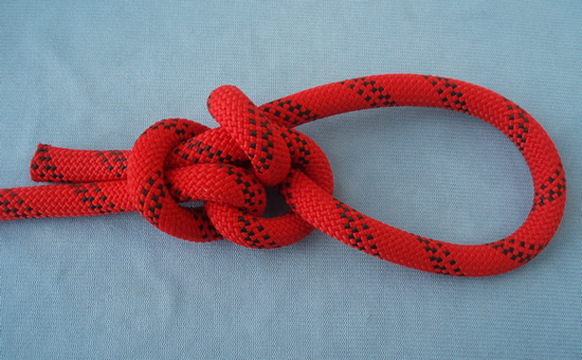
In other words, let’s just try a 1033 Carrick eyeknot with this amendment.

One might plausibly wonder, why should i add some extra complexity, considering that we know that the original 1033, is a jam proof knot?

  1. You get two lines of defense, hence a more secure knot.

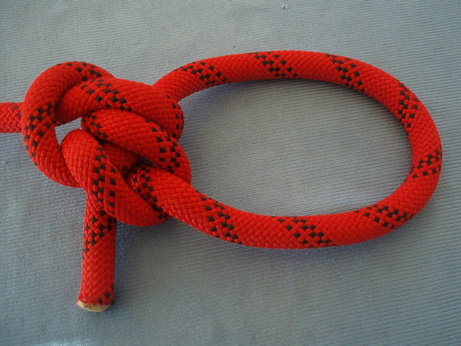
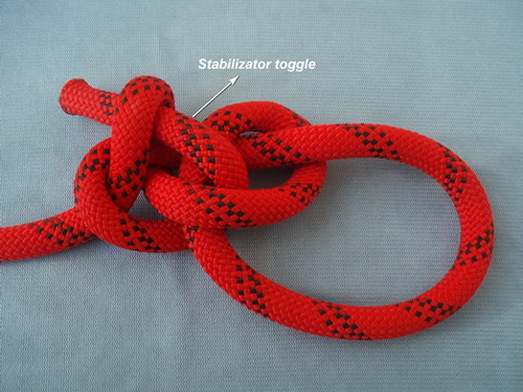
  2. You enhance the knot stability, because the stabilizator toggle ( first image), renders the crossing knot component, less prone to deformation.

Am i mistaken here , or is this a jam proof knot, stable and resistant to distortion?

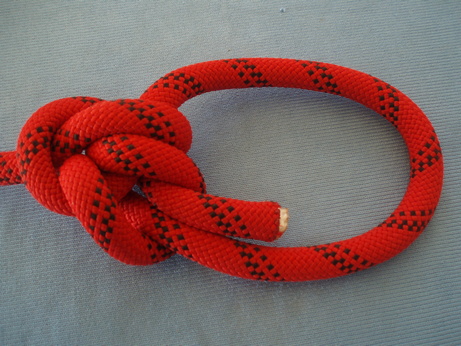
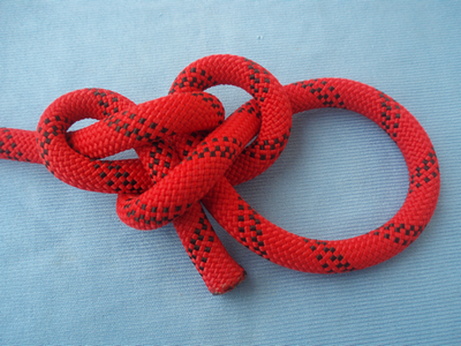
Fourth image, illustrates the corresponding, helical, crossing knot based variant.


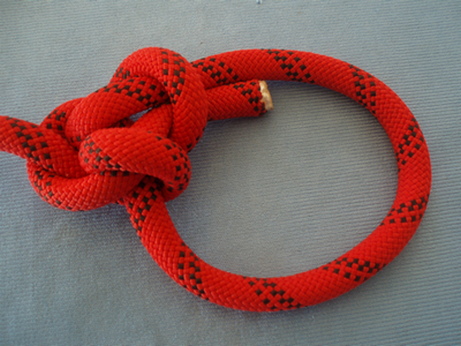
Here is another loading profile of the previous knot structure, with two bight structure, stabilization options, in crosssing knot and carrick fashion accordingly.

This is actually a munter nipping structure, (as it was in the previous reply), where two theoretically, volatile, when subjected to loading conditions in isolation, components, (a helical SP formation and the unstable crossing knot state), are combined in a series formation, supporting one other’s back, in order to form a stable, non-jamming configuration.

Moreover, there is the feasibility of forming a proper Myrtle, Carrick toggle, bight structure, which means to insert the running end from the other side of the munter formation (not illustrated).


                                       [b][u]Girth/clove hitched helical nip bowlines[/u][/b]

This is an approach of making stronger Alan Lee’s prototype helical eyeknot, (using only the helical part of OP’s nipping structure), with a girth/clove hitch, bight structure binding.

The knots appear to be quite stable, for helical based eyeknots. My guess is that the friction generated by the crossing area, (SPart, returning eye leg), plus the three rope diameters in the nipping loop, forge a less prone to distortion helical shape.

A couple of queries…

Do the attached knots qualify as bowlines?

  1. TIB nipping loop? check

  2. Is there a collar structure whose both legs, (one delayed), are being clamped by the nipping loop? check

Are such bindings able to retain the helical SP shape at extreme loadings? To be seen, it’s a subject in question…

So far, i have seen a myrtle based, clove stabilised nipping loop (WE is being inserted through the nipping loop from the other side), which is deemed to qualify as bowline.

PS: The knots are illustrated in a loose form, they have to be cinched very well in order to function properly.


Getting back in the opening post’s main theme, this time i choose to go the myrtle Carrick style, in order to stabilize the following crossing knot + helical turn, nipping configuration, with a longer rope continuation beween the two components.

After a quick test between the two approaches, (myrtle, helical), i noticed that, in this case, although both jam resistant, the first one, lashes down the components in a more stable, solid and distortion-proof way.


                                                [u]Anti-myrtle hitched 1010[/u]

Guess what, this is yet one more attempt to secure the tail of 1010, this time with an anti-myrtle component, on the on-going helical, eye leg formation.

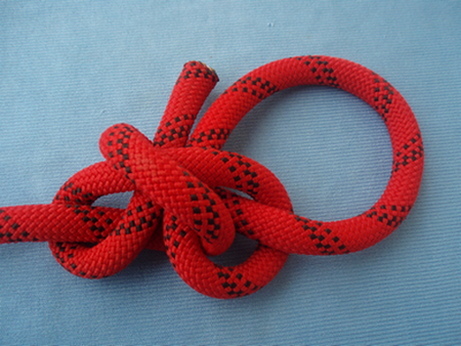
The helical formation doesn’t have to be preformed, a simple 1010 is tied first with a two times twisted eye, like the first image configuration, and there comes the tail tucked under the on-going eye leg and its helical formation.

I sense a touch of the water bowline, jam proofness, with improved stability to cycling loading in relation to 1010, but with a tail pushed out of the eye, ideal for those who are willing to avoid tying an overhand on the returning eye leg.

The helical, “slithery mechanism”, is located on the out going eye leg continuation, which is a non-critical spot, where less tension is expected.


And now, with that --indeed-- scent of Clove-BWL
(not so much “water”, really : the turns are close!),
you are within reach of the well-working, well-secure
(though amply loose --just not loosENING!) knot,
the Mirrored Bowline.

–dl*

As Dan Lehman and Alan Lee observed, the way the tail is lying there idle, it’s like it’s crying out for a third visit down through the nipping loop, for an upgraded and more secured version of the previous bowline.