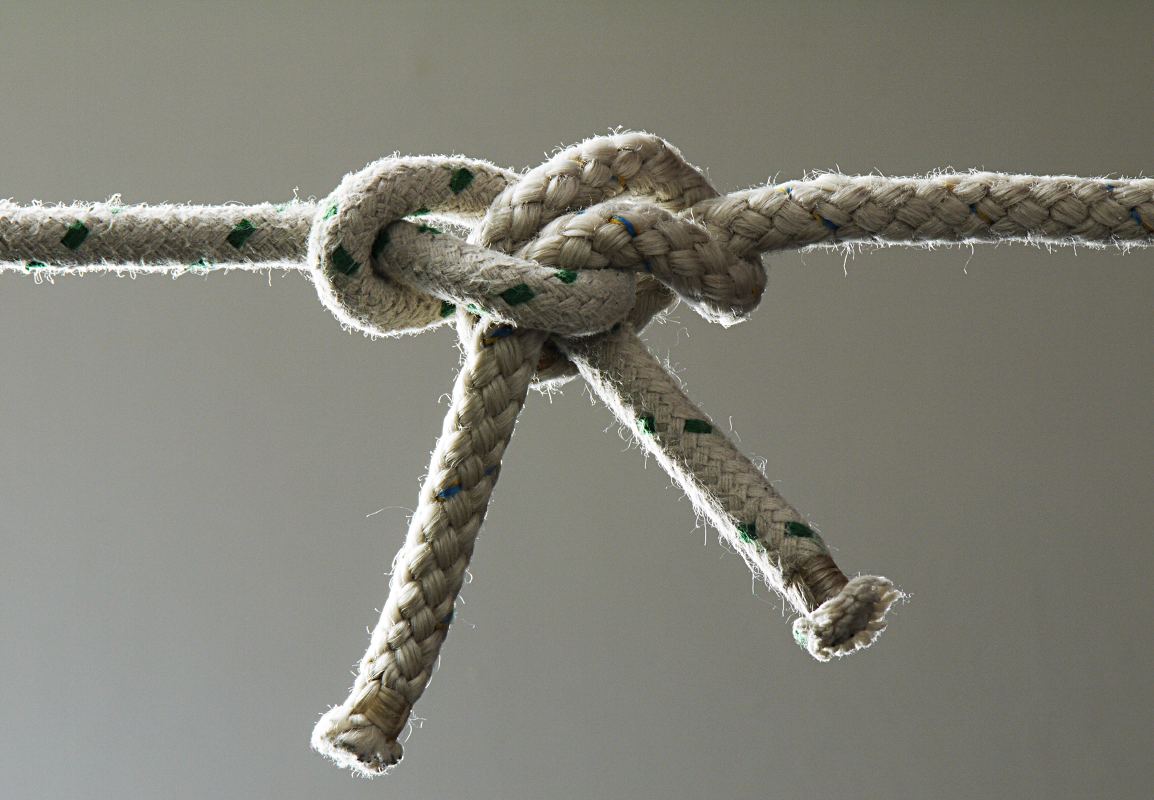
Of course it boils down to the Carrick Bend being a pet peeve of mine; I really didn’t care to use those other knots, so I didn’t pay much attention.
The Angler’s Loop or those other bends may be useful knots, but they’re not in my toolbox, which is probably the reason why I didn’t go into detail there.
The reason I chose the Carrick Bend as my preferred bend is mainly that it is sufficiently secure and easily tied under harsh conditions. It simply joins many desirable features, not all of them present in many knots. I did not know by then of a reliable method to tie the Butterfly Bend in a simpler way.
Regarding “strong”, I don’t subject the lines to anything near breaking strength, except if I want to test how much it takes to break one. So in my eyes, any knot, with no exception, weakens the rope about half from the manufacturer’s declared strength. I usually regard the maximum working load as the manufacturer’s strength divided by seven. With that arithmetic, there’s little difference in strength between different knots. I don’t know of any knot that effectively would cut the rope, so I don’t bother a lot about strength in knots.
However I do regard ease of tying as well as ease of untying as important features, together with reliability. That’s where in my toolbox, the Carrick Bend wins hands down over most knots. My most used knots do not rely on vision for tying, but are all formed by a well planned choreography, a set of movements with the hands, which lead to the desired pattern. I have not been able to adapt that to any intertwined overhands except the EDK/ORB and the Butterfly. The Carrick Bend is the easiest to untie of those, followed by the Butterfly, which is easier to tie.