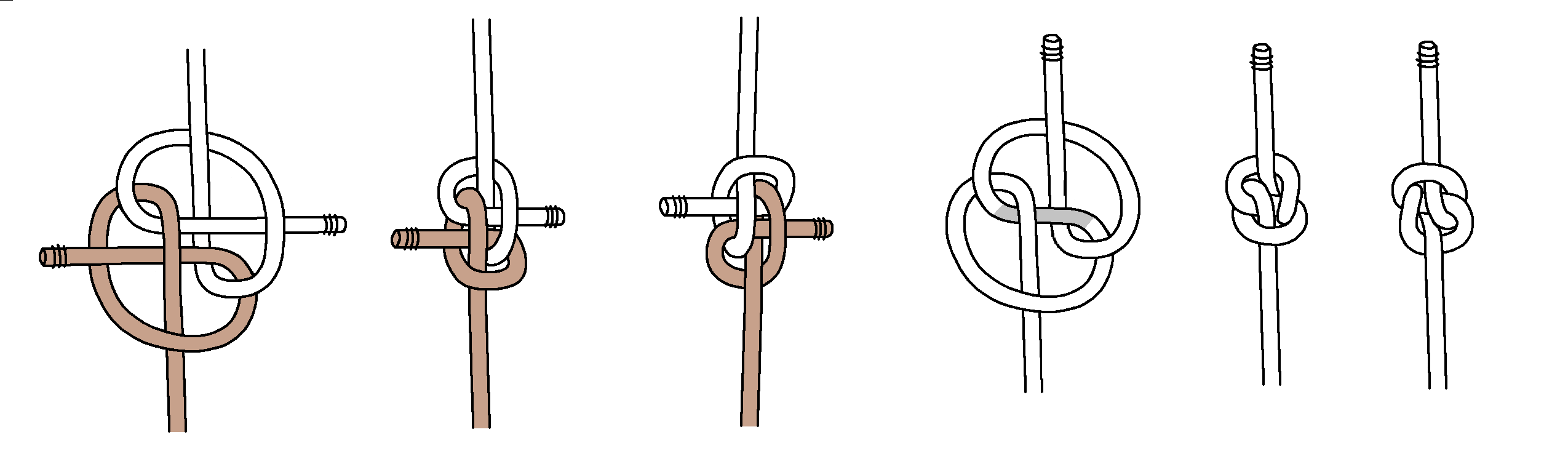
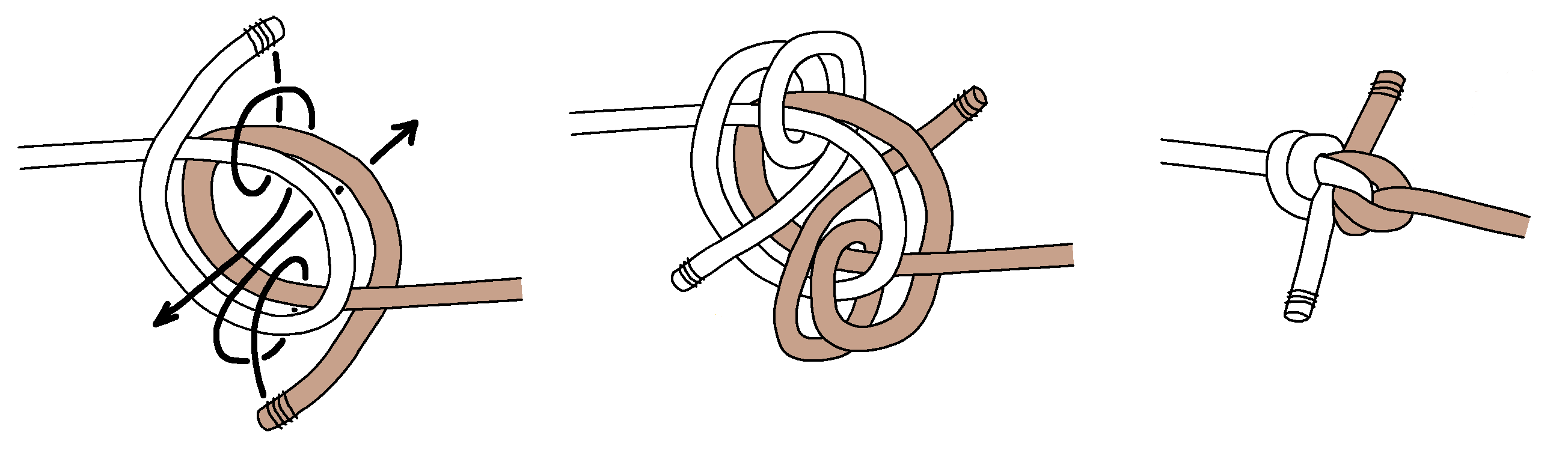
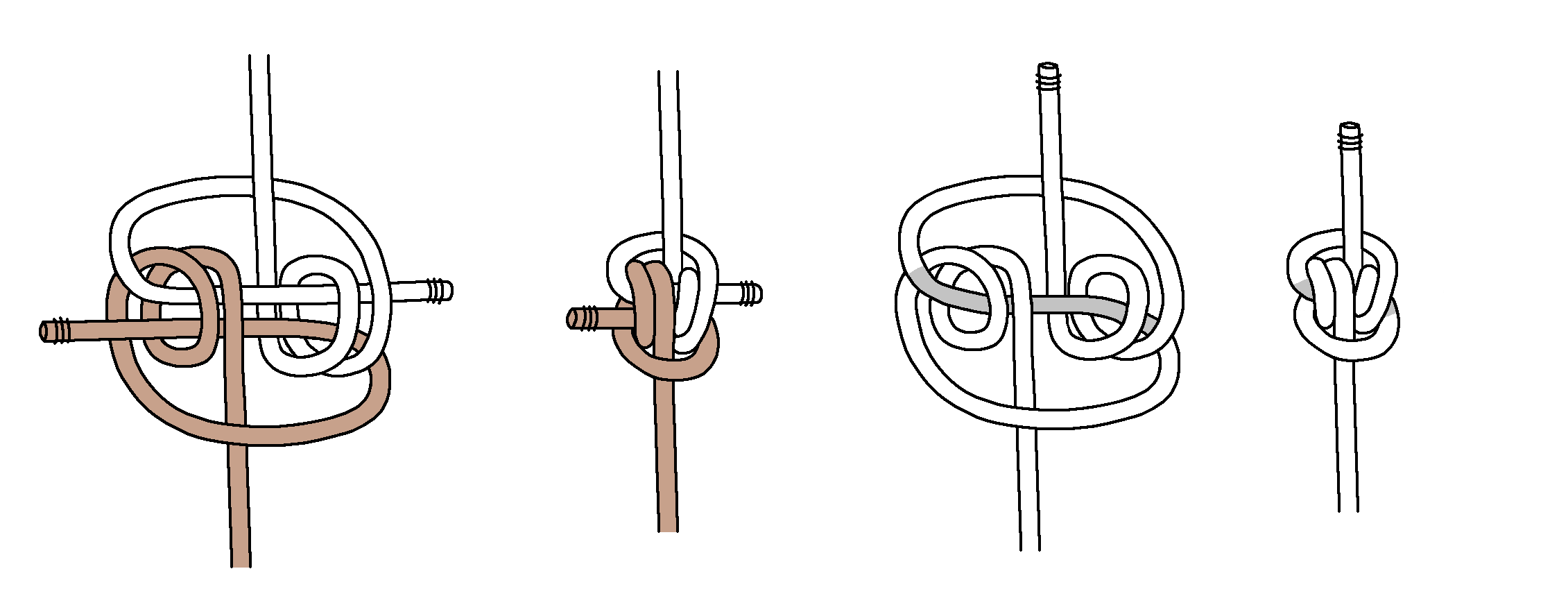
I have found at least one instance where someone on the IGKT Forum tried to “double” a Blimp Knot. Actually, that person only “doubled” half of the Blimp Knot as we will see below. Still, it raises the question what we might get if you look at some of the already accepted Double Zeppelin Bends when we move to the Blimp Knot. First, here is a review of how a Blimp Knot has a structure similar to a Zeppelin Bend.
Zeppelin Bend (front) (back) …………. Blimp Knot (front) (back)
Where the two separate free ends in the bend cross in the middle, we have in the stopper knot the region shaded in grey that just continues. Ashley does not name this Blimp Knot ( ABoK#582), but he puts it in his chapter on lanyard (or decorative) knots. I believe that most of the enhanced Blimp Knots below are mostly decorative. Most of the related enhanced Zeppelin Bends, however, are practical.
Most attempts to “double” a bend such as the Zeppelin Bend, consist of moving from the two Overhand Knots to Double Overhand Knots.
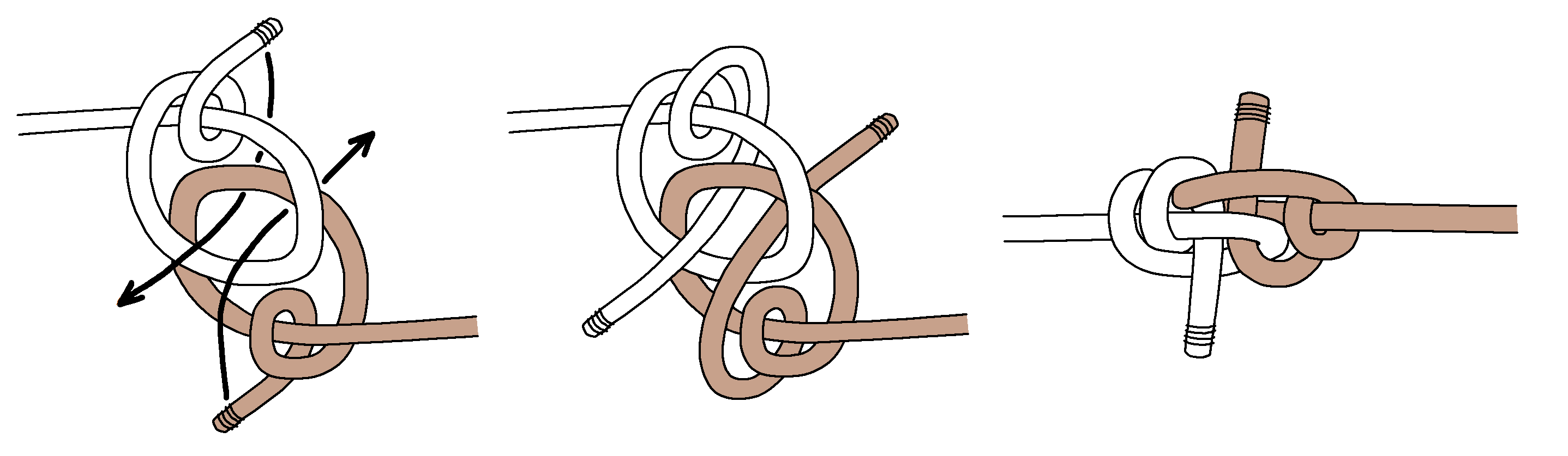
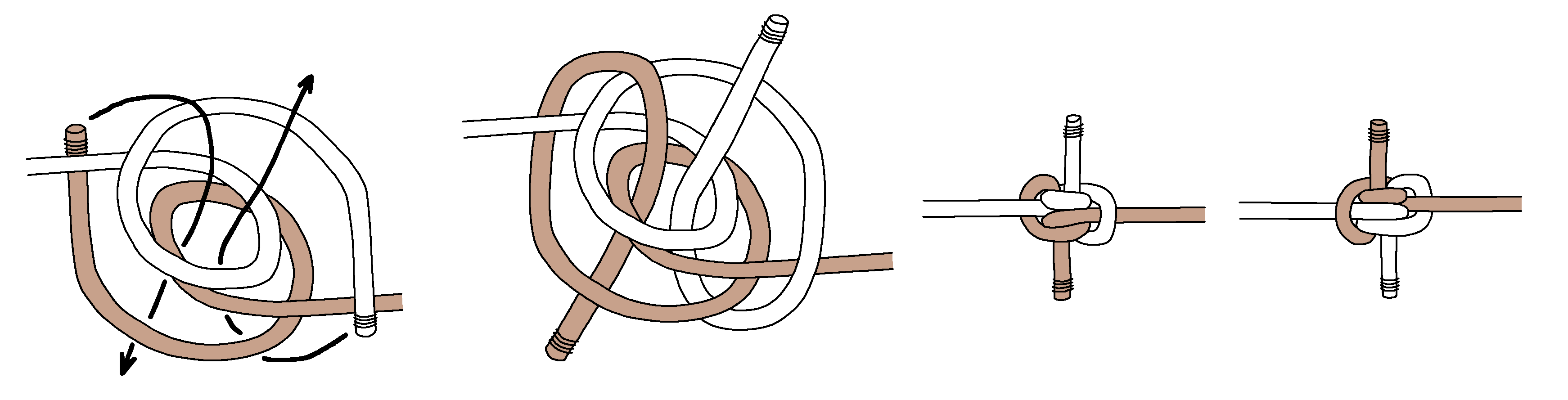
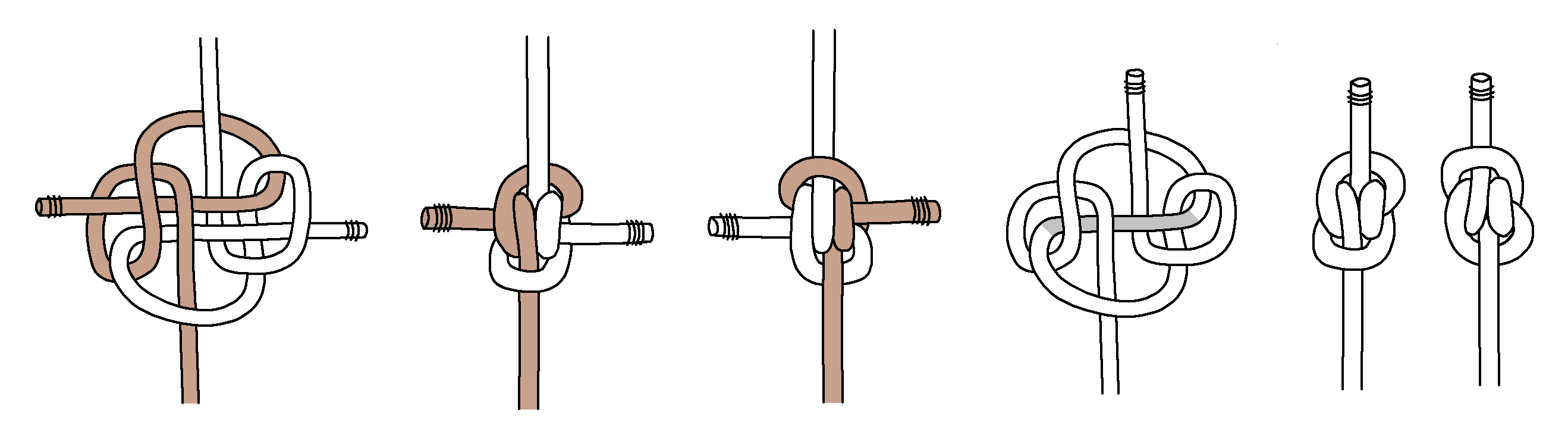
Here is what is probably the most accepted Double Zeppelin Bend, which I will label a Double Zeppelin Bend A1. This is often called the 6-9-method or the b-q-method. After laying one loop on top of the other, you double wrap.
Here is a variation that also involves double wrapping. You can find at https://knots.neocities.org/longashley a modification of the double wrapping for the Ashley Bend that is called a Long Ashley Bend. In the description, it says that this method can be extended to other symmetric bends involving Overhand Knots. Here we apply it to the Zeppelin Bend, and we call it a Double Zeppelin Bend A2.
Double Zeppelin Bend A2 ………………….Double Blimp Knot A2
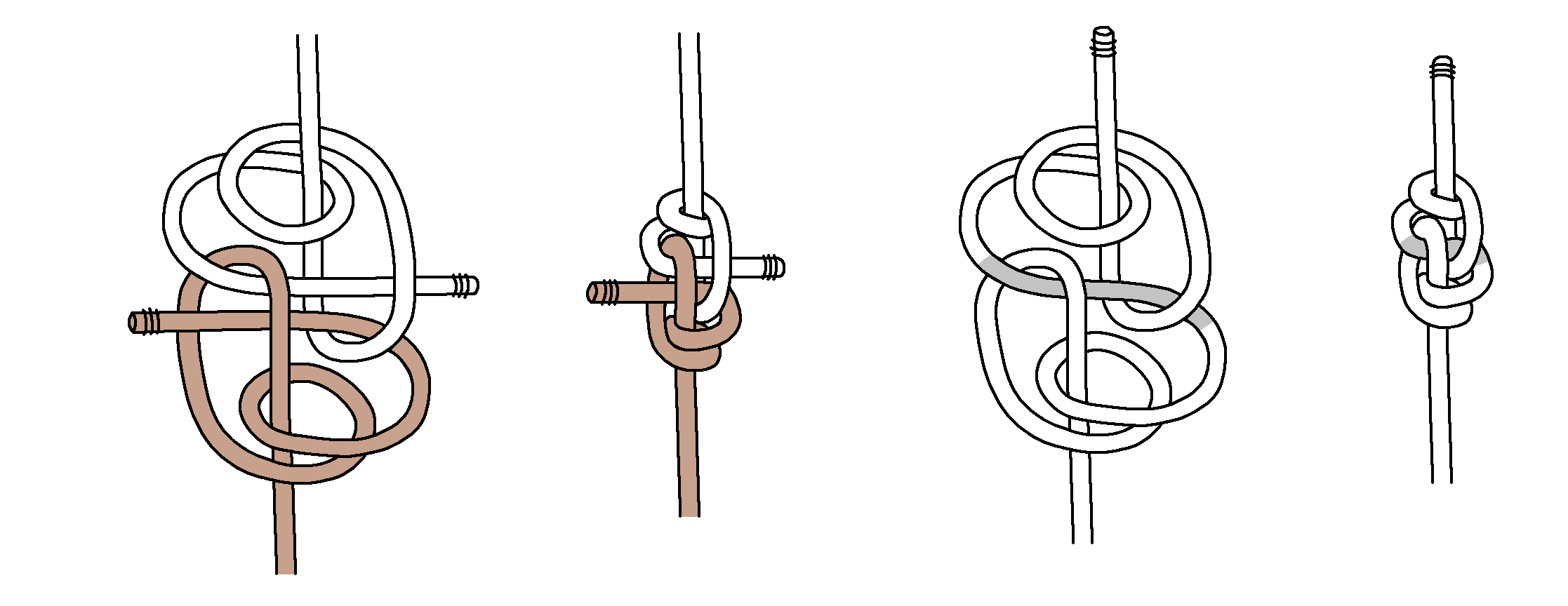
Next, here are tying instructions for a Double Blimp Knot A2. Again, we find tightening is even more difficult. Keeping the horizontal part centered (shaded grey) is important, and you gradually tighten the top and bottom.
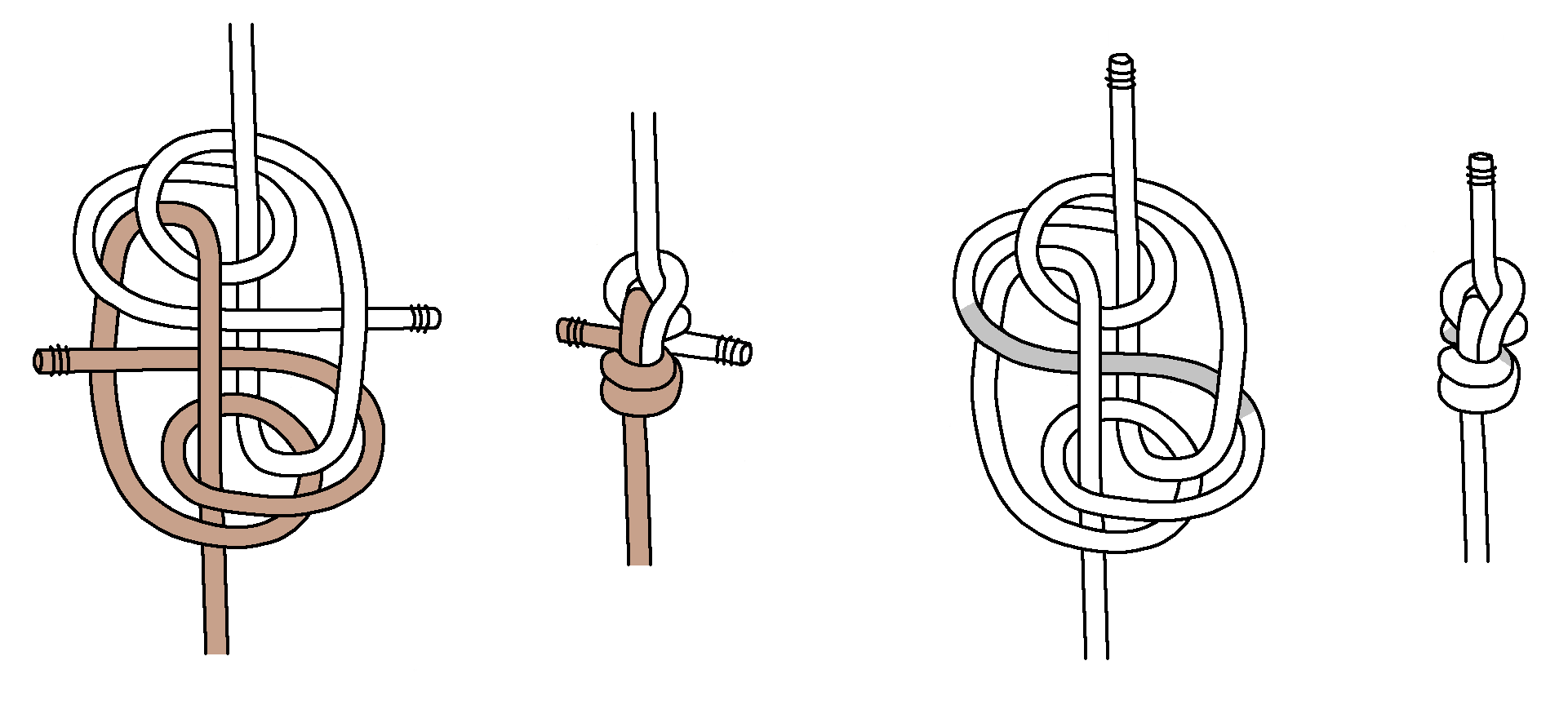
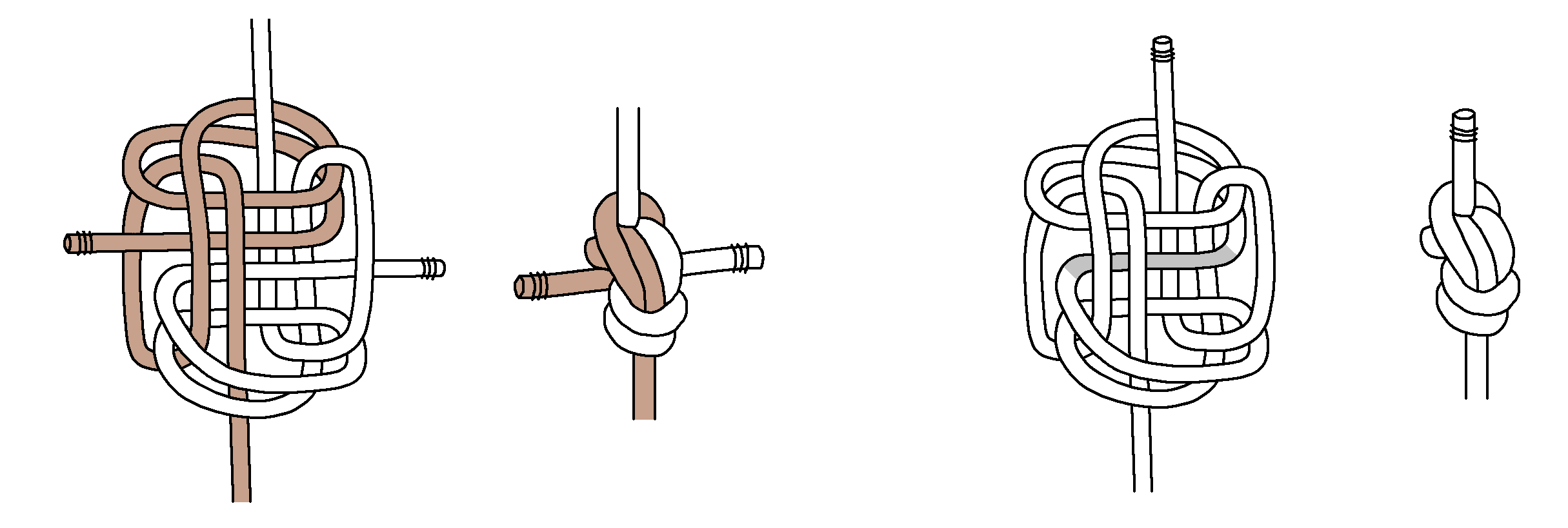
Double Zeppelin Bend B1 …………..Double Blimp Knot B1
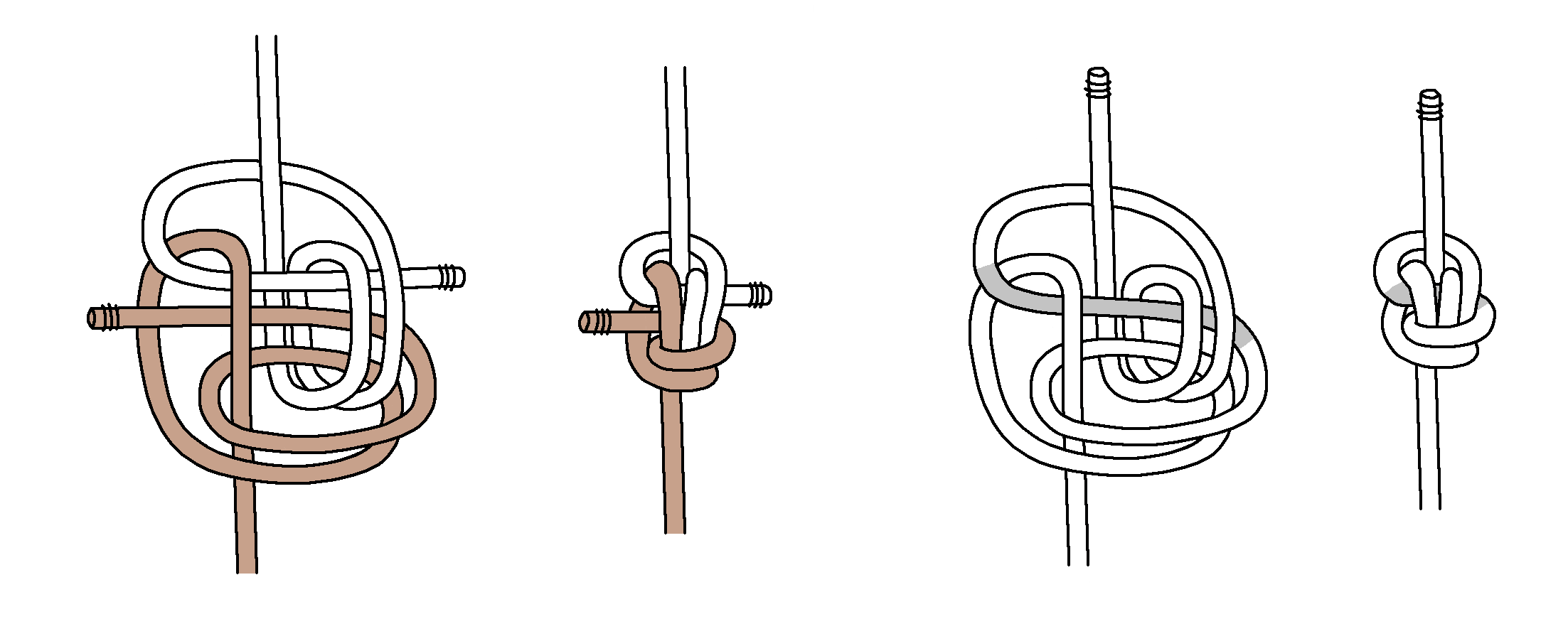
Here is how to tie a Double Blimp Knot B1. Begin with a round turn. Then tie a very loose Double Overhand Knot as indicated. Then wrap another round turn and finish the symmetric part. Again, we keep the grey-shaded part horizontal as we tighten.
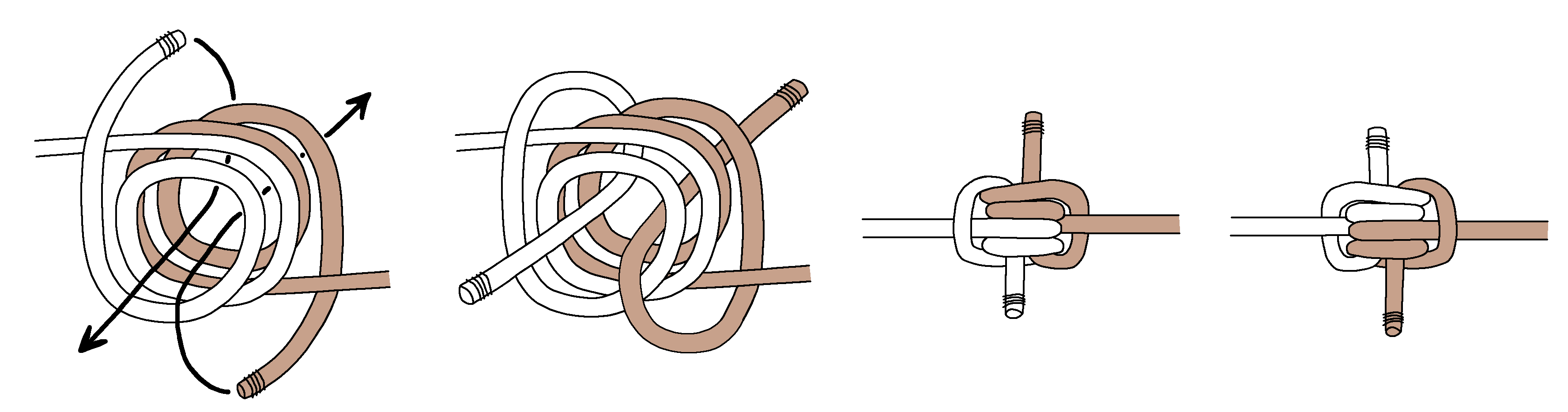
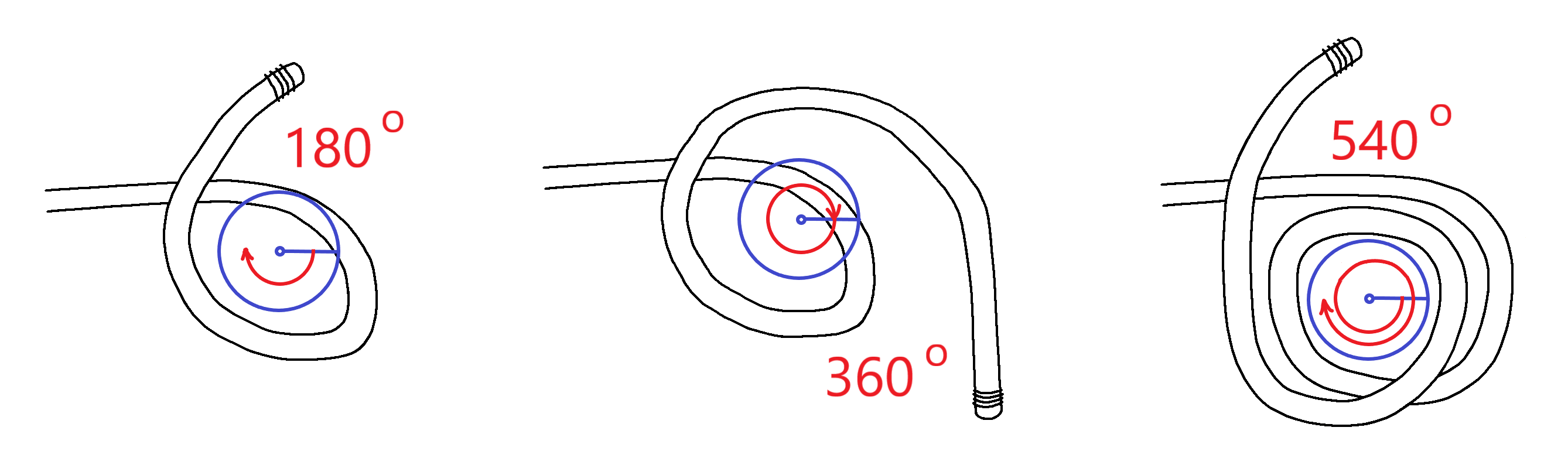
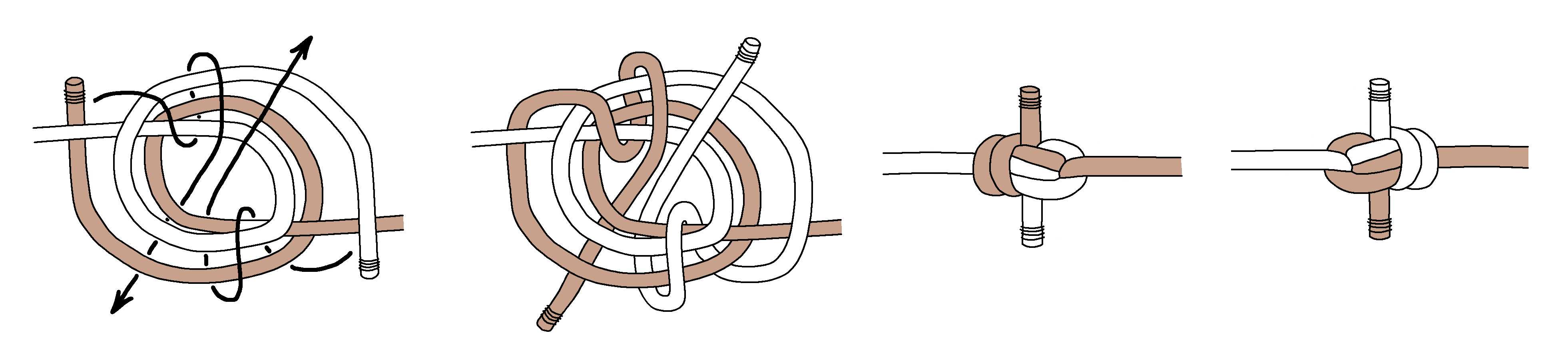
Here is another variation of this round turn method due to Xarax which seems to be first presented in the IGKT forum in 2010. Many of the very old items no longer have important images, but this was more recently discussed in 2024. https://discourse.igkt.net/seppelin-360-bend/7750 Effectively, we do “half a round turn” to get a version usually called a Double Zeppelin Bend B2.
Before we move on to the related Blimp Knot, we should note that this construction does not truly give a Double Overhand Knot in each of the cords separately. Instead, it is merely a more complicated way for two Overhand Knots to interact. It has been recently proposed that this Double Zeppelin Bend B2 instead be labeled a Zeppelin 360 Bend by Mark Gommers on the IGKT Forum. He also wants to rename the Double Zeppelin Bend B1 to now be a Zeppelin 540 Bend. The motivation for this notation is the wrappings of the start of each.
I am not opposed to the renaming for the Double Zeppelin Bend B2 because it does not involve any Double Overhand Knots. However, I think I will not switch the name of the Double Zeppelin Bend B1 because it does involve the interlacing of two Double Overhand Knots. Next, we move on to how to get the related Blimp 360 Knot which I like a lot.
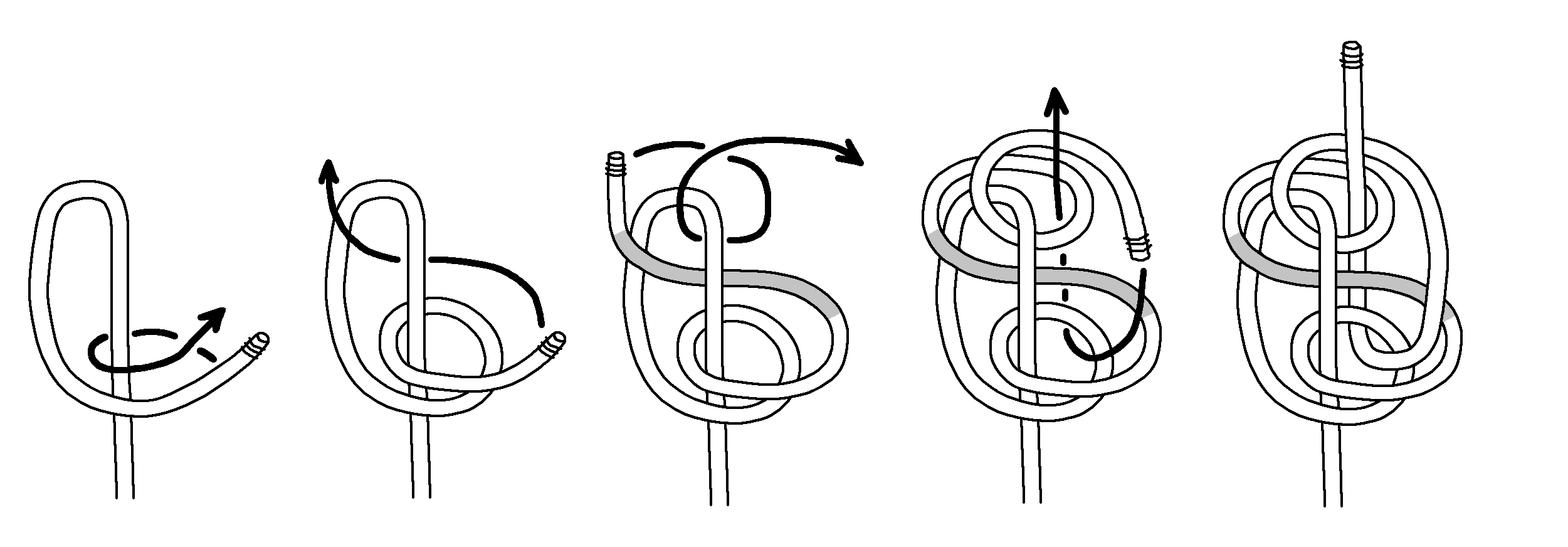
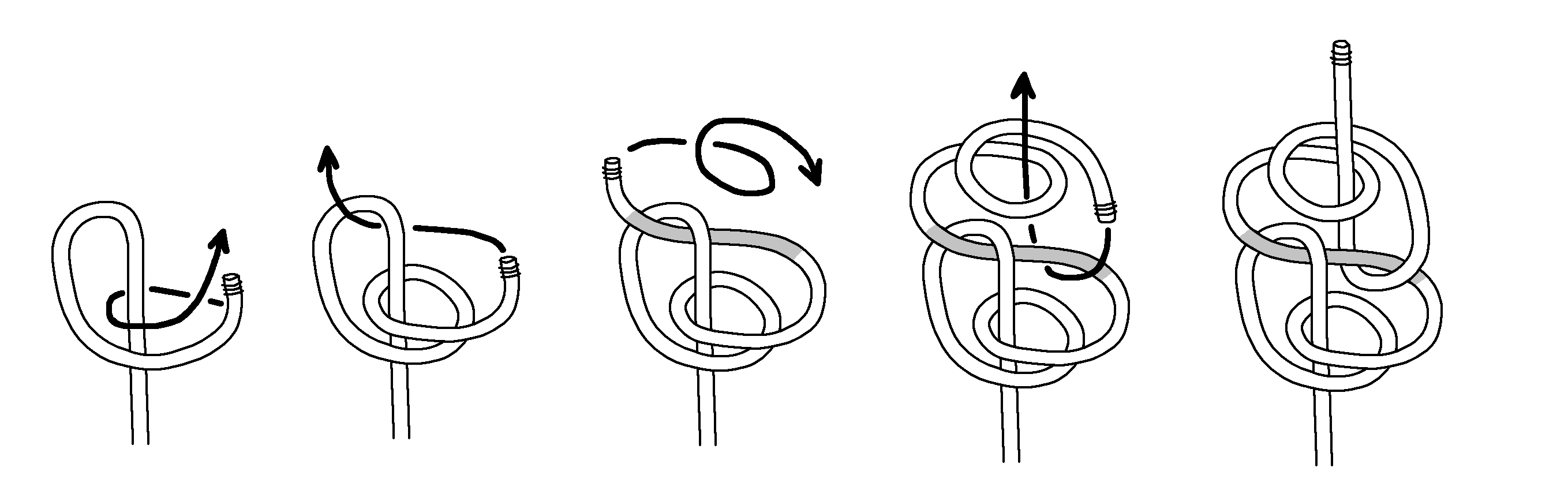
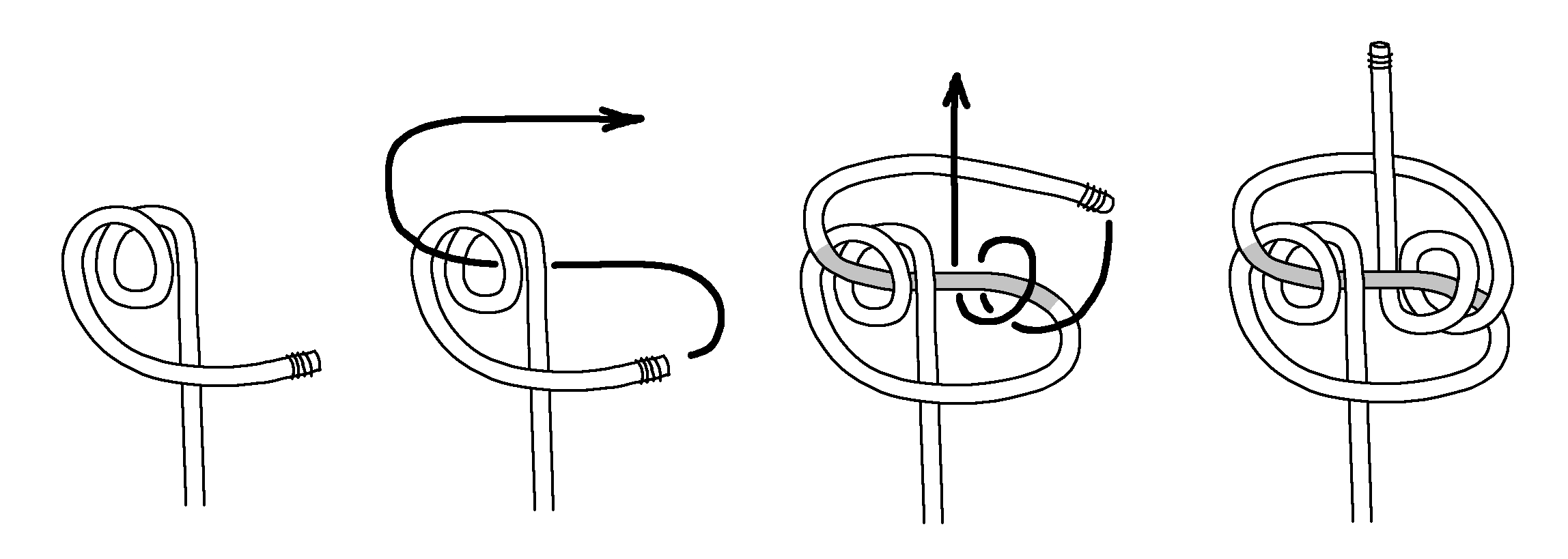
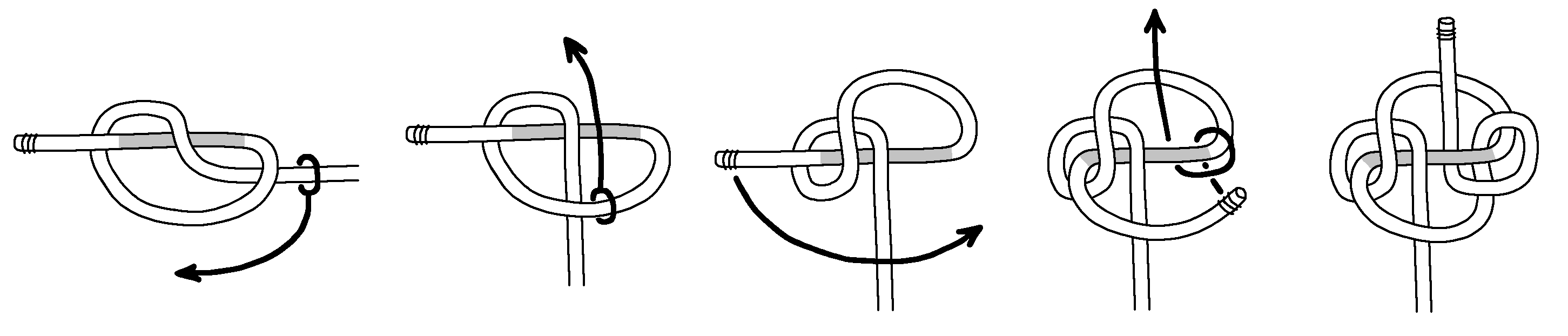
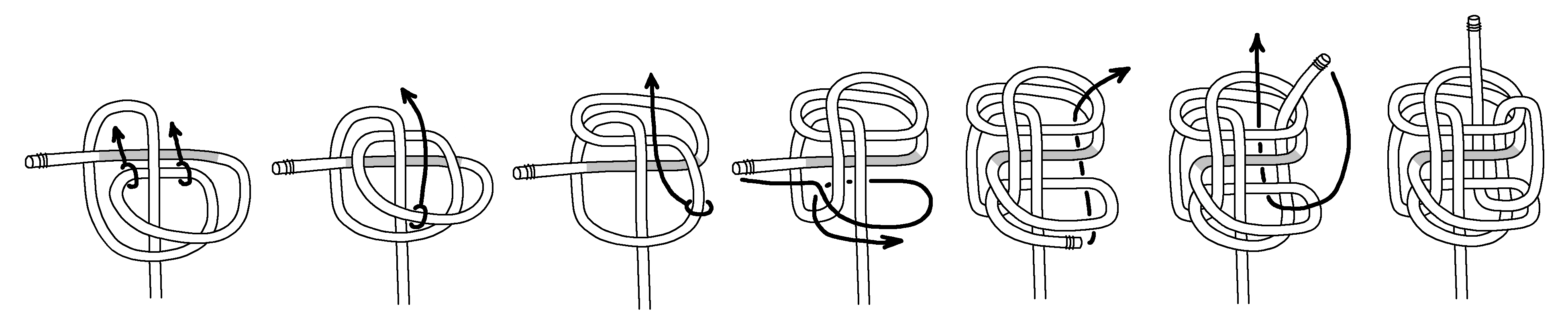
Here are the tying instructions for a Blimp 360 Knot. Notice that we begin with a loose, horizontal Overhand Knot. Then we move the standing part down and flip the bottom of the Overhand Knot up. We finish with the free end as indicated.
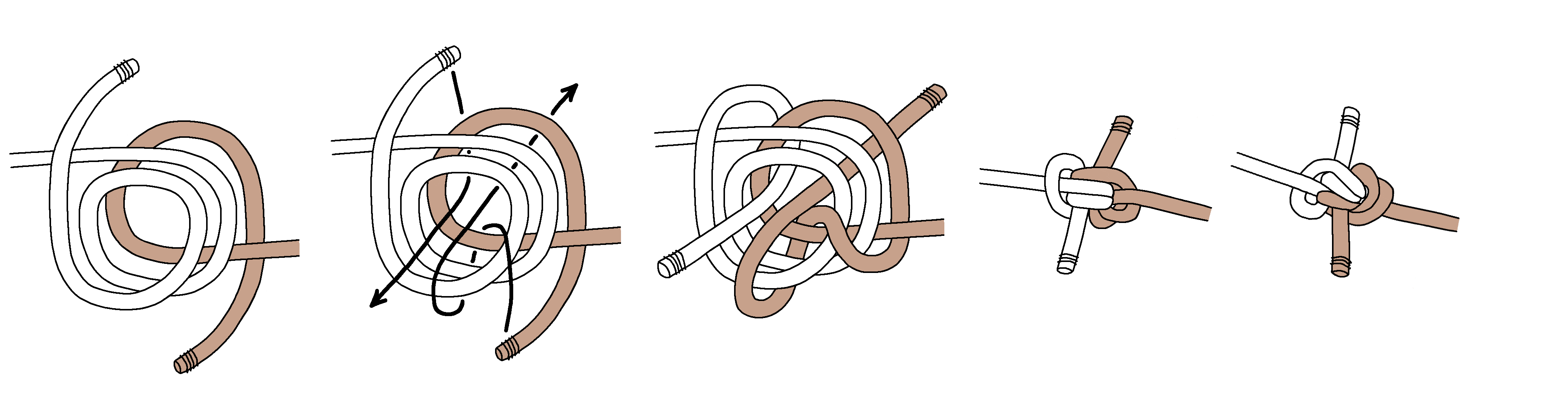
Here is a way to move the 360 deg structure to an actual Double Overhand Knot. We start out as we did above with the 360 deg turn, but then we double wrap.
On a whim (since I was having fun with this exploration), I tried a Mixed Double Zeppelin Bend. One side has the A1-variation with a single turn and double wraps. The other side has the B1-variation with a round turn and a single wrap. I thought it might be more interesting in the Blimp Knot implementation, but the resulting Zeppelin Bend worked out better than I had expected.