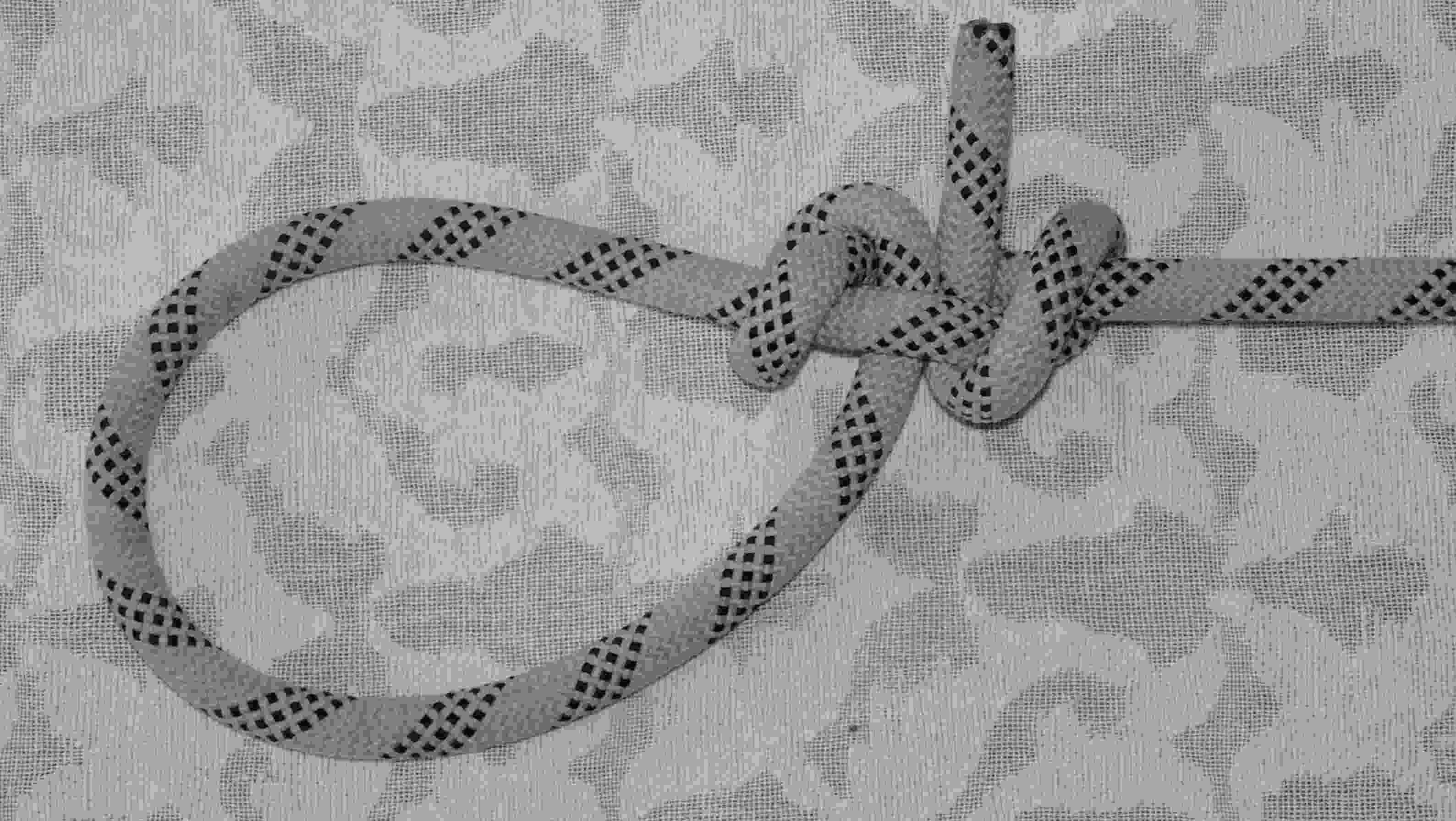
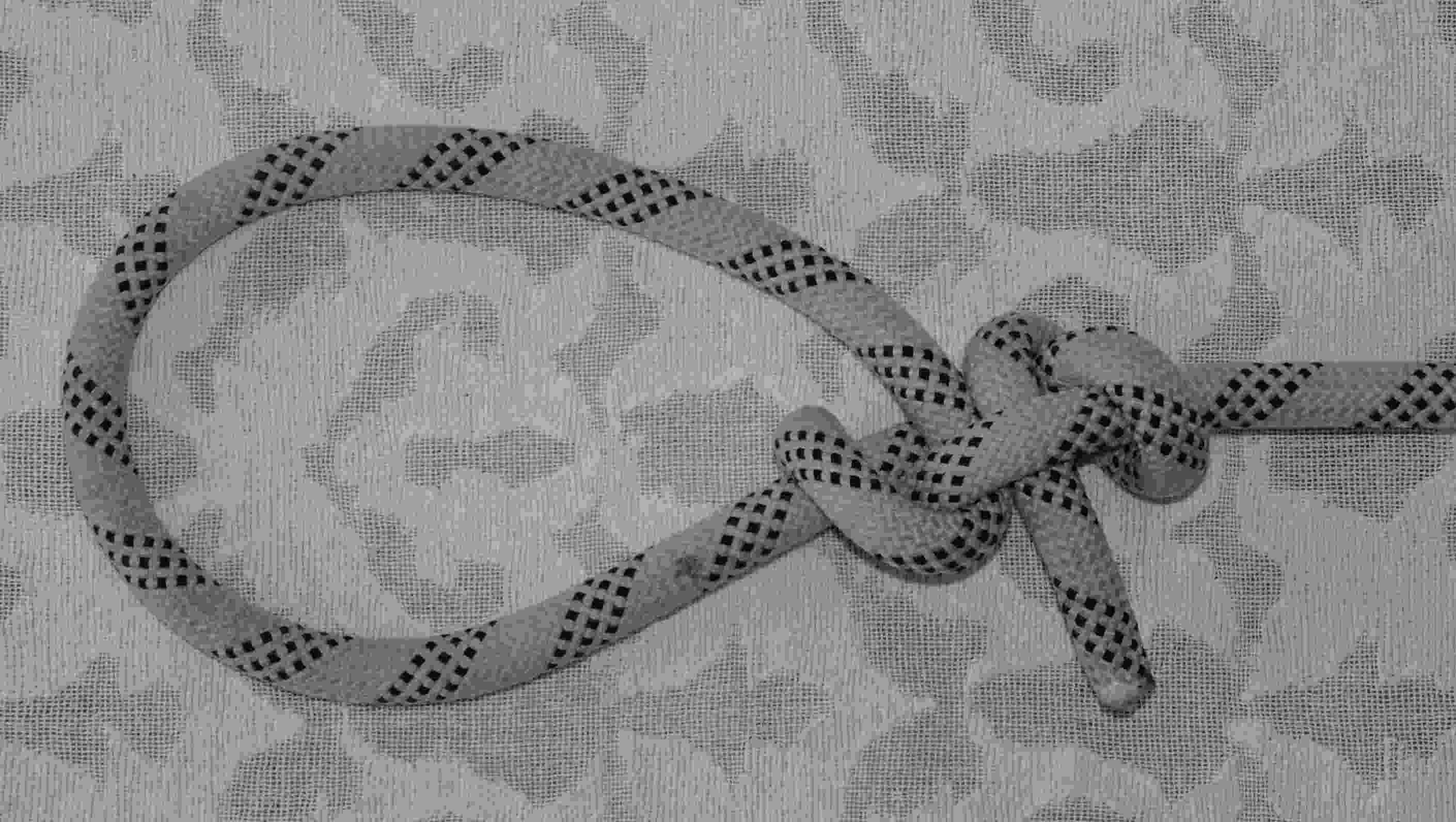
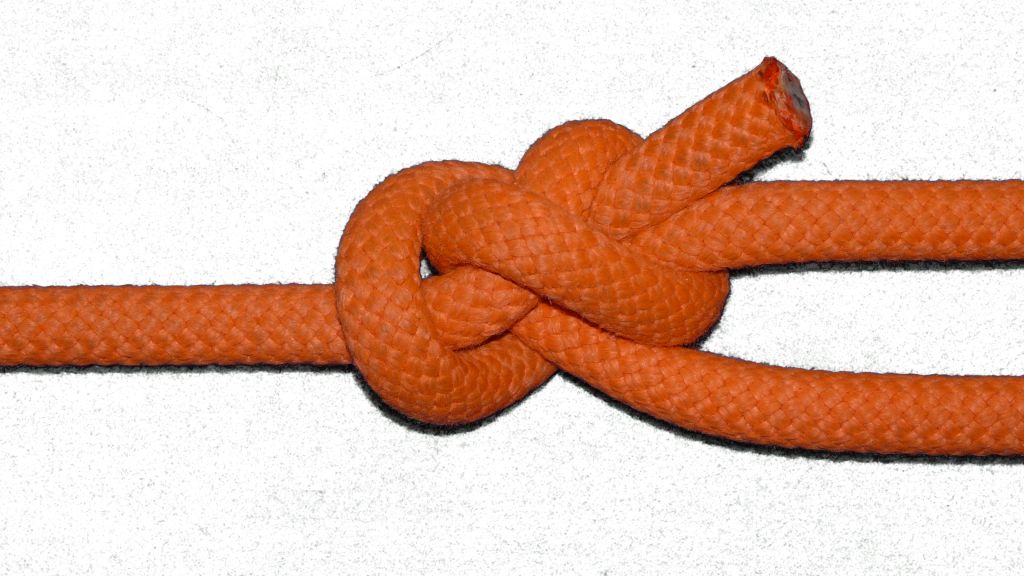
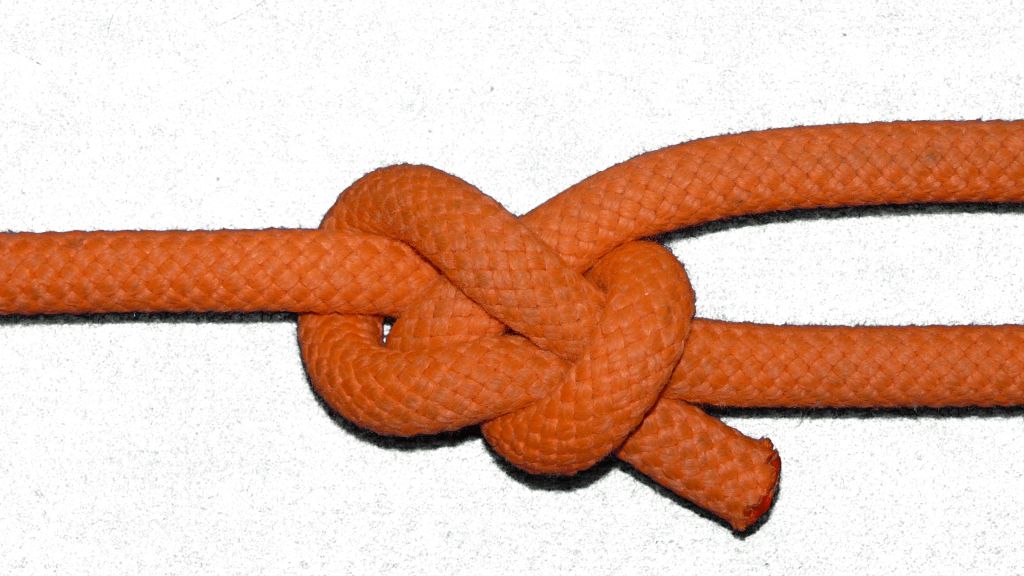
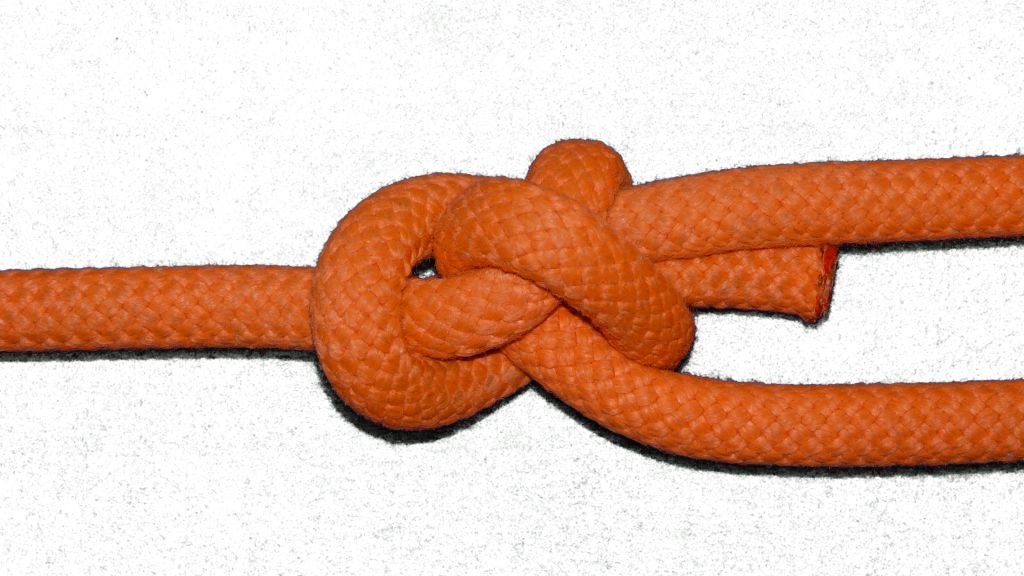
The DHB should be more secure, esp. when slack (i.e.,
when set well and then jiggled around in slack line) ; it is
just a wrap or few further and one is into the blood knot long
favored by anglers and secure in nylon monofilament line
(maybe also in HMPE gel-spun line, but weak, there?).
I don’t look to the carrick bend as a model of security
–in contrast to the interlocked-overhands end-2-end knots,
which can be seen to be derivative to the former (for better
nipping of tails).
What I’ve found nice in resorting to the (single/double) harness
bend is that it’s formed by simple wrapping of the tail around
two parallel parts and then tucking it between them ; this at
least is easily done for ONE side, though sometimes I’ve
resorted to the “single” form for ease of finishing the knot,
where a 2nd wrapping & tuck was more difficult --now needing
to tuck between some OVAL opening rather than the wide
“V” of diverging parts for the initial tail-tuck placement.
–this being in small, fiddly stuff, hard to work with with
fat fumbly fingers.

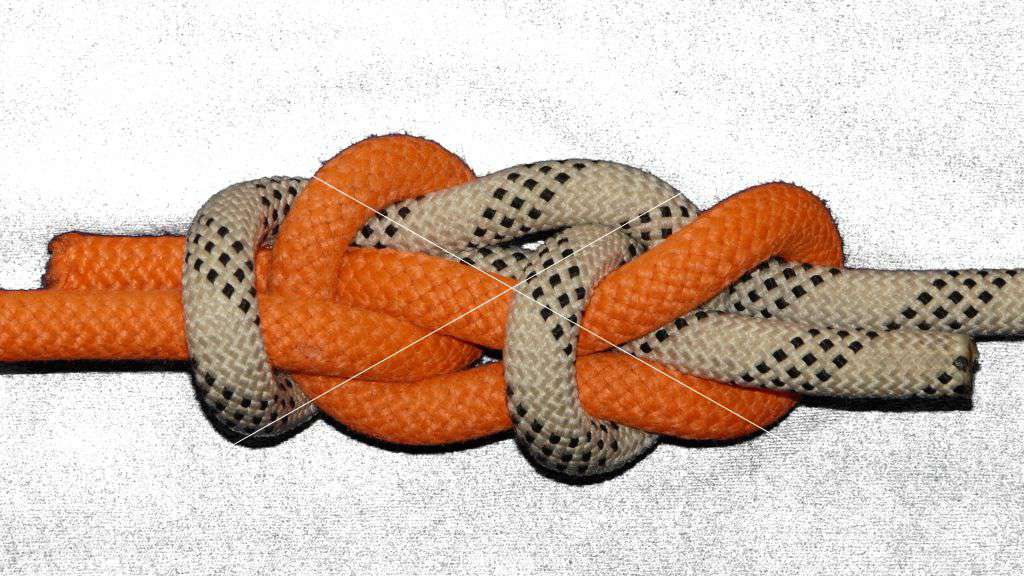
Ashley also reports that the [i]Double Harness bend[/i] with parallel ends
( ABoK#1421) "[i]appears to be preferable[/i]" from its more symmetric relative,
the [i]ABoK#1420.[/i]
One reason for preference (not articulated by Ashley) would
be that the adjacent/same-direction tails can be jointly cut
and will protrude on only one side, leaving the other side
clean for flow over surfaces, etc., where opp-direction
tails protruding might cause some difficulties. (Although,
I’ve found blood knots tied asymmetrically so as to
have the opposite results --i.e., an extra half-turn in one
tail-wrap so to have it emerge in opposition to the other.
I think that it is natural & easier to start the knots with
an orientation leading to --in symmetry-- same-side tails.)
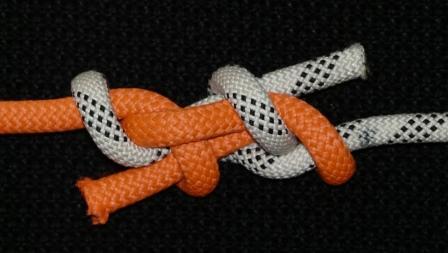
I do not like the [i]Double Sheet bend, [/i]for the same reason that I do not like the [i]Single[/i] one :
I do not see ANY reason a bend need NOT be symmetric, and MANY reasons for why it should be.
???
This is a quite limited vision (or maybe a hint at how you define
“bend”!?), as an obvious need (or rationale) is that one’s joined
ends are asymmetric --of non-equal nature (in size, material,
construction (or color ;D ) ! So why would one expect to bend
one stiff old material in ways that well suit a new flexible rope?
An asymmetric end-2-end knot might be just the right solution
to this simple rope problem. (Above, I show one reason I came
to an asymmetric harness bend solution --tying difficulty.)
Re “definition of ‘bend’”, I have some sense of seeing the sheet
bend and similar as “bight hitches”. But I recommend to you
the reverse sheet bend aka “Lapp bend” with an extra wrap
around the SPart & that-side-of-bight part (not both bight legs!)
as a wonderful substitution for the sheet bend in that it
is slack-secure, looks amply strong, and has a seemingly good
“forcible untying” method : pulle bight legs apart to draw
some hitching SPart through, and enable loosening of the
bight tail.
–dl*