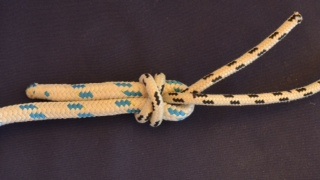
I am testing out the following simple bends for slippage amount:
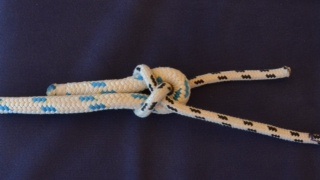
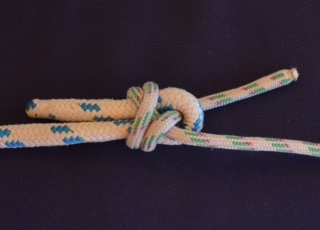
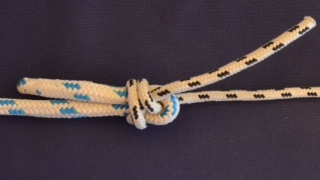
Lapp bend
Double Lapp bend version 1 (Don called this the jammable version)
Double Lapp bend version 2
Single sheet bend
Double sheet bend #1434
Double sheet bend #488
Asher’s Simple Simon Under
Knowing how much a bend can slip before it sets is very useful information, if only to tell us how long a tail we need to leave.
This is dependent not just on the particular bend, but on the material and diameter/diameters selected for the line. My particular interest is finding the best simple bend when double braided polyester lines are used and are different in diameter.
Note: The amount of initial slipping does not necessarily tell us anything about knot strength. A knot could slip substantially before it bites well.
My testing resources are unfortunately limited so this is just very preliminary work, but not much information currently seems to be available and curiosity has got the better of me.
As a side issue, I will also comment later on how easy I found the bends to undo after the load was applied (surprising results).
I will copy a few posts over from the other thread to fill in what prompted all of this. I have done one test on each today so I will then post photos of the 7 bends dressed and then after load has been applied (may be slow as internet is weak).
So my big questions are:
“Is #488 a better version of the double sheet bend than #1434, which is currently in use?”
and
“If so, why is the worse version taught everywhere or illustrated as the version to use (as in all books I have seen and even in this guilds section on knots for Sea Cadets)?”
This post prompted me to check out the Lapp bend (or knot as it is also referred to):
Referring to the double sheet bend, Don Lehman recently made this interesting comment that caught my attention. I had not come across the Lapp knot previously:
I had a particular request for testing the slippage of the Simple Simon Under, so will also test this out again later using new line and perhaps also using a thinner diameter, comparing that to the best performer of the other six bends:
So these are the nitty gritty details. Skip this if all you are interested in are the results later:
Equipment used:
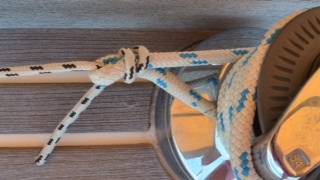
Two speed manual Lewmar 54 self tailing sheet winch
Old double braided polyester 16 mm and 10 mm (sailors very rarely use new line, so this is useful information for us).
Calipers
Camera
Measurements taken:
18 were taken for each test:
To judge the amount of stretch in the thinner line (and therefore get a rough idea of the load applied) three sets each of the length of the line between two points was measured before and under the final load applied
Three sets each of the length of the tail of each line before and after.
Method:
A loop was tied in the middle of the thinner line so that I could throw it around the drum of a nearby winch. Initially a midline bowline was used, but that seemed to need care so that it did not elongate too much under load, so I switched to an Alpine Butterfly loop (grrrrrrr, more about that later)
Bends were tied and dressed and photographed
The lines were transferred to the winch with 4 turns of the thicker line around the winch (within half a metre of the location they were tied), but the lines left slack and the bend tightened as carefully and as much as I physically could
I took measurements as described above
Load was slowly applied by turning the handle on the higher gear. I continued to turn the handle until no further movement was possible (two hands)
the length between the chosen two points on the standing line was measured 3 times again, the load removed and the length of the tails measured.
I plan to do at least 3 lots of measurements, 5 if enthusiasm persists.
If anyone can see any improvements I can make in technique, please let me know. Too late to change for this trial, but if I do any more it will help.