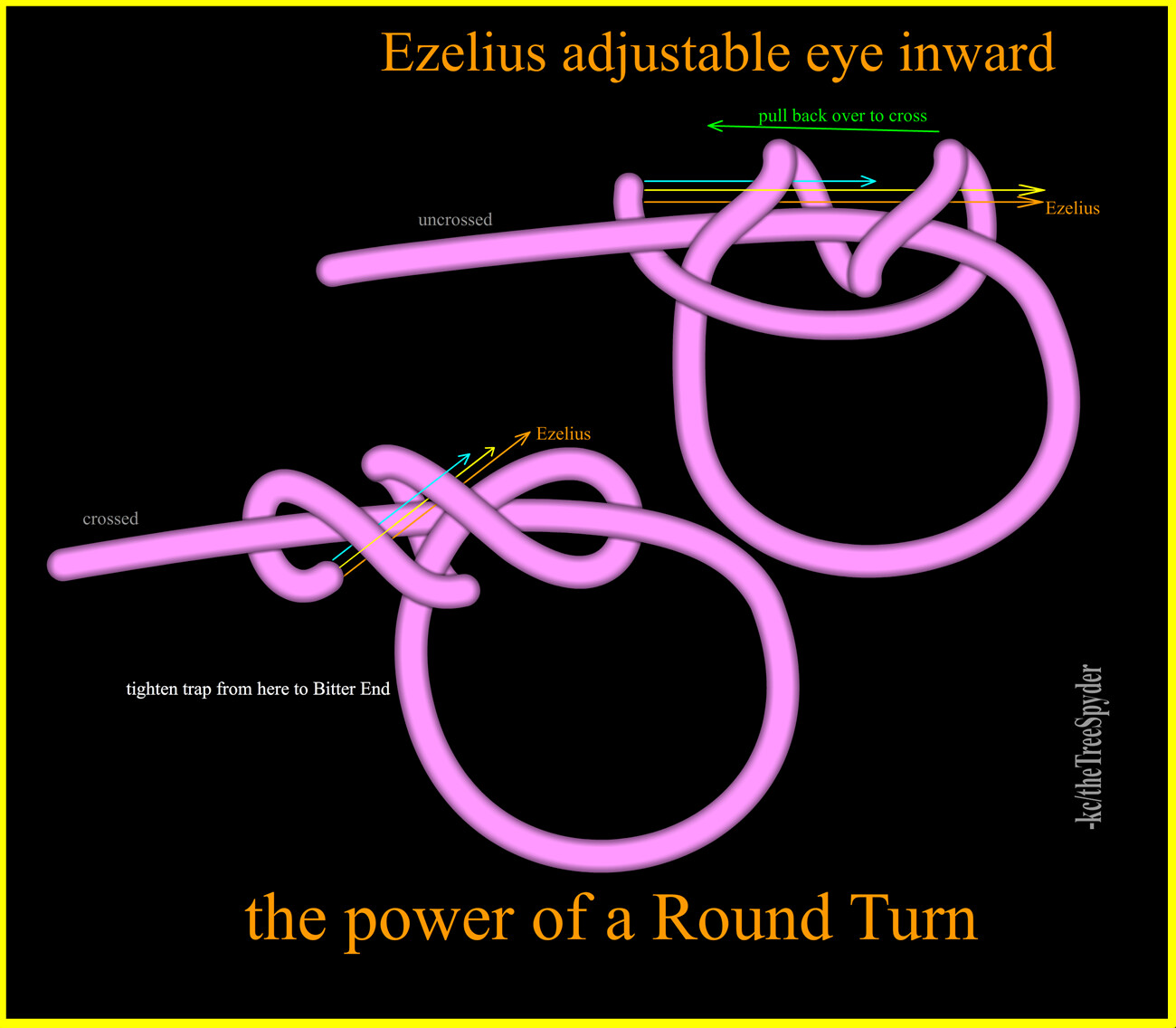
Examples of use of Ezelius knot variants

Dear Sirs,

I have made some examples of how use the Ezelius knot:

I also made an instruction of the inverted variant of Ezelius knot, including examples of use:

This is the original description of the Ezelius’ slide-and-grip hitches:

Yours Sincerely, Ezelius

I also made a video about the knot. The inverted variant is not in the video though.

The Ezelius family of knots is generally an improvement over the Rolling Hitch family. The Ezelius Grip Hitch is similar to the Rolling Hitch (1) [ABoK ##61, 503, 1190, 1465, 1681, 1734, 1791, 2555], Rolling Hitch (2) [ABoK #1735], and Rolling Hitch (3) [ABoK 1466, 1736]. The Ezelius Adjustable Loop Hitch is similar to the Tautline Hitch [Ashley does not use this name, but ABoK #62 (mislabeled), 157, 431, 1730, 1800, 1856], the Midshipman’s Hitch [ABoK #1027, 1729, 1799, 1855, 1993], and the Another Adjustable Hitch [ABoK #1800 (mentioned in the text), 1857]. The Inverted Ezelius Hitch is similar to the Adjustable Jam Hitch [ABoK #1230, 1727, 1994].

I would point out that there is one application to tent guy lines [#1799, 1800] where the Ezelius knot does not work out better. As the later name implies, the Tautline Hitch is often applied to a guy line under some tension. It is not as easy to tie the Ezelius Adjustable Loop Hitch under some tension.

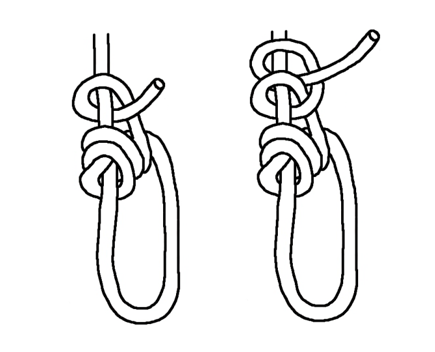
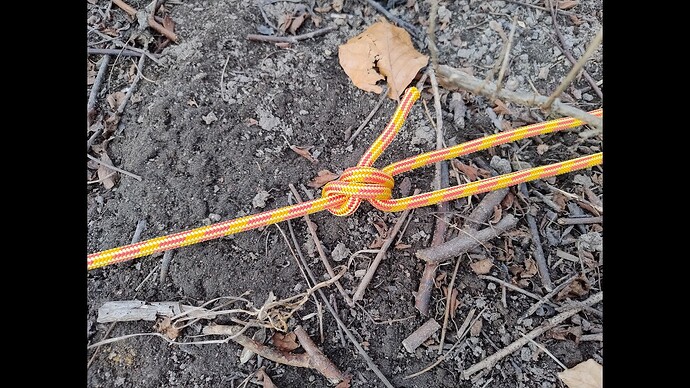
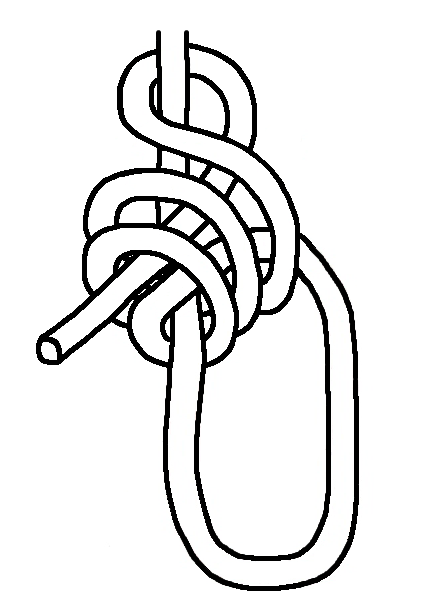
The usual trick for improving the performance of all of the knots in the Rolling Hitch family is to add extra wraps. See [ABoK #215, 452, 480, 481] for examples. The extra wraps are still easy to do for rope under tension. The Ezelius family of knots usually does not need extra wraps, but sometimes it can also benefit from an extra wrap, particularly when using very cheap, stiff, slick cord such as the yellow braided polypropylene rope which is common around boats, swimming pools and construction sites. Here is one way to do this.
Thank-you!

Very nice breakdown to comprehensively link the pieces; and re-affirm the individual parts of these Friction Hitch constructions with the Ezelius.

i too think adding more ‘wraps’ ( i call arc180s 1 as a stroke, 2 as a cycle with engine mechanics) beyond a Round Turn (RT) increase the powers of these magical Friction Hitches, a true personal favorite class.

May i add that for ABoK 480 vs. 481 on page 77 in Occupational Knots can find that the continuous turn directions of more Clove based 480 can walk/creep a bit ; but the reverse direction of more Cow based 481 not so much, if at all.

The root power (worker bee)of all these to me is the RT i think. The rest of each lacing are different forms of ‘keepers’ that keep the RT in place working faithfully. If RT is hyper seated well into place, the ‘keeper’ parts that keep it on the job can be a bit looser. This ‘keeper’ function to me is like a cotter key/hair pin that keeps the clevis pin working in place confidently in other mechanics. If the tight seating of the critical RT can’t be achieved in stiffer (or if slicker), especially then added turns/arc180s especially to the working RT (if more than one) is a more serious upgrade. If stiffer rope for the Hitch, it simply does not lend as well to the task. In other ways a stiffer line may not lend well to DBY(personal fave for fixed terminal eye); and so one way i judge usability of particular rope to my style/usages when choosing or buying.

To me the capstan theory plays in hear, if we break it into 2 parts to view it as
A> seating to host capacity in the maths
then
B>maths of that capacity used for friction utility as the focus of the capstan theory
Hear, in Friction Hitches, we use virtually same seating capacity maths to host for grip utility instead. So just as capstan theory counts in arc180s/turns; so i find we can here.
Tho , need an opposing arc180 to get most out of it in Friction Hitches. 1 arc180 only giving tangential/sine grip. But in plurals of more than 1 arc180 around host then get cos+sine for grip. arc180 being as important in rope as in a bridge! Same maths! (Another place the seating capacity is used is in Nip functions). An arc180 is a simple structure unlike other simplest structures in that both ends of arc180 AND it’s even greater force(than the end ‘inputs’) apex pull not only in the same dimension, but then too, the same direction of that dimension!! This is very key to me.

So we do see the RT throughout these historical forms once so decoded; then to to this newer Ezelius ! Here is my take on it from before:

Dear Mr. Dennis,

It is an honor to write to you.

I really admire the Ezelius hitch. It has become one of my favorite adjustable hitches.

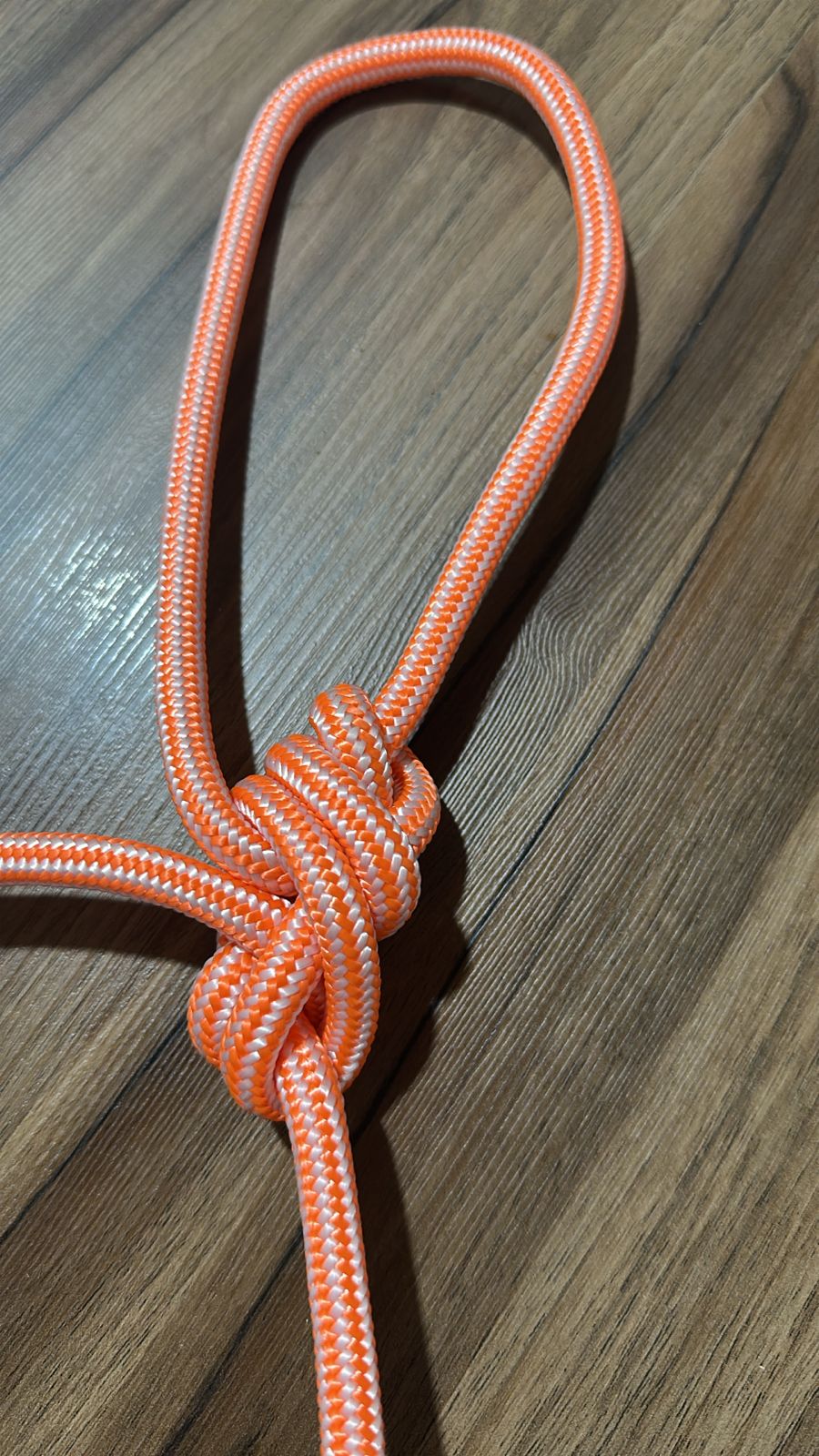
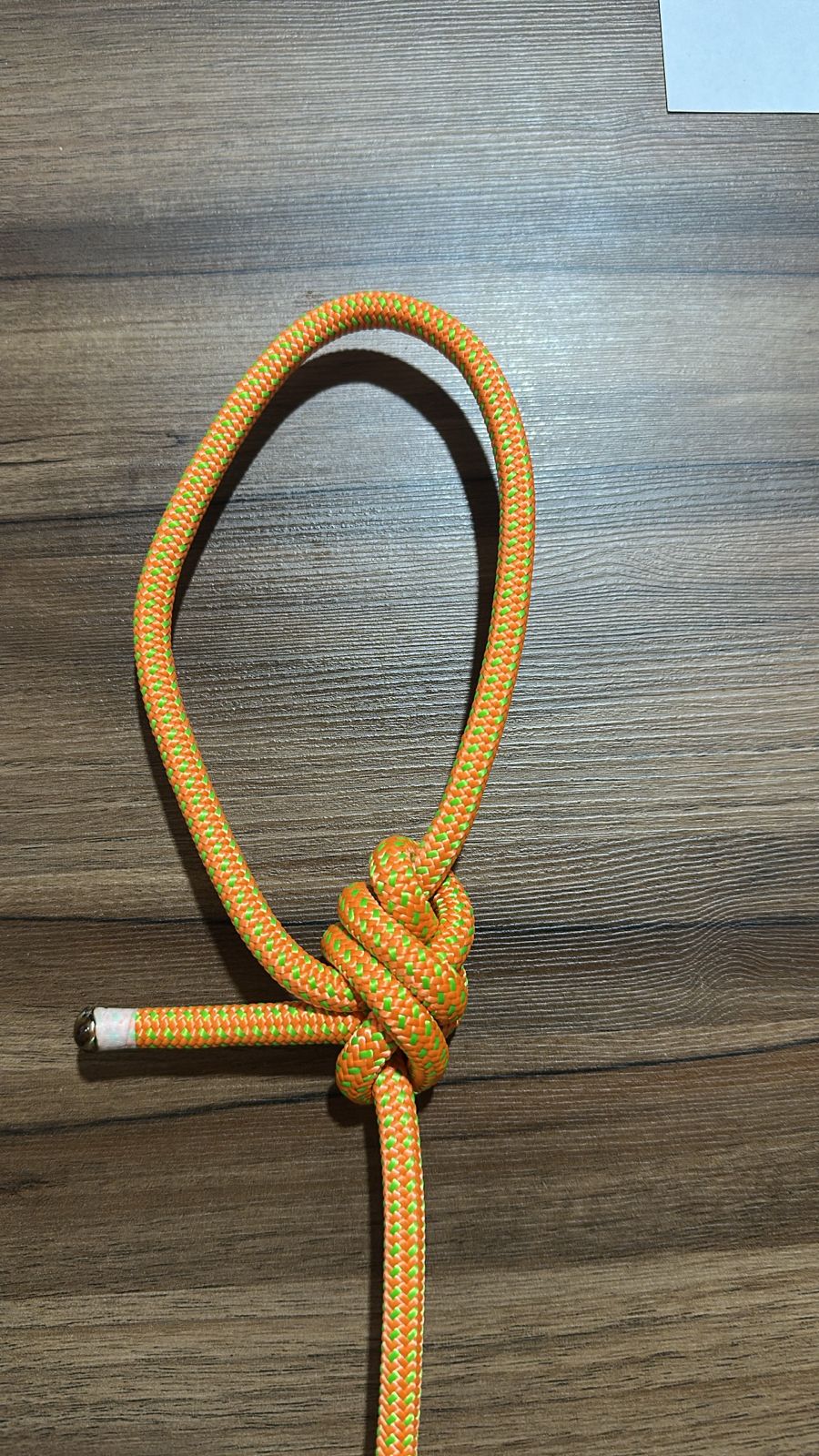
While practicing with it, I made a small variation. I do not know whether it has already been described or not.

I added one extra wrap over the eye and then brought the working end around the lower loop with one or two additional turns. In my own tests, it seems to be more resistant to slipping.

I am attaching a photograph of the variation. I would be honored to know your opinion.

Kind regards,

José Luiz Appolari
Brazil

Dear Jose,

Sorry, but I cannot follow all of the turns hidden in your knots. I need to see a loose version to totally understand them, but they both look interesting.

The key feature of the Ezelius knot is that the free end finishes by coming out under the extra wraps. That feature makes it a little harder to tie under tension (as for a guy line) because you have to keep the wraps loose until this free end is inserted before you tighten. I cannot see how your free end goes into this location (unless it goes there and then goes on back to come out where it does.

Many use extra wraps in a Midshipman’s Hitch, and yours look like they started out this way. I cannot see the finish.