Introduction
First, let me introduce myself. In 1985, at the age of 14, I took possession of, and never returned, the book Klutz Book of Knots, from my father’s desk. I’ve had an interest ever since. I’m familiar with the ABOK book, but I haven’t treated myself to that expensive book yet. A few years ago I bought the book Knots, by Richard Hopkins. A couple months ago it occurred to me to look up the Klutz book for a friend, who has a 14 year old son. I bought the kid the book and tried to inspire him the way it did me. He didn’t get bitten by the bug but my friend did. He’s been practicing and texting me about various knots ever since. As a result, my knot passion is as high as ever. It has brought me to this forum. I’m still a hack but I’m eager to improve. This Trucker’s Hitch thread and the associated YouTube videos have taken up much of my free time the last couple weeks.
The Fixed Loop
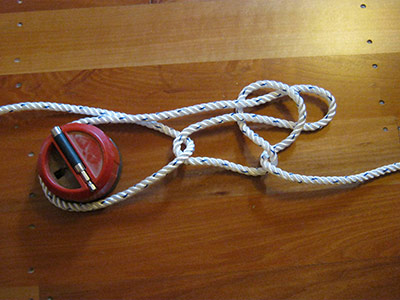
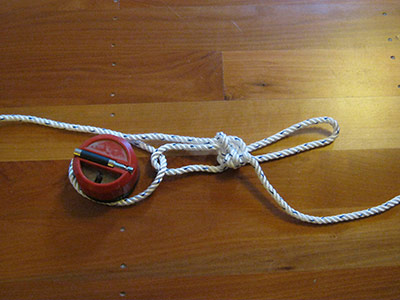
The Klutz book showed a slipped overhand loop. I like the arguments against using such a knot (losing tension) and was pleased to learn the Alpine Butterfly Knot. What is the name of the fixed loop used in the following video?: http://www.youtube.com/watch?v=8N6blmw006U
Pros/Cons?
The Clove Hitch
There was some debate as to the desirability of using a Clove Hitch to initially fix the rope. I liked the following video for its overall presentation of a Trucker’s Hitch: http://www.youtube.com/watch?v=drkcOzCjuuU
This fellow ties a Clove Hitch but adds a Half Hitch. Does the addition of the Half Hitch appeal to those who discourage the Clove Hitch?
The Great Lee Bundy
In this thread, this fellow seems to have gained legendary status with the combination of knots in his Trucker’s Hitch (his combo is very similar to the fellow in the linked video just above). I think his combo deserves his name, Lee’s Trucker’s Hitch: http://www.youtube.com/watch?v=gcz-D0kxiwo
I’m not taking sides in the flame war that occurred regarding the dis/advantage of single vs. double turns. However, I did NOT see a double twist corkscrew turn prior to the insertion of the bight. I watched it many times over the last week. Please pardon my ignorance as to the proper lexicon. Here’s what I saw Lee do (I believe someone said something similar): he forms a loop (possibly the first purported twist?) and then turns it to expose the back of the loop (possibly the second purported twist?) in order to insert the bight. To me this assembly appears identical to what is done when tying a Bowline (without going around and reinserting the bight, of course). By the way, in recent comments to the video, Lee was alerted to this thread and was asked whether a double twist corkscrew turn was performed. A representative at trailblazesonline answered in the negative.
Maintaining Tension
I have questions about Lee’s Trucker’s Hitch and Trucker’s Hitches in general. With a fixed midline loop, what is the best way to maintain tension while finally tying off? In other words, the working part (the part that is hauled or heaved? Lexicon?) is passing through an open loop. As soon as I stop heaving and let up to tie the two half hitches I’m losing tension. How can I avoid this?
To try to maintain tension, I’ve tried the following when tying Lee’s combo. After inserting the bight through the nip/loop, I pull on the leg of the bight that snugs up the loop through which the working part passes. Basically, that loop (the fixed loop in other variations) is cinched down to the diameter of the running part in order to snug it. This can be done with (what has been so discouraged in this thread) a slipped knot as well. It’s harder to untie. Is this a good technique or should I follow Lee and leave the loop open?
Thanks all. I hope to be spending more time on the forum.