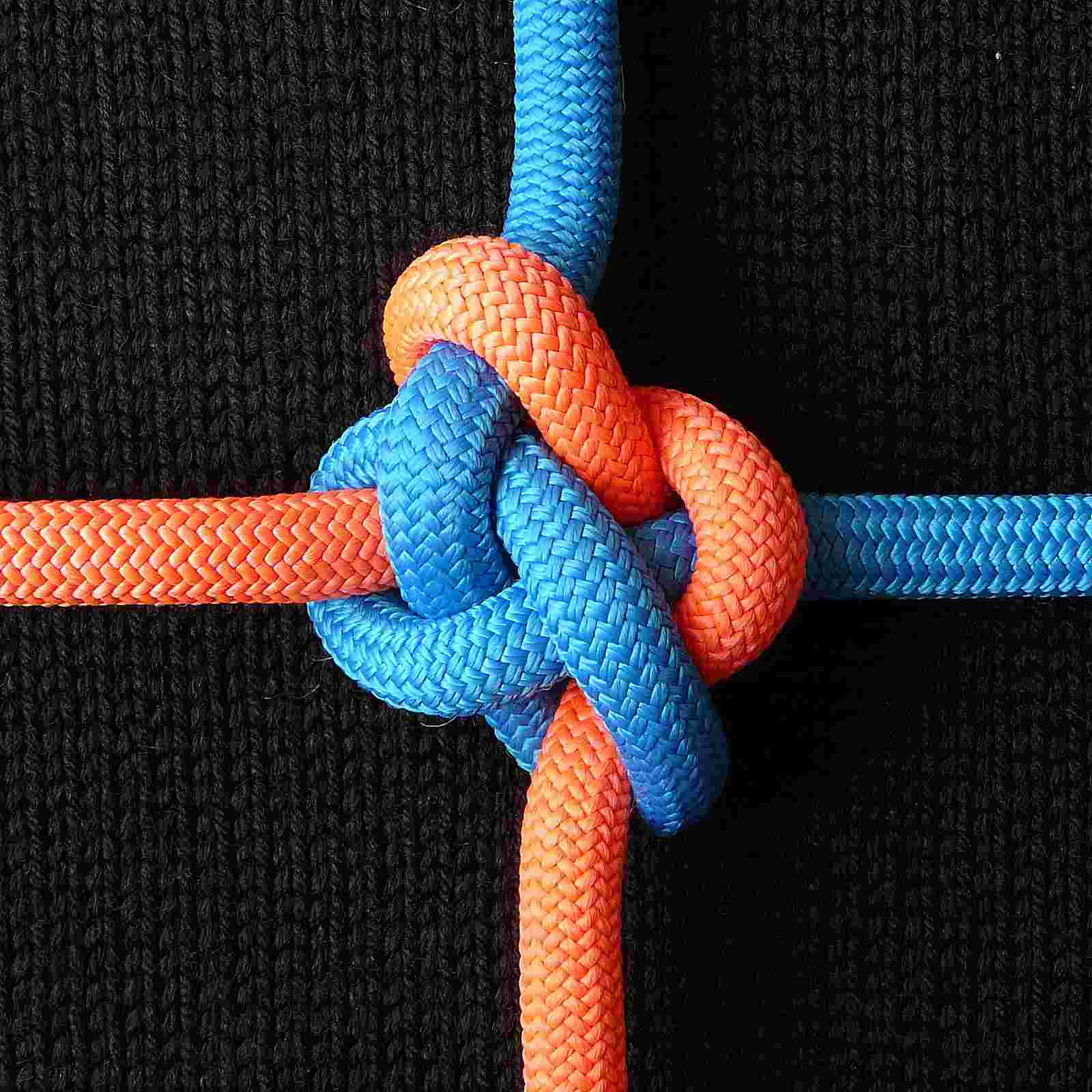
Fisherman's Bend

Hello all

Just looking to clear up a debate that was held at our Lifeboat station a few nights ago.

One of the knots on our list to know is the Fisherman’s Bend.

I have always taught this as similar to the Round Turn and Two Half Hitches but capturing the round turn with the first half hitch. As with the RTTHHs I look for the hitches to be in the same orientation. Apparently a visiting assessor indicated this to be incorrect and that the half hitches in the FB should be orientated in opposite ways (Cow Hitch-esque).

Can anyone clear up this confusion for me?

Also, I have students asking why this goes against the rule (albeit a rule I made up for training purposes) that bends are for joining ropes and hitches are for securing to rails, rings, eyes and bollards. My stock best guess befuzzlement is to explain that the anchor is merely an extension of the whole rode and can be said to be bent together.

What do you think?

Cheers,

Guy.

Welcome to the forum Guy, I’ll try and help you with this knot.

The Fisherman’s Bend probably got its name from sailor’s “bending a rope to…” eg an anchor. The name now is increasingly being used in place of the Fisherman’s Knot (usually tied double) which is a bend whilst the knot you describe is also known as the Anchor Hitch. Unfortunately knot names are often more confusing than helpful and changing a name is easy enough on the web but the many thousands of printed books will be around for years to come.

The knot can be finished in at least 2 different ways. The first is as you describe, closely allied to 2 half hitches, and should have the 2 half hitches tied in the form of a Clove Hitch around the standing part not a Cow Hitch. The second, more compact and perhaps more secure version, has the first half hitch the same but then the working end makes another parallel turn following the same path.

Many arborist websites simply leave out the second half hitch or turn altogether (see https://www.youtube.com/watch?v=DclnKHGg2ts) - maybe not such a good idea when the knot is out of sight underwater.

Hope this helps

Barry

There are many ways one can “see” one more-complex knot, as made by many more-simple elements / parts.
Some people prefer to analyse it, and then describe it, so then one particular method / sequence of moves they follow to tie the knot becomes more easy to memorize and to execute. The problem with this is that it does not reveal anything of the final form of the knot, of its geometry and of its structure. Some others try to “break” the whole into a number of more localized, separate, quasi-independent parts. This may explain the way the knot works more clearly, but it tells nothing about how to set up and dress the knot in the first place. A third, intermediate way is to explain and then describe a more complex knot as a re-tucked well known and easily memorized simpler knot.
Different people think of knots very differently, because human brain is not evolved to solve tangled 3D puzzles ! So I do not believe there is one “best” way for all people to “see” even the most simple knots !

Apparently the two interpenetrating / sliding parts can “kiss” each other better that way, indeed. However, I do not know any tests that prove the one form is stronger or more secure than the other.

Fisherman-knot-like bends belong to a special, most symmetric class of bends. In my mind, they are best analysed and described as two “siding halves” ( M. p.73 ), two inter-penetrating stoppers, i.e., two stoppers which are tied around each other s Standing End, so the Standing End of the one stopper penetrates the nub of the other (1). Sometimes two bights of those stoppers are also “hooked” to each other at the middle of the knot (2) - and/or the Tail Ends are re-tucked through the other link s nub.

  1. http://igkt.net/sm/index.php?topic=4203
  2. http://igkt.net/sm/index.php?topic=4792.msg31154#msg31154

( See the attached pictures for three simple, conceptually, Fisherman-knot-like bends, which you might not be aware of. )


Cuboctahedral bend.JPG

Sweeney is correct, he’s talking about the Anchor Bend Variant and it traps the working end much like the Buntline and Lobster Buoy Hitch. To me, the ABV is much more secure when tying off to objects such as a small boat anchor. As an avid fishermen, I tie all of my anchors with one of the above hitches because of their ability to trap the working end.

It seems that for many folks, knotting only begins
with Ashley, and assumes his correctness. Let me
quote another knotter, who might be seen to give
good analysis on things knotty, viz., Cyrus Day
(and [u]The Art of Knotting & Splicing (4th ed.)
pp.12,14 (13 =Table 2)) :

The word [i]bend[/i] is almost obsolete as a noun except in names like [i]carrick bend[/i] and [/i] sheet bend.[/i] It is still used [ca. 1947], though not extensively, as a verb (e.g., to bend a sail or cable). Now primarily a nautical word, it was once familiar to landsmen as well as to seamen. To [i]bend[/i] a bow meant to [i]tie (bind, bend)[/i] a bow string to a bow. By transference, the word acquired its modern meaning to [i]curve[/i] or to [i]crook.[/i]

Ashley tried to reestablish the word bend as a
noun; he wanted, on the one hand, to limit its applica-
tion to knots whose function is to join the neds of two
cords or ropes, and, on the other, to call every such
knot a bend. This system of nomencalture, however,
cannot be justified on the grounds of traditional us-
age. The sheet bend, for instance, is so named be-
cause it was formerly [more strongly, originally!]
used to bend the sheet to the
clew of a sail, not to the end of another line. The
fisherman’s bend is not a bend at all according to
Ashely’s definition. …


(And I think that the common reference is to
“Anchor bend” as a synonym. Google --today–
gives it 33,100 vs. 13,100, for what that’s worth.)

Hence, I’ve abandoned my past efforts to try to
instill the Ashley-an nomenclature in favor of my
novel “end-2-end knot” term.

As for the question of the orientation of the (2nd)
half-hitch --to be clove- or cow-esque–, why not
put that to a test --a better course to take than only
following someone’s unsupported recommendation,
possibly. (I say “possibly”, for one cannot be so confident
that one’s testing will reveal all, and the recommender
might --might well NOT-- have good reasons (unstated).
This case shows the problem with not getting rationales
but only assertions : knowledge is lacking.) And do your
self-testing with some variety of cordage, keeping aware
that it often is better to think of this material so knotted”
than of “this knot” with regard to behavior characteristics!

Can you find any references that do otherwise (e.g., in my
quick Google check re names I see only the one orientation)?

In either case, it might be helpful sometimes to finish with
a slip-tuck/bight, and to knot this bight as a slip knot
–i.e., the tail pulls out–; this will maybe better resist loosening
than a 2nd half-hitch. And there are other modifications
to the commonly presented knot that lend better security,
at the expense of tying ease/simplicity and maybe untying
ease. (In most commercial marine cordage knotting that
I’ve seen firsthand, there is some final securing of a tail
by non-knotting means --“hog ring” stapling, taping,
seizing (rather seldom, actually, per thread vs. prior
methods), and tucking it through the line’s lay.)

I will say that I THINK that this is the FIRSTime that
I’ve ever heard this issue raised for this knot, and
that all that I’ve seen has the clove-esque form.

–dl*