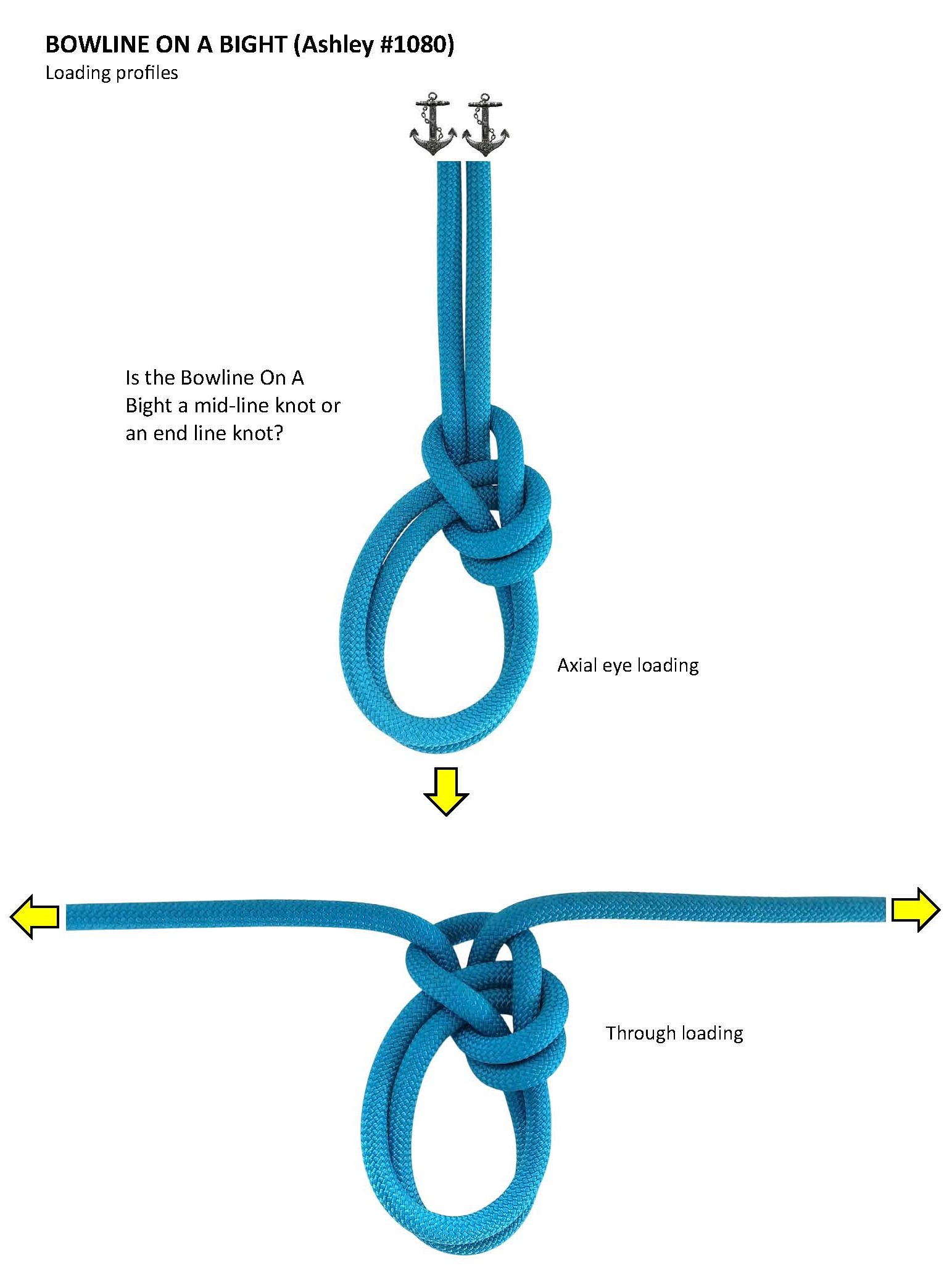
Simply, yes.
((And, egadz, I find that "simply yes" doesn't
meet requirements for a post, here!! So, these ... ))
(-;
Simply, yes.
((And, egadz, I find that "simply yes" doesn't
meet requirements for a post, here!! So, these ... ))
(-;
Apparently you couldn't help to note that the
cited error came from another trying to tie
Lee's Link Bwl, which HAS a posted image.
--dl*
====
per agent_smith
I've been wondering for a while now, what knot Dan was referring to with the term "doubly HAH"! because he had already posted in the past instructions but i was unable to follow without a reference frame.
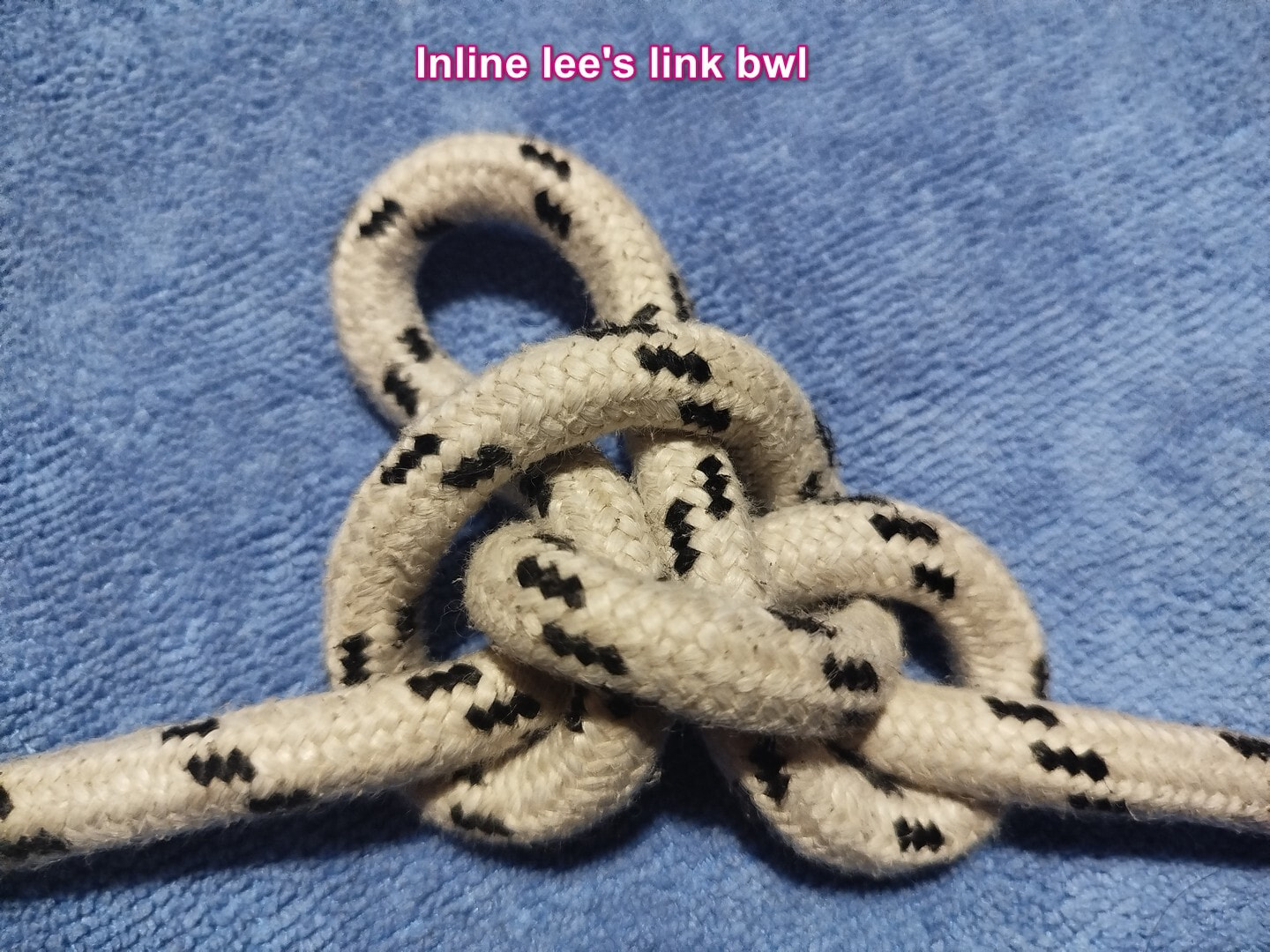
After all, i still believe he did an excellent job describing it using my image of Lee's link bwl as a reference frame.
Of course i made a mistake, because i used parallelism of two ends for simplicity, but the way he put it, (that i don't understand Lee's link bwl) is at least a bit harsh to say to someone who has tied Lee's link bwl and all his loading profiles so many times  .All good.
 .
Thanks Dan for the confirmation, but that " simply yes" does meet requirements for an additional post, at least from my part.
I have already admitted my mistake, however it seems you have missed quite a few important things from my previous post such as.....
and this very important part, which you rather did not notice at all,
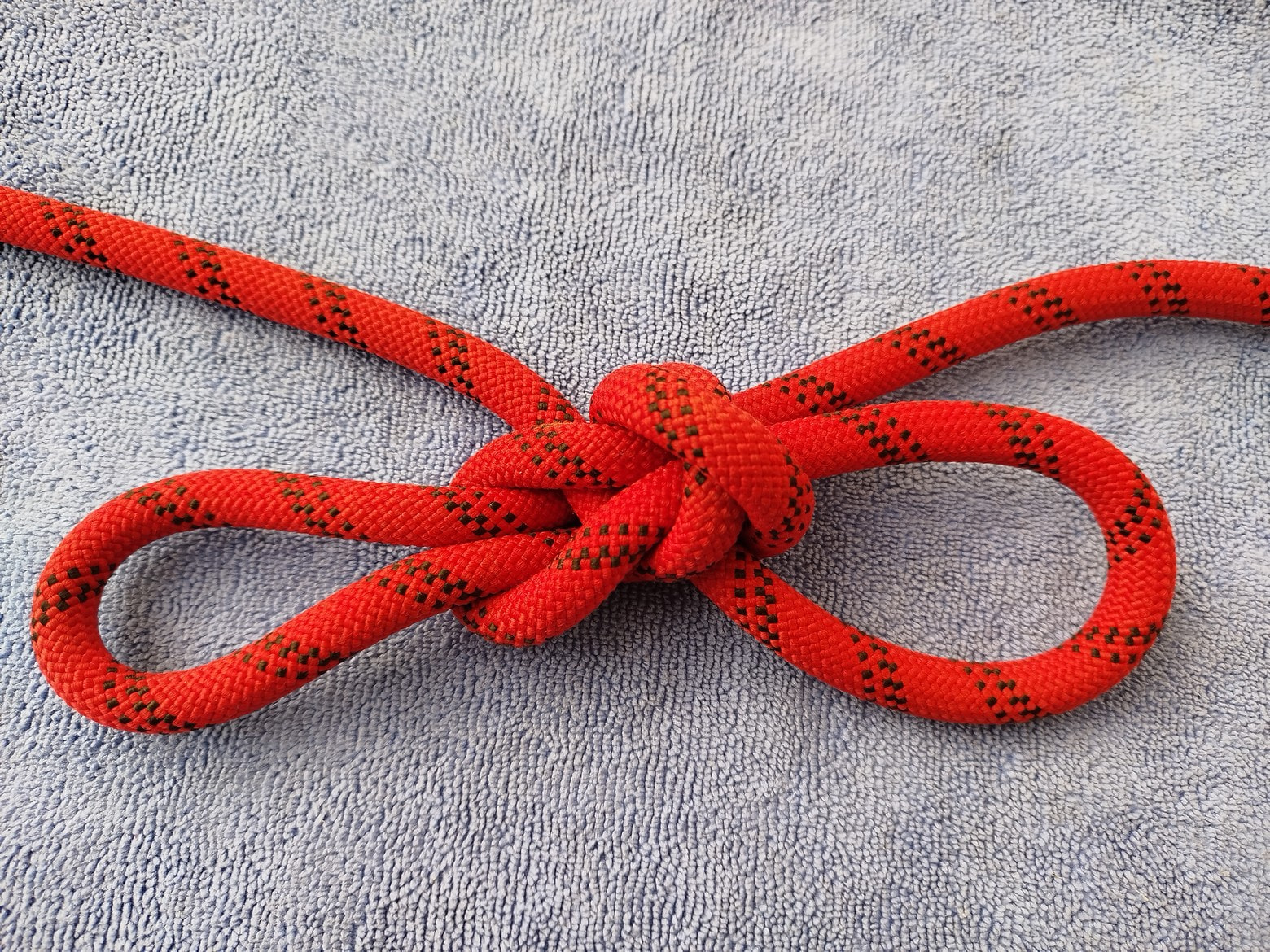
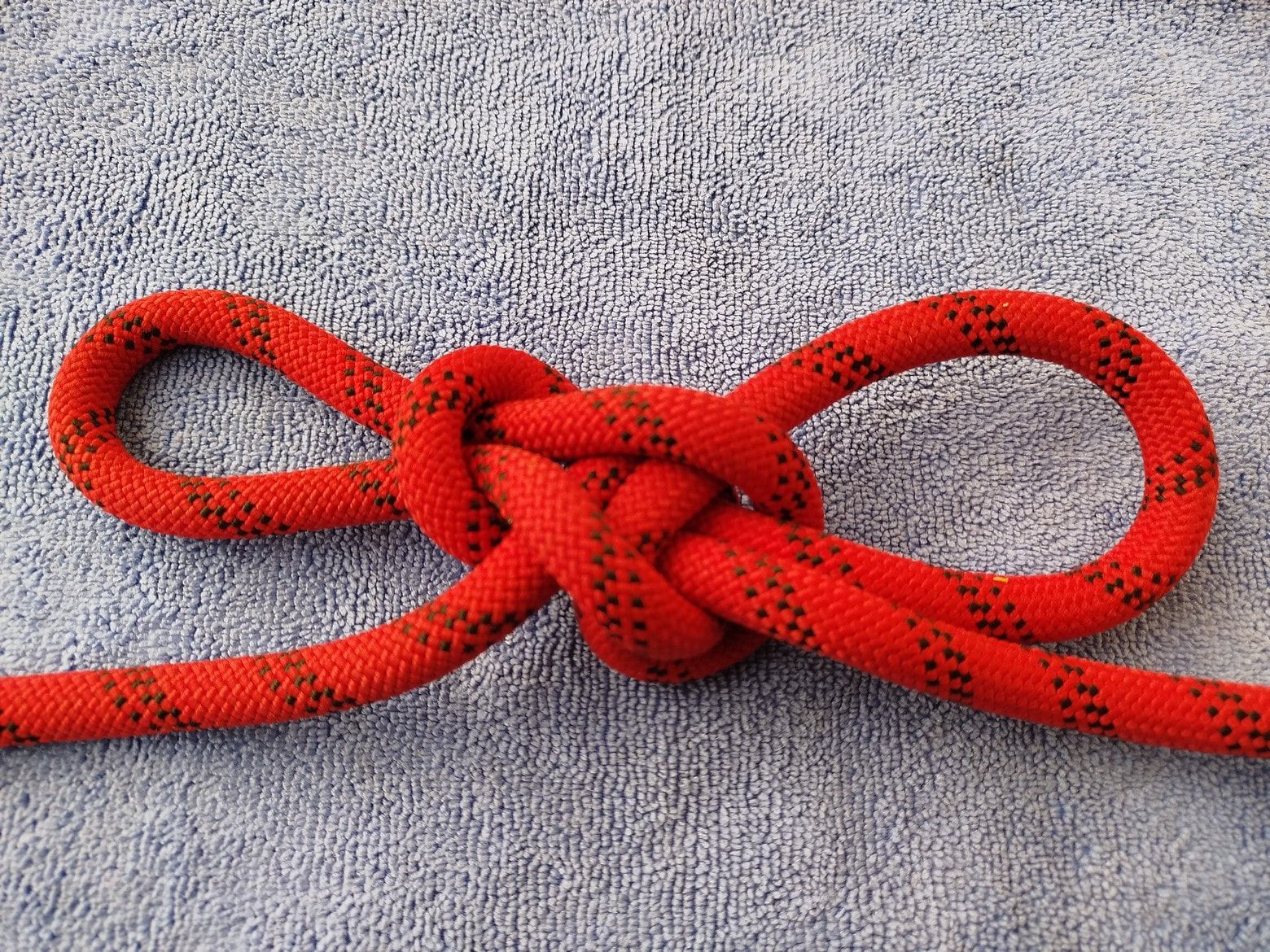
Question: What is the difference between the two images?
Answer: None, except for the parallelism of the two eyelegs.
Leaving a short tail and loading it "in tugboat style" in end of line format, does not change the very nature of the knot, which is a midline knot.If i pick an SP side to load the midline knot, the other side is automatically designated as "the tail," short or long, whatever.
If you had loaded the knot from the nipping loop side, you would have activated this nipping action that i mentioned previously, and things would have been better in terms of jam resistance.
If that was the case, I would not be dealing with Lee's inline loading profile. When an end termination knot is resistant to ring loading, the through loading profile of the corresponding inline knot will be great also, and this applies to our knot as well.
How exactly is your "doublyHAH " resistant to ring loading?It appears that the collar and the core is deformed when you pull the eye legs in opposite direction.Perhaps you meant "stable through loading"?
It is certainly a different knot, but the idea, IMO, belongs to the original creator.
That's the reason, when i first tied the midline profile of Mr.Lee, i attributed the term" Inline Lee's link bwl" to it.
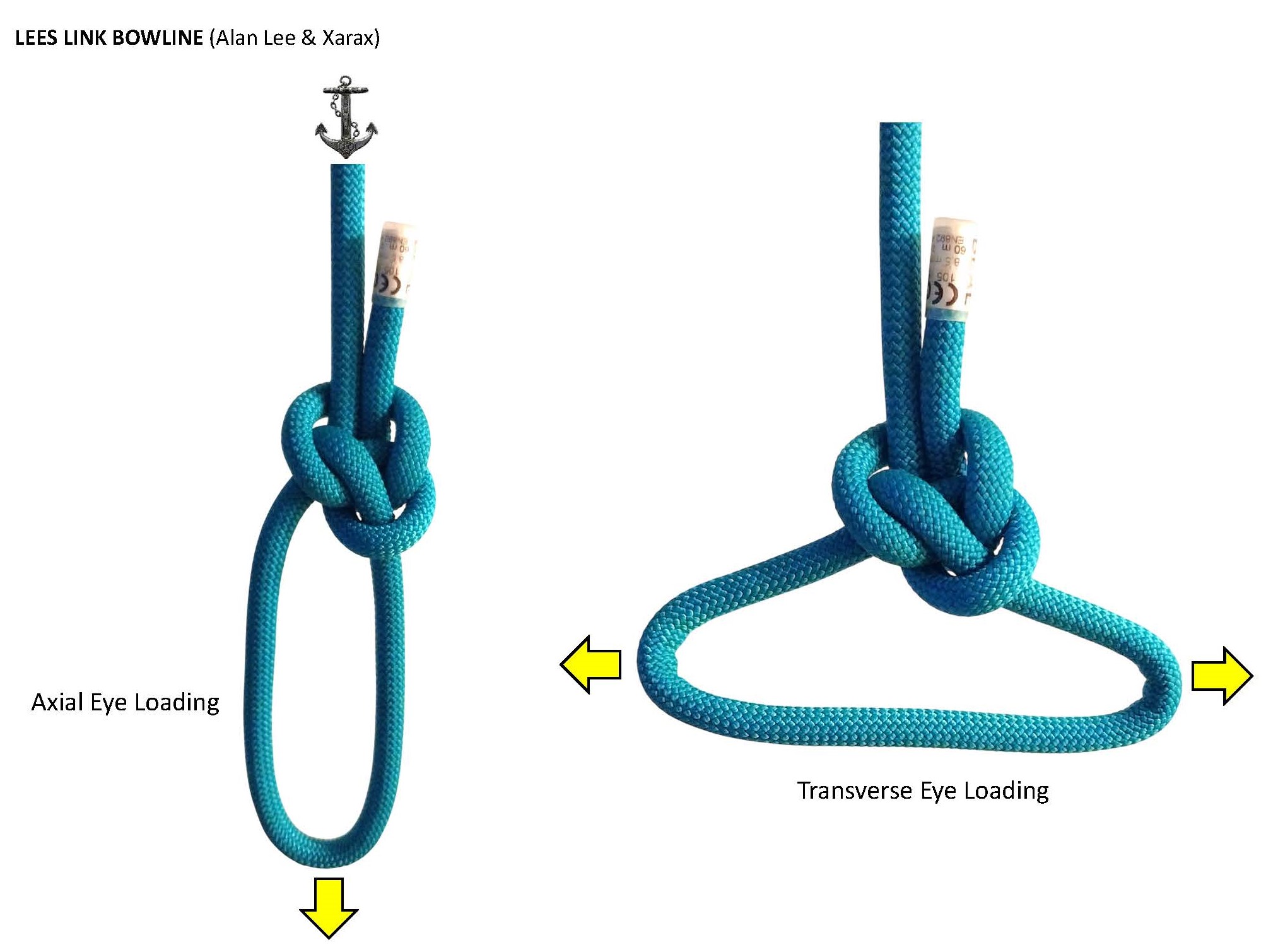
Actually, Lees Link Bowline is resistant to transverse eye loading (aka 'ring' loading). Although it depends on precisely what you mean by "doesn't like"...
Its certainly superior to a simple (#1010) Bowline when subject to transverse eye loading. Axial eye loading is optimal - and is what this Bowline variant is intended for. But, it can tolerate transverse eye loading - however I cannot declare the load threshold where instability and/or loss of security will be triggered.
Might have to ask Alan Lee to run a test to see what loads trigger instability in transverse eye loading.
By the way, it is a very fine knot - it is inherently secure and suitable for life critical applications (when tied in human rated EN892 and EN1891 ropes).
that " simply yes" does meet requirements for an additional post,
Ha, yes, mine too, but NOT this forum system's --wants more keystrokes!
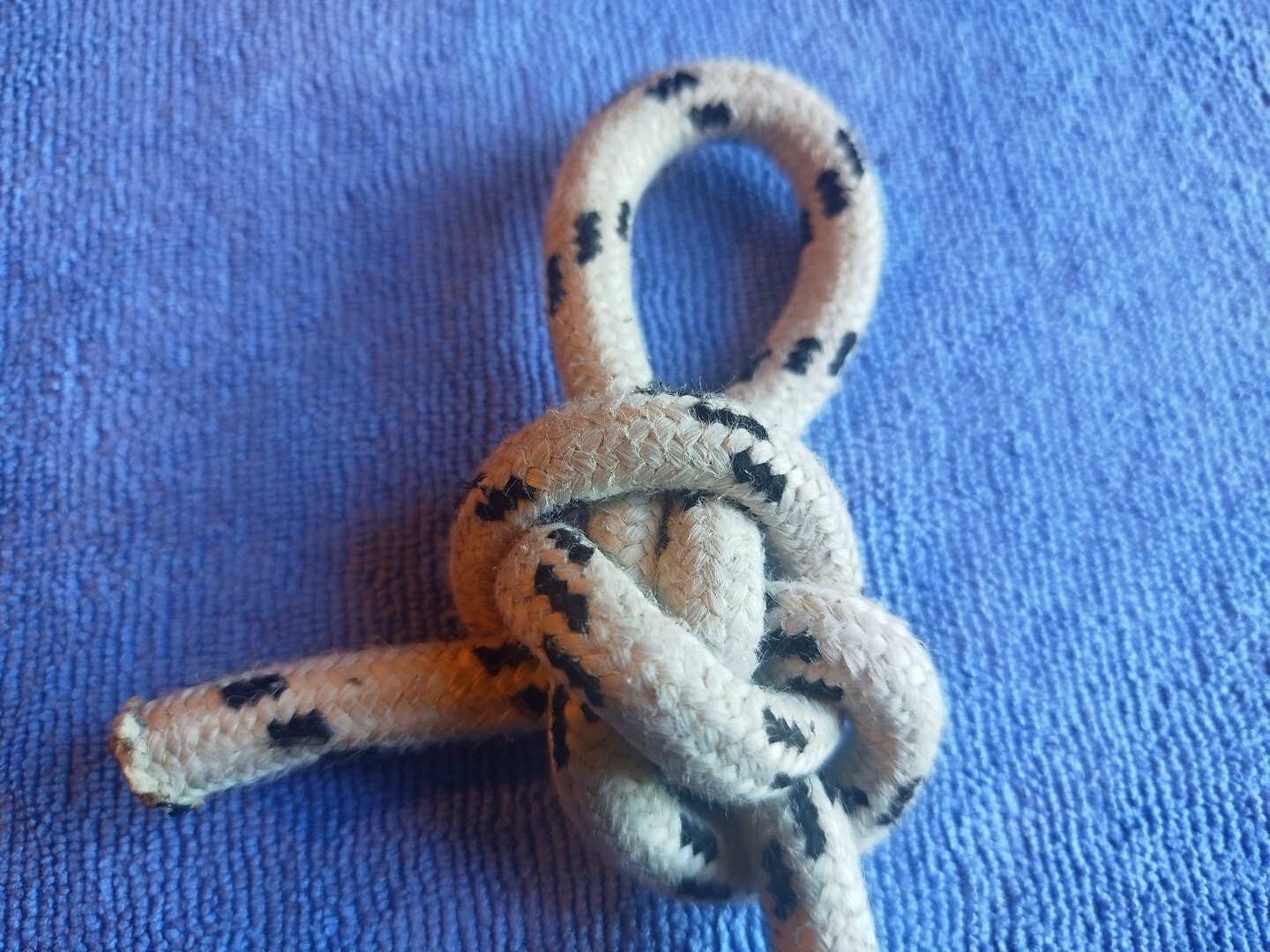
Question: What is the difference between the two images?
Firstly, the upper image isN'T Lee's Link anything
--it's clearly a Fore<=>Afting of L'LBwl, its S.Part & Tail
fused and Eye cut apart to be new Tail & S.Part.
See Mark's following pics, where clearly Lee's Link Bwl
has a BROAD, collaring of S.Part & Tail span, not the around-
RELeg collar.
The difference is that in the top image, the LEFT end's
(i.e., one of your two presented-as mid-line S.Parts)
flow is into the RIGHT-side eye leg and nips just TWO parts;
in the lower image, it flows to the right-side, nipping three.
"Tugboat style" : what is this? I too think of that term,
partly for the Angler's Loop and that doesn't-have-an-OH
part very similar to it --well, what has been promulgated
as the (or a) tugboat BWL. (Triply Hahs! Philippe Petit's
book spends a lot of words decrying Sosin&Kreh's book's
tying instructions for the Angler's Loop; while I concur in
his critique --darn lousy S&K presentation!--, they have
one redeeming value : unlike PP, they get the right knot!
(And PP show's a Tugboat Bwl.)
In Dbly.HAH!, though, the S.Part takes a nice-looking,
padded more than most, loop INTO the tugboat-like
collaring of the eye legs. Tail-Loading DblyHAH! of course
retains this collared eye legs state but delivers no force
into it from the S.Part.
Oh, then all EKs are "mid-line" knots? --really??
IMO, "mid-line knots" pose a tough challenge for
my Tangle + >>Loading_Profile<< = Knot thinking ::
for mid-line EKs can sometimes see a variety, unless
it is defined to be, say., opposed-S.Parts AND ,,,
--and I can't figure out how to solve this.
Mark's "Transverse Loading" I like for loading
an EK at some sort of wide-spread state of
eye legs AND the S.Part; "Ring-Loading" is safely
purely EK qua e2e Joint via eye legs --direct,
unmitigated opposition. "Through-Loading is
joint-wise pulling of the S.Parts w/no eye loading.
(And in these cases, expect there to be fuzzy
boundaries. Canonically, an EK is a 2-Tangle
with end "1" of part 1-2 loaded vs. end "2" + "A" of part A-B,
with roughly parallel --oh, 0 -to- 40degree spread
of eye legs? But keep spreading them and there's
a change in both direction-of-tension AND tension
into the Tangle and ... Mark's "transverse" comes to
reign --we're no longer in Kansas, Aunt May!
(Testing of mid-line EKs thus should be way more
involved than checking each loading profile on a
newly tied rope. What becomes of the M-LEK
after various sequences of loading --we know that
the knot can be shifted around, collars collapsed
on initially unloaded parts, and so on.)
--dl*
====
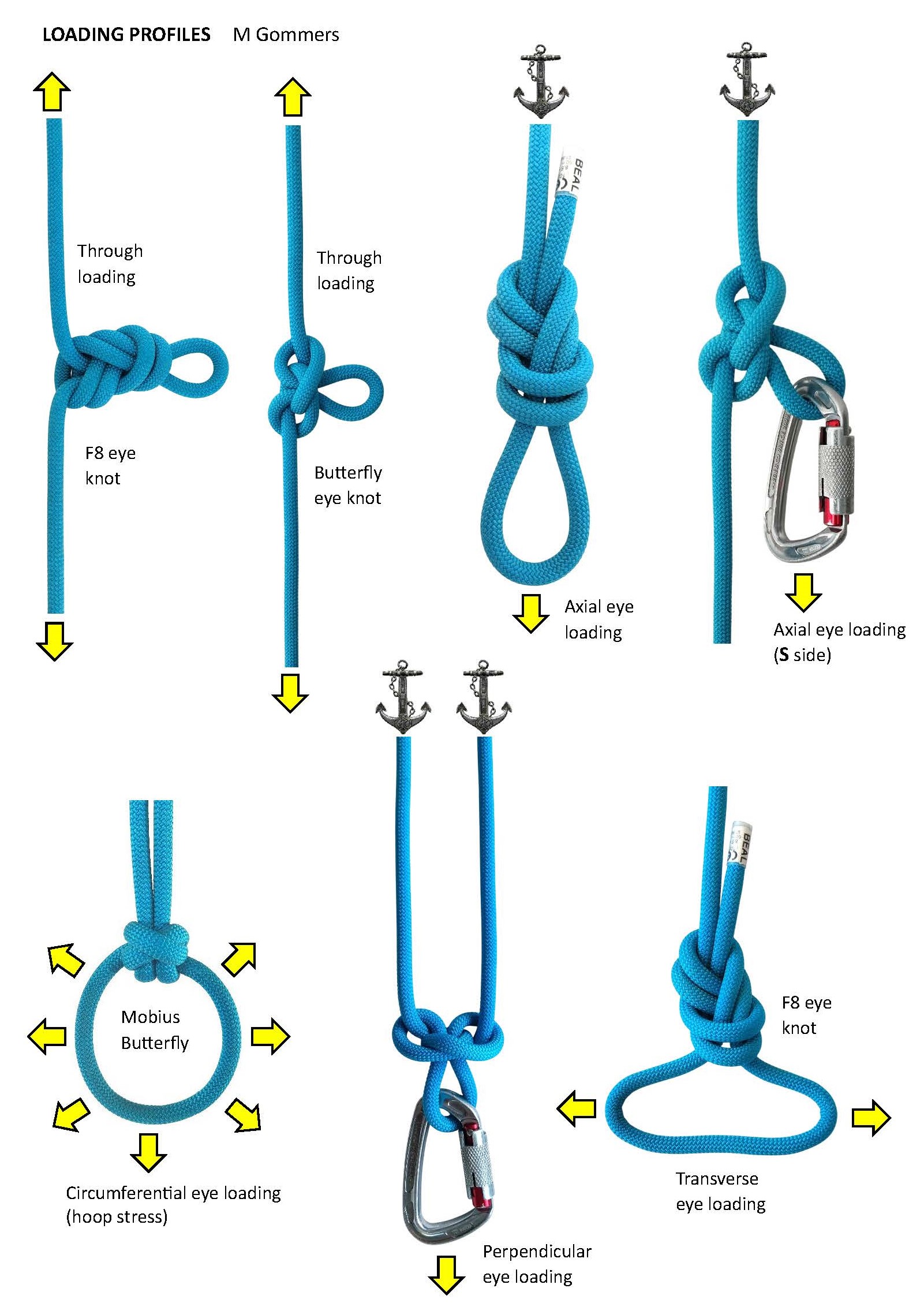
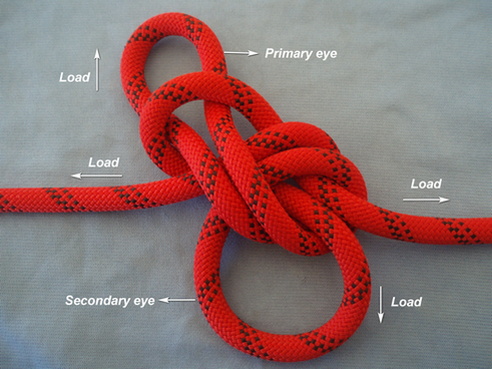
Since the discussion is veering toward loading profiles, I though I'd try to clarify with a photo. Note: Not trying to derail or pivot the discussion... I can start a new topic thread if the discussion needs to zero-in on loading profiles and defining the term 'mid-line' eye knot.
The photo is illustrating my definitions... Circumferential eye loading is how I conceptualise 'ring loading'.
The term 'mid-line' eye knot knot generally refers to an eye knot that is stable and secure in a through loading profile. (Note: But see below for further discussion...).
And so a good example of a 'mid-line' eye knot is a Butterfly. In contrast, an F8 eye knot is not a 'mid-line' knot because it isn't stable and secure in a through loading profile.
To further clarify concepts, a Clove hitch is a 'mid-line' knot. It isn't an 'eye knot' - its a hitch. But it is a mid-line knot. It is stable and secure in a through loading profile.
A Directional F8 eye knot (Ashley #1058) is also a mid-line eye knot. It is stable and secure in a through loading profile. Note however that the 'eye' of this knot can only be loaded in one direction - it is unstable when the 'eye' is loaded in the opposite direction. In contrast, the 'eye' of a Butterfly is bi-directional. But both are stable in a through loading profile.
It is true to state that all mid-line knots are TWATE (Tiable Without Access To either End) - also known as 'TIB' (Tiable In the Bight). Again, the distinction is that mid-line knots are stable and secure when through loaded.
This is why I make the claim that an F8 eye knot (Ashley #1047) isn't a mid-line knot. Obviously, an F8 eye knot can be tied 'mid-line'. But it becomes unstable when through loaded.
This hinges on how we wish to define what we mean by 'mid-line' knot. If you poll a bunch of rock climbers, they would all agree that a Butterfly knot is a mid-line knot. The Bowline With a Bight (Ashley #1074) is also an example of a mid-line eye knot. I am requiring through loading as a condition - where both S.Parts are aligned in 180 degree opposition - and the knot remains stable and secure.
An interesting case is the Bowline on a Bight (Ashley #1080). It is unstable when through loaded (S.Parts aligned in 180 degree opposition). At #1080, Ashley describes that it could be used for lowering an injured man from aloft (employing 2 active S.Parts) - where the Bowline is tied mid-line. But, per Ashley's description, the 2 active S.Parts are not aligned in 180 degrees opposition, they are aligned in parallel.
Again, it comes down to how we wish to define the term 'mid-line'.
I strongly object to this approach. One core, five loading profiles, of which four end of line knots and one midline.Three TWATES(TIB), two non_TWATES.
Now, if you want to break the inline variant into two knots, cross the eye legs and define them as two TIB, end of line knots, i have nothing further to add.
I admire Mr.Gommer's illustration skills, and always pay attention to his images, but i happen to know every single detail of Lee's link bwl, because i have spent a lot of time working on it.
It is a great versatile knot, that might point to three inline tangles, one from the loading profile, and two more from topological equivalences with its core.
I saw that coming! The third diameter within the nipping loop, has minor significance in this profile. Perhaps the nipping loop will open up with two rope diameters? Or the eye leg might slip? Let me remind that the other end captures the nipping loop crossing point. Of course, the third diameter matters in Lee's link bwl, for additional tail constriction.
Where did you get that from? We were refering to a specific loading profile of Lee's link bwl, which, pursuant with the requirements outlined by Mr, Gommers above, and i completely concur with them, quilifies as a mid line eyeknot.
Last i've heard, nobody has ever claimed that Lee's link bwl, or TIB Scott's locked bwl, or Xarax ampersand bwl, are midline knots, regardless of their property of tying them in the bight.
In addition, no one has ever demonstrated inline loading profiles derived from the aforementioned knots, because they simply did not qualify, or were too complex, e.t.c.
There comes a question for Dan, Mark and anyone else who might be interested.
Hypothetically speaking, if you were in the middle of a very long line, without access to ends, and you had only these two TIB knots at your disposal, Lee's link bwl and the inline with the parallel eye legs, which one would you use?
Dan, can swap the eye legs if he pleases i don't care, . Hopefully, a thought such as "Hmmm, i am not in the end of my line so i can't tie any of those two" , does not cross his mind.
No worries, it's completely relevant and thanks for weighing in.
I have highlighted some sections of you reply such as:
and this
and also this
In my opinion , these two knots that you mentioned,(not the butterfly) are not bi-directional and can be eye-loaded only from one end, while if loaded from the other end, they have an unstable response that might lead to core distortion.
I would add an extra requirement for midline qualification such as, the eye of the knot must be bi-directional or the knot should be either end loadable EEL.
I am also of the view that the bowline on a bight, does not fall under the midline category because of the parallel alignment of the two SPs.
On the contrary, the following profile, is more likely to be included.
?! "approach"? I pointed out that the knot you put forwards
as Lee's Link in mid-line form was not that --that the obvious
eye at top wasn't that knot's eye but it's Tail & S.Part fused;
the parts you were pulling apart to show through-loading
were Lee's Link eye legs.
One "core", er Tangle, has 8 eye knots (if asymmetric);
whether one might choose/use them qua mid-line
work is a separate matter --in THEORY.
We are naturally prone to talk about things in practice;
and "mid-line EK" as I noted above I find hard to capture
in theory --in the having of several loading-profiles.
Fore<=>Afting might describe one of my assertions
above --viz., "Lee's Link Bw doesn't like being ring-loaded"--
needs Fore<=>Afting itself :: rather, THIS loading works well
for Lee's Link and is the through-loading wanted so much
for (practical, if not theoretical) "mid-line" EKs --and it is
that for DoublyHAH!, which is what suffers with ring-loading
as Lee's Link does for thus for (the equivalent) through-loading.
.
I don't understand why you object to "parallel S.Ps"
--which are quite non-parallel in through-loading.
As for the knot you show here --what is variously
presented as "Two Eyes" Bwl or "Sister Loops" (Ashley),
which peculiar structure surface to my awareness
recently enough I can find a note I wrote --to wit::
The name "Eye Bwl" occurs in Hensel & Gretel's make-believe
world of knots, Ency.of Knots & Fancy Ropework, Plate 10
"Bowlines" (1939) --one of very few plates w/a *theme*.
They also re-present it as something-or-other sheet bend in
Simple Knotting (the cross-reference is yours to make, not
theirs to give). And in Ashley's BoK (1944) he has it as "Sister
Loops" --perhaps finding it in H&G's book !?
Now, the only prior pub. I'm aware of is GRShaw's 2nd Edition
in which he presents it --graphically, devoid of verbal insight--
as an apparent way to have "Double Loops" along a line
--i.e., he has a line running across the page L-to-R and the
opposed (vertically) eyes *lean* rightwards at about 2/3
of the distance rightwards (single line continuing under
apparent tension), as though for e.g. two line pullers to
share the work!? --> 1936 (not in 1924 ed.).
(I'm unsure of exact knots cited here --two in EKFRW,
one in ABoK which IIRC matches one of the two,
and the knot shown above here.
The knot shown above has a dangerous loading :
left-S.Part vs. "Secondary" (lower) eye --that S.Part
can spill the (unloaded) upper eye and it all!
(which is a problem potential for BoaB w/some loadings).
--dl*
====
Which loading makes no good sense qua KNOT ::
one looks at the 2-tangle ("core") and sees what of
its 4 ends are loaded; that loading defines the
loading-profile. Your Circ. loading is simply
through-/joint-loading, which doesn't care
about all that where-does-it-ever-occur rounded
shaping of the eye!
.:. It is just a matter of forces upon the Tangle.
Which IMO makes good sense for your named
"Transverse Loading" IFF you add one more little
load-indicating yellow arrow at the S.Part. (think
of the equilateral, all forces (begin) loading
w/120degree spreads between eye legs & S.Part
(i.e., each with the parts either side of it).
((Oh, of Knots In the Wild, this Transverse Loading
is seen in some lobster-pot bridles. These were
made with two round slings (closed by a Fisherman's
Knot), one about a 4th larger than the other;
each was Larkshead-hitched to respective sides
of the pot, and then the U-fold ends joined with
a Sheet Bend (easily tied), which hitching-side's
Tail --a U-fold-- then was presented qua eye for
a snood's tying to it w/(likely double) sheet bend,
and the effective "eye" of slings & pot-between
was a quite wide-spread Eskimo Bwl structure.
(In some observations w/protractor, I measured
angle between such "eye legs" as usually about
140degrees, up to 150.) ((Alas, this isn't anything
I see in "Images" now --it should be : it's decent!))
Ha. Testing in what might be seen as your favorite
medium --low-elongation nylon kernmantle-- by
CMC Rope Rescue has shown your decried-as-unstable
F8 EK under joint-/through-loading to be some-ropes stronger
than the Butterfly, and well stronger than the supposedly
made-for-through-loading, "Directional/inline F8" !!
--to wit ::
[from CMC Rope Rescue Knots Test Results]
with F8 at 74% & 64% (=128% summed) vs. 66% & 60% (=126)!
The Directional/Inline F8 through-loaded is essentially
a squaReef joint, and it got 51% & 49% (=100).
Well, there are "knots" and then "actual things" and
different materials, loading rates, dressing & setting ... !
Recall a French (cavers) group finding that THEIR tyed
offset F8s bettered the Offset Water Knot --though in
some other tyers' production might have resulted in
ill-set offset knots, as there is some particular setting
that matters! --and that amounts to through-/joint-loading
of the F8 EK.
And you might recall the dramatic failing of the Butterfly
in the HowNot2 tests w/7mm low-elongation kernmantle
--such that Mr.HN2 vowed not to rely upon it (but, yes, in
contrast to others' testing which we presume didn't show
such slippage).
BTW, it's not a big deal to tie a *true* inline F8
--i.e., where the F8 in its twinned form is there
in full, and the former Tail (to become opposing
S.Part) is simply tucked back through the knot
(sometimes I think that this has been advanced
for normal EK security).
And let's recall my sometime-ago remark about
how one would/should regard an observed-tied
line of Carrick EKs amidst the line and loaded on all "ends"
--i.e., both eye legs & both, opposed-to-each-other
S.Parts. W/o close inspection and maybe even untying,
you won't knot about whether they're NSE (TIB) or not;
but does it matter? (And if rejected qua "mid-line EKs"
for want of NSE, what then ARE they --they that are
quite plainly tied, secure, and doing mid-line EK work!?
(I find the Carrick bend EKs rather attractive.)
--dl*
====
Many thanks kost_greg.
WOW!
This is rivalling the great Xarax in terms of creative genius 
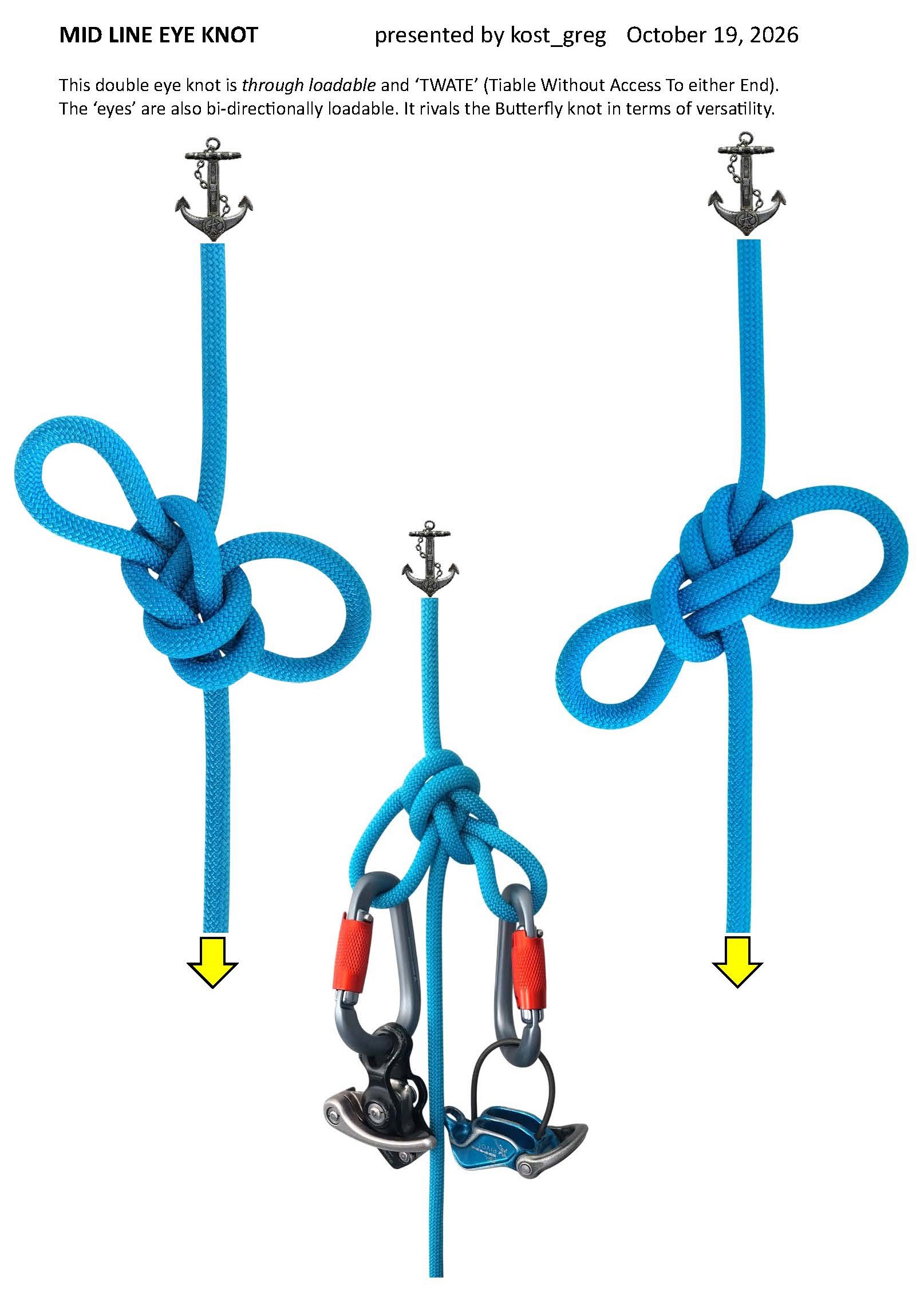
I have been on a long and arduous hunt to find a mid-line eye knot to rival the Butterfly.
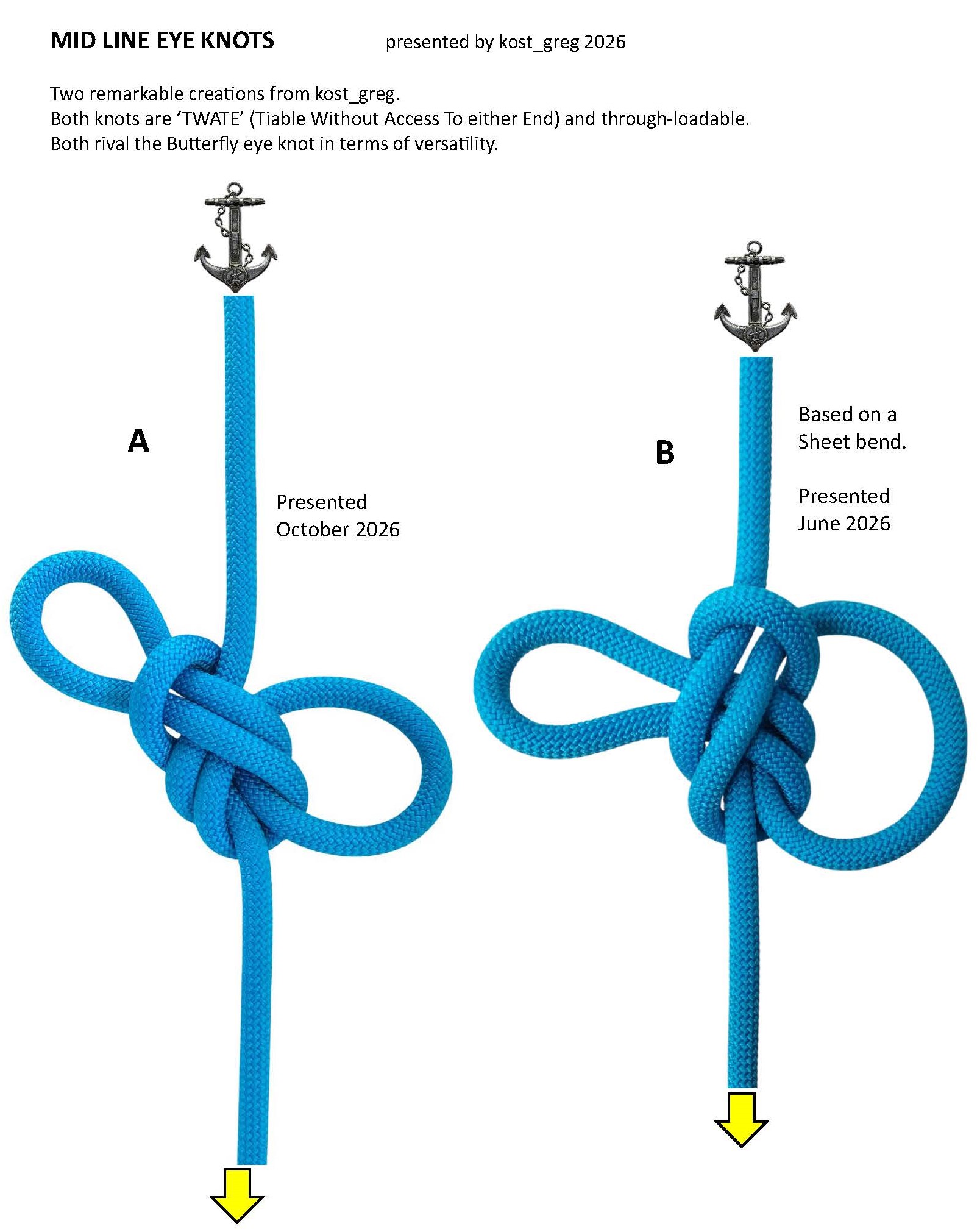
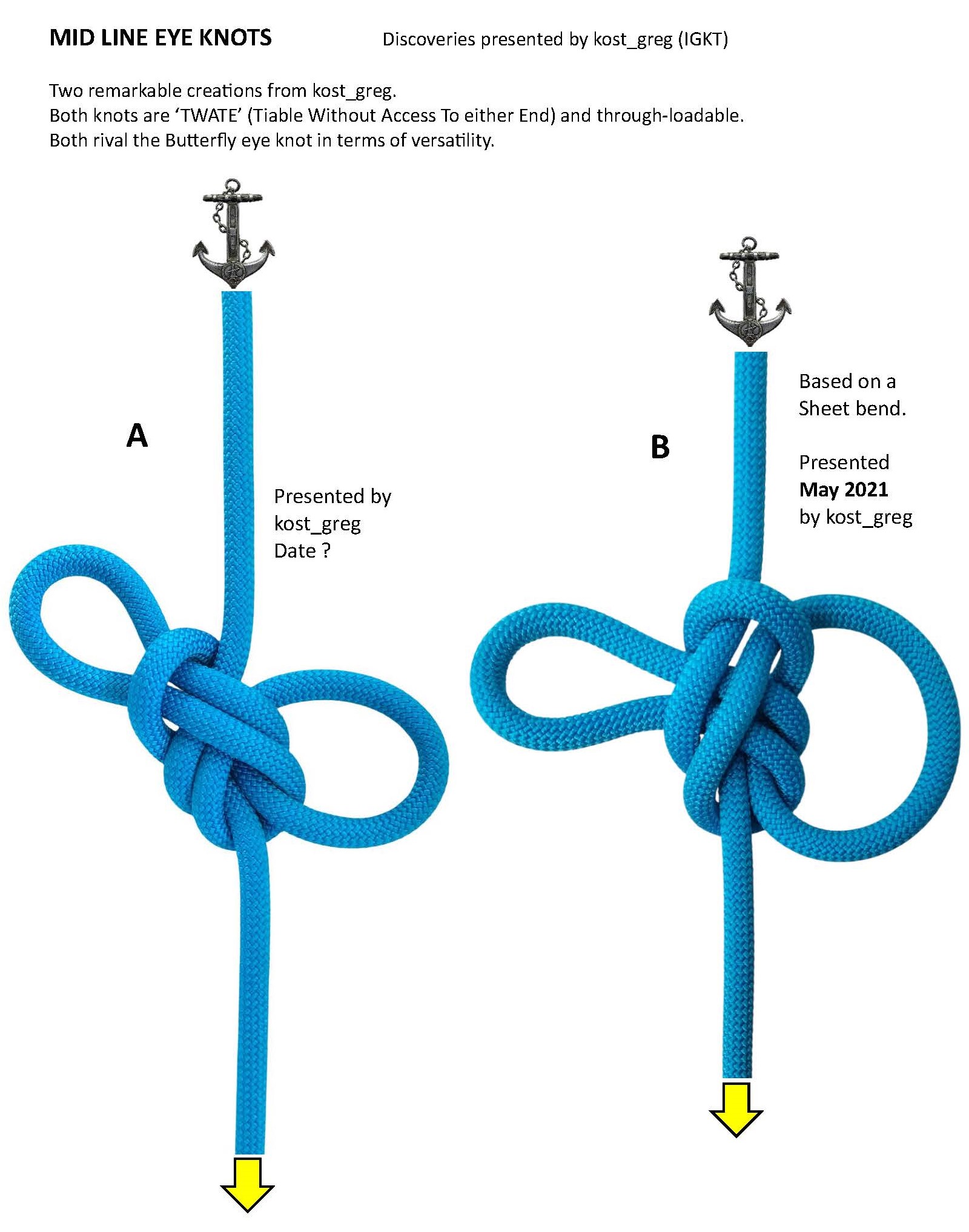
I'm just trying to get the timeline and historical facts correct... please refer to my images below ('A' and 'B').
'A' is your most recent (October 2026) creation.
'B' is your previous creation presented on or around June 2026 and is based on a Sheet bend geometry.
Your most recent creation needs to be very tightly set - to stop one of the 'eyes' from collapsing when through-loaded. However, when carabiners are attached to the 'eyes' - this acts as a blocking mechanism.
I'm doing some evaluations on this very innovative mid line eye knot.
Are you claiming this as an original creation? I don't recall seeing this anywhere else...
There is no 'Ha' !
I know all about the CMC knot test paper you point to. It is meaningless.
In the first instance, all of the authors are incapable of conceptualising a knot in any way other than MBS yield (strength). Their definition of ;efficiency' is bogus - because it is based on MBS yield.
Who cares if knot 'A' yields a few percentage points lower/higher relative to knot 'B' ?
There is no load that a human climber or human VR operator can generate that will break a knot. One only needs to look at the EN892 dynamic drop tests - an F8 eye knot easily survives 5 very harsh falls (at factor 1.78) using an 80kg rigid test mass.
I do not base my definitions of what a mid-line knot or through loadable knot is on the basis of MBS yield. It has nothing to do with a knots yield point.
An F8 eye knot definitely becomes unstable when through loaded - any person with functioning intelligence knows this (its observable).
A Butterfly remains stable when through loaded.
All knots eventually fail when subjected to an increasing force, but this tells us nothing. If we recommend an offset joining knot for abseiling / rappelling, all we care about is that it has a safety factor of around 3:1. It just needs to remain stable and secure up to around 3.0kN...maybe 4.0kN. Who cares if it yields at 10.0kN?
And the other characteristics of importance include resistance to jamming, and footprint.
Summary:
CMC define 'efficiency' in terms of a knots yield point relative to its unknotted rope state, expressed as a percentage. I consider this type of thinking to be parasitic (per Gad Saad book "The Parasitic Mind'). The testers have been taught what to think... not how to think.
Thank you agent_smith.Actually, i had posted these two profiles back in may 2021 in my other thread with mid line eyeknots and you had also weighed in with some comments but i guess you have forgotten it.
You can verify it here.
The image of profile A has vanished but thankfully the image of profile B has survived.
From what i understand, Dan claims he has seen something relevant in a very old knot book, but he's not entirely sure.
Anyway, i 'm not claiming anything, if it turns out to be practical, it should be thoroughly tested to find any vulnerabilities, before being used in the field.
Hello and thanks kost_greg,
That topic thread you pointed is huge with many knots and discoveries. And yes, knot 'A' has vanished. Just wanting to reconfirm that knot 'A' was discovered and presented in May 2021? Dan always makes claims of prior discovery - I think he needs to learn how to use a camera
From my perspective, the evidence points to you as the originator of both these marvellous 'TWATE' and through-loadable double eye knots.
I am going to subject both to rigorous in-field testing to determine which one is 'optimal' in a range of loading profiles.
Anyways, you have made some important discoveries and need to be acknowledged for your good work. I would say that the great Xarax himself would be admiring your work! If these knots turn out to be as good as I'm hoping, I'd like to bring them to the general awareness of the vertical rescue, and canyoning communities.
Would be good if Alan Lee could load test these double eye knots in a variety of loading profiles...
The good thing is that they are stable through loadable along the horizontal and vertical axis meaning that one might load their eyes in a through loading mode with no SPs involved, plus they can be formed with super easy TWATE methods in the middle of the line.
I am working on something similar, mid-line, through loadable, with two eyes above the main line, oriented in opposite directions , intergrated in a bowlinesque core with two nipping loops and one collar.
The main concept is to maintain the simplicity and functionality of a bwl core as much as possible.
I'm keen to see this...
Hopefully the structure will be simple enough and resistant to jamming?
As simple as it gets, with two eyes under the main line facing opposite directions, TWATE, with easy tying method.
A stable loading scenario should involve primary eye loading on its own or in combination with the secondary, using any of the Sparts.
The combination Left Spart-secondary eye is a critical loading that Dan would probably detect as well, as it could cause the displacement of the two nipping loops, along with some slippage of the primary eye.
Does anyone suspect which very well-known knot, this double loop might be related to?
Thanks for your presentation.
Well it appears to me to be built around a tail outside Bowline (Ashley #1034 1/2). I see this when you grasp both 'eyes' and pull them apart in opposition.
I don't find this knot to be as simple and stable as your 2 previous offerings. The 'eye' that you indicate as being the primary eye is pulled 'downwards' by its collar (which is a continuation of an S.Part). The secondary eye seems to be more stable (less affected by S.Part loading).
I would like to see you do more work along the lines of your previous 2 offerings - they are elegantly simple structures.
Is there a way to improve the stability of this latest creation? And to make the structure more simplistic?
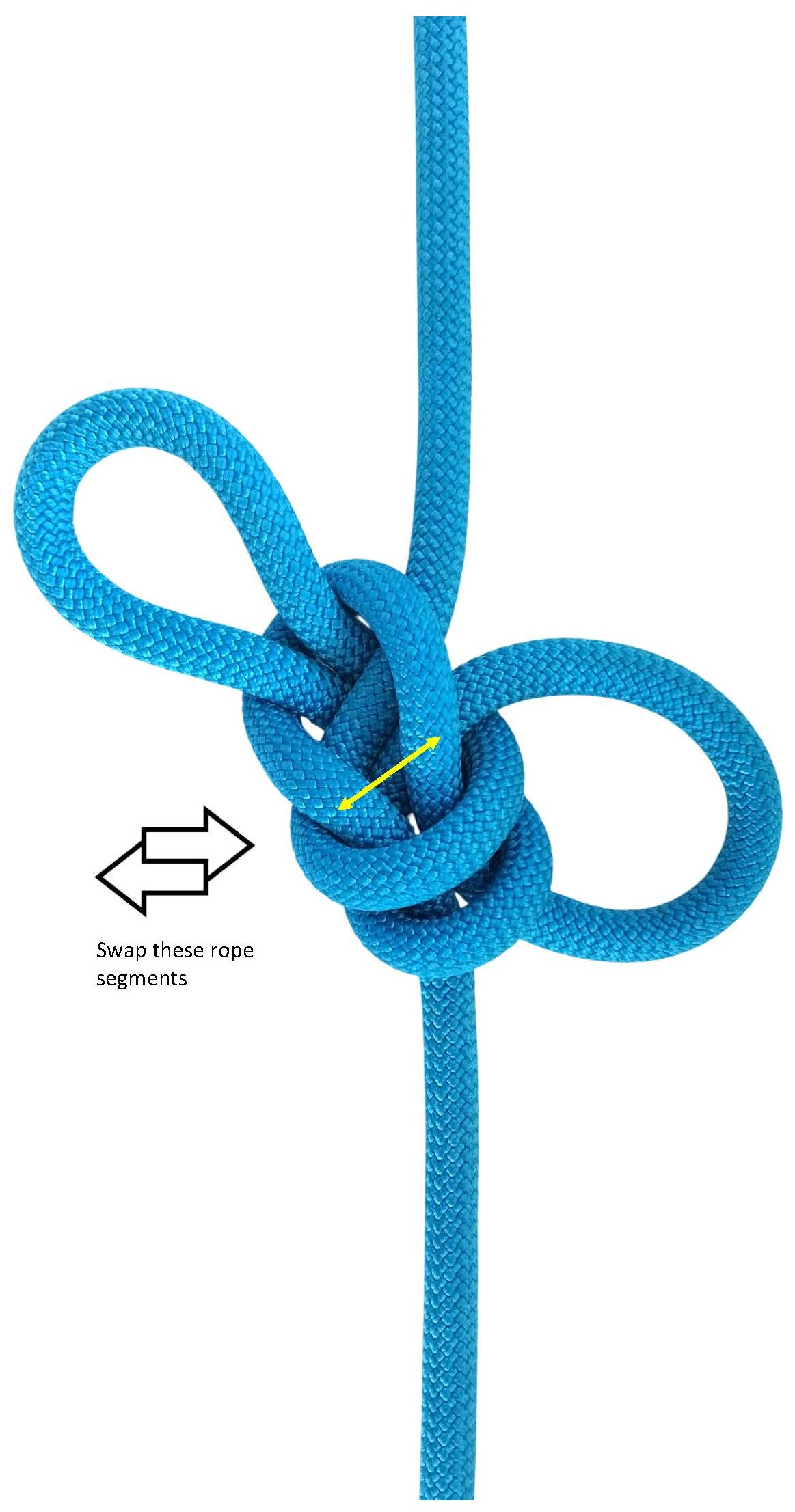
With regard to the photo (below) of one of your previous creations, I think it can be improved by a simple swap of 2 rope segments. What do you think?
Thanks for taking the time to examine this structure and comment. You have a point, i agree, it's not particularly impressive from a stability standpoint, specifically concerning the loading combination SP1- secondary eye, with the main issue, appearing to be the slippage of the primary eye.
A few clarifications first....
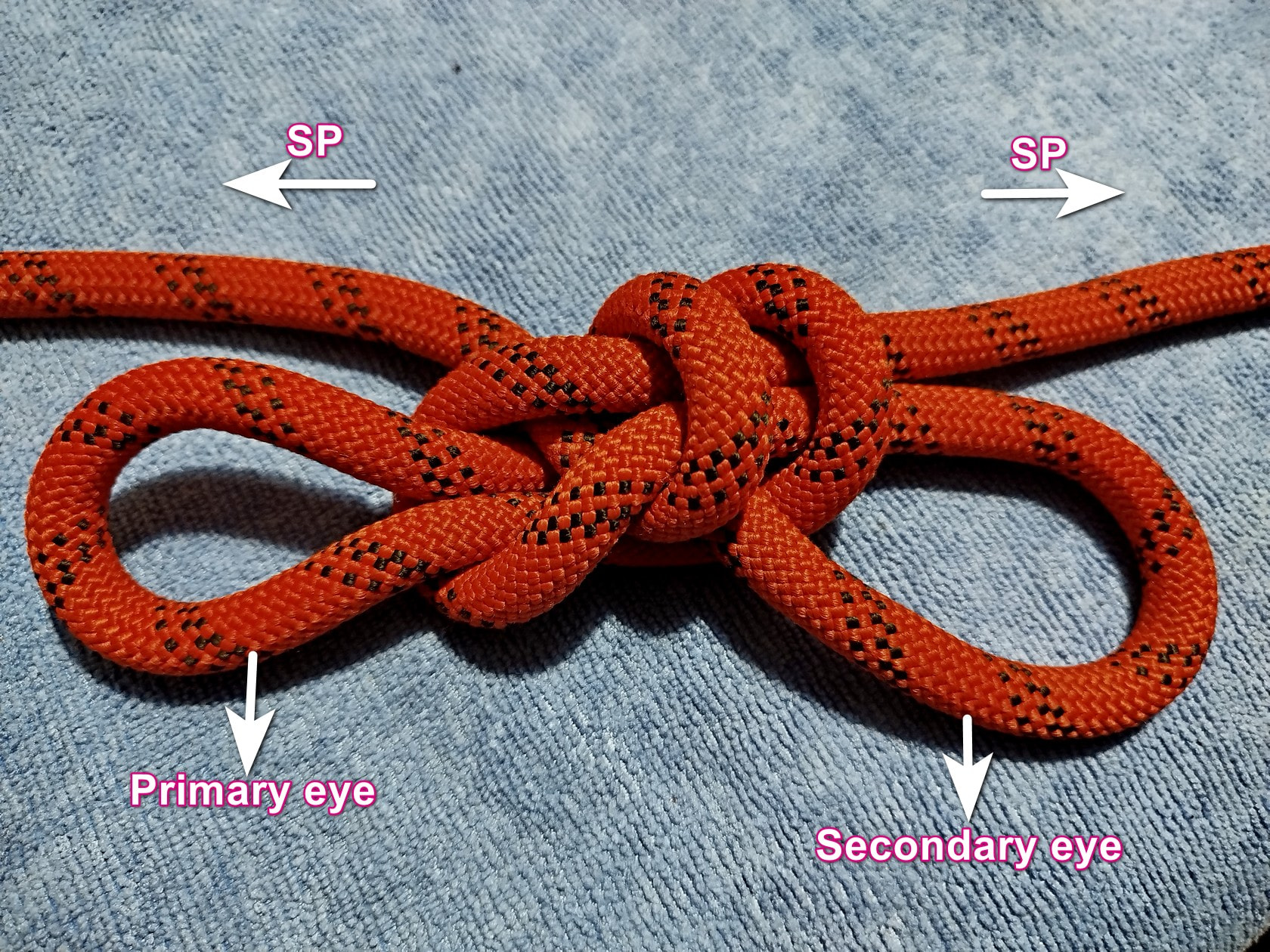
SP1 = direct continuation of the first nipping loop.
SP2 = direct continuation of the bwl collar.
Primary eye = The one being encircled by the bwl collar.
Secondary eye = direct continuation with the second nipping loop and the bwl collar.
This is rather a structural part of the core, perhaps i have not given some additional hints for identifying the origin of this knot such as....
As you probably realised, this double loopknot points to the false butterfly knot, or more precisely, it appears to be a different, inline, loading profile of the double splayed-eye bwl (end of line knot), that comes from false butterfly (with the well-known method of folding the eye and extending the eye legs).
I know what you are thinking right now, i thought the same thing, what about the corresponding one that comes from Abok #1053 butterfly knot?Is it more stable?
I'm afraid not, the same loading combination mentioned above (SP1-secondary eye), appears to be also problematic in the case of interlinked nipping loops, maybe even worse, even though it seems to solve the problem of their displacement in the false butterfly variation.
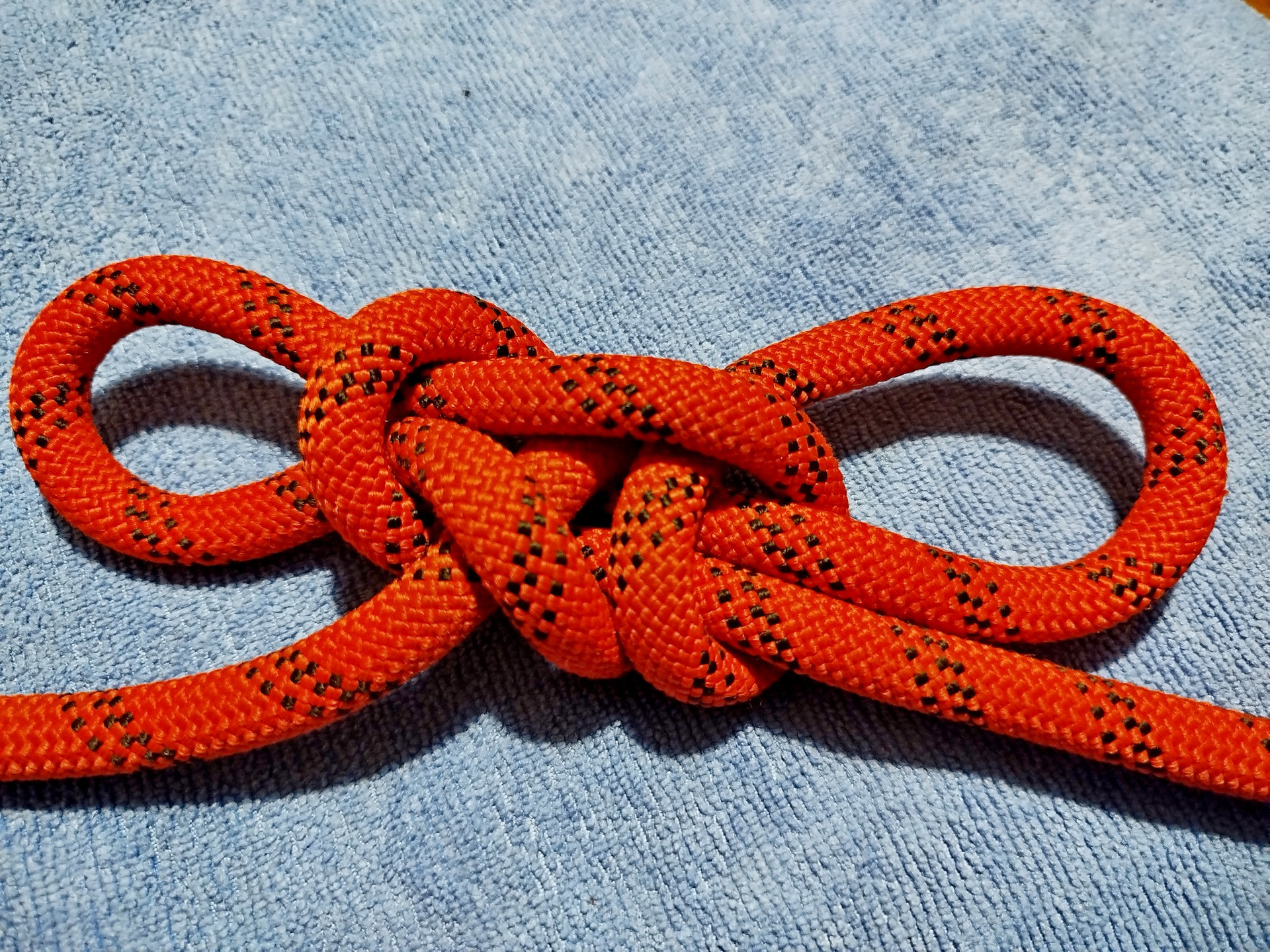
For anyone, wanting to inspect all various loading combinations of the afore-mentioned profile, here it is.......
So far, excluding the first two, i was not able to find a more stable profile, strictly within the framework of a bwl configuration with two nipping loops, two eyes and one collar.
Of course there are, but i guess they exceed in complexity, beyond the scope of this forum.
Yes, your modification might provide some stability improvement, but, IMO, the stability path, includes both eye loaded eyes, with any SP, in all these configurations.