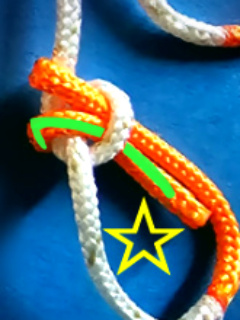
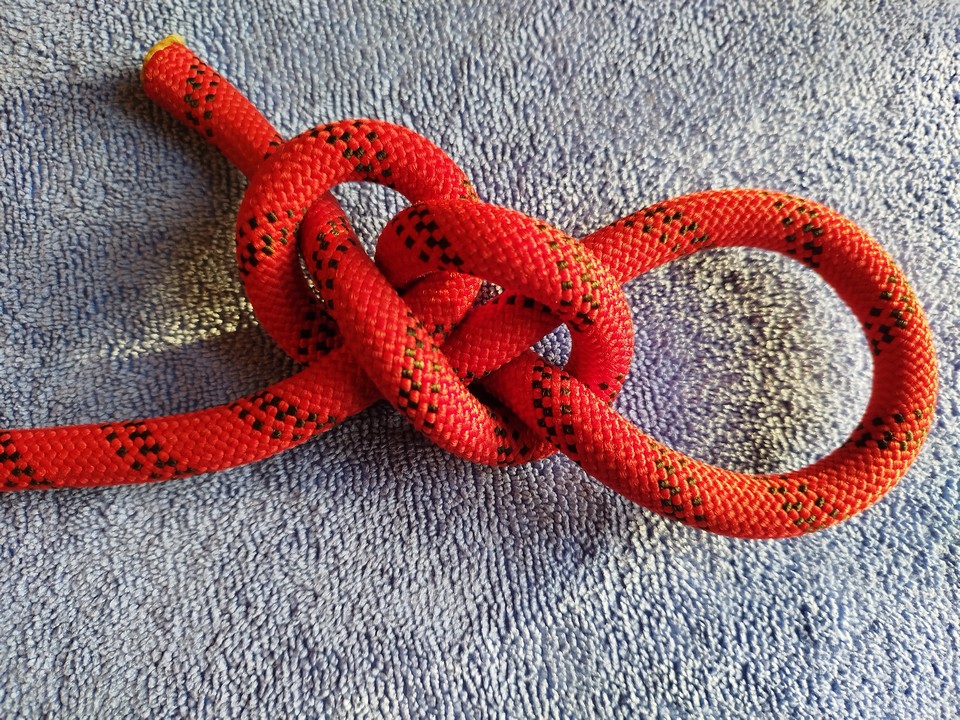
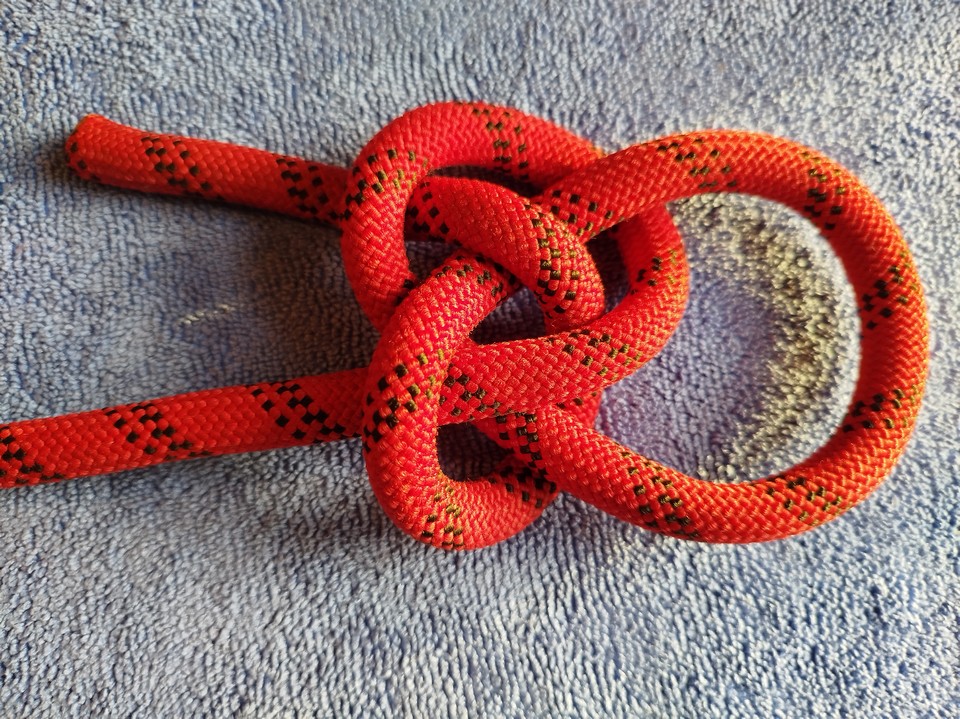
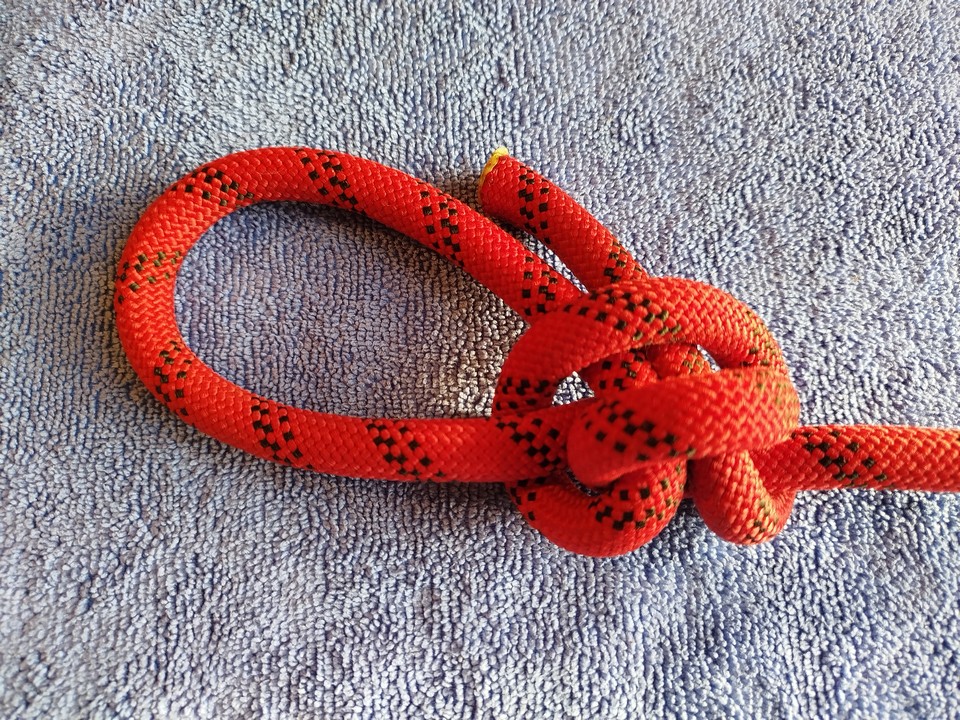
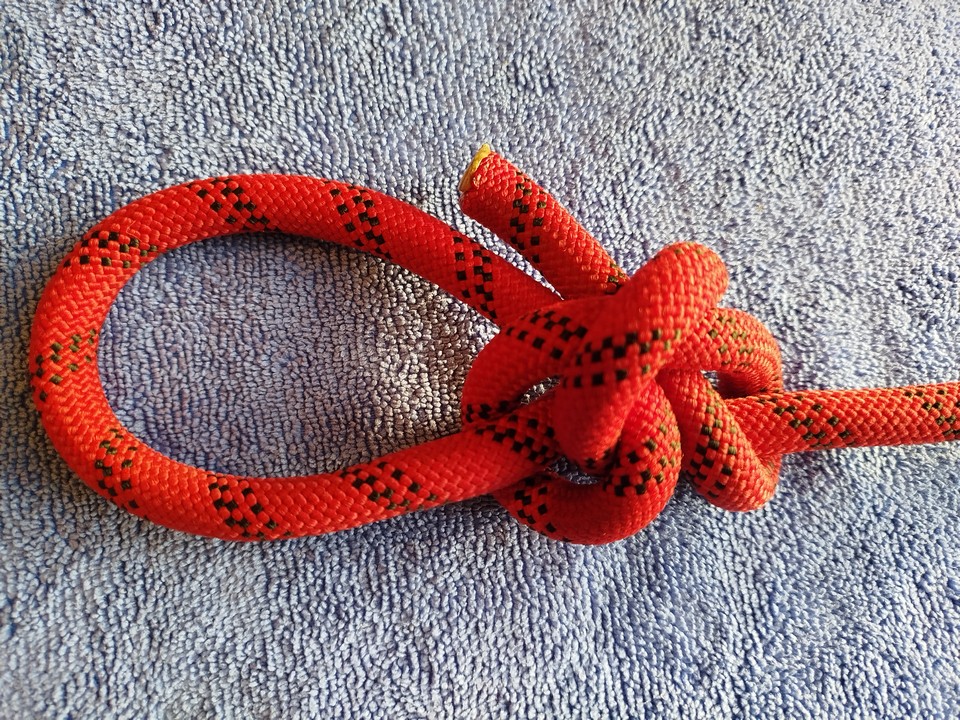
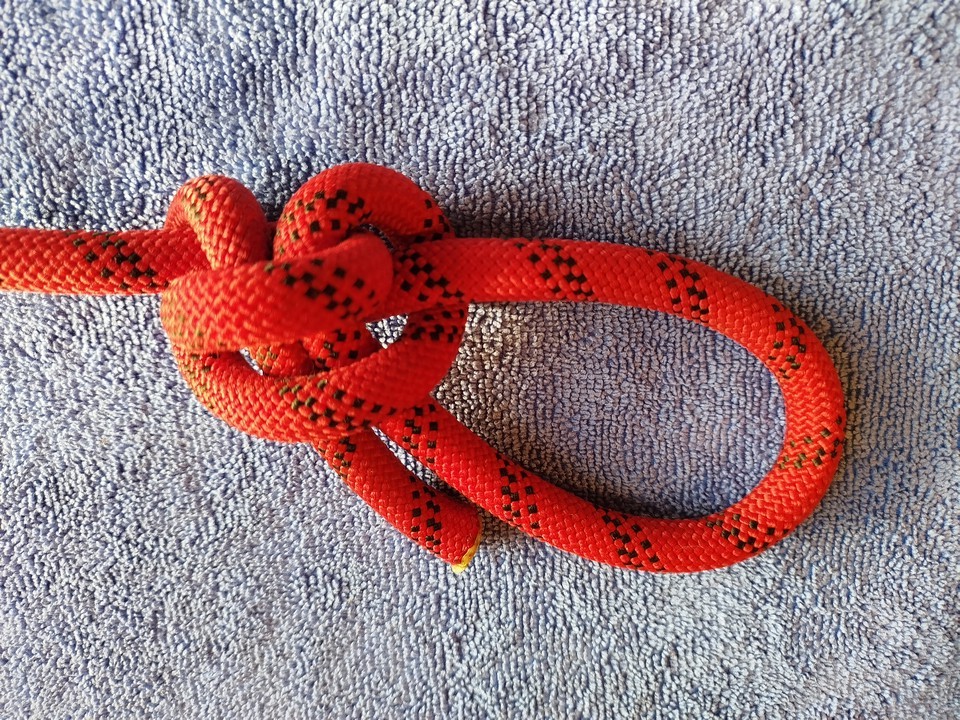
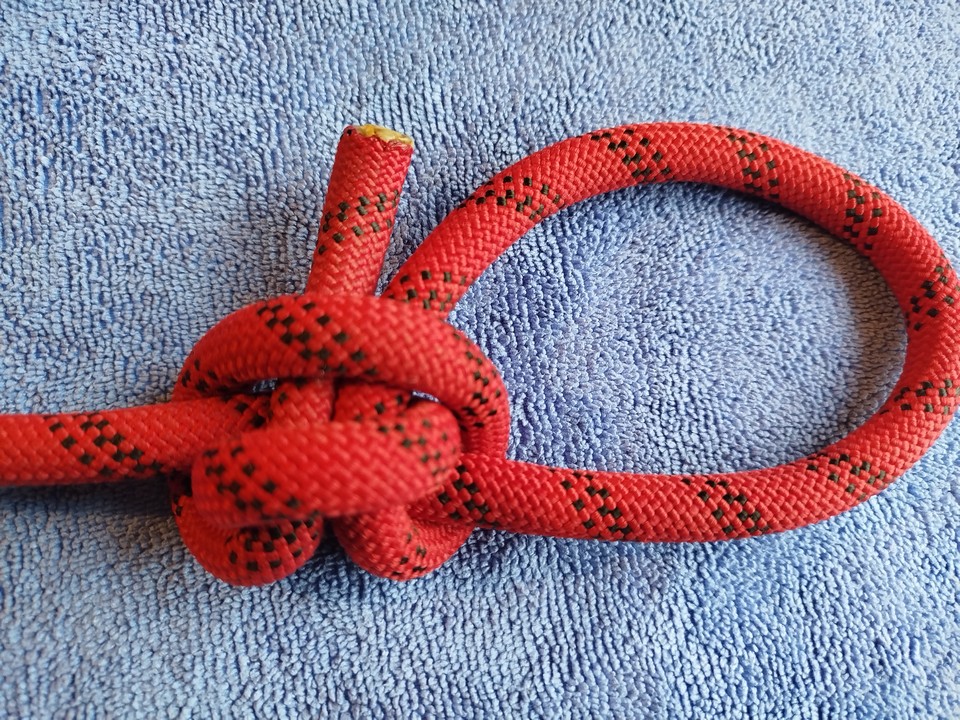
another tucking route through the (pre-)Slip Knot
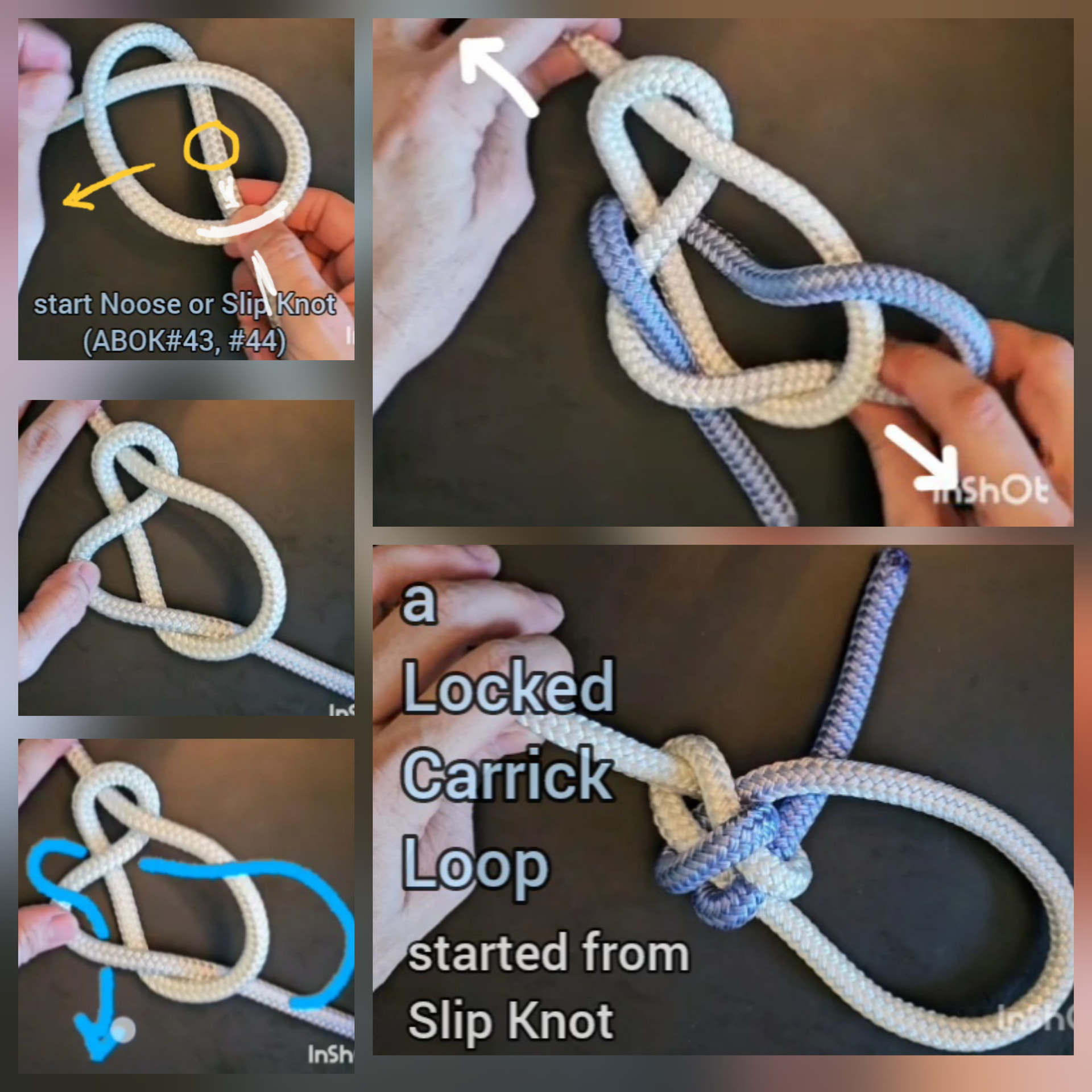
… a Locked Carrick Loop eye knot
Hi Alana
The Mocha Loop Knot was mentioned in “My New Knots” on 9.11.2018 in the old forum. It was posted in KM143 June 2019.
Happy Knotting
yChan
furthermore …
(i think I’ve only ever used that word once before!)
in terms of notation, this knot might be the “Ms..R..R..Dn with tail to S.Part”, in this series of folded knots,
standing for
• Marlinspike hitch,
• segment to the Right,
• working end coming from the Right side,
• end Down to inside eye,
• tail returned to Standing Part.
at the same time,
I’m interested in a notation that would be “Ms..X..X..Dn”,
where X would denote the crossing point side,
or C would denote the bight side,
instead of Left or Right;
Up or Dn would indicate the direction of the tail;
thus being independent of handedness and orientation.
this is after reading some of Dan L’s notes, with X’s, O’s, and other typography,
though i didn’t have full comprehension of it.
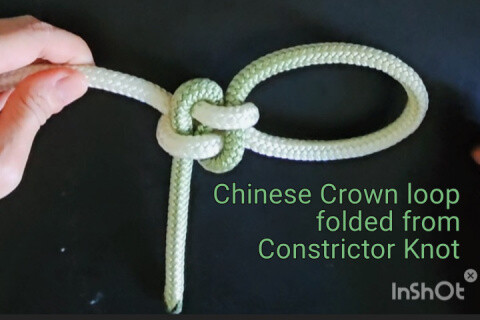
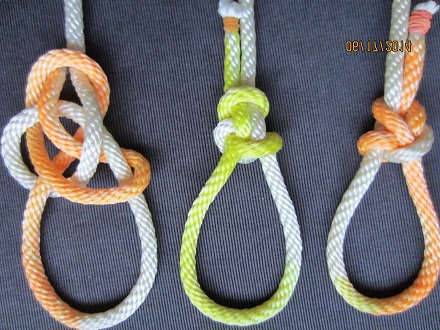
forms a sort of Chinese crown loop,
shown to be a locked anti-bowline
(?).
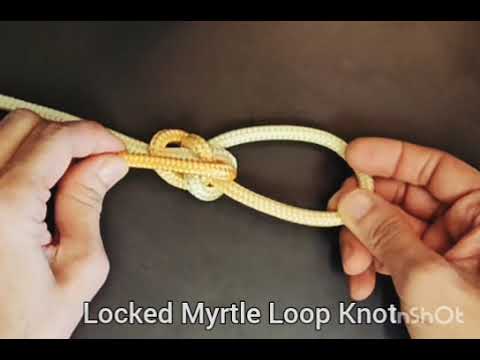
same video, on youtube:
the ‘qp’ eye knot anyway
starts out SK..X..X..
don’t know how to shorthand notate the rest
@eric22 Alan has tied it here!, i think,
and in the same colour
(i rotated and mirrored the image)
so far i have read the terms
‘trick’, (Ashley)
‘jamming’, (Ashley)
‘folding’, (moi)
‘snap’, (@SS369)
‘locking’, (@siriuso)
and ‘backflipping’, (@Dan_Lehman)
used to describe this folding action.
here in a post by Xarax, saying
my read is that we are meaning the same thing that i’m (trying) describing as 'segment pulled out and to the (left / right / crossing point / bight) side.
i had considered it a ‘twist’, or a half twist, or ‘swap’, and further a full twist or ‘wrap’, but lacked the knowledge of the names of the parts 
this is the post: Samisen TIB bowline - #2 by xarax
so, 11 years later, I’m commemorating the posts 
a ‘Chinese Crown loop’ from a Constrictor knot
i came across this Chinese crown loop formed from the folding mechanics of a Constrictor Knot:
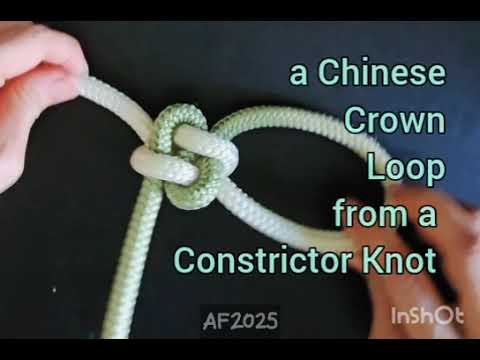
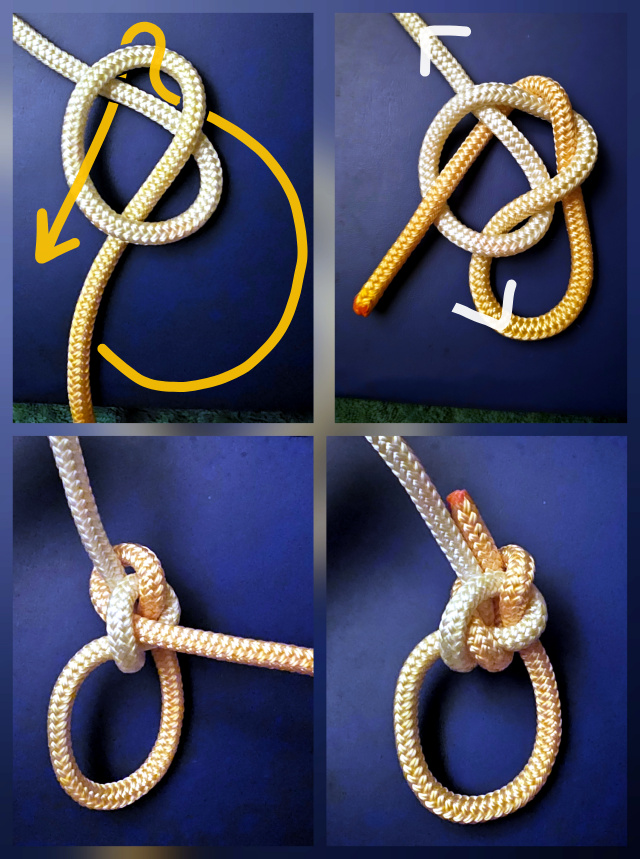
deconstruction shows a Bird’s Foot Bowline under it and a Left Hand Bowline under that.
there is also this variant but i don’t think it’s as stable.
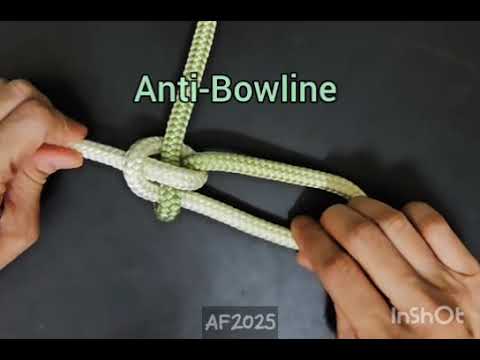
deconstruction shows a ‘SK..X..X..Up’, and its antibowline under that. fun!
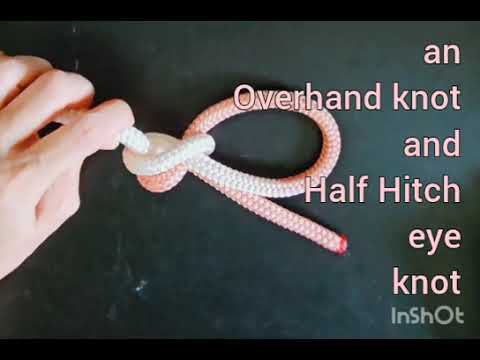
loopy little knot
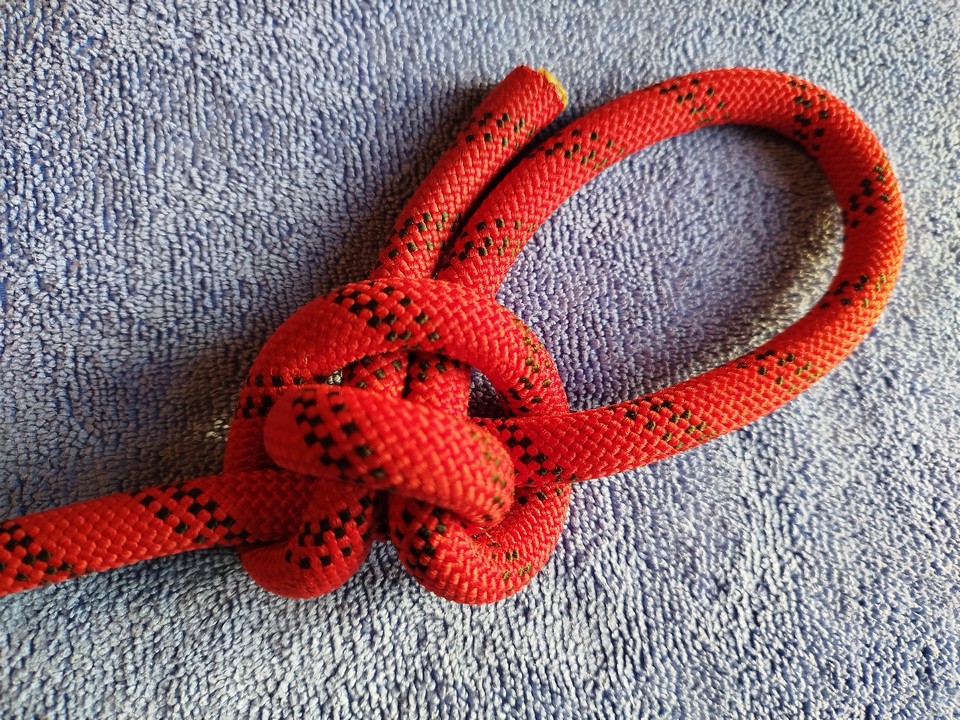
Myrtle Loop Knot with U-fold Hook Double Bowline
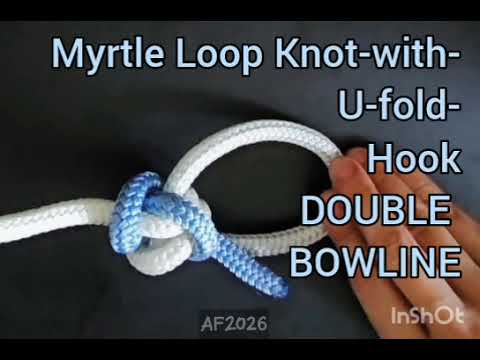
i think that’s what it’d be called
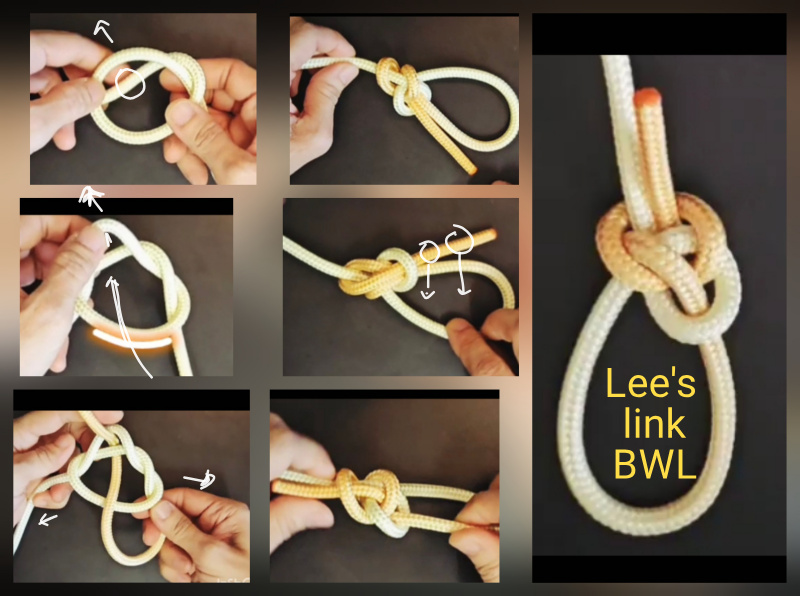
With regard to your video showing Lees Link Bowline posted 04 Dec 2025:
A method of verifying if any given eye knot is TWATE / TIB is to reverse engineer it (which you did in your video - just pointing out that you ‘reverse engineered it!). This means untying the knot without access to end. If the knot can be untied without access to an end - it proves the knot is TWATE/TIB.
With regard to Xarax’s tail tucking ‘trick’ with ‘Bowlines’, it is true that in some cases, tucking the tail through the collar so it exits from the collar on a parallel path with the S.Part - makes the knot TWATE/TIB.
But, it doesn’t always work - only in some cases. Scott’s locked Bowline is an example where it only works on 1 of the 4 variants.
Lee’s Link Bowline is a marvellous creation. It is inherently secure (in EN892 climbing ropes) and it is has no ‘tight’ (single rope diameter) turns/wraps.
can’t remember what eyeknot i had in my hand when i first read of it, and gave it a go - what a most amazing phenomenon, a fantastic discovery, it’s awesome.
eye knot obsession intensifies
works with L.H bwl,
even works with this (?)samisen-myrtle that i am fiddling with at the moment
(now not sure what it is …
but it does the TWATE thing!)
One variant that belongs in this series of bowlines, and has to be further investigated, is the girth hitch stabilizer of a simple nipping loop with two rope diameters passing through.
Perhaps you have already depicted it in previous replies but i’m quite sure that i have not included it anywhere else so far.
The knot has to be perfectly cinched, however, i ‘m not so sure about the efficiency of the nipping action associated with a not- so- flat nipping loop state.
No matter how jam resistant this core may be, one has to investigate nipping loop’s stability in heavy loading conditions.
For a more flat, nipping loop form, the tail might be pulled out of the girth hitch collar, which can lead to more conventional carrick forms, maybe some of them also present in Abok (i can’t remember where).
This looks like a transposed carrick variation loaded from the tail.
And the key question is….. “ does the first structure (with the girth hitch) qualify as a bowline”?
IMO, yes, it’s bowlinesque enough --to at least pose
the questoin.
IMO, it is much better with the nipping loop reversed
in hand (all else unchanged) ! The knot presented has
the RELeg working to turn the “loop” into too much
a helix, rightly then begging the question above.
With the nipping loop in opposite hand to above,
the loop wants to unloop in one direction against
the RELeg’s pull, with a nice net-neutral result.
BTW, one can take a set of common hitches and
run a nipping loop through them and often find
something half-decent.
And the “loop” of many BWLesque knots will tend
to change towards a helix upon increased force,
or in some othe rcases to move towards what we
might prefer to see as crossing-knot-based EKs.
.:. The boundaries of one vs. the other are
(1) not so easily stated and (2) altered by force
–quite a pickle!
–dl*
==== *
IMO, it is much better with the nipping loop reversed
in hand (all else unchanged) ! The knot presented has
the RELeg working to turn the “loop” into too much
a helix, rightly then begging the question above.
With the nipping loop in opposite hand to above,
the loop wants to unloop in one direction against
the RELeg’s pull, with a nice net-neutral result.
Frankly, i do not see much difference with the nipping loop reversed in Z orientation, with respect to the nipping loop stability and its tendency to unravel into a helix formation but i guess you are seeing something in the following configuration i have attached for comparison.
Well, the sure thing is, that the following profile adds more stability to the system with the girth hitch collar passing through the nipping loop to add a third rope diameter.The enhanced stability was to be expected, since the first construction stage of the knot is already a bowline, but of course with the cost of less core pliability.
BTW, one can take a set of common hitches and
run a nipping loop through them and often find
something half-decent.
Yes, but with some creative intervention, usually involving additional tail maneuvers, the half- decent knots, might evolve into super-decent bowlines.
PS: The first costruction stage of the second attached bwl with the three rope diameters inside the nipping loop, is a myrtle bwl, but it might as well have been an anti-bwl, without any problem, perhaps with more core friction.
You’ve shown the same knot.
What I suggest is that the S.Part’s hand be reversed.
(In both your pics you have the RELeg entering the
nipping loop from the OELeg side of the loop, not
the S.Part’s side. You’ve just pointed the eye in opposite direction.)
(-;
Nope, I have not shown the same knot.
What i did was to change the polarity of the nipping loop and leave everything else unchanged like you said.
Pointing the eye in left orientation, was to show that this configuration was bound for left- handed knotters.Examine both knots pointing in the same direction this time and see if they are the same. I did not make any change, i just flipped the second image with the Z nipping loop.
Now, you are suggesting something else, and that is to alternate the returning structure and capture the SP first, which means that the tail is going to land inside the eye.That has nothing to do with the polarity of the nipping loop, it can work in both cases.
I think it is very obvious, no need to attach any images, and if there is a language barrier here i apologise.
PS: There is a chance that you are implying that the first inserted returning line should be threaded from the other side of the nipping loop. That would be a different configuration of course, but when you are aiming for an out-going eye leg capture first, i prefer the side i have illustrated, following the rules of anti-bwl construction.
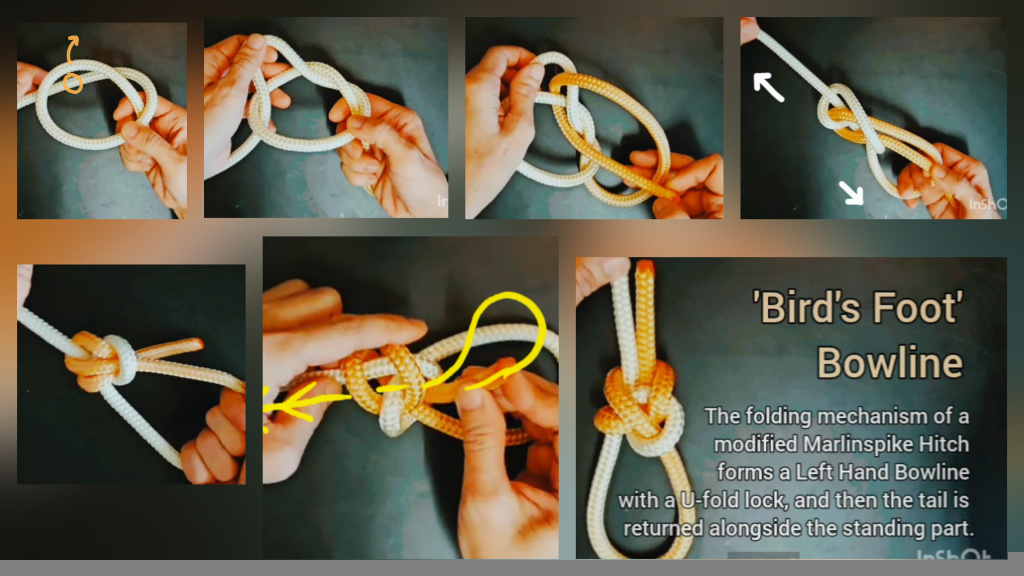
 hook? clasp? u-turn tail? (Ychan)