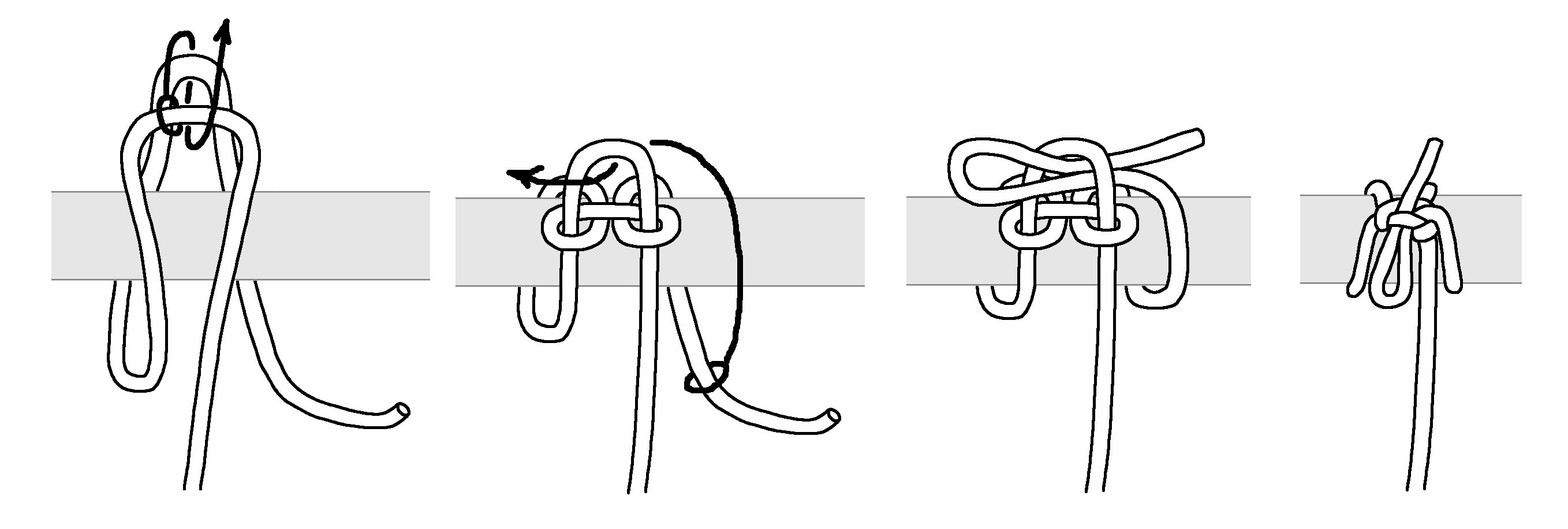
Good for you --still a thing to do,
no matter the hi-tech options.
[i]Animated Knots by GROG[/i] ...
I've urged Grog to put in a strong warning
about the vulnerability of the Highwayman's H.
to CAPSIZE/pull-through --users need to beware
[b]THIS [i]PARTICULAR[/i] issue[/b], not just something
general about not relying on the knot for critical work.
Troop Program Resources website of the BSA does recommend it for large pioneering projects where a piece might need to be lifted up into place.
They should avoid this knot,
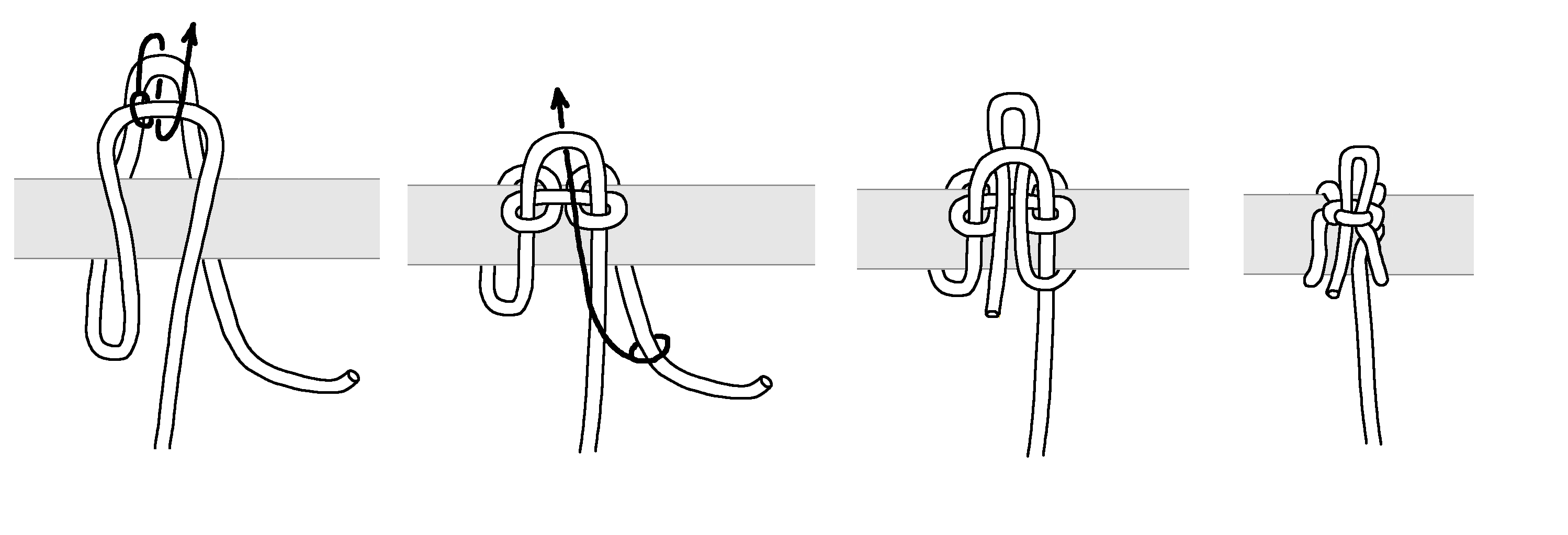
and use the version that QUITE SIMPLY
reversed the surrounded/surrounding
relationship of S.Part & frame U-folds
--i.e., in those traditional cases,
insert the frame's U-fold inside of the S.Part's,
and make the slip-tuck thus through the
frame, thus not heavily loaded possibly
to fold-&-pull-through capsizing!!
Again, there are particular ways knots work,
and particular ways they can fail.
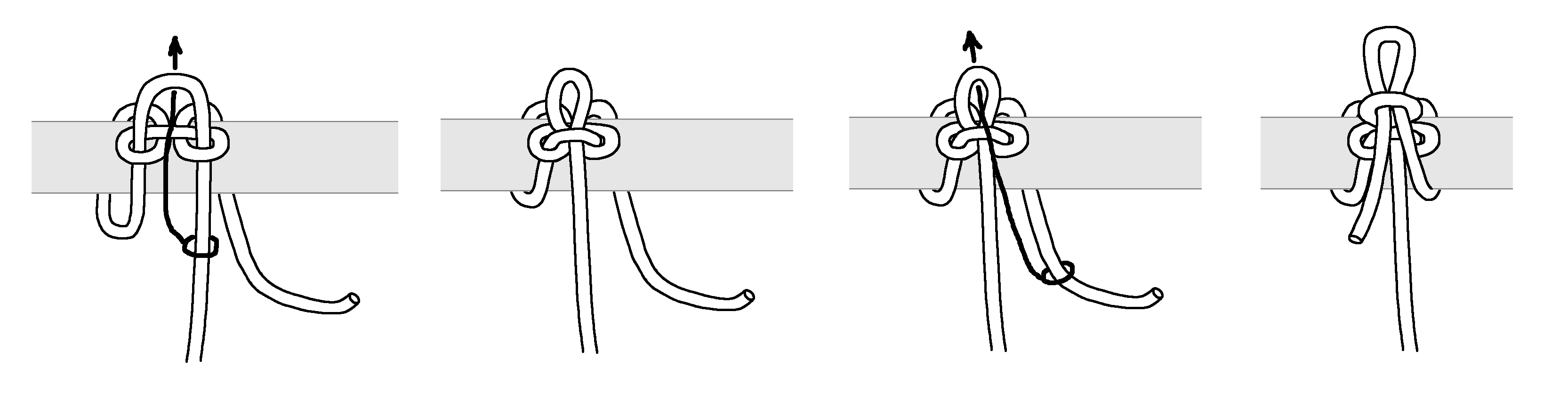
I am willing to keep trying! This version is nicer. I was able to tighten it up as indicated in the last diagram, keeping things pretty much as they are tied. But when you pull hard on the standing part, the knotted part twists a little and pulls some away from the rail. But it stays tied. If the original Draw Hitch pulls any away from the rail, the slipped loop will fold under and the knot comes apart (as Dan has warned above).
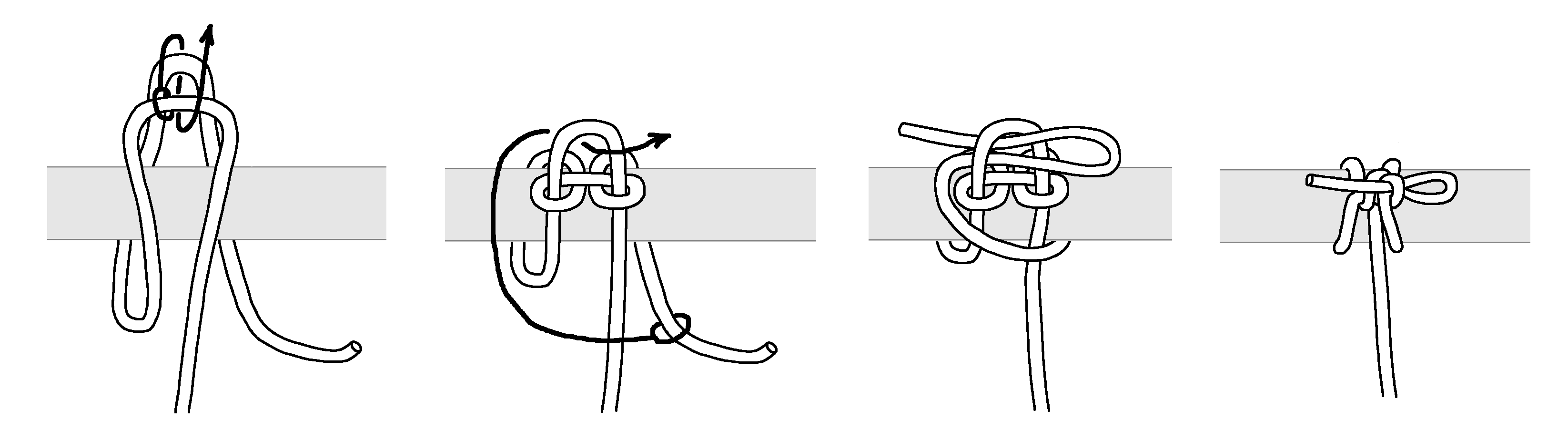
Almost there! Tuck the slip-tuck out the opposite
direction (such that it will come across the S.Part’s
path).
Roo’s capsizing matches part of my mixed bag of results
in trying to tie this! I’ve somehow gotten another variation,
and will look at that some more to see how/why
(I think it resulted from trying this one but loading something
too soon with too little snugging).
One should also keep in mind how stiff-rope
will not want to pinch together so to pull out of
toggling something through an aperture that had
pinched its legs together --our needed release of pulling
out that “slip-tuck” !
(Cyrus Day, I think it is, in his Art of Knotting & Splicing,
says that someone attributed the trad. knot to “Dick Turpin”,
a sailor; and then come the myths built for it of highwayman !?!?
)
Sorry, Dan. I cannot understand what else to try. Anything other than what I have displayed in Reply 15 and Reply 21 tends to easily come apart when you pull on the free end. Both Reply 15 and Reply 21 tend to pull a little away from the rail, but they generally stay tied. Maybe someone else can understand what you intend.
But you don’t need to,
just look at your 3rd image (from left)
and see your tuck of the toggle U-fold/slip-tuck
going back-to-front;
as I said, reverse this → front-to-back.
(which will look rather “UPward”, yes).
Which brings the connected (not tail) part
of this tucked U-fold more play in resistance.
| Tuck the slip-tuck out the opposite direction
| (such that it will come across the S.Part’s path).
I tried several more maneuvers, and this is the only one that would hold when you pull hard on the standing part. Even in it, if you do not tighten it enough first, the slipped bight might pull away from the rail and flip under (although it stayed tied, even when it flipped).
And the one going FRONT-TO-BACK in tucking the
slip-toggle?
Even in it, if you do not tighten it enough first,
the slipped bight might pull away from the rail and flip
under (although it stayed tied, even when it flipped).
These are some questionable contrivances!
(And then come all those other factors I pointed out
above, such as impediments to delivering force to
the hitch.)
I thought that my earlier attempt (Reply 15) went across the standing part and up through the front of the bight formed by the standing part (after the slingstone hitch). It held better than some of my later tries. But you need to tighten it very well or the knotted part also pulls away from the rail and partially flips the slipped loop.
Correct finish to the wrong start --that “bight formed by the S.Part”
should NOT be formed by the S.Part but by the other U-fold, having
been pulled up through the S.Part’s, casting S.Part into the cat eyes.
“need to tighten it very well” :: yeah, reducing material that can
extend/deform/do-mischief !
For some simple things, these slip-free hitches can be fine,
dandy even; but for holding critical loads and performing
under outdoor-abseil situations, one needs to be careful,
and these just might not be good solutions.