Is it a "bowline" ?

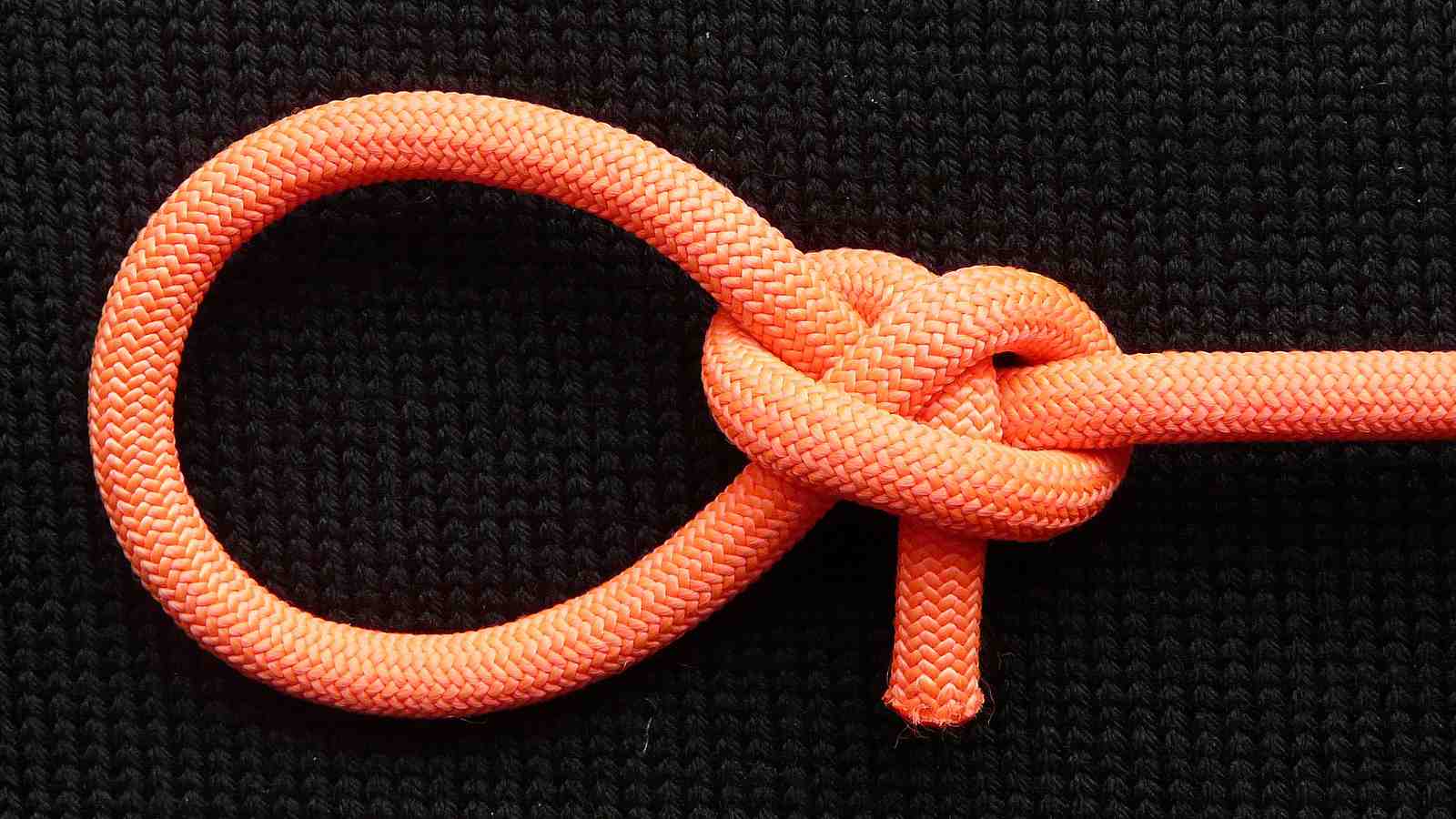
Back in 2006 a certain PET loop, based on a configuration of two linked bights (( one of which is a “nipping loop” ( two loaded legs ) and one is a “half hitch” ( one loaded leg )), was given a new name : Myrtle s bowline.

Mark Gommers, in his “Analysis of bowlines”, has retained this name, along with the more “formal”, descriptive one : "A bowline based on a crossed bights component ". ( see the attached picture, copied from this article ).
As I had tried to argue elsewhere, I always believe that a “bowline”-like loop is a PET loop that has TWO main components :
The FIRST component is tied on the Standing Part BEFORE the eye, and it is topologically equivalent to the unknot. I use to call it “the nipping structure”. It may be a single nipping loop ( as in the ABoK#1010 ), a double ( = two turns ) nipping loop, or any other structure which, when it is loaded by the 100% of the total load coming through the Standing End, and by the 50% of the total load coming through the eye leg, shrinks and grips the Tail End which penetrates it, and so it constricts it and it immobilizes=secures it.
The SECOND component is tied on the returning eye leg AFTER the eye. I use to call it “the collar structure”, although it looks like a common “collar” only in the cases of a few, very simple bowlines. It can be any knot with segments that go through the one, two or more shrinking / gripping openings of the “nipping structure” - while, at the same time, those segments are woven within and around this nipping structure they penetrate, in a way that helps it to remain a “closed”, tight knot, and not “open up”, and degenerate into an elongated structure “spread” along the Standing Part, unable to grip and immobilize=secure the Tail End any more.
So, each and every time I look at a “Myrtle bowline”, I wonder, and I ask myself again : Is this thing tied on the returning eye leg, a “collar”, or a “collar structure” ? Now, even if one can not it call “a collar”, it certainly is a “collar structure”, as I had defined the term “collar structure”, i.e., in the most general way possible. However, a too general term runs the danger of being too abstract, vague, and not at all descriptive - so, there is a risk that the issue would be confused rather than clarified, and we already have many confusing terms of the knotting nomenclature around us, we do not need more ! :slight_smile:
There are two ways out :

  1. The first one is more radical : The “Myrtle bowline” ( and all the “similar” PET loops, where the legs of the “second” bight component ( the “collar”, or the “collar structure” ) do not enter into the openings of the first ( the “nipping loop”, or the “nipping structure”) through the same direction ( i.e., the two legs of the “second” bight are not parallel to each other )), should NOT be considered as a “proper” bowline - although it is a PET loop. ( After all, the “Carrick loop”, which is similar to the “Myrtle bowline”, is not called “a bowline” by Ashley).
  2. The second one is more conservative : The term “collar structure” should be discarded, and replaced by a term which does not have any relation with the “collar” of the common bowline any more. The first thing that cross anybody s mind would be something like “nipped structure” , or just “part tied after the eye”, in relation to a “part tied before the eye” ( instead of “nipping structure” ). The “Myrtle bowline” remains a “bowline”, the Myrtle bowline, and the “Carrick loop” becomes a bowline, too - the Carrick bowline.
    :-\ :-\ :-\ :-\ :-\

P.S. The real reason I mention this probably hair-splitting thing, is that I was thinking about the ABoK#1445 and its reverse, on which the “Myrtle” hitch and loop are based… Such simple, almost elementary knots, yet we have not tested or analysed them as we should…
http://igkt.net/sm/index.php?topic=5049.0
I didn’t really know what to call it.

Other than the fact that the term ‘Myrtle’ was used by others on this forum. There is this link here: http://igkt.net/sm/index.php?topic=3233.245;wap2

The bight is the interesting component - in that it is not parallel - it is crossed. Sort of like the ‘Carrick Loop’ (Bowline derivative?) refer ABok #1033

I’m glad you raised this issue because it is deserving of further analysis.

Mark

Thank you, Mark.

I believe you have noticed the 5 :-\ ! :slight_smile:
I separate the Carrick mats in two distinct categories :
The first includes those which, by a 180 degree “twist” / rotation of the one link around the axis of the bend, they can be transformed into one of the four “classic” knots of the Reef family : the Reef, the Thief, the Granny and the Grief. The second includes all the rest.
Clearly, the ABoK#1445 and its reverse belong to the later. I have no idea which of all those configurations are the more secure ones ( i.e., they do not slip under heavy loading ), either in the bend or in the loop form ! So much about our/my knowledge, even for the most simple knots …
A “proper” collar has two characteristics : First, it encircles one tensioned limb / appendix of the knot, be it a Standing End or an eye leg. Second, both its legs enter/exit the nipping loop(s) being parallel to each other.
I guess one can say that the second characteristic is not very important, and it does not influence the security or the strength of the knot very much. So, let us describe as “collars” even the bight components with crossed, not parallel legs. However, what makes me wonder if we should consider the “Myrtle” “collar” as a collar, is the absence of the first : The “Myrtle collar” does not collar any segment of the nub other than the rim of the nipping loop itself, it is a turn around a part of the nipping loop ( which may also be a turn around the nipping loop s crossing point, as in the case of Alpineer s TIB bowlines, or not, as in the case of Scott s TIB bowlines ).
That means that, even if one decides to include the Carrick loop into the bowline family ( ignoring the fact that the legs of the bight component / collar are not parallel to each other but crossed, but taking into account the fact that the bight component goes around a limb of the nipping loop, indeed ), he/she would find it difficult to do the same for the “Myrtle” loop - because he/she would not see any “collar” there, just an additional turn around the rim of the nipping loop.
Alan Lee and myself have also used such “collars” as an additional measure of security, on top of ordinary / proper collars ( so, always in a compound configuration, never in isolation ) in the case of the “Link bowlines”.
http://igkt.net/sm/index.php?topic=4314.15

I encounter the same difficulties when I have to describe the so-called Sheet bend bowline(s) ( which are the corresponding to the Sheet bend loop knots - the common and the “Eskimo” bowlines are not ! ).
http://igkt.net/sm/index.php?topic=3233.msg23702#msg23702
http://igkt.net/sm/index.php?topic=3233.msg25412#msg25412
http://igkt.net/sm/index.php?topic=4162.0
Are they bowlines, or not ? Where is the collar / what does it collar ? What happens when one leg of the bight component does not penetrate the nipping loop(s) at all ?

And I’ve long argued against that second criterion,
taking the “nipping loop” to be the heart & soul of
a bowline --its defining feature. But I run into
some difficulty in at least two ways in this position:

  1. there are constructs that we are happy to regard
    as parts of bowines that aren’t precisely nipping
    loops --the water bowline’s clove hitch, e.g.–;
  2. some closures of the knot based on that turNip
    (nipping loop) don’t so well hold it in that form,
    and then one is wondering if indeed a “loop” is there,
    vs. say a helix (a more obvious helix than the one of
    a turNip, i.e.).
The bight is the interesting component - in that it is not parallel - it is crossed. Sort of like the 'Carrick Loop' (Bowline derivative?) refer ABok #1033
Than why are you calling it a "bight"?! I tend to see such things as "loops", as they [u]wrap around[/u] something more nearly in full circle, vs "turning" in more of a 180deg range.

–dl*

However, “long” after you have argued this, “now”, we have the Gleipnir, and we can “see” the landscape of the bowline itself, the Sheepshank and the Captain Mullin s knot from a better angle.
How can we distinguish the mechanism of the bowline from the mechanism of those knots, which also include a nipping loop ?

Let me repeat what I have argued on this issue not so long ago :


Well, I do not ! The general concept of the ( topologically equivalent to the unknot ) “nipping structure”, which shrinks and grips and immobilizes the segments of the part of the knot tied after-the-eye, covers all those cases. It is some characterization of the different “collar structures” / of the parts of the knot tied after-the-eye that is missing, which will or will not separate the “Myrtle” and/or the Carrick loop from the rest of the bowlines, not of the “nipping structures” / the parts of the knot tied-before-the-eye.

There is a less geometrical / more functional reason those structures do not seem to be "collars" : In contrast to the collars ( even to the "not-proper" ones, like the collar of the [i]Carrick loop[/i]), they tend to [i]revolve[/i], i.e., move [i]en block[/i] ( like the outer ring sliding on the inner ring of a plain bearing ) and so they run the danger to unwind the coiled (around the rim of the nipping loop) segment, and let their first leg be spilled out of, and their second leg be swallowed into the nipping loop...

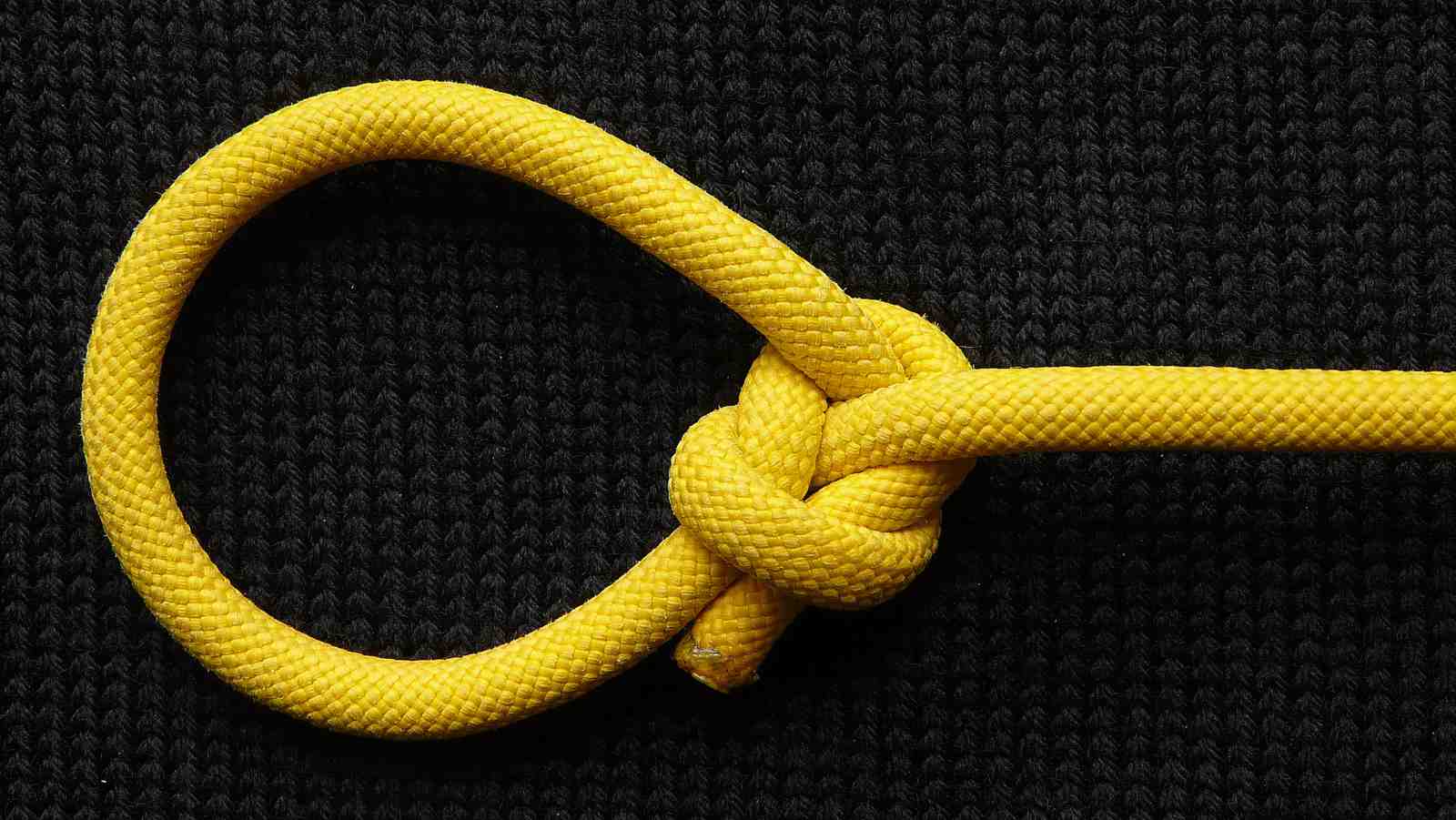
Same question / problem : Is the loop shown in the attached pictures a “bowline” ?
( A very secure, easily and quickly tiable loop, as its nippimg / gripping part tied before the eye is a capsized Pretzel knot).


Capsised Pretzel loop ( front view ).JPG

before capsizing.JPG

No, let’s hope not!
Calling this squaREef eyeknot “very secure” is going
beyond the pale in exaggeration/misrepresentation :
it is a dubious knot of considerable instability,
which leads to capsizing into things not consistent
with my notion of bowline at the very least!

–dl*

Hi Dan,

Do not load directly the capsized form,load the loose form!Here some relevant post:

http://igkt.net/sm/index.php?topic=4107.msg32235#msg32235

                                                                                                              Bye!

“Your” notion of bowline does not help the bowline itself at all :), neither the discussion about it, I am afraid - but it seems that it also prevents you from either READING what anybody else writes, or actually TYING the f… knot he shows ! We want “notions” to help us understand what reality is, not to distort it !

The “squaREef knot”(sic) is somewhat you may “see” somewhere ( I hope you only “see” it; you do not “listen” to it yet ! :slight_smile: :slight_smile: :)), but it is not existing anywhere in the pictures I had posted. Wake up.
Instead, I have shown a Pretzel-shaped nipping structure, which, for starters, is topologicaly equivalent to the unknot, NOT to any overhand knot ( because we were supposed to talk about bowlines, and bowlines are PET loops, remember ? ). This nipping structure, when pulled by both ends, capsizes into a single nipping loop, like the nipping loop of ANY bowline - even like the nipping loops (“turnips”) of the bowlines you might have been dreaming when you were typing your previous reply.
However, this bowline-or-not was not presented as a knot better than the common bowline, of course ! - just like the “Sheet bend “bowline” mentioned in my previous post. It was presented for one reason, which is quite evident through the thread : We see a “collar” which, although both its legs are not-crossed ( like it happens in the common bowline s “proper” collar”), does not collar a limb of the nipping loop, but its rim - like the “collar” of the “Myrtle bowline”. So, if we call the “Myrtle bowline” a “bowline”, what will prevents us to call this loop a “bowline”, too ? A precise “notion” of ‘bowline" ( not “your” notion of the bowline ! ), should be based on geometrical properties, not on notions of “instability”, or other vague functional properties. If you can describe this “instability” in precise terms, having to do with the particular topology or geometry of the knot, then it would be fine : We could be able to pinpoint a feature which the bowlines have or should have, and this loop does not. However, this would be something which would describe the way the segments themselves of the bowline are or should be weaved, and which way is not followed by the loop I show - i.e., it would be something NOT based on your notion of the bowline - or your hand weaving arguments, for that matter ! You had tried to single out the basic property of the bowline in the “nipping loop”, while I had insisted that the "collar’, although secondary, should also be taken into account. Here are three instances ( the “Myrtle”, the “Sheet bend” and the “Capsised Pretzel” PET loops. which do have a nipping loop, but they do not seem to look like bowlines. Why ? I supposed that this should be due to their different “collar”, or the absence of a “proper” collar, so my “notion” of the bowline, which includes the existence of a “proper” collar, seems more helpful.

Alan Lee has tied many secure “bowline-looking” loops, where the second leg of the collar does not go through the nipping loop, but instead it is weaved within an φ-shaped nipping structure in other ways (1)(2)(3). Should they be called “bowlines”, or not ? This decision should be based on precise geometrical properties, not vague arguments about “instability” - because Lee s loops are as stable as the Earth itself ! We should not shift the goalpost, when we are presented with a question/problem we can not solve easily, or may even be unsolvable. Although Lee s loops are not “instable”, and they certainly do not “collapse into things not consistent with “your” notion of the bowline”, they should not be baptized as “bowlines” without further examination !

( I had not been able to make this loop “collapse” into any-thing, when it was properly tied, dressed and pre-tightened by bare hands. It is not self-dressing, that is for sure ( few knots have this advantage ) but that does not mean it can not be dressed… I do not know what will happen with a really heavy or unfavourably loading. However, I do not know what will happen in such conditions also in the case of many other PET loops which do have a nipping loop - but I do not stop calling them “bowlines” because of that ! )

  1. http://igkt.net/sm/index.php?topic=4125.msg32934#msg32934
  2. http://igkt.net/sm/index.php?topic=4125.msg32948#msg32948
  3. http://igkt.net/sm/index.php?topic=4125.msg32012#msg32012
  4. http://igkt.net/sm/index.php?topic=4125.msg31986#msg31986

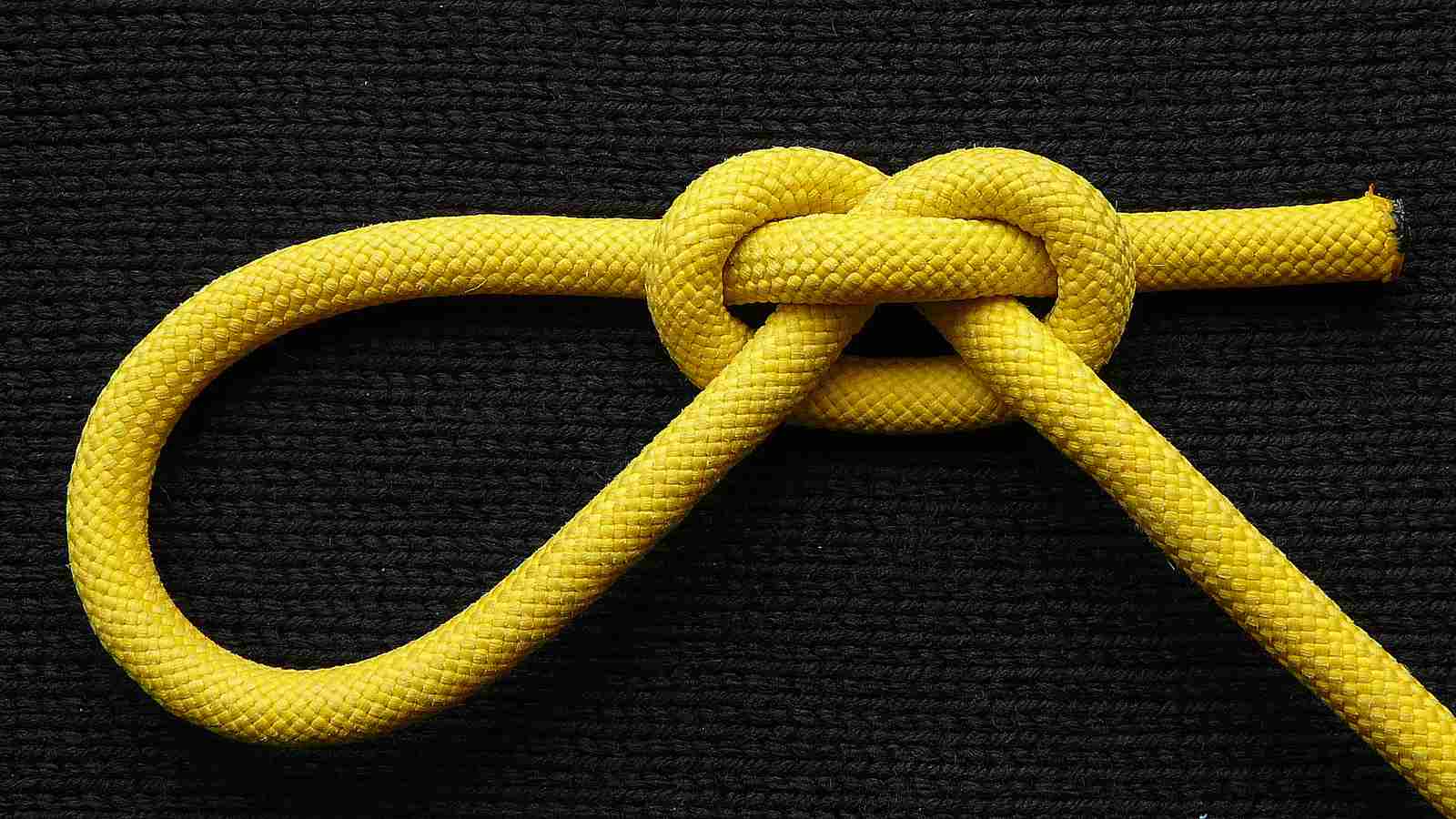
See the attached picture, of a “thing” this knot might lead to capsize into :
A very secure, easily and quickly tiable noose - which is the most safe form one would had wished any bowline to capsize into, because it will not be released : If it slips, the eye would shrink, and the eyeknot would function as a hitch, encircling the hitched object more tightly. If one has not tied the original Capsized Pretzel bowline-or-not, or this Pretzel noose, around his neck, he would not encounter any major problem ! :slight_smile:
Nice simple noose ! The Tail end, being perpendicular to the continuation of the Standing End, works as a tight wedge, an obstacle the tensioned line has to overcome to start slipping through the nub.


Adjustable Pretzel noose.JPG