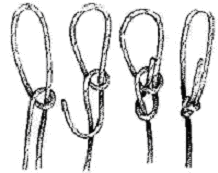
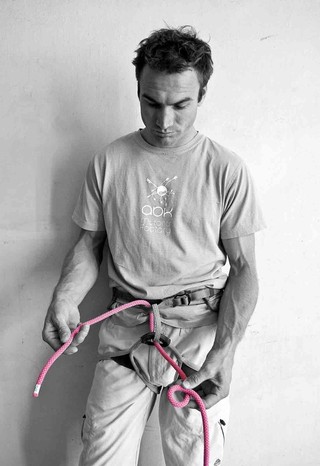
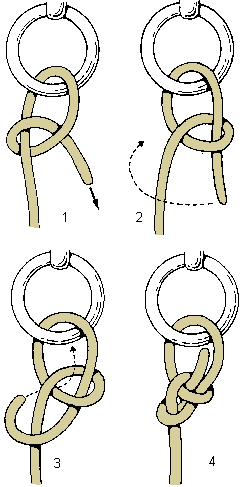
I read at the Wikipedia article about the tying of the bowline :TyingA mnemonic used to teach the tying of the bowline is to imagine the end of the rope as a rabbit, and where the knot will begin on the standing part, a tree trunk. First a loop is made near the end of the rope, which will act as the rabbit’s hole. Then the “rabbit” comes up the hole, goes round the tree right to left, then back down the hole.
http://upload.wikimedia.org/wikipedia/commons/thumb/6/6f/As_de_guia_1.jpg/120px-As_de_guia_1.jpg
The rabbit hole.
http://upload.wikimedia.org/wikipedia/commons/thumb/a/a2/As_de_guia_2.jpg/120px-As_de_guia_2.jpg
Out comes the rabbit,
http://upload.wikimedia.org/wikipedia/commons/thumb/5/59/As_de_guia_3.jpg/120px-As_de_guia_3.jpg
runs around the tree,
http://upload.wikimedia.org/wikipedia/commons/thumb/3/30/As_de_guia_4.jpg/120px-As_de_guia_4.jpg
and hops back into its hole.
There is a potential with beginners to tie what is known as an Eskimo bowline. This faulty knot stems from an incorrect first step while tying the rabbit hole. If the loop is made backwards so that the bitter end is on the bottom, the resulting knot will be sideways. The final loop of a sideways bowline will slip. This makes it particularly dangerous in the case of an inexperienced sailor, who, in addition to having an insecure knot, is also less familiar with what to do should it come untied on the water. ( Red underlining by me )
With THIS BS, no wonder people believe that there is ONE tying method for the bowline, already carved in the first Stone Tablet…( which was later smashed ). And that there is ONE front view of the bowline, which has been imprinted in their brains, or, better, in their DNA. Generations of knot tyers have been brain-washed by the parroting if this “rabbit hole and tree trunk” junk !
Following this method, one will never understand which is the function of the bight component. in general, and the reason that the eye leg of the Tail penetrates the nipping turn as it penetrates it, in particular. Also, people that have been brain washed by this method, would tend to consider the “Eskimo” bowline faulty, and insecure - and, of course, they will never see that there are four (4) different variations of the “Eskimo” bowline ! They will never understand that there is a variation of the “Eskimo” bowline, where the continuation of the eye leg passes in between the rim of the nipping loop and the eye leg of the Standing part, and the Tail is tucked “under” it, which is probably more stable and safe than the “Common” bowline - indeed, this variation can be considered almost as a “safe bowline” !
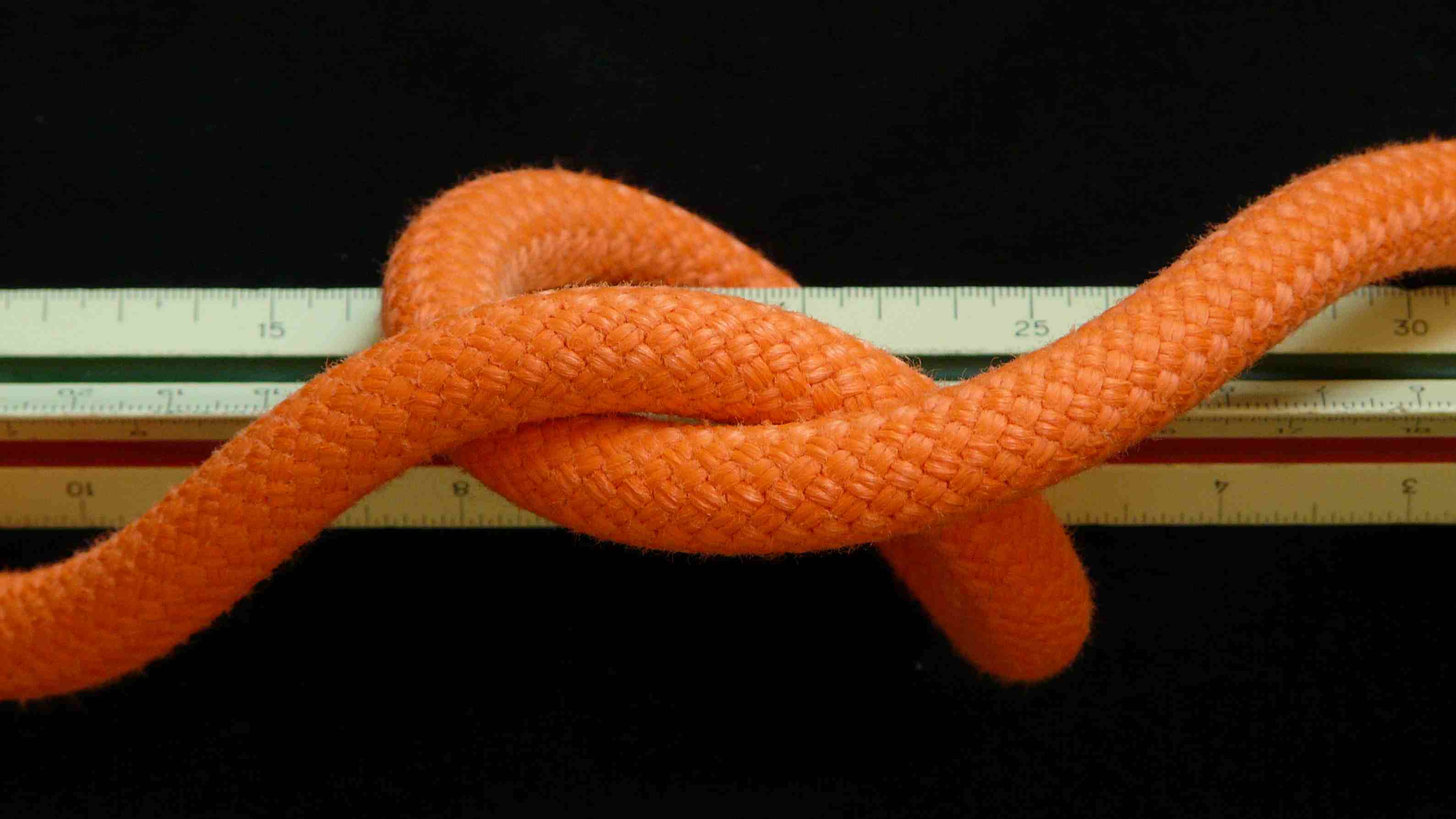
Well, I will not try to convince knot tyers that they have been brain washed, because I know this would not be good for their jammed ego..  . However, I will show two pictures of a different, more revealing mental image of the bowline, which explains the structural role of the legs of the bight component in relation to the nipping turn : a mental image which shows why the nipping turn can not be unwinded, open up and degenerate into an open helix. Next time knot tyers will teach the bowline to a boy scout, they would be able to sing a different Looney tune, and show something more than Bags Bunny !
( The ruler plays the role of the eye leg of the Tail )