I heard that the bowline is king of knots , the most strong one
If you’re going for an improved security bowline, I would also think it’d be beneficial if it were easy to check. A Water Bowline is a natural extension of a simple bowline that is fairly easy to recognize at a glance:
http://notableknotindex.webs.com/waterbowline.html
Some other options:
http://notableknotindex.webs.com/zeppelinloop.html
http://notableknotindex.webs.com/monsoonbowline.html
http://notableknotindex.webs.com/gnathitch.html
Hi Ruby,
The last loop you show is “lost among Bowlines”: it is not a Bowline, and not even a Bowline-like loop, and not even a post-eye-tiable loop: it is more like if one cuts the eye of a Figure 8 loop, and then “melts” one of the two legs of the eye to the appropriate end of the original 8 loop.
Bye!
Note that these don’t necessarily imply each other.
but after looking posts in this forum, just find that bowline is said to be weak, and there're lots of ways to make it more secure more complicatedjust wondering whether you’ve got a conclusion on which is best or recommended bowline
I don’t recall “weak” being part of its resume, but YMMV
over various factors. Look further at the forum posts and
you should understand that “best” is a dubious claim, at
best  . Different circumstances will often call for different
solutions; clearly, one cannot tie any of the elaborately
extended-for-security variations quickly as one can the
original --which one might need to do, and then one might
seek some further security with an add-on knot.
And one should understand that “strong” is an attribute in need
of careful consideration --it might be that a steady, slow-pull
break test gives a different ranking of “strengths” than would
a dynamic loading, than would a long series of cyclical loadings,
than would actual use & abuse.
–dl*
see some posts like this:
Hrungnir
Exp. Member
****
Posts: 142
    View Profile
    Personal Message (Offline)
Re: Bowline transformations
? Reply #3 on: 2010-12-25, 11:48:00 ?
Quote
… in articles on the web, books and comments on TV, I often hear the bowline called “the king of knots”. Anyone new to the knot might think “the king of knots” must be the perfect knot. Safe and usable for almost any task. In fact, it seems like the knot can be quite dangerous…
And you saw “weak” where?
???
With “Janus”, I was trying to connote the aspect of the
knot having two faces --looking the same coming as
going (though this isn’t essential to “Janus”, I think)–;
one might also see it as having a mirror bisecting one
dimension.
And for that simple tail-wrap-&-re-tuck around the crossing
point of the central nipping loop, I used “end-bound”. This
seemed to work not all so well in the single, but well in the
double bowline --esp. if the rope is firm. I found that this
seems secure in many ropes but can be not so secure in
some firm, slick polypropylene!! There, a Janus bowline
although loose, looked better than the end-bound one,
in which all of the turns just widened (!). So, YMMV.
–dl*
For the record, this is the modification dan Lehman suggested in relation to the DDK 3 bowline .
http://igkt.net/sm/index.php?topic=19.msg20960#msg20960
http://igkt.net/sm/index.php?topic=19.msg20961#msg20961
The Lee s locked bowline, presented recently, is a much better knot.
http://igkt.net/sm/index.php?topic=19.msg27508#msg27508
I do not understand why the “overhand” is “intuitive” and the “underhand” is not (?!). If you keep in mind this nice final picture, with the pair of lines running parallel to each other, you will tie it with ease.
I have tied and tested it with a number of different materials, and I have not encountered any major problem. One would possibly argue that it needs a somehow careful dressing and a minimum of pre-tightening, so the lower collar around the returning eye leg would become and remain taut - but this happens in most post-eye-tiable secure eyeknots, where the continuation of the returning eye leg needs to follows a more convoluted path than the path it follows in the case of the less secure common bowline.
http://igkt.net/sm/index.php?topic=4125.msg27496#msg27496
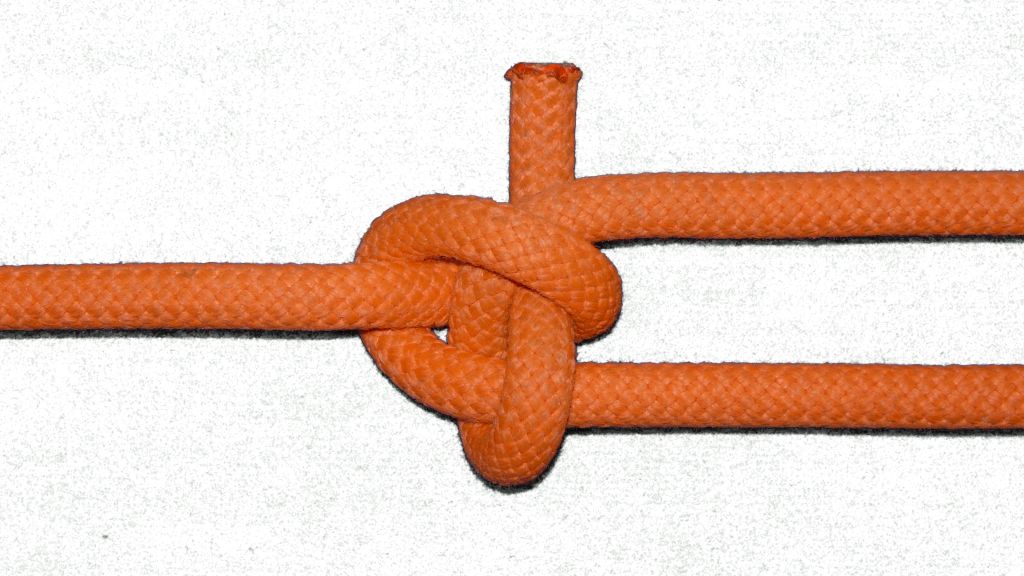
Having said that, I should mention that I would nt chose this bowline as my second or third choice. I have seen that the “crossing knot” based (-)bowlines are not well known, and this is probably the main reason they have not yet received the attention they deserve. I believe that the second or third choice should be the ( best of the four variations of the ) “Eskimo” bowline. ( See the attached picture). A superb knot, safe, simple, easy to remember how to tie and to tie, easy to untie - I can not see any reason it should not be included in any set/collection of bowlines with more than 1 elements/members :).
I’m not sure what is said, above. My quoted words make sense
to me, but contrast with the images presented at the two URLs
given below the assertion “this is the modification …” !? What
I’ve tried and like somewhat is where the “end-bound” tail wraps
over the crossing point of the central nipping loop, and thereby
binds it (sometimes well, sometimes less than well).
As for Lee’s Locked Bwl being better, maybe that too is one more
YMMV case. I’ve tried similar such locking, with some success,
sometimes throwing in some turns to better nip the end’s exit
–but that makes for an increasingly ungainly knot!
–dl*
What is the difference between the two bowlines, the first one presented by DDK (3), shown at the images at the two URLs, and the second one presented by 75RR ?
I thought that, if, in the bowlines presented by DDK, both the ( almost…) two round turns of the second leg of the collar around the rim of the nipping loop encircle the nipping loop s crossing point, we get the 75RR bowline. And I thought that this is what the quoted words were saying…
The mirror image of an “overhand” is an “underhand” - so, if a compound knot uses an underhand knot, its “mirrored” / mirror symmetric knot will use an overhand knot…
Am I missing something here ? Why do you prefer the one form from the other ? This under/over-hand knot does not stand alone, in mid air : it is interweaved with the nipping loop and the returning eye leg - so its “over” or “under” form does not make any difference. All the knot tyer has to do, after the collar, is to follow, with his working end, almost blindly, first the line of the rim of the nipping loop and then the line of the returning eye leg… So, forget the “overhand” or “underhand” knot form of the bowline s “lock”, just follow the lines of the nipping loop and the returning eye leg.
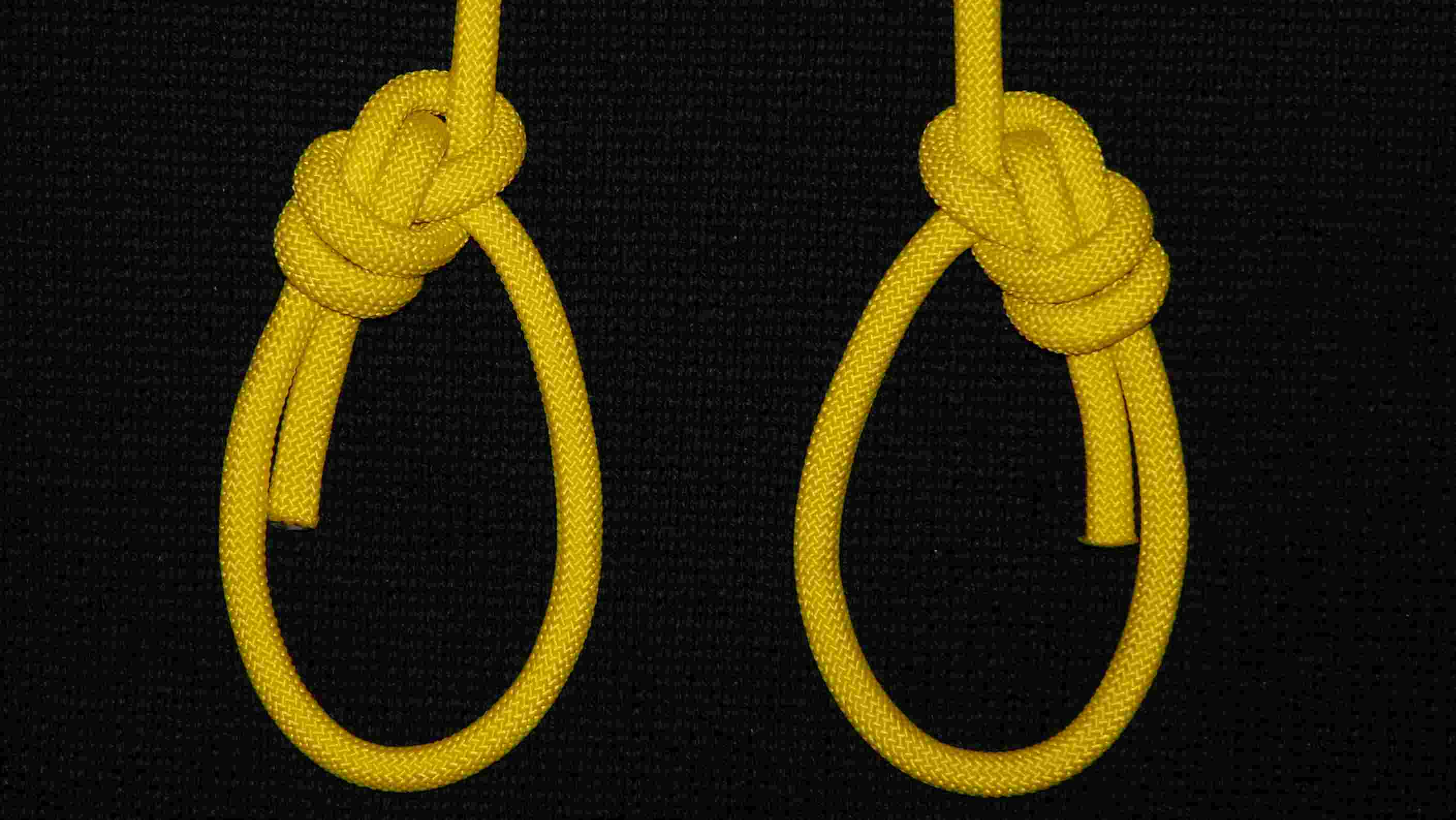
See the attached pictures. If the bowline at the left side of the picture uses the (+)hand knot as a “lock”, the bowline at the right side uses the (-)hand, and vice versa.
? ? ? No relation whatsoever ! It is a bowline-like / post-eye-tiable eyeknot, while Lehmans s fig.8 is not.
No, its nipping structure ( if tied with two wraps instead of three, as it is in the picture you show ) is strangle-knot like, its collar structure is not. When we are talking about a bowline s “lock”, we mean that the common bowline s simple collar has been replaced by a more complex structure, able to enhance the security of the knot against a possible slippage of the tail. A more complex nipping structure can also serve this purpose, that is true, but only if it alters the straight paths of the two legs of the collar- we do not know if a double, or even a triple nipping loop is able to prevent the slippage of a penetrating segment of rope more than a single one…The contact area is double or triple, but the nipping force per coil/wrap is the half or the one third, so we can not say if the total friction force applied on the penetrating tail is greater or not.
( In the “locktight bowline” the second leg of the collar goes through two coils/wraps, so we can argue that the path of the tail is not as straight as it was in the case of the common bowline - buy I think that this small deflexion is not very significant. )
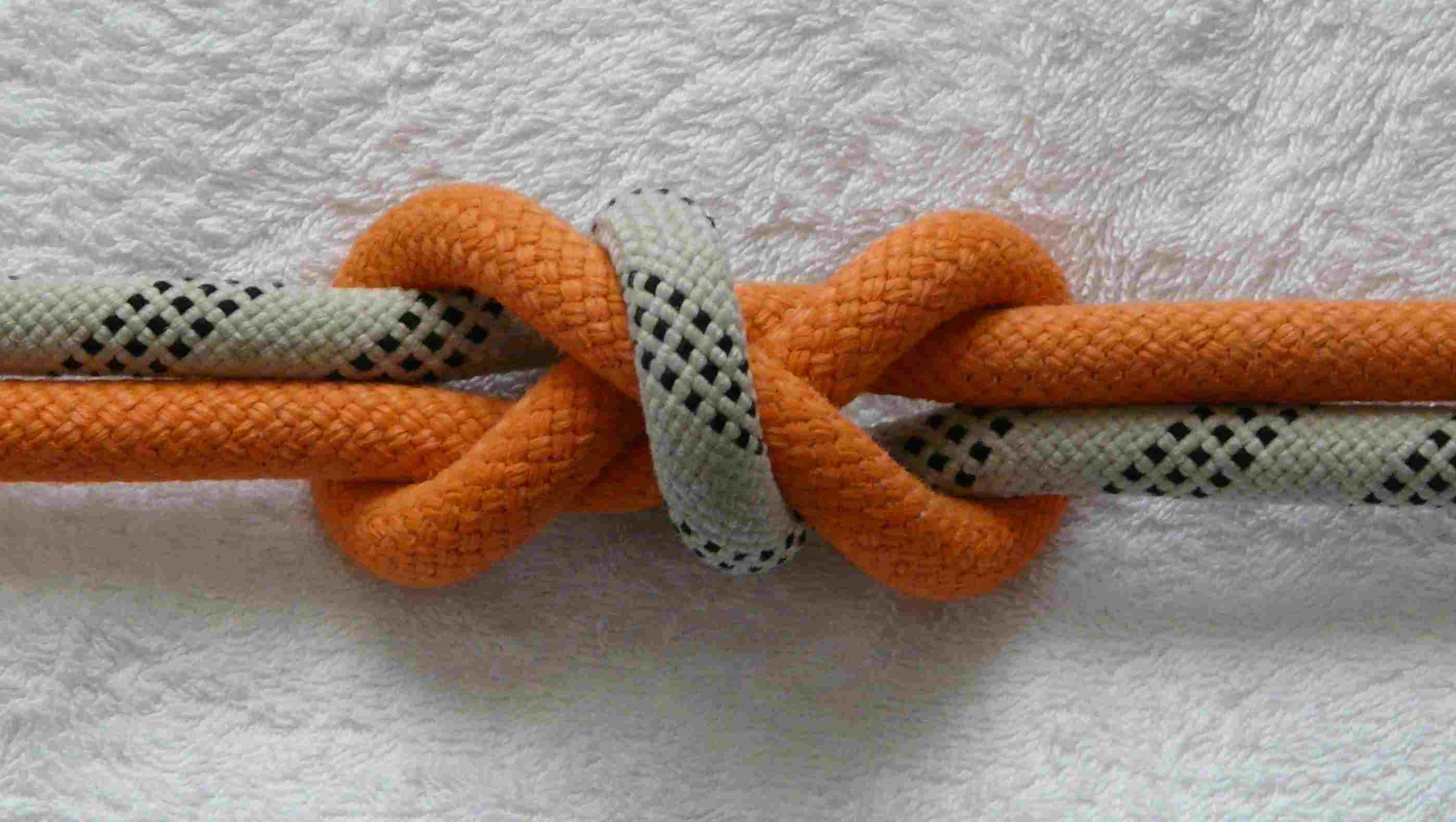
See the attached pictures for a “proper” strangle-knot lock. The knot tied on the white rope is the nipping structure, and on the orange rope the collar structure.
Hi Ruby,
+1 X1!
Because yes,almost same structure,but almost.Very similar indeed:more than once you have proven to be a very good observer of knots, but the subtleties that you notice (the “almost”) ,can lead to major consequences for the structure(essence!)+functioning of a knot. Taking the example of your pic “leeanddan1” ,if you cut the eye of the loop on the left, and then" join" the left leg of this initial eye to the tail ,you get a loop apparently very similar to that on the right, but this operation alone will not be enough to get a loop that will be a Bowline as the loop on the right(but in fact you did not say that!Is superfluous what I write to you?), mainly because it will be a loop that always requires a knot that is executed (in this case a Figure of Eight) before it is formed his eye:this, apart from the fact that the construction of the knot’s nub is very similar,is sufficient to exclude the loop on the left, also modified as described, from the family of bowlines(but this is not the only discriminating that one needs to define a loop as a bowline(or bowline-like(not to mention the anti-bowlines!).
Bye!
If you do what you say, i.e. tie a complete common bowline and then add a strangle knot, then yes, it becomes a little bulky. However, I do not believe one should go as far as this…You have only to tie the bowline s nipping loop, and then tie a strangle-knot like collar within it, as shown in my pictures. ( I do not know what is the knot you have tied, but it is not the one I had shown…)
We can replace the Strangle knot with a fig.8 knot, as in Luca s bowline, or in (1) and (2). We can even replace the “closed” nipping loop, with an “open” helical nipping coil, and tie a “helical loop” - around a Constrictor (3), or a Strangle (4), a fig. 8,(5), a fig. 9 (6), a double overhand (7), you name it !  We can enclose our locking collar structure into/within a helical nipping structure of one, two or even more nipping turns, depending on the material and the application. ( See the first two attached pictures ). Or else, we can replace the single nipping loop with a double nipping loop, and enter into the realm of the “double / double” bowlines ( double nipping loop / double collar ), as, for example, in (8 ), (9) and (10). (See the last two attached pictures )
If you are not lost by now, you would not be lost from now on, I can assure you !
- http://igkt.net/sm/index.php?topic=19.msg26660#msg26660
- http://igkt.net/sm/index.php?topic=19.msg26677#msg26677
- http://igkt.net/sm/index.php?topic=3020.msg21688#msg21688
- http://igkt.net/sm/index.php?topic=4300.msg26785#msg26785
- http://igkt.net/sm/index.php?topic=3020.msg22085#msg22085
- http://igkt.net/sm/index.php?topic=3020.msg22086#msg22086
- http://igkt.net/sm/index.php?topic=4308.msg26877#msg26877
- http://igkt.net/sm/index.php?topic=4300.msg26926#msg26926
- http://igkt.net/sm/index.php?topic=4300.msg26944#msg26944
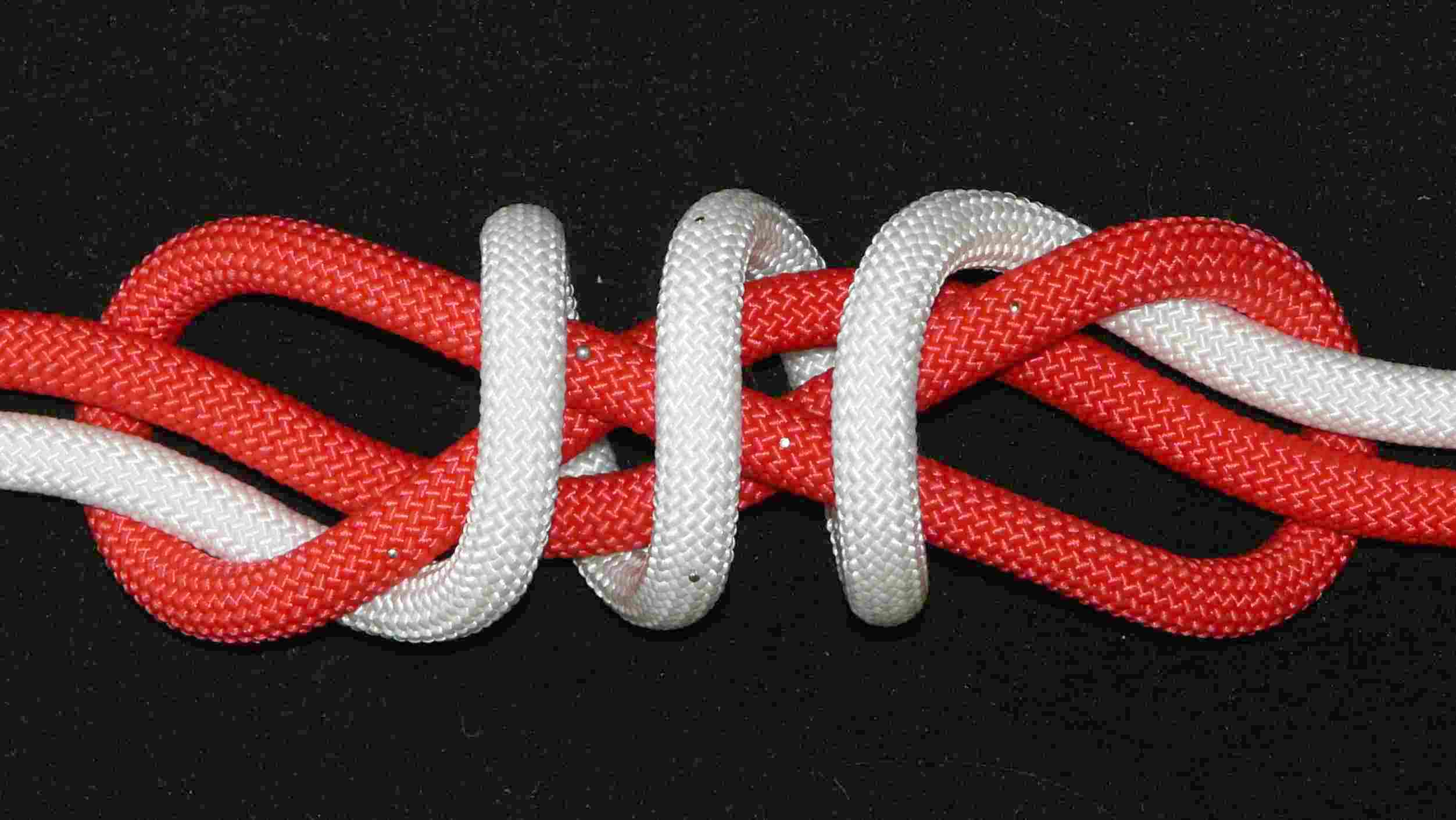
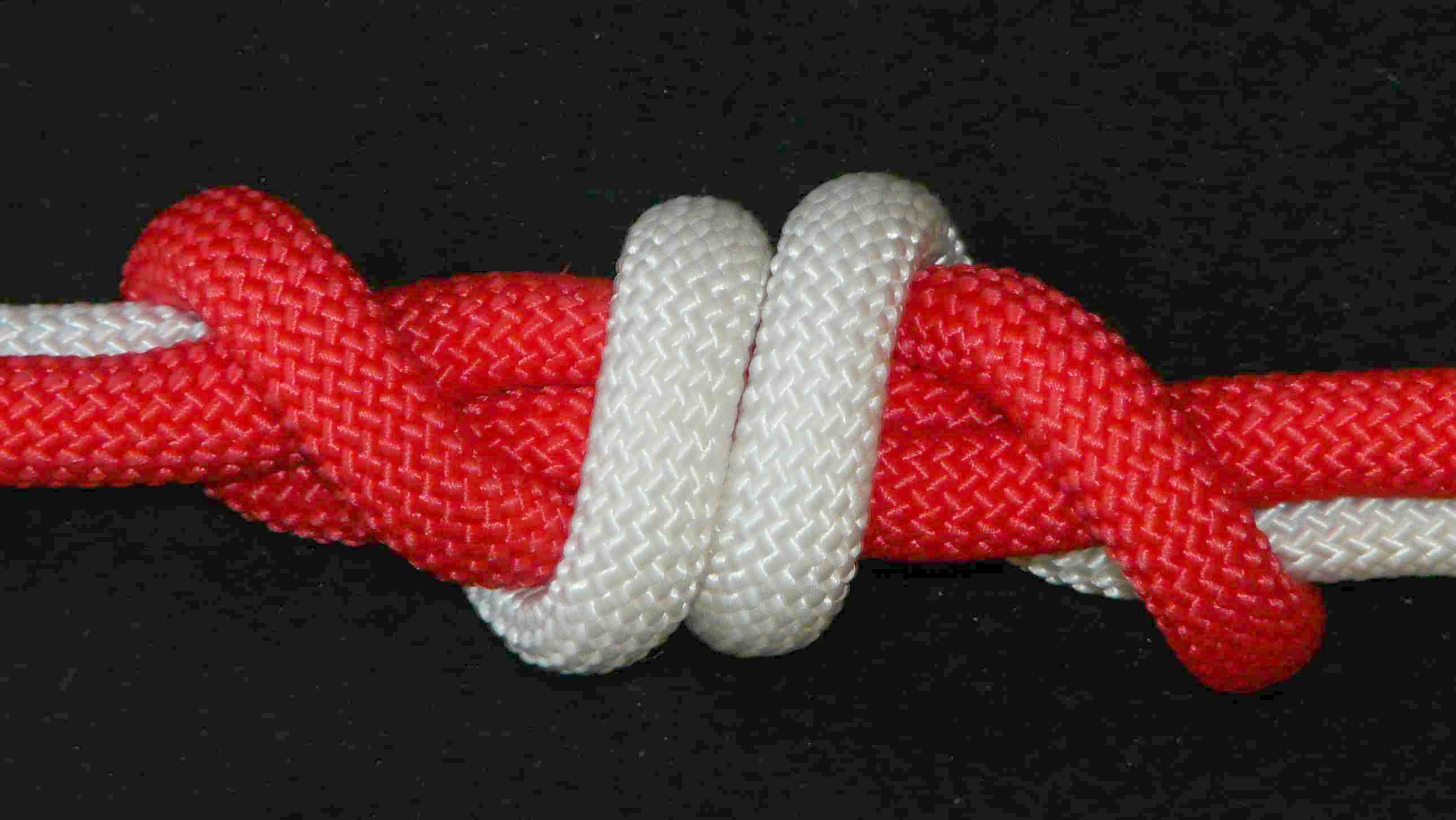
Correct. However, if by “bulk” we also mean “voluminous”, as we often do, we can also say that the “double nipping” makes it “bulkier”.
My intention was the exact opposite ! When you will tie those knots a number of times ( a number which depends on the individual. I am very slow learning a new-to-me knot, and that is why I need to repeat it a dozen of times before I am able to get the “feeling” of it… So, if one needs about one minute for each knot, he will need about 15 minutes to tie each knot 12 times, so, for those 10 bowline-like knots, he will need 150 minutes = 2 1/2 hours to tie them all, the time he would have spent to watch a dumb movie… :)), you will discover that they are but simple implementations of a few only knotting in principles. Once these principles are understood and applied, the particular knots can be derived almost automatically. I refer to those posts/URL s/blah blah s only because they may contain some additional clarifying thoughts - but you can always just tie the knots shown there, and ignore the chattering about them ! I had spent much more time searching for, tying and trying those knots, and then taking pictures of them, so I think 2 1/2 hours is a bargain !
There are people that, although they tie knots, they do not understand that they should understand them - or, even worse, they do not understand that they do not understand ! So, they think that the knots I tie are but “random” tangles, and that, in order to learn them, they should do what they are used to do all the time : parrot a particular series of moves, to produce a “useful” final object, a knot they do not bother to question why it is tied like this and not in any different way. They are not knot tyers, they are just knot users. Parroting 10 more knots, on top of many other ones, is a hard task, indeed. However, learning, applying and understanding the few knotting principles that had generated those knots in the first place, reveals that, in fact, one can not be lost in the Knotland - and that all those dozens of knots, Urls about knots, blah blah about knots, and knot tyers tying and talking about knots, “are only a pack of cards, after all”. So, “Begin at the beginning, and go on till you come to the end: then stop.”