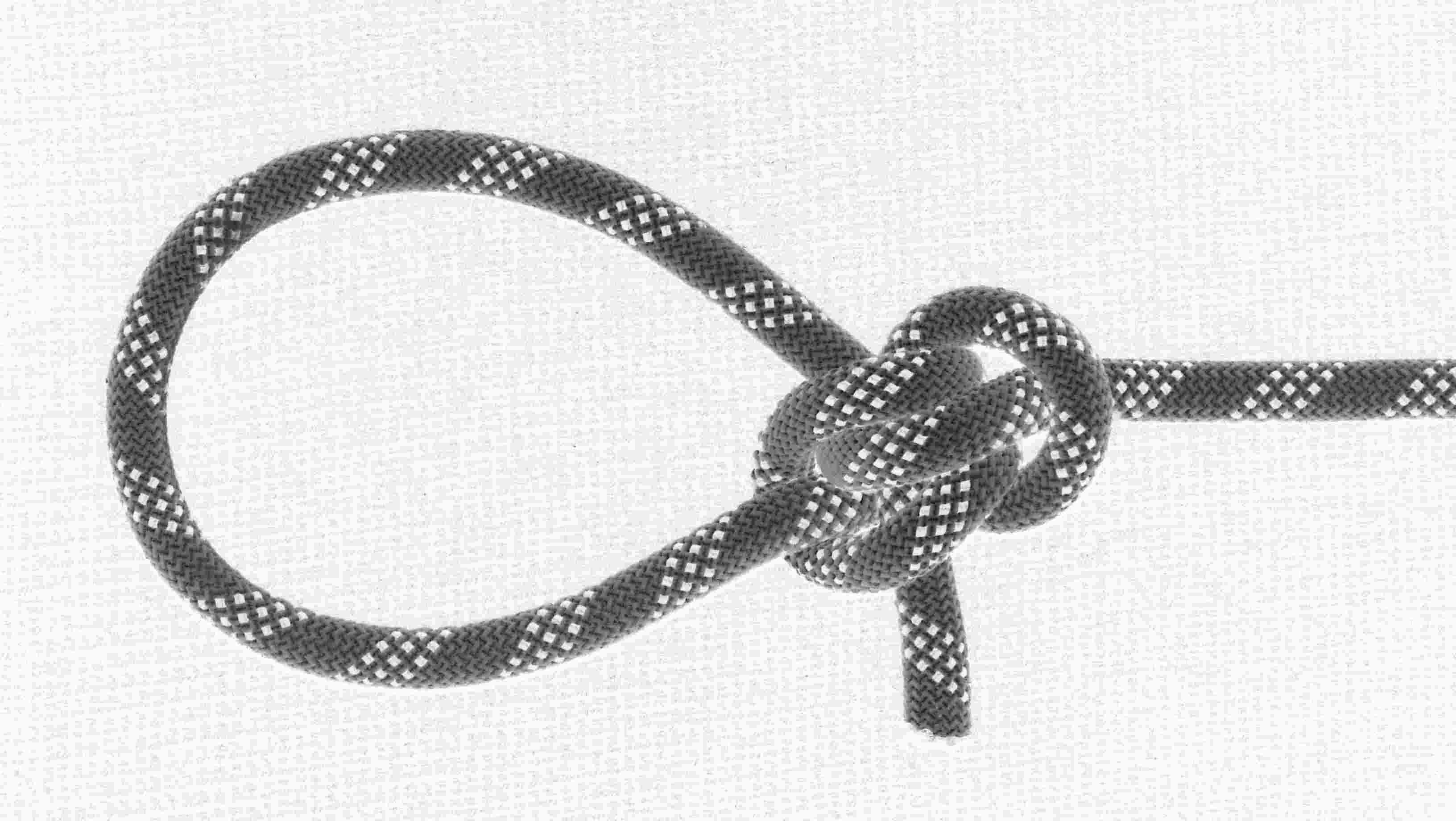
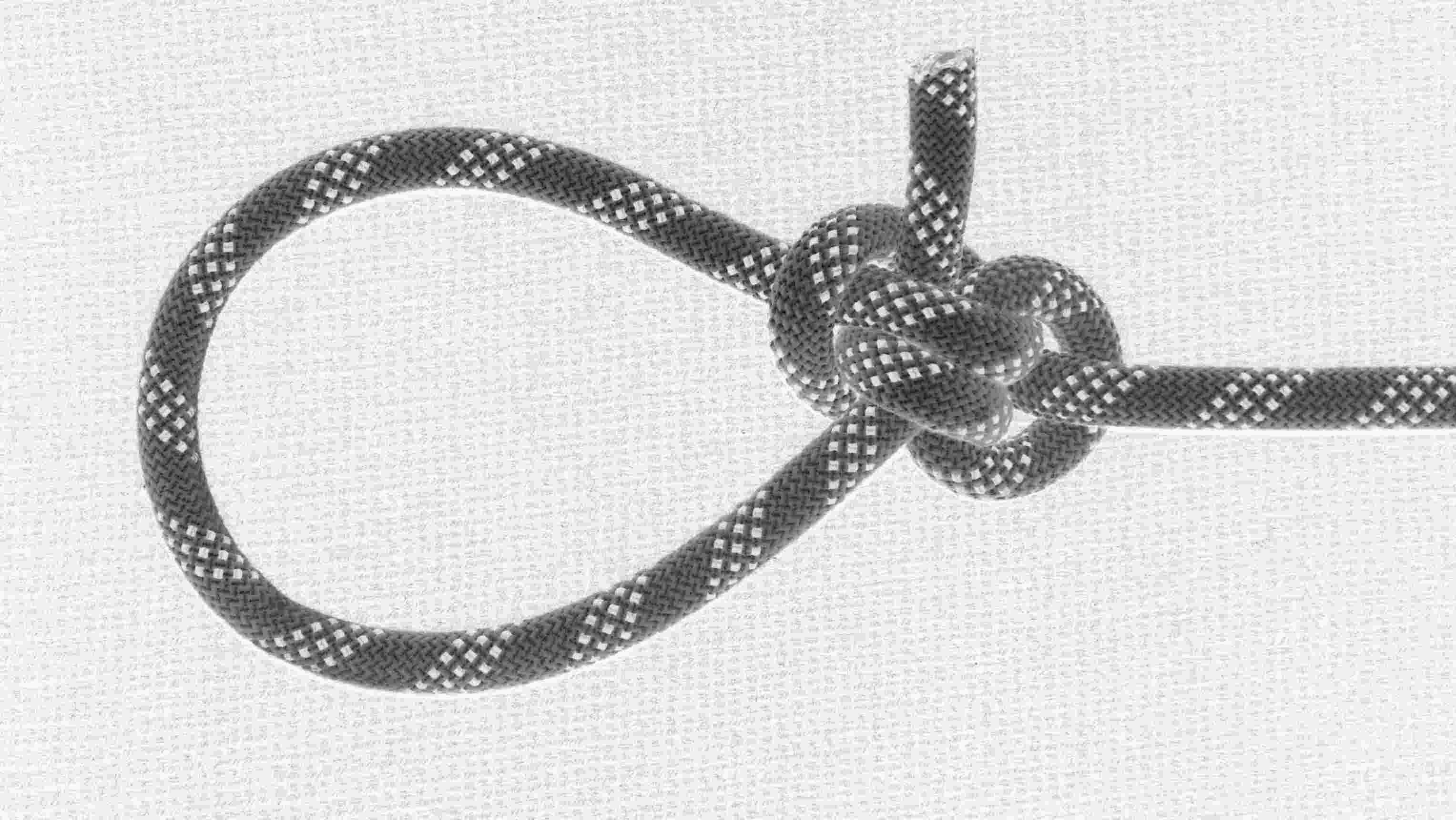
Hi everyone, I have two Bends and a loop,they are well secure. Please take a look at them and critique them.
Thanks Alan Lee
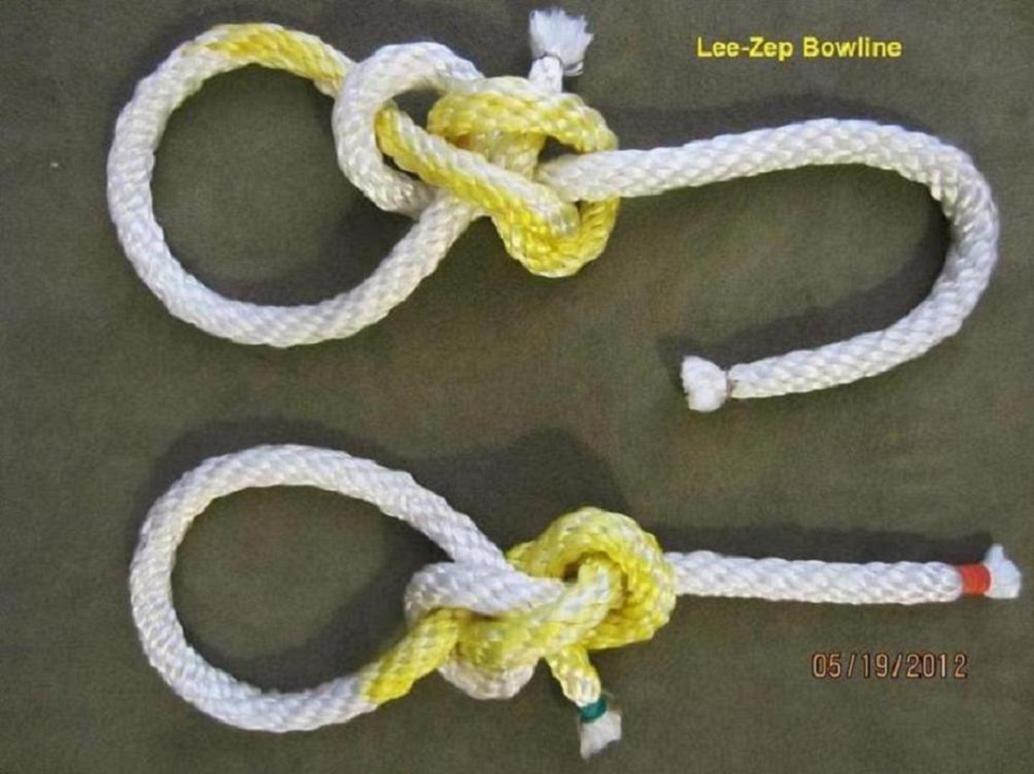
Hi everyone, I have two Bends and a loop,they are well secure. Please take a look at them and critique them.
Thanks Alan Lee
I tried the loop in some Bluewater II rope. Its security was noticeably lower than the genuine Zeppelin Loop. Strangely, upon close inspection, the knot doesn’t really even have half of the Zeppelin form. It’s all superficial.
To say that the knots are “very simple” is to ignore that
many people find the bowline (even!) “complex”.
(E.g., IIRC, although I encountered instruction for it
in Chapman’s Piloting when I was somewhere in or
approaching my teens, it didn’t stick with me; and I don’t
recall recognizing its similarity of structure to the sheet
bend, which I did learn and admire (perhaps because
like so many presentations of these knots, they show
opposite faces to what would make the similarity obvious
–wrong face of the bowline !).)
I’ve also played with the --shall we call it-- “one-&-half
zeppelin bend”, but I take the full turn to the outside,
not inside, of the knot (coil outwards). I’ve probably done
something similar to what you show, without seeing it as
a sort of zeppelin derivative, but directly as a knot resulting
from the design goal of having the SPart make a gradual
curve into the nub (and be easy to untie).
For the eyeknot, it is nearly half of some corresponding
“one-&-a-half zeppelin” but the round turn of the tail
should not encompass the SPart (as the turns of the z. don’t).
Take it to the side of the SPart, and then tuck the tail out
through this turn, and that’s a better looking bowline
variant. (But it looks at though the SPart will have a hard
bend in it, alas.)
More to this structure : make it a 1&1/2-zeppelin-based eyeknot
by reversing which side has the eye, so that the SPart will
feed into the “1&1/2-zeppelin” component, and the tail
will reeve the loop through this. (The structure approximates
the zeppelin knot by one half taking an extra half turn
to collar not itself but the other end, while the other end takes
a half less to reciprocate --in contrast to the z. in which
the reciprocal overhands see ends collaring themselves.)
Hi Alan,
Thanks for bringing us some interesting variations.
While I have a play with them, could I ask what was your thinking behind calling the loop a bowline?
Thanks
Derek
Hi Gentlemen,
Thanks very much for all the comments, i am new to me knot tying, only the last six months i start to know what is water bowline, Janus bowline and some terminology of knots from this forum. my english is limited, till now i am not quiet fully understand Dan’s comment yet , bear with me if i happen to use improper wording or language, please correct me. by no mean to ignore any body.
I see the loop have the nipping loop like bowline and structure look like zeppelin, that way i called it zep bowline, what you guys think, may be i called it bowline-like loop, or any suggestion please let me know.
Thanks alanlee
This bowline is one of the best I know. However, I do not see it as a bowline “corresponding” to the Zeppelin bend - but as a bowline where there are maximally interlinked nipping loops on both legs of its bight. The one loop serves as the “nipping structure”, and the other loop as the (one-half of the) “collar structure” ( the other half is a “proper” bowline collar).( See the first attached picture).
I have tied and tried all the possible loops based upon this Carrick-mat-like structure, i.e. the two maximally interlinked nipping loops, the one tied on the eye-leg-of-the-standing-part, the other on the eye-leg-of-the-bight. ( I use the word “maximally”, to denote the fact that each one nipping loop encircles the crossing point of the other one ). Then I have secured the tail by re-tucking it through the central opening for a last time, after a clock-wise or an anti-clock wise turn around the standing end. There are 4 x 2 = 8 such knots, slightly different from each other. At the first sight, they all seem quite secure, because of this quite convoluted configuration of rims and limbs… However, I have seen that there is a problem at the last step of this solution, the last line of defence against any possible slippage of the tail. The central opening of this two-maximally-interlinked-nipping-loops knot, contrary to what one might had expected, is not nipping the tail as hard as I would like to… ( When the tail is nipped at a number of successive “defence points/lines” into the knot s nub, I always prefer to arrange them so that the stronger of them come at the very end. Otherwise we can have a slack last segment of the tail, and a not-compact knot ). I believe that, in this tight entanglement of the two rims and the four limbs of the two nipping loops, a great portion of the tensile forces that would otherwise tend to shrink the diameter of the central opening and grip the penetrating tail forcefully, is “wasted” - it is absorbed by the strong friction forces between the many tightly embracing rope segments that turn around the central opening, and around the penetrating tail that is supposed to be nipped,at this last point of contact with the nipping structure, harder than anywhere else before.
The best solution of those 8, two-maximally-interlinked-nipping-loops + “proper” collar knots I have tried, is a variation of the Lee Zep bowline, which I call “Lee Zep X bowline” ( in order to denote the fact that it is essentially the same knot - the only difference is that the tail is crossed ( X = crossed ) with the second leg of the nipping loop, just before it leaves the knot s nub. ( At the Lee Zep loop, it remains parallel to it. ) That embrace of the tail might add some security, or sense of security, in relation to the original knot.
P.S. It would be nice if we had some pictures, or explanations, of the proposed alterations of this knot, proposed at the Replies # 2 and #3…
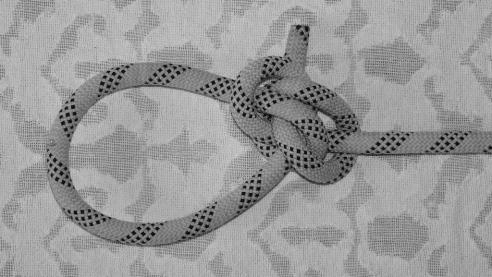
What I like about the Lee Zep X is that it has two “nipping” loops. After loading it to approx. 300 lbs. it is easy enough to untie. Beating it around the ground and various stationary items it did not loosen or come undone.
EDIT: The following statement and pictures are erroneous and not germane to the OP loops . I was working on another loop concurrently and mixed them. My sincere apologies.
The one thing I found that doesn’t sit well with me is its deformation when the eye legs are spread forcibly. As with the original presented loop knot.

Hi Luca and All,
I think i got it figure it out, it is difference loop see the photos i attach, may be SS have accidently creat a loop here, Interesting, more i work on the loop, it came out another loop the front face look similar from it, i don’t know it good anything or not.
Thanks alan lee.
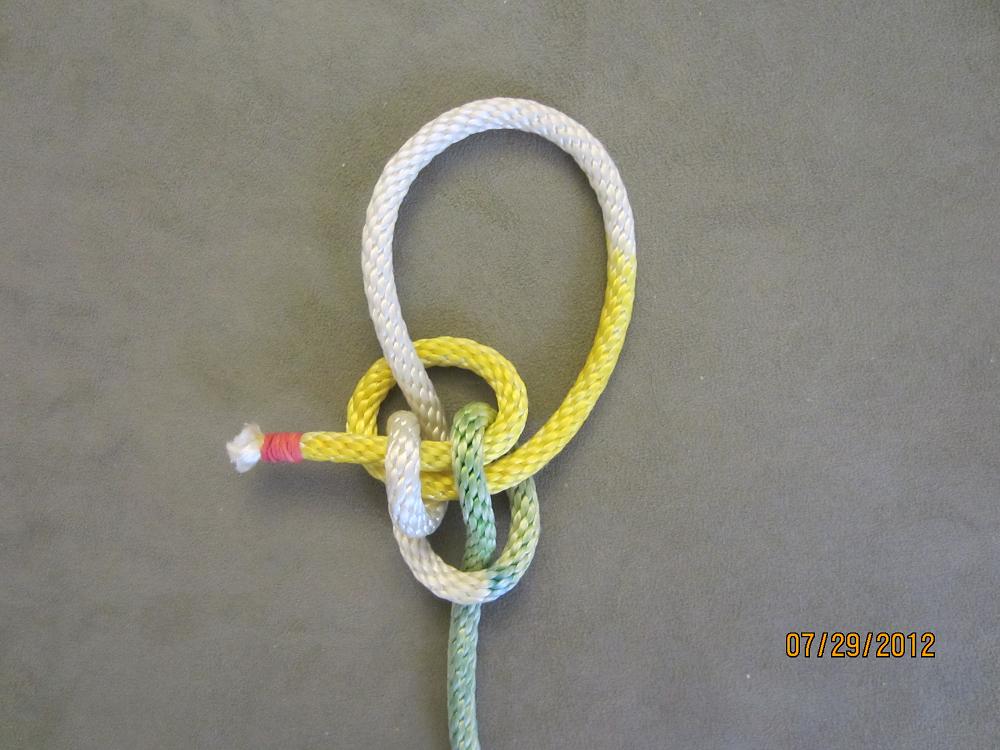
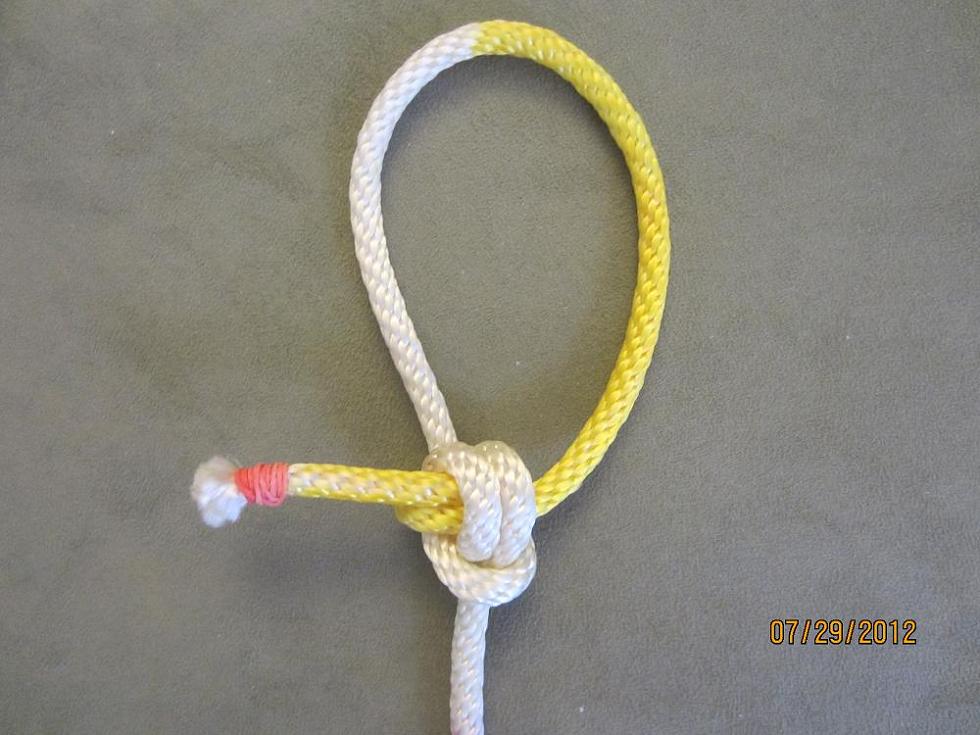
Hi All, some how only allow to post 3 photos, so i have added more here.
Thanks alan lee
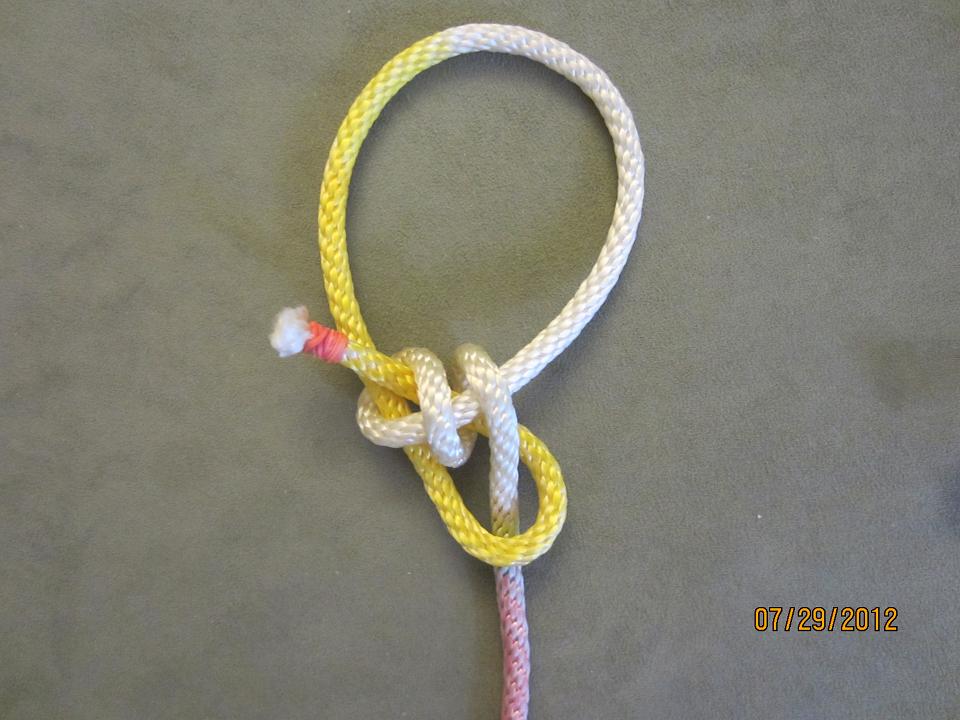
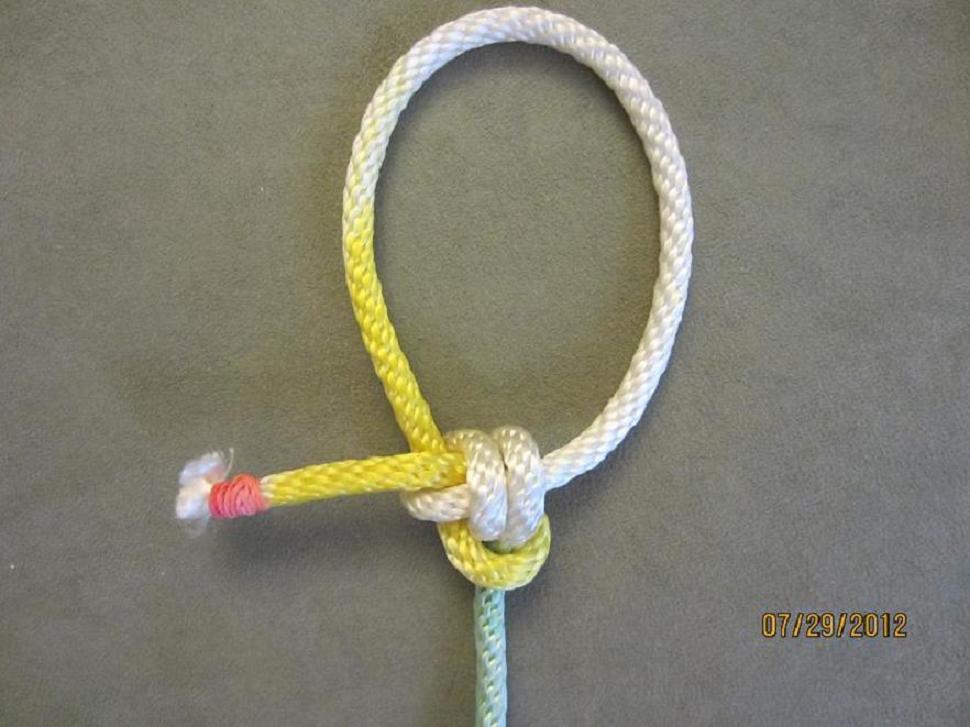
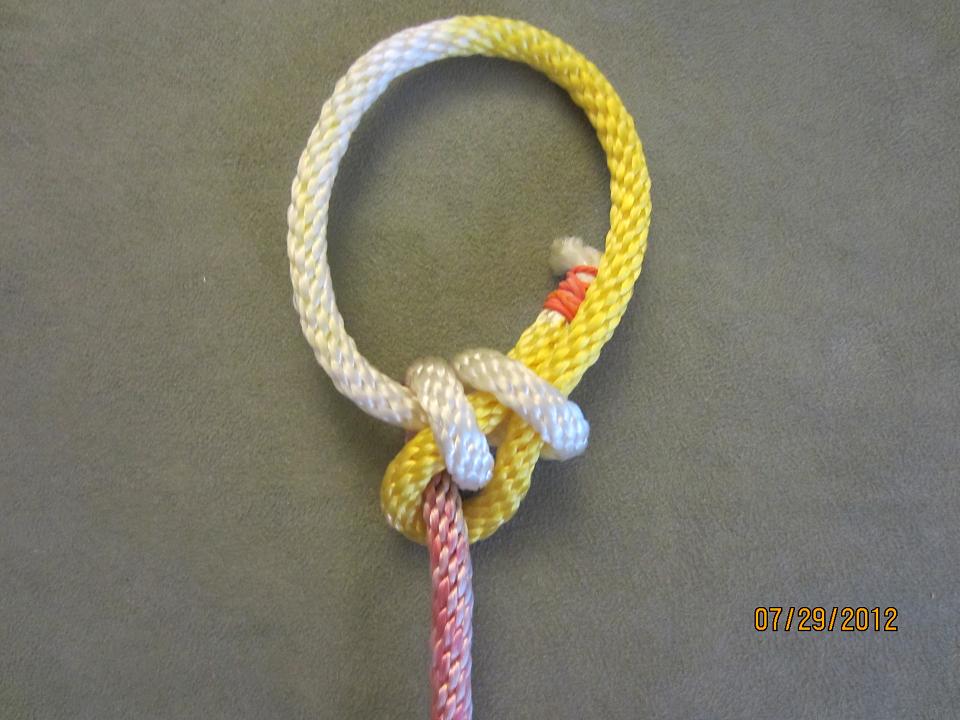
Hi Alan,

The end-of-line loop you show at Reply #8, has a very effective, and almost self-stabilizing "nipping structure" ( resembling the double, crossed nipping loops bowline I have presented elsewhere), but a very poor "collar structure". With stiff ropes, when the standing end is not loaded much, this double U-turn around the nipping loop s rim will run the danger of unwinding.
However, if you add a decent collar, this loop is transformed into a coherent whole. To keep the orientation of the girth hitch unaltered ( this way the nipping structure is almost self-stabilizing ), it is better to add an “Eskimo” collar - and then you get the Girth-hitched "Eskimo"bowline shown at the attached pictures.
The bowline you show at the Reply #9 can be considered as a standard bowline, where the standing end has encircled the second end of the collar and the eye-of-the-standing-end once more. As such, I believe it is a secure knot . I am not sure that the ( now second) nipping loop adds anything to the nipping power of the original structure, but it might add something to its stability.
P.S. 2012-08-07 . The working end can enter the nipping loops from the one or the other side - so we can have two types of Girth-hitched “Eskimo” bowlines. See :
http://igkt.net/sm/index.php?topic=4009.0
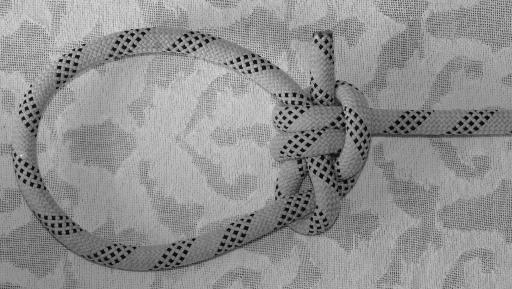
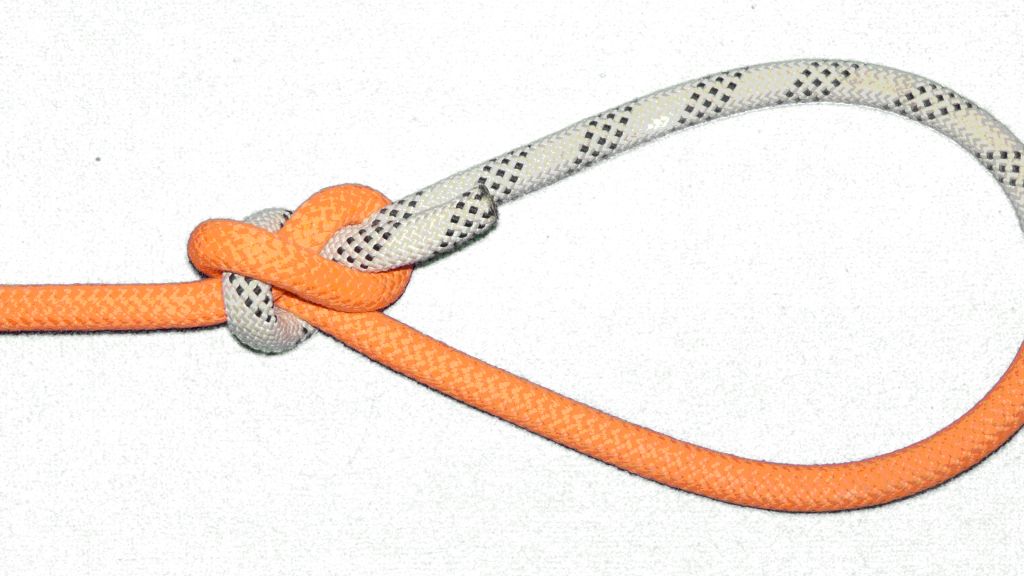
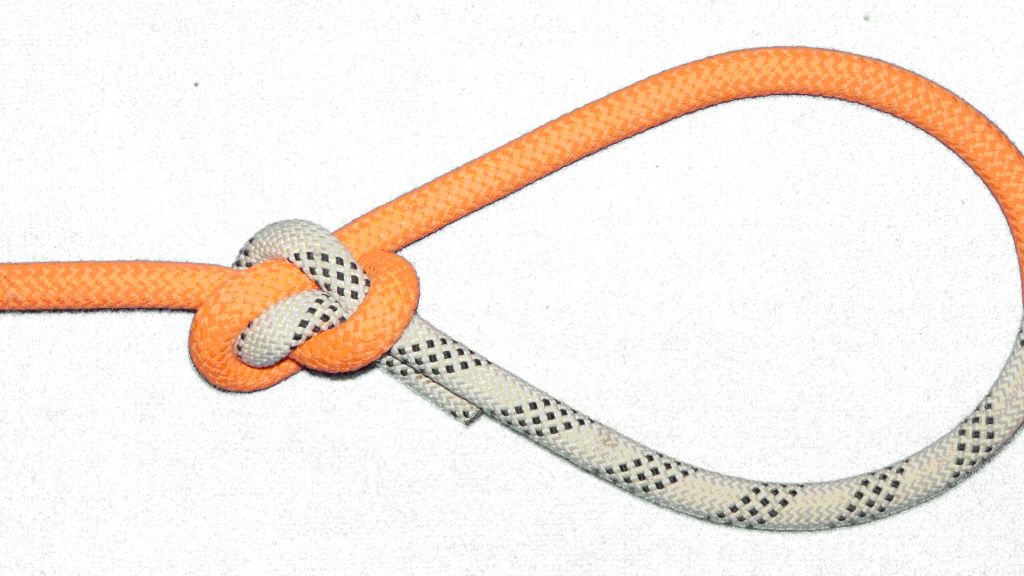
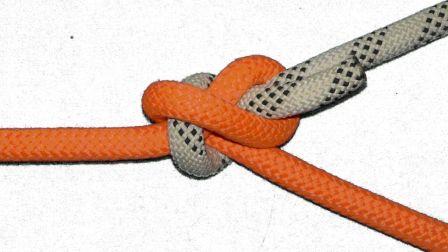
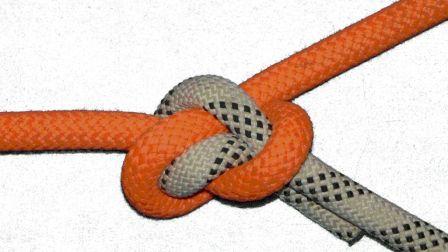
Another variation of the Lee Zep bowline ( although without a “proper” bowline collar). It is the exact “reversed” knot of the “Lee Zep bowline B”, the one pictured on the Reply # 8 , ( The standing end and the eye-leg-of-the-standing-part interchanged). ( This loop might have been suggested in some no-so-clear pictures and texts, (1)(2)). ( See the attached pictures, for this knot, the “Lee Zep bowline C”, and its reversed, the Lee Zep bowline B.)
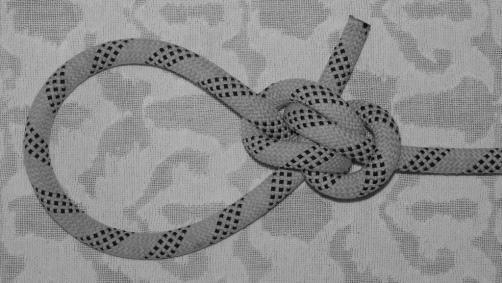
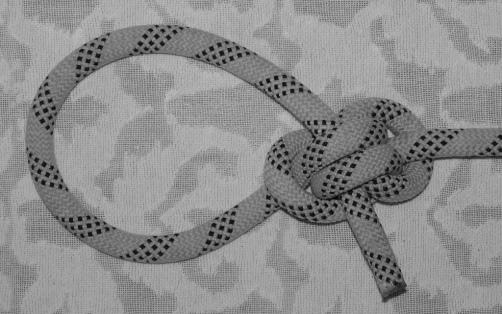
Interesting knot
http://igkt.net/sm/index.php?action=dlattach;topic=3908.0;attach=7609;image
The SP enters the knot into a Carrick component (shown in green)
It then immediately forms a single turn component (white) before leaving into the first loop leg.
The returning loop leg then forms a single turn component (yellow) through the carrick and the first single turn, stabilising these two components and in turn being stabilised by them.
I would have to ask, what is the intended purpose of the white single turn?
Derek
In general, we should not suppose that all knots are “designed” according to a certain “plan”, to satisfy some “intended purposes” !  Of course, after we have tied a knot, we can always ask ourselves if there are any redundant elements that can be subtracted / omitted, without making any important sacrifices.
This loop, in particular, was tied the way it is tied, just because of its resemblance with the original loop, the Lee Zep bowline. Without the second turn, it looks like another one of the many crossing knot loops we already have.
However, I believe that there are some advantages offered by the presence of the second turn, indeed. First of all, the collar follows a softer curve around the standing end, which, generally, is always a good thing. Similarly, the coil-like Eskimo-type continuation of the eye-leg-of-the-bight is following a three diameters path, which is also good thing. With stiff ropes, a less wide coil would tend to unwind itself.
Last, but not least, the very important subject of the stability or instability of the nipping structure. With “instability”, I mean the tendency of the closed nipping loops to open up, and degenerate into open helices. I have seen that many double nipping loop bowlines are quite stable - and some of them will pass the “ultimum bowline stability test” : their nipping loops will remain closed, even if the rim of their collar is cut off ! ( The three most stable double loops bowlines I know are the Water bowline, the Girth-hitched bowline, and the double crossed nipping loops bowline.)
This characteristic of the double nipping loops bowlines makes me appreciate the presence of the second nipping loop, even if it might look as a superficial/redundant element. I believe that, in a degree, the same happens in the Lee Zep Band B and C loops, too. Of course, the real gem of this thread is the original Lee Zep bowline - and I think that the “shining” it acquired in its X form ( where the tail goes under /crosses the other penetrating segment ) made it a most secure end-of-line loop ( that has also the great advantage to be bowline-like, and thus be able to be tied and untied in one step).
For some other crossing knot loops, see :
http://igkt.net/sm/index.php?topic=3467.0
At the attached files see yet another simple crossing knot loop, posted elsewhere.
I suggest that the base-knot be reversed : i.e., have the SPart
make the full turn, and exit with the follow-up single turn;
this gives more credence to the “bowline” moniker, which IMO
requires (only?!) a central nipping loop (=360deg turn).
(Here, I’d regard this as a quasi/“false” such “bowline”,
because the SPart’s continuation from this suggested turn
doesn’t feed (directly) into an eye leg (with its tension), but
goes into the “follow-up single turn.”)
In the above suggested variation, the tail’s turn will need to
collar the SPart in order to stabilize the knot.
What is the intended purpose ...In general, we should not suppose that all knots are [i]designed[/i] ...
We can read the question as “How does function?”. 
And note that my suggested variation preserves the “look”
of the zeppelin ; possibly, it has better behavior (than the
eye knot that it is a revision of).
I can only guess that this suggested variation can not be anything else than the " Lee Zep bowline C " knot, shown at Reply#11 (1)… However, who can be sure about it ? We have seen time and again that, in knots, one picture is worth of many words, AND many words are corresponding to more than one picture !
Yes, quite ; although I think I’d reverse the over/under
relation of tail & its prior part on the finish --so that
the loaded part lies adjacent to the SPart, which will then
draw the tail around a little, making a nice curvature!?
(And we have seen words work, if writers are willing.)
At the loaded knot, the tail and its prior part have a certain orientation / inclination in relation to the standing end s axis. At the knot tied as shown at the pictures, the former passes under the later ( well, not much, but enough, I think). I always prefer this relation, because it gives a sense of added security : The tail is squeezed under its prior part - in fact, it is hitched by its prior part - the thing that does not happen in the two standard common bowlines ( contrary to the Derek Smith s theory ), but happens in the two of the four standard “Eskimo” bowlines. When I see those funny-looking coil-like not-proper bowline collars, I try to make them work as hitches - so I try to anticipate their final orientation, and pass the tail under its prior part.
Of course, the question of the curvature of the first s standing part s curve is (always) also there, and it should be addressed as well.
And we have seen words work, if writers are willing.
And the readers are fluent in English ( in this forum ). A decent image obviates willingness and fluency.
Every time I am caught in a better mousetrap ( another bowline…), I tie all the previously experienced ones, to compare their mechanisms.
I realized that I had not tied this beautiful Lee Zep C bowline ( Reply#11, http://igkt.net/sm/index.php?topic=3908.0 ) in the best possible way. If, after we form the two and a half round turns of the double nipping loop, we pass the working end of the returning eye leg through those turns the other way we did in Reply#11, we get a more “balanced” knot - where the nipping structure, in order to remain in a closed form, is not depending upon the collar structure so much. We can see this by trying the two variations, the one shown at Reply#11 and the one shown here, without their collars, and see which is more stable. The difference between the two variations is hard to distinguish at the pictures, but it may become significant under heavy loading, in the case the collar gets loose and is less able to keep the nipping loop in a stable, closed form.