Oh, those were the glory days. I suspect many knotters dream of wooden ships and the open seas. I do, too, I must admit. But I sometimes also dream of Oregon 100+ years ago when a fir tree 6 feet in diameter at the stump was considered normal to small. Photography, was in existence then – I have pictures of my grandfather as a child taken in 1903. There are also photos to be found of the early days of logging and logging history. http://www.vannattabros.com/histlog3.html
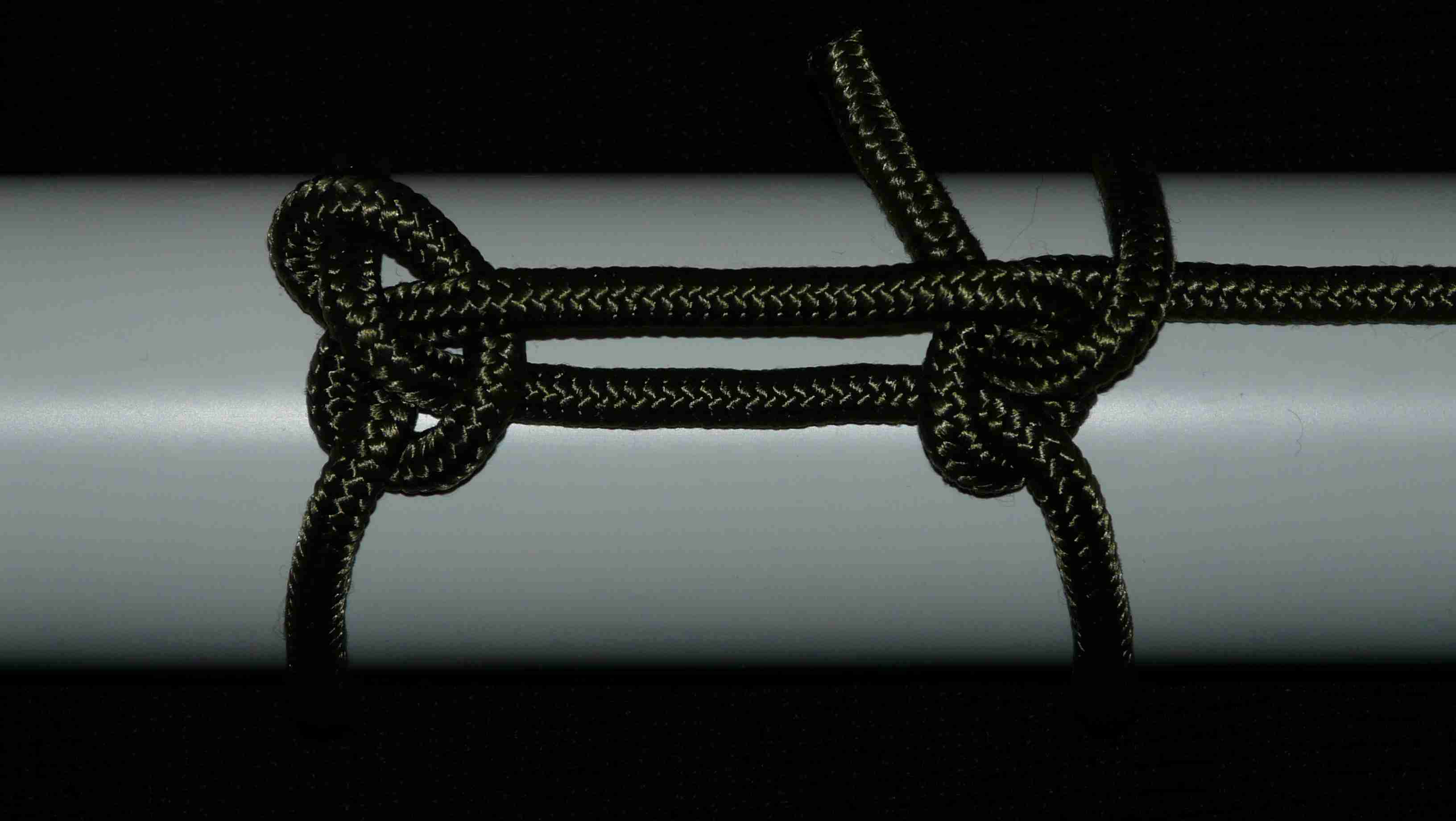
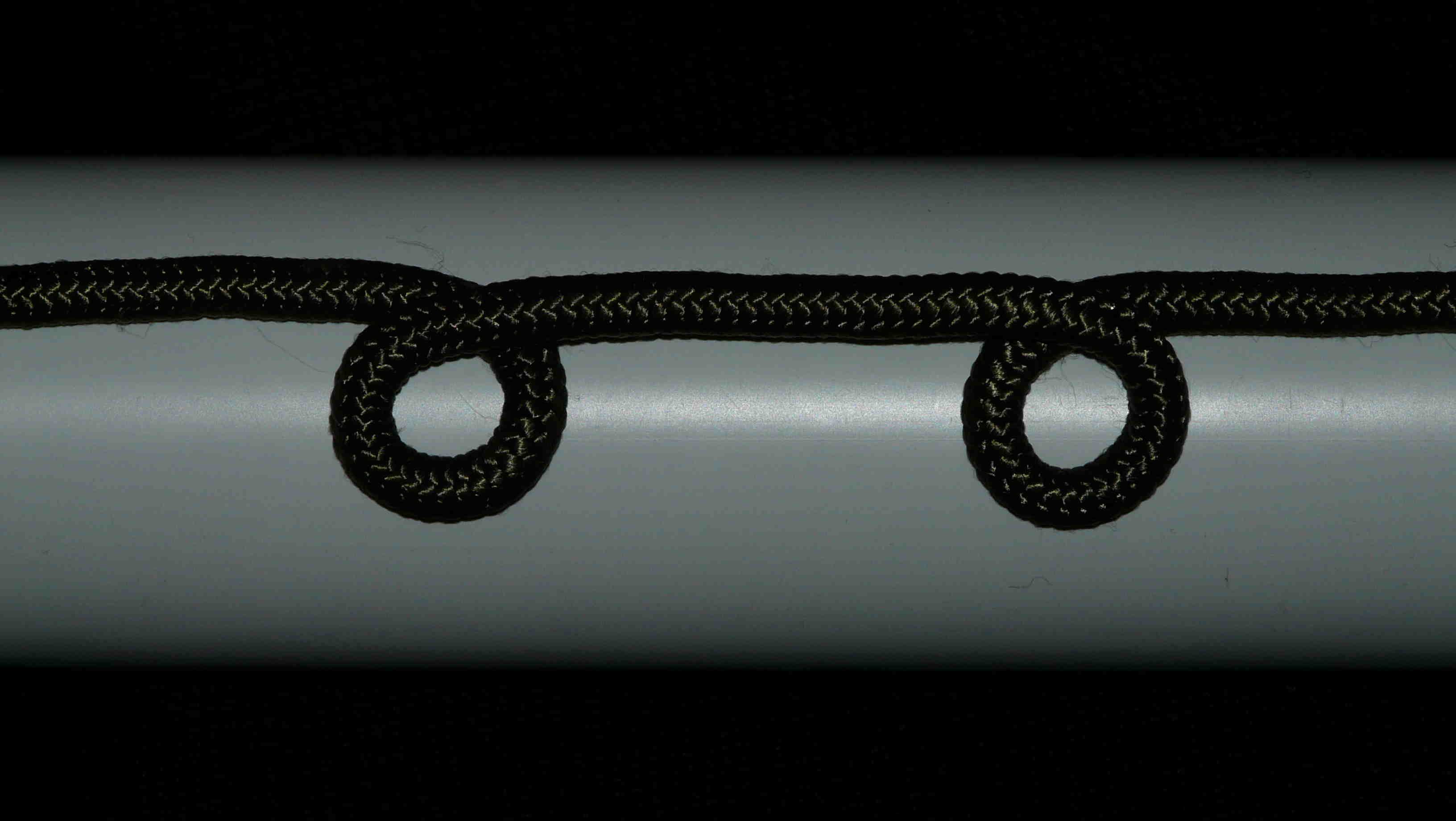
As I am not logging timber in Oregon 100 years ago, but still I like making noises, I will tie a Double Cow hitch, or two Double Cow hitches, and I will have an easy to remember and tie tight hitch, able to withstand a lengthwise pull even when tied around very slippery poles.I would hate to work for a hypothetical logging company that used such hitches -- if I proportionally scaled the rope and line in your picture to fit a six foot log, I expect the line would be nearly a foot in diameter. And to think I would have to wind that line around the log eight times in order to form my employer's favorite (he likes to make noise about it) towing hitch -- why it's enough to make a grown man cry. :) But since I remember seeing exhortations by someone that knots cannot be assumed to behave the same when tied in different sized lines, I would probably have a lot of vacation time while the hitch was scientifically tested in lines (and logs) of that size.;)
Seriously, though, that is a nice looking hitch, and it looks like it would hold well on smooth/slippery poles. If I didn’t have to continually tie and untie the hitch all day long moving logs or poles I might consider it. But aesthetics aside, If I had to drag/pull/tow a lot of poles/lumber or timber with ropes, I’d still take a timber hitch with additional half hitches when and if needed. I guess that makes me the least clever member of the forum.

 I have only to warn you that, as statistics tell us, logging timber is MUCH more dangerous than bicycling… Beware, great logger, things are falling down from time immemorial, but it makes some difference if those things are us, or even heavier things