I have a question about one of the variations of the Reever bend. There is a Wikipedia discussion of the bend: https://en.wikipedia.org/wiki/Reever_Knot
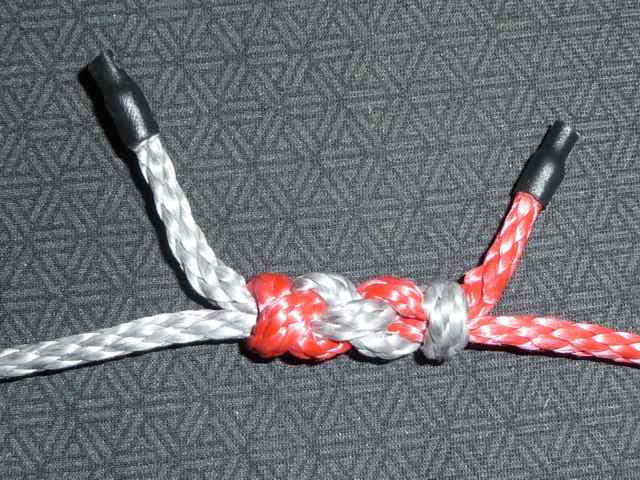
One of the “combinations” is not discussed. As they say, choosing the standing parts as A-B (or equivalently, B-A) results in the Vice Versa bend. Choosing A-A results in the Reever bend.
But what about choosing B-B? On page 54 of Harry Asher’s book “The Alternative Knot Book” he says of the Simple Simon under bend “At the intersection, the light end (the tail; my comment) passes beneath the standing part; the nip thereby imparted to it considerably increases security…”
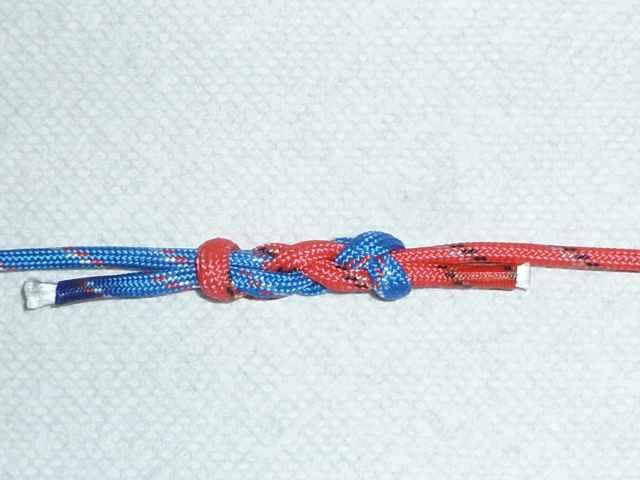
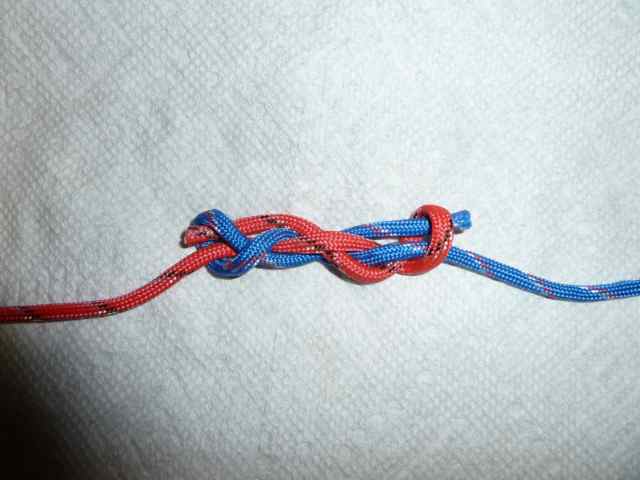
Examining the difference between the A-A choice and the B-B choice in the Wikipedia article, it seems to me that the same comment applies to the B-B choice. When B-B are chosen to be the standing parts, the tails pass beneath the standing parts in the nips. Wouldn’t this be the preferred configuration?
I haven’t found any discussion of this difference between the standard Reever bend (the A-A choice) and the B-B configuration on the forums, but I haven’t read every post yet. Can anyone tell me if there has been discussion of this on the forums, and if the B-B configuration has a name of its own? If it hasn’t been named yet, I propose that a name should be invented.
Here are a couple of images of the front and back of the B-B configuration (unnamed top bend in the images) and the A-A (Reever) configuration (bottom in the images).
http://igkt.net/sm/index.php?action=dlattach;topic=6026.0;attach=22043
http://igkt.net/sm/index.php?action=dlattach;topic=6026.0;attach=22045