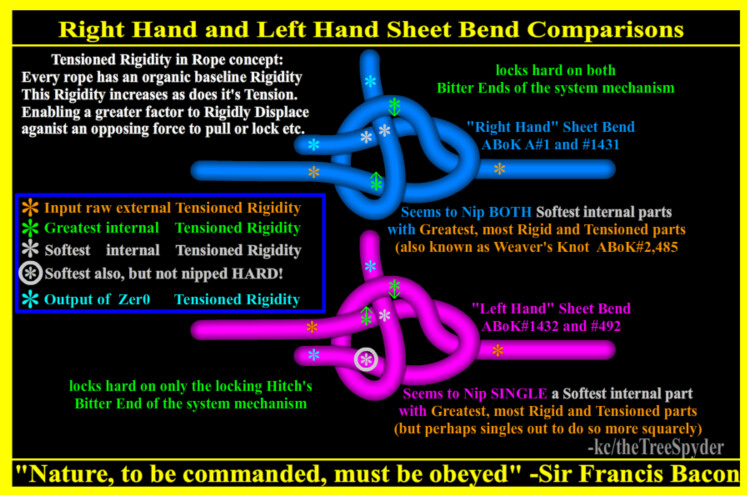
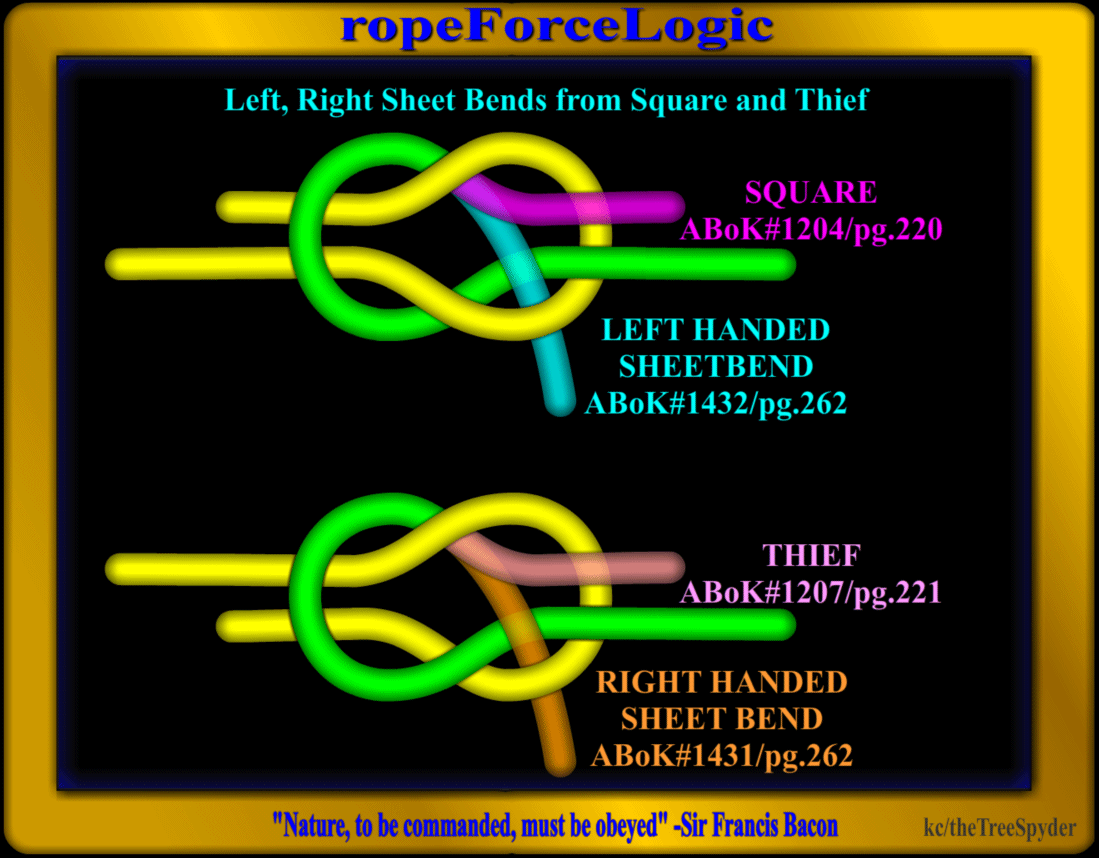
Knot guru Mr. Lehman has brought this up about Left. vs. Right Sheet Bends over the years. As i chased his view i did note he favors the underdog Left Hand style; that actually relates to the proper Square Knot form. While the ‘proper’ Right Hand style forms from the ‘improper’ Thief knot form as possibly fortifying his position:
Personally i lean towards Left vs. Right Sheet Bends mattering more in 3strand where would want to bed the Hitch’s lock into the lay of the bight/passive/host side member. NOT skipping across the texture of the lay.
.
Also, we just speak of ropes as generic items more irreguardless of manufacture but especially of material as ‘knot-smiths’. But rope is as a building material to engineer like other materials and constructions; subject to the same rules. Whereby to a woodsmith or metalsmith etc. , different oak vs. pine as like aluminum vs. steel would be more deeply part of the considerations. Perhaps separating ropes into materials, textures, constructions, rigidities and elasticities under varying loads would more reveal Left over Right or yet vice versa considerations.
.
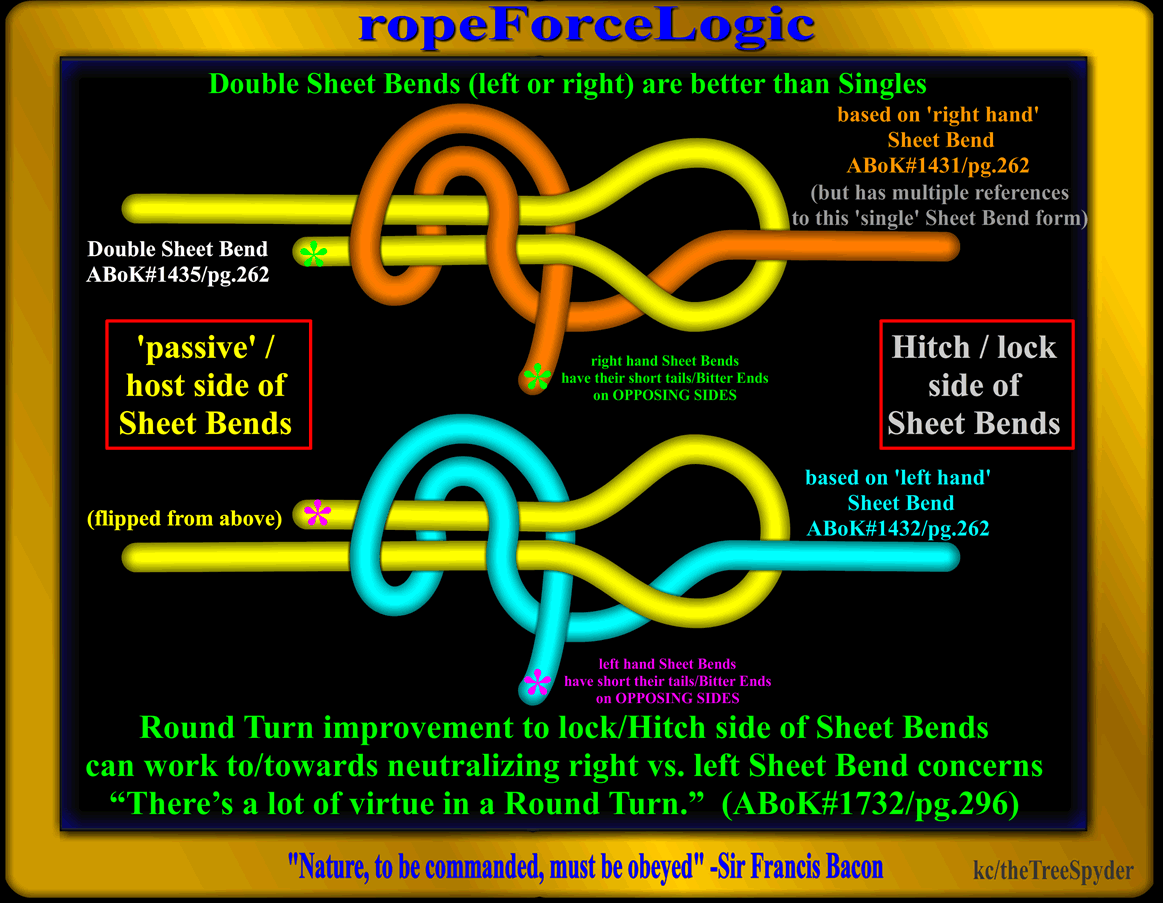
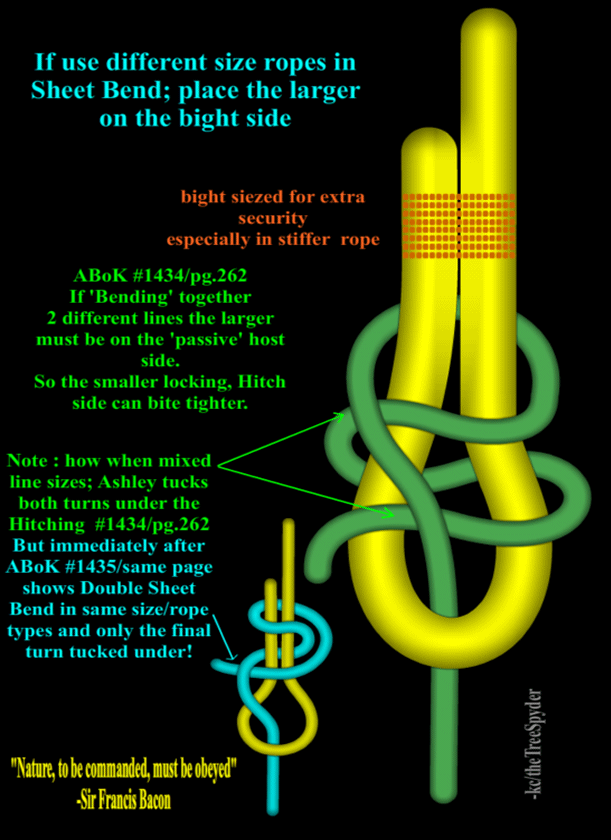
For real work, risk, long term usage etc. or just cuz i lean towards the more secure Double Sheet Bend form. i think can go Left or Right very confidently as route around the whole argument:
Only tucking the final / Bitter end is quicker and works strong.
.
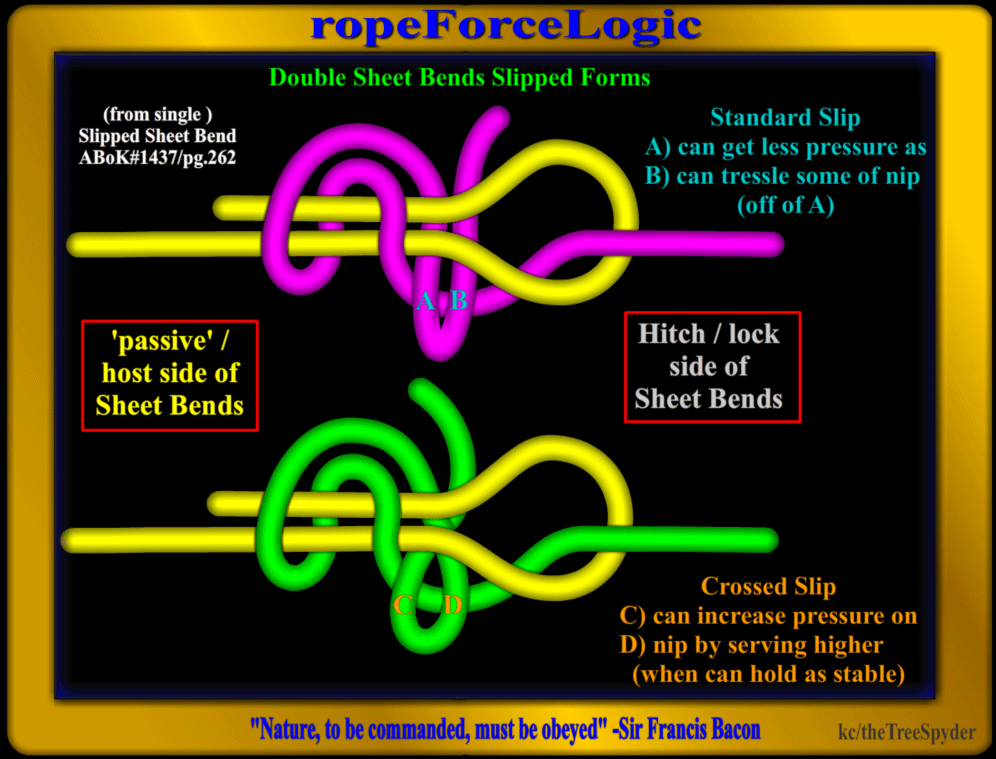
i do prefer to slip Sheet Bends, especially for repeated usages; like pulling logs etc. Where have the bight on the pull side perhaps even larger size rope. Then a bunch of ‘tails’ available that can be reset quickly to the bight. Can pull load, detonate the slip and truck/loader leaves as the just pulled load is untied; pull another and repeat throwing the previous tail now untied into the pulling vehicle for speed of return.
i think the crossed form if stabilized well provides more secure Nip/pinch by virtue of giving more linearity deformity.
.
In mixed size ropes, thicker on the more ‘passive’ bight or host side there are some extra notes. i still slip these as above, but don’t show here for more clear view of the basics. i think the double-tuck here works as the smaller ‘cord’ gets more lost in the size of the larger bight. So as not to give the ‘trestling’ (d)effect noted previously.
This is how i fell into doing these things too, not by design; but rather observation. To then come back around later in more deeper sifting study and find i shoulda just read closer from the ‘Big Book’! The ‘hands-on’ wisdom of the Ancient’s collective raw experience must be respected!