Hi gents,
I’m new here but interested in ropework since I was a little Sea Scout 
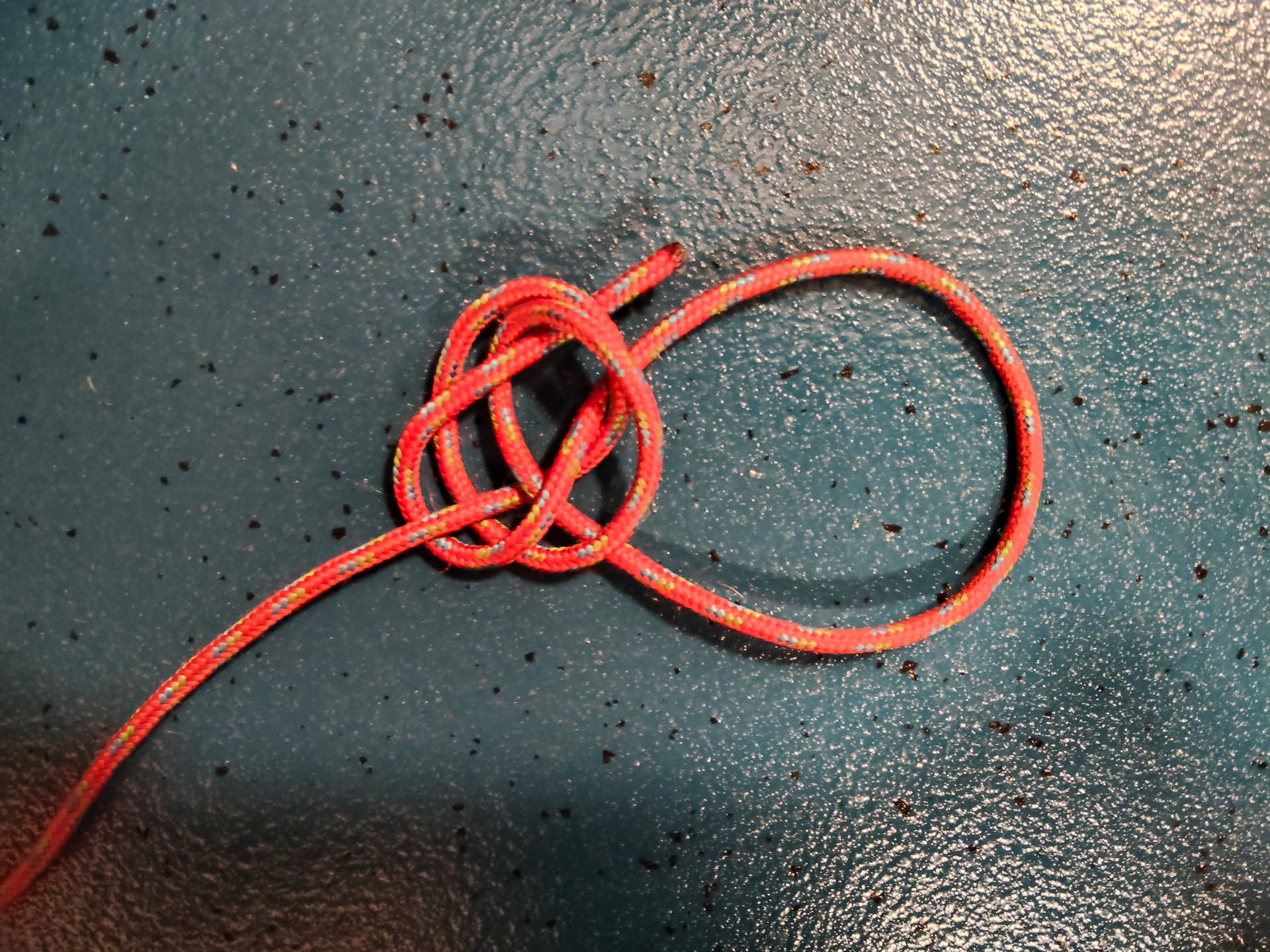
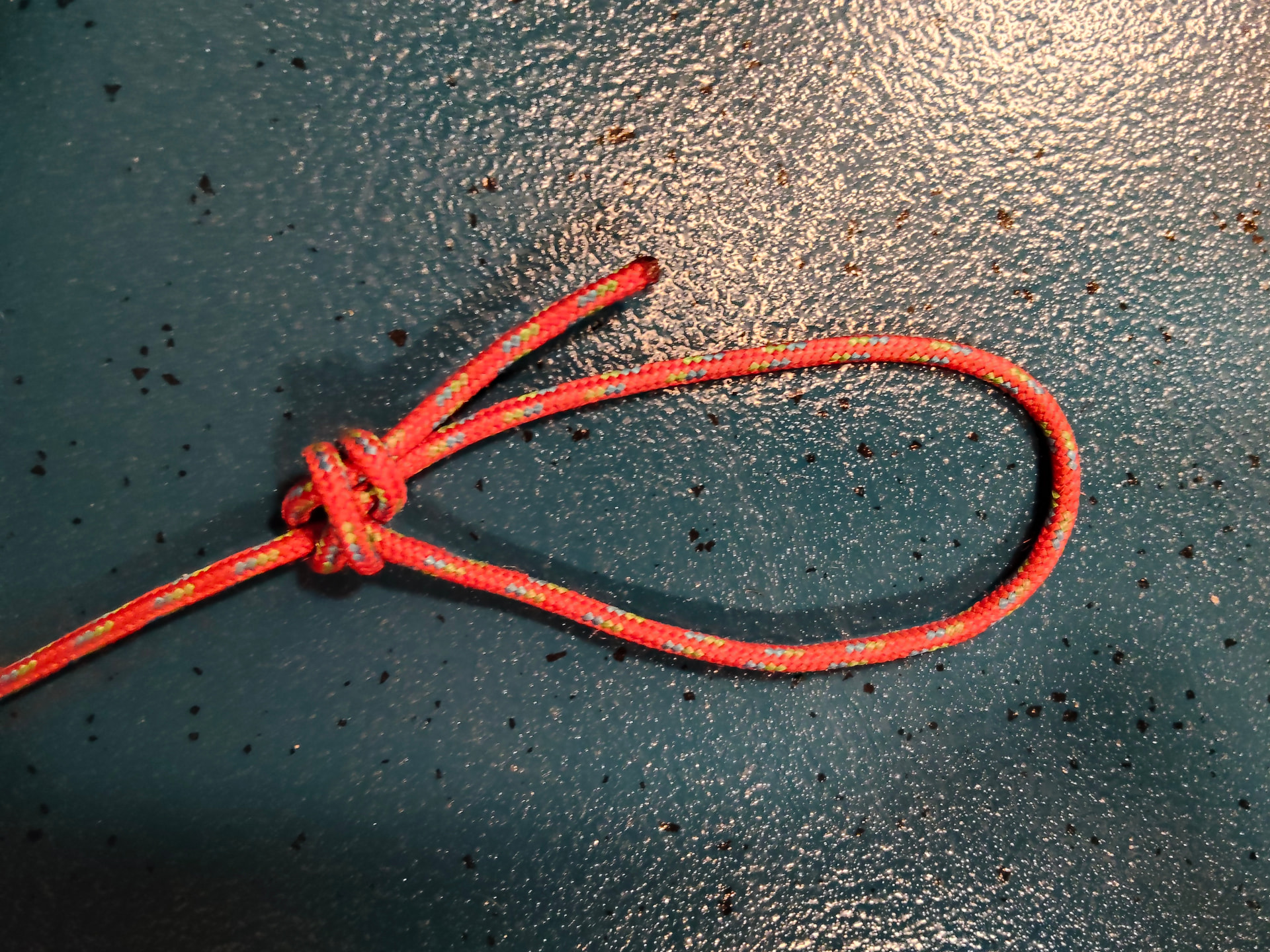
Can anyone tell me the name of this knot?
I was searching on this forum and beyond, but can’t find the answer.
It is a Left-hand Water Bowline tied with the working end “the wrong way” through the Clove Hitch.
I’m using it for some time now and I like this knot better than the original Water Bowline as the Clove Hitch can’t shake loose but the whole knot is still relatively easy to untie.
The reasons I used a Left-hand Water Bowline(-ish) knot instead of a standard Water Bowline:
- It seems to have better grip on slippery rope (need to run additional tests with HMPE).
- It makes the knot less bulky.
- Because I’m Dutch
 .
.
Hope to get some useful replies on the name and your experience with this knot.
Many thanks in advance.
Hello kappietano and welcome
I’m surprised you have not recieved a reply so far, because as far as i know, this bwl topology is very well known in this community forum.
I believe Mr. Mark Gommers (agent_smith) has also made a reference in his excellent “bowline analysis paper”.
You might come across to it under the name of “clove hitch bwl” and probably the reason that it has not gained any popularity, is the difficulty in loosening in heavy loading conditions.
In my view, this is unacceptable, for a knot configuration that claims the title “bowline”.
You see, the clove hitch, in its typical raw formation, is a very stiff nipping component, so that the level of returning component’s compression is to such an extent, that jamming is inevitable in hard strain conditions.
Despite its supposed stability, the core is so stiff and inflexible, therefore you ought to see the water bwl from a different perspective.
1 Like
Hi kost_greg,
Thanks for your reply and detailed explanation about the cons of this bwl.
I will look into the Bowline analysis papers as I need a Bowline for slippery rope that is easy and quickly to tie.
Mark does not usually give a reference to his site so I will.
PACI
There among other interesting things is the Bowline Analysis paper mentioned above. I would particularly recommend to you the five bowlines listed at the end of the article which he recommends for life-critical applications. They will all work well with slippery rope.
1 Like