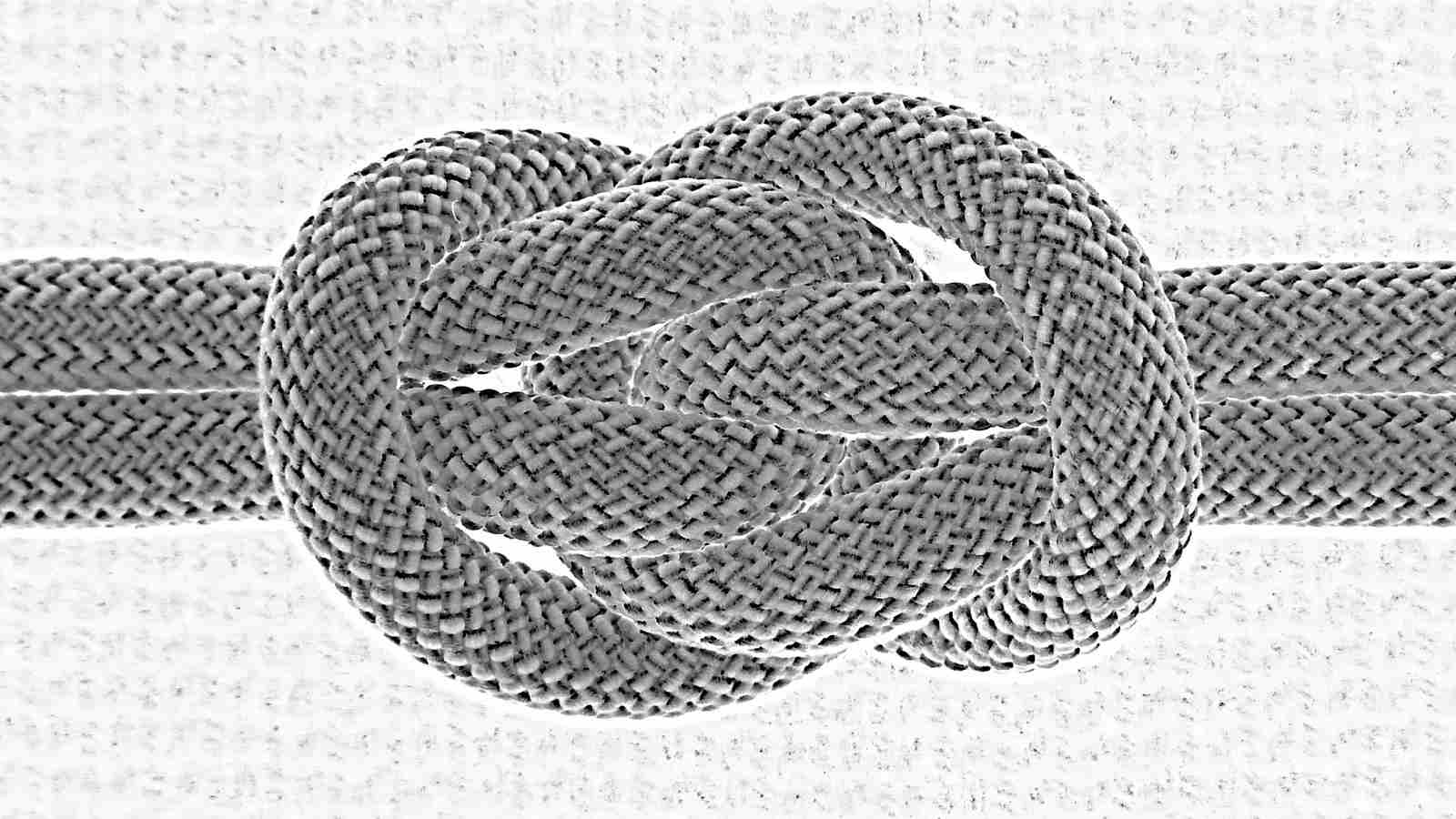
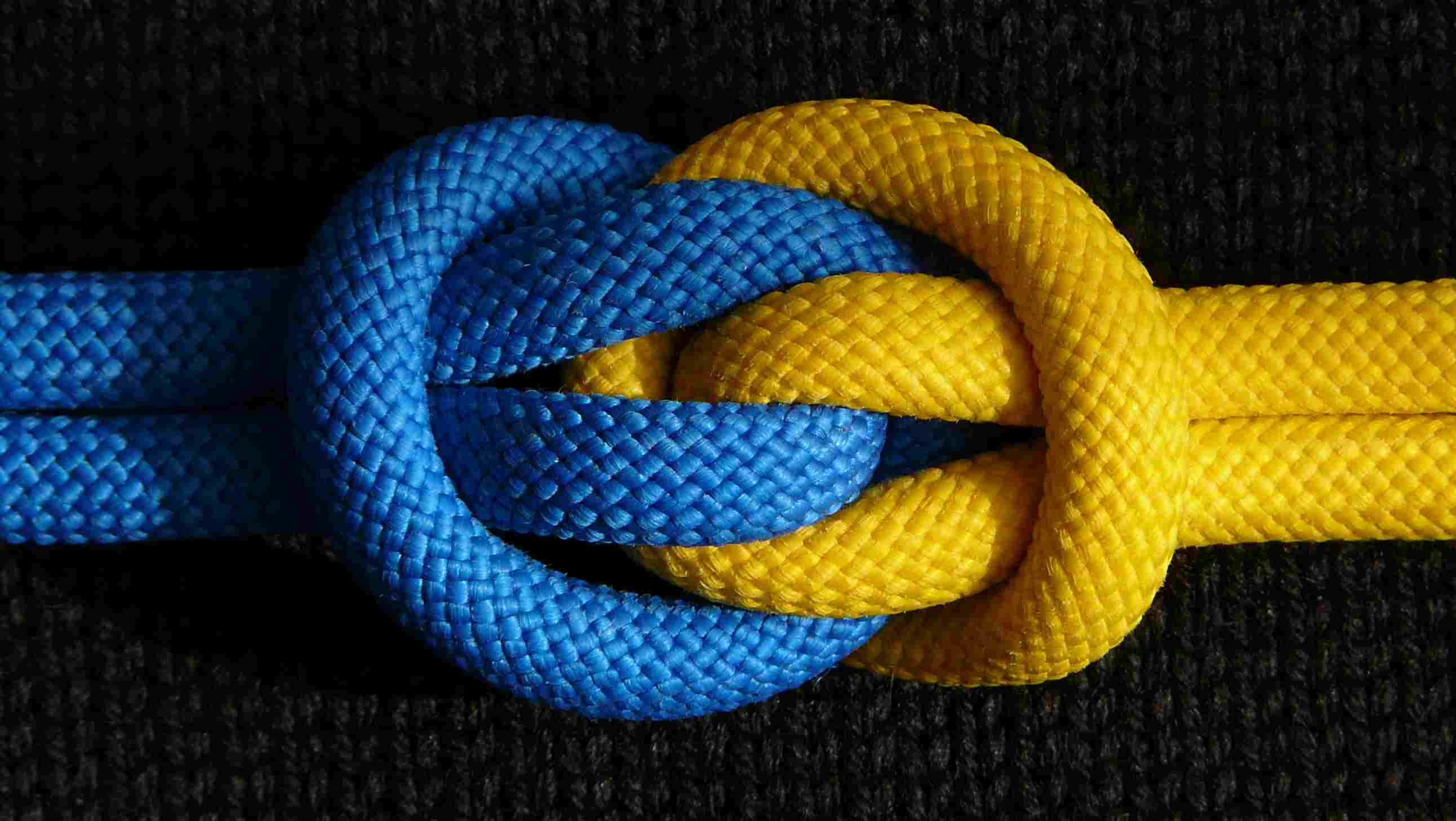
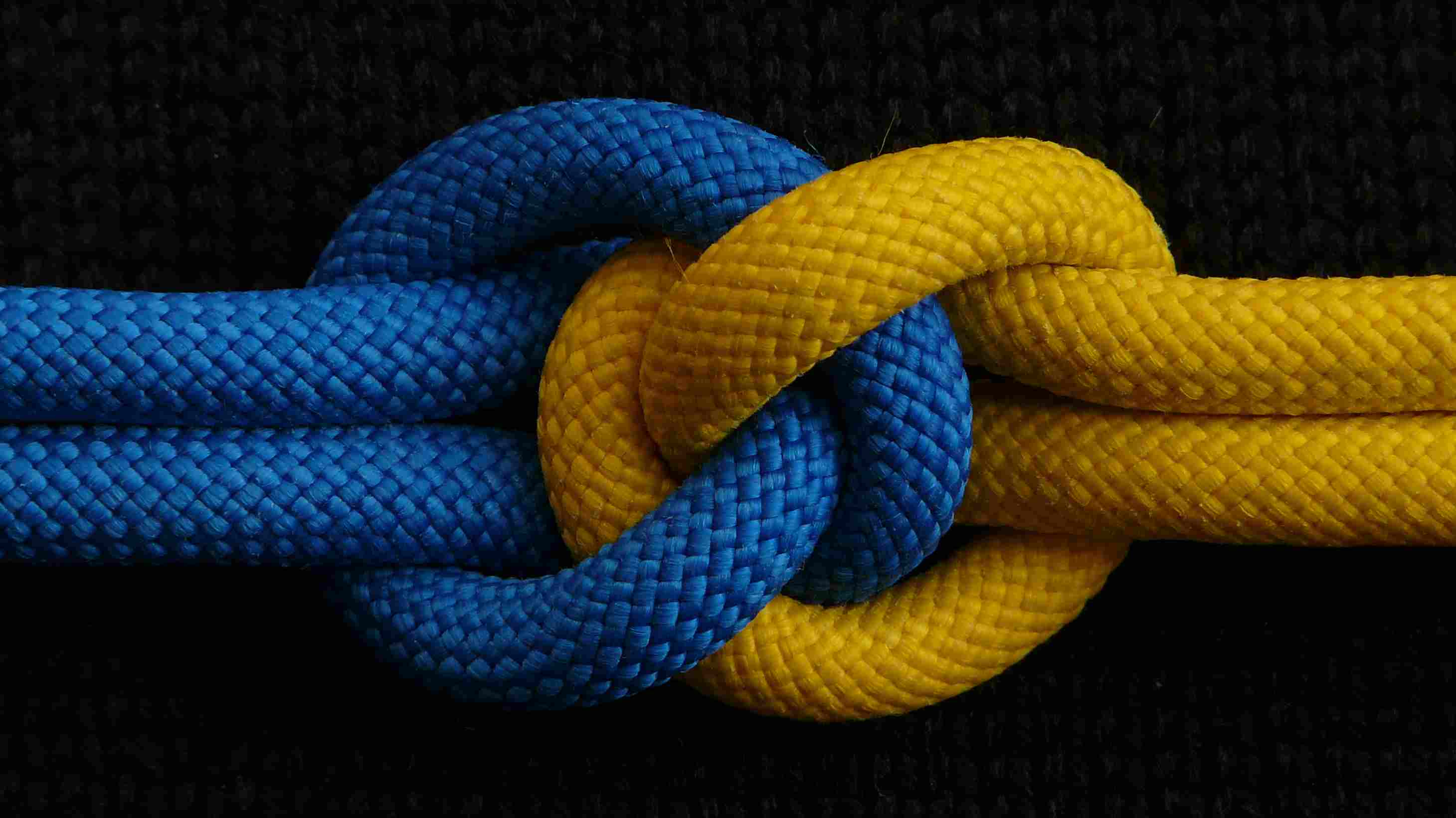
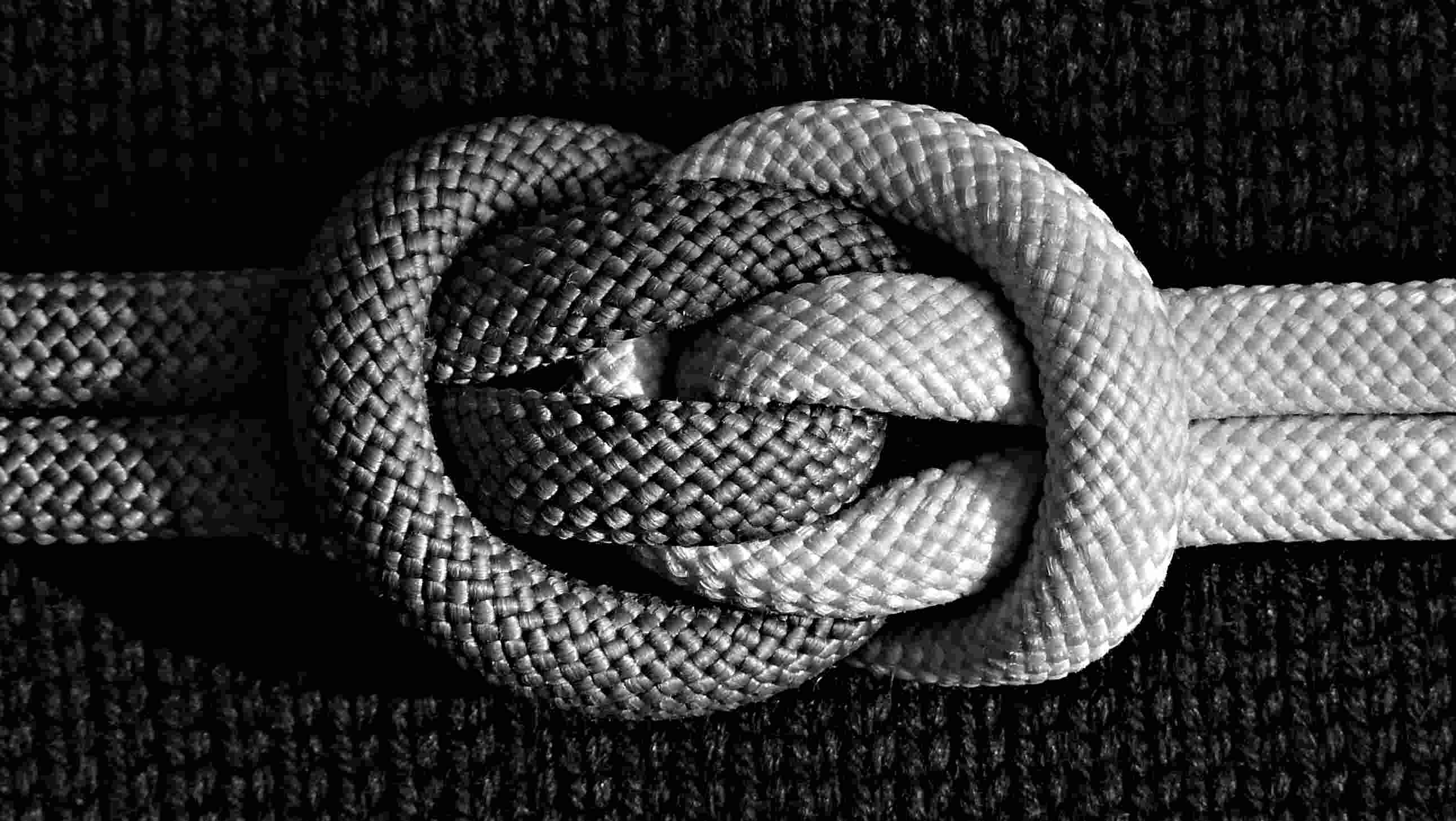
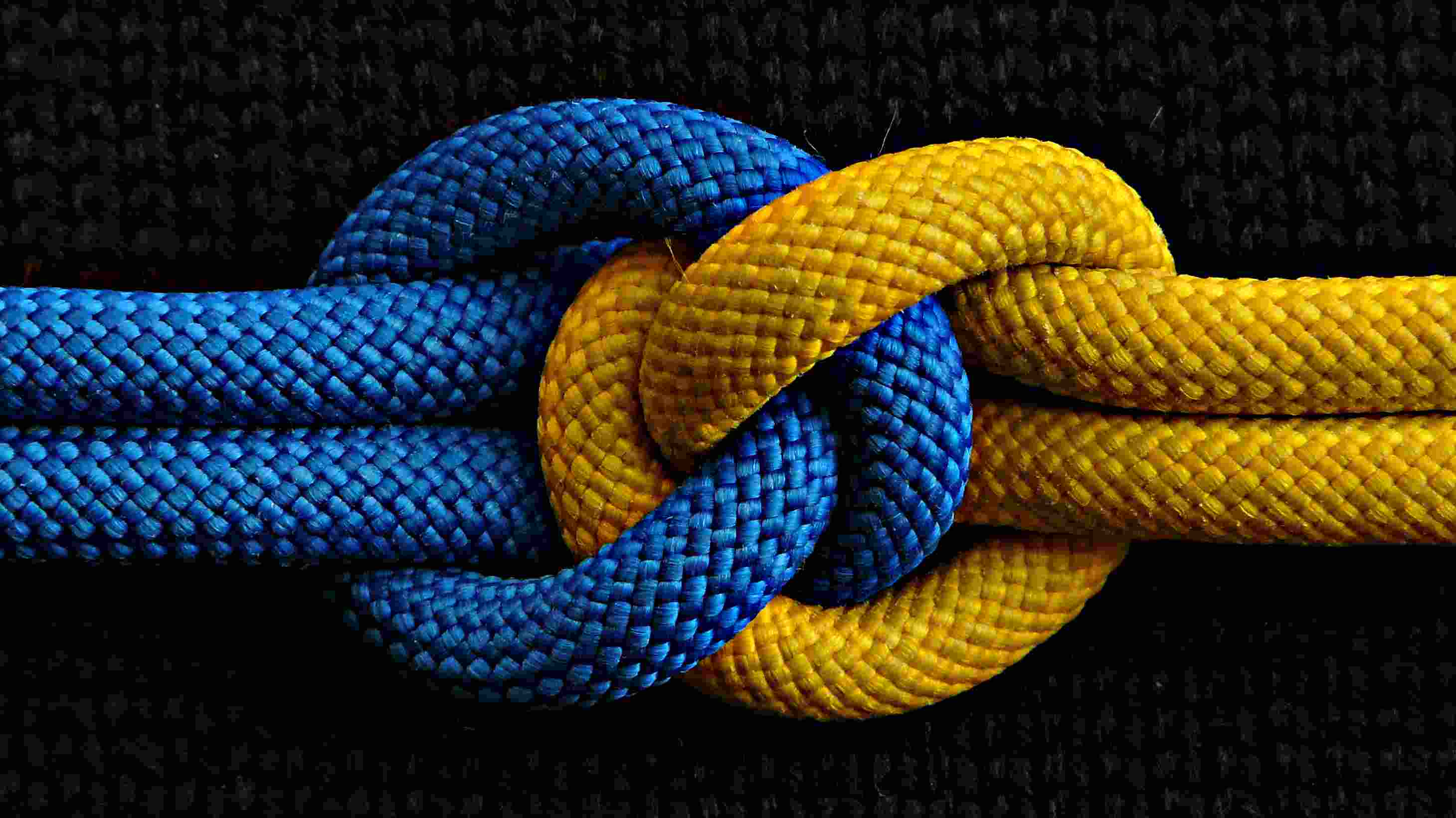
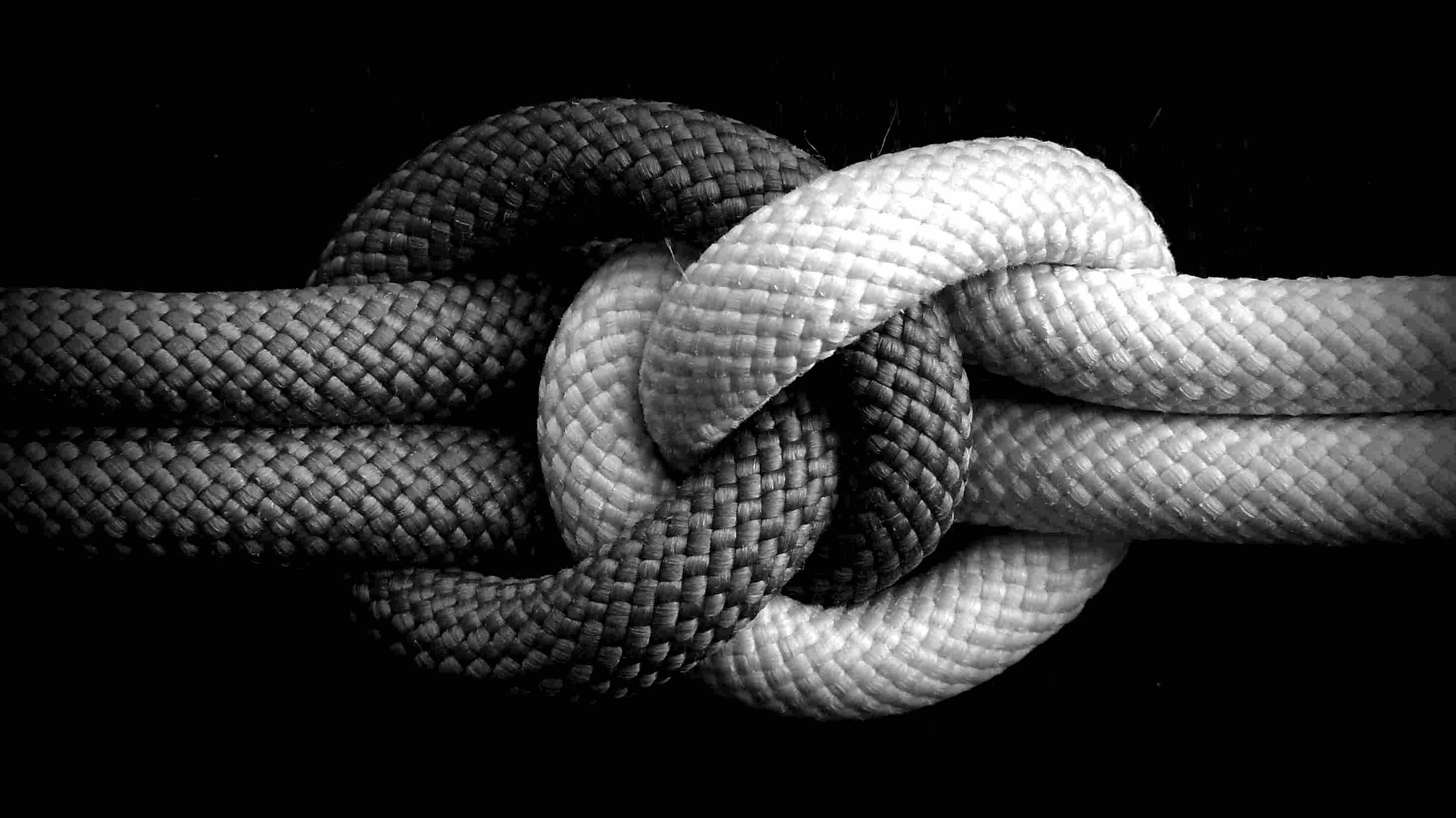
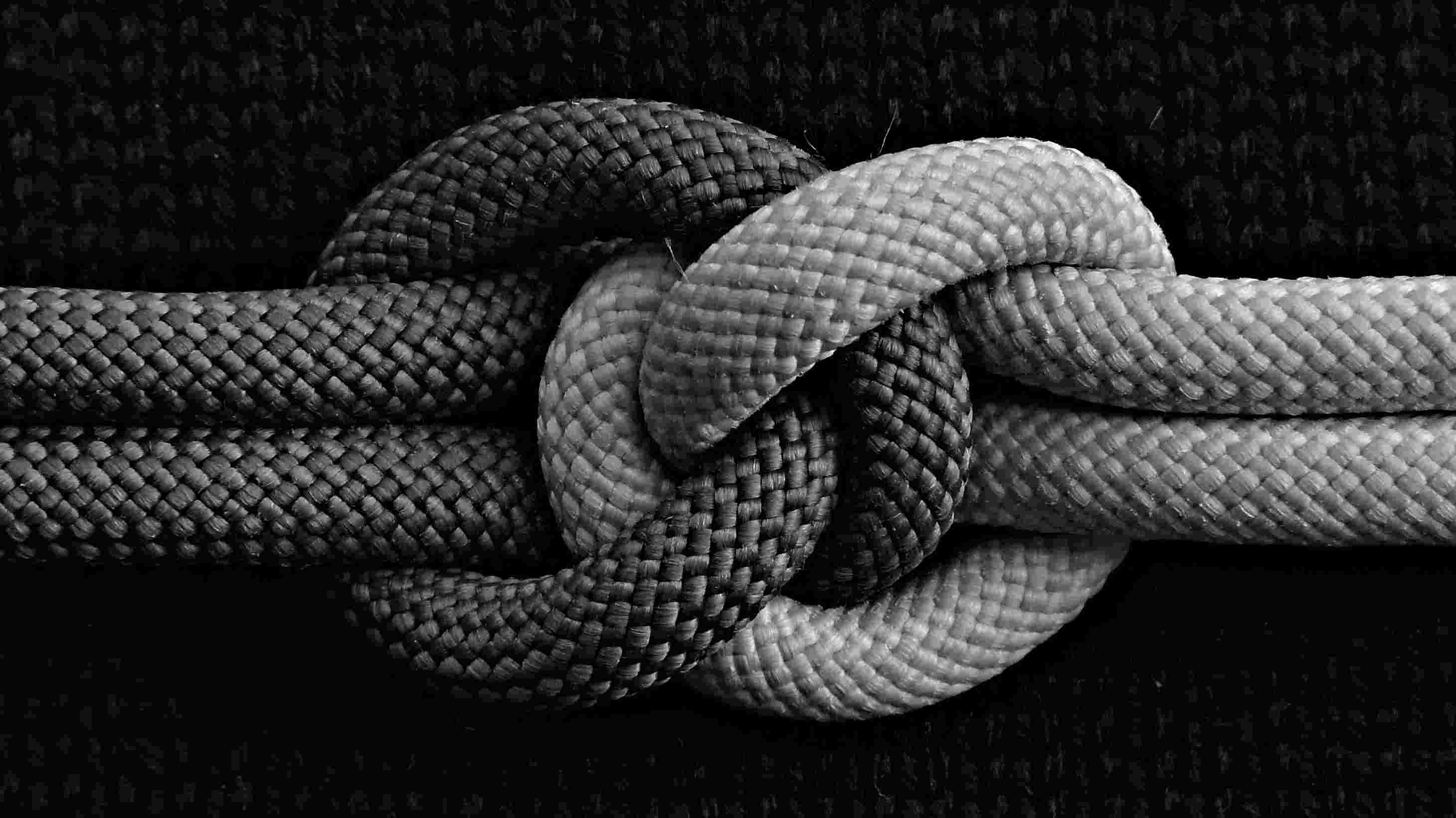
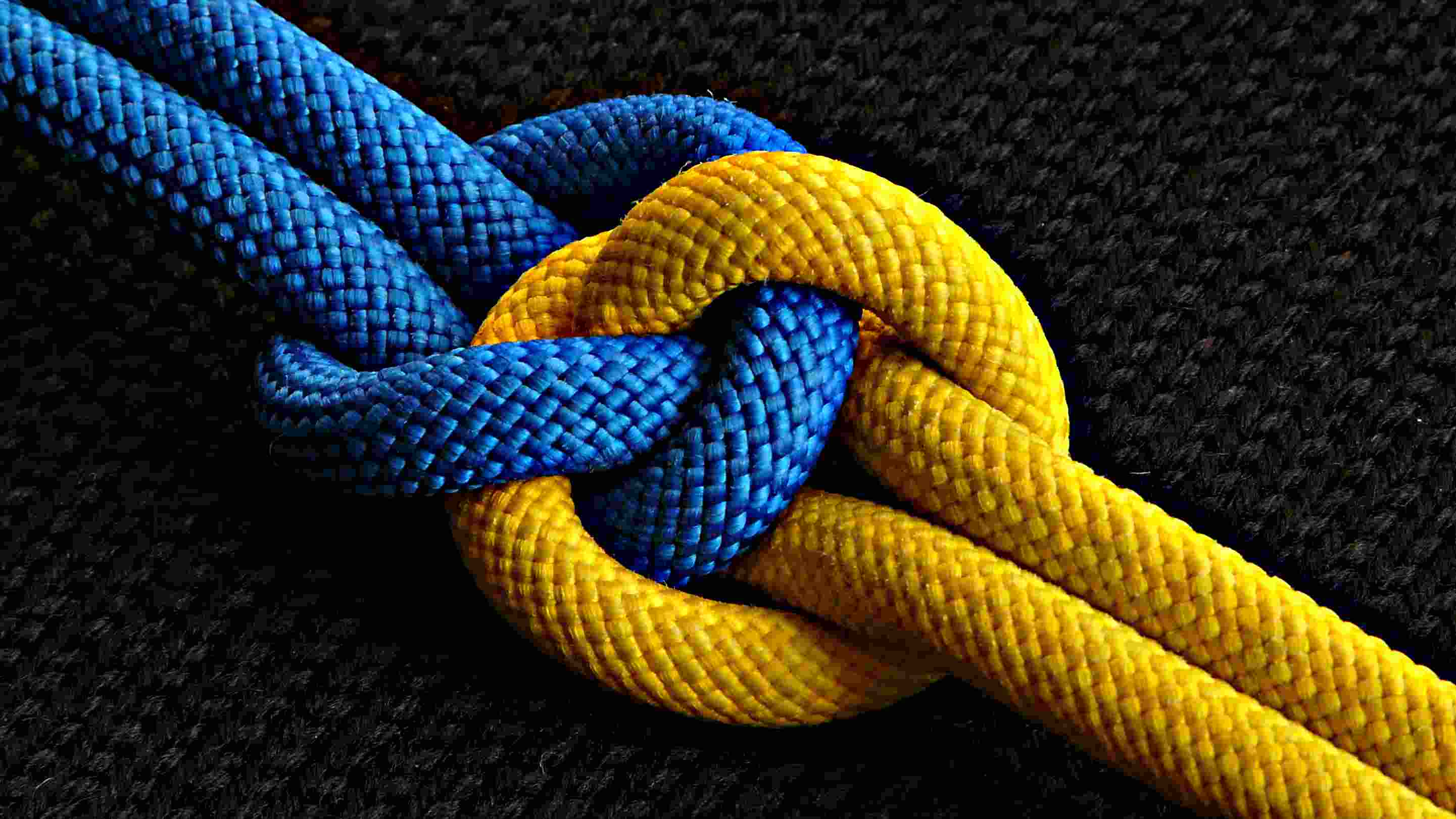
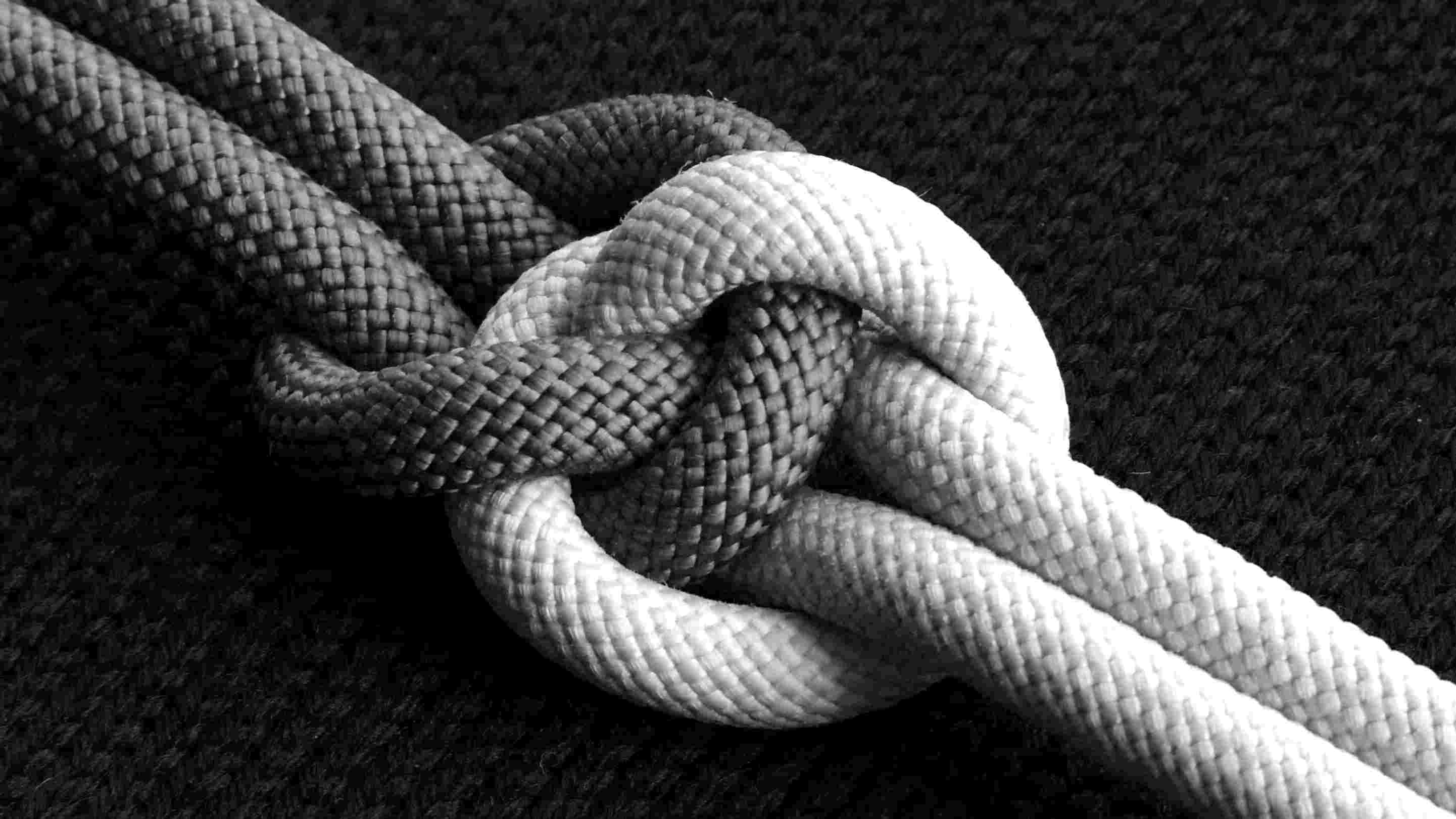
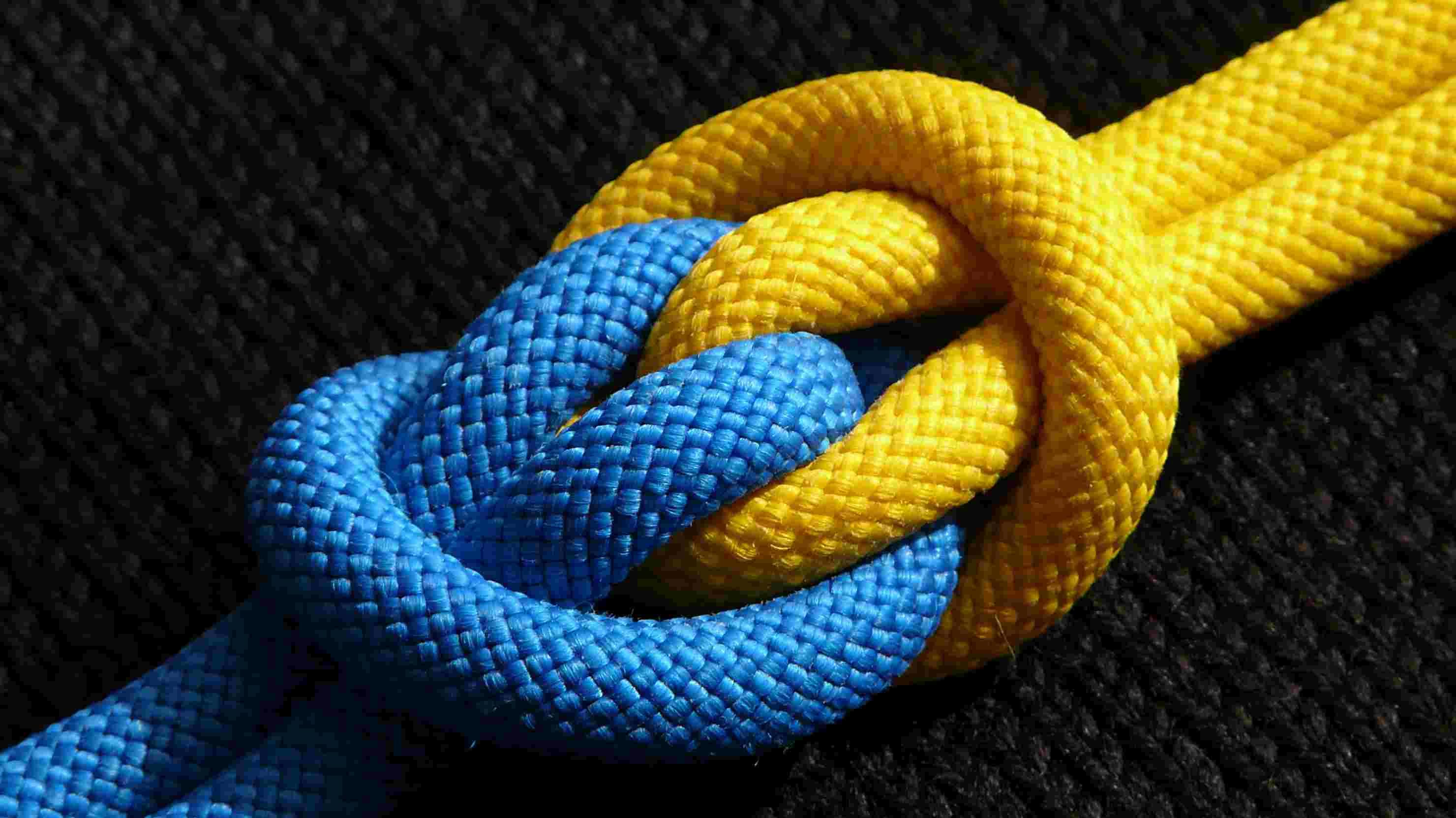
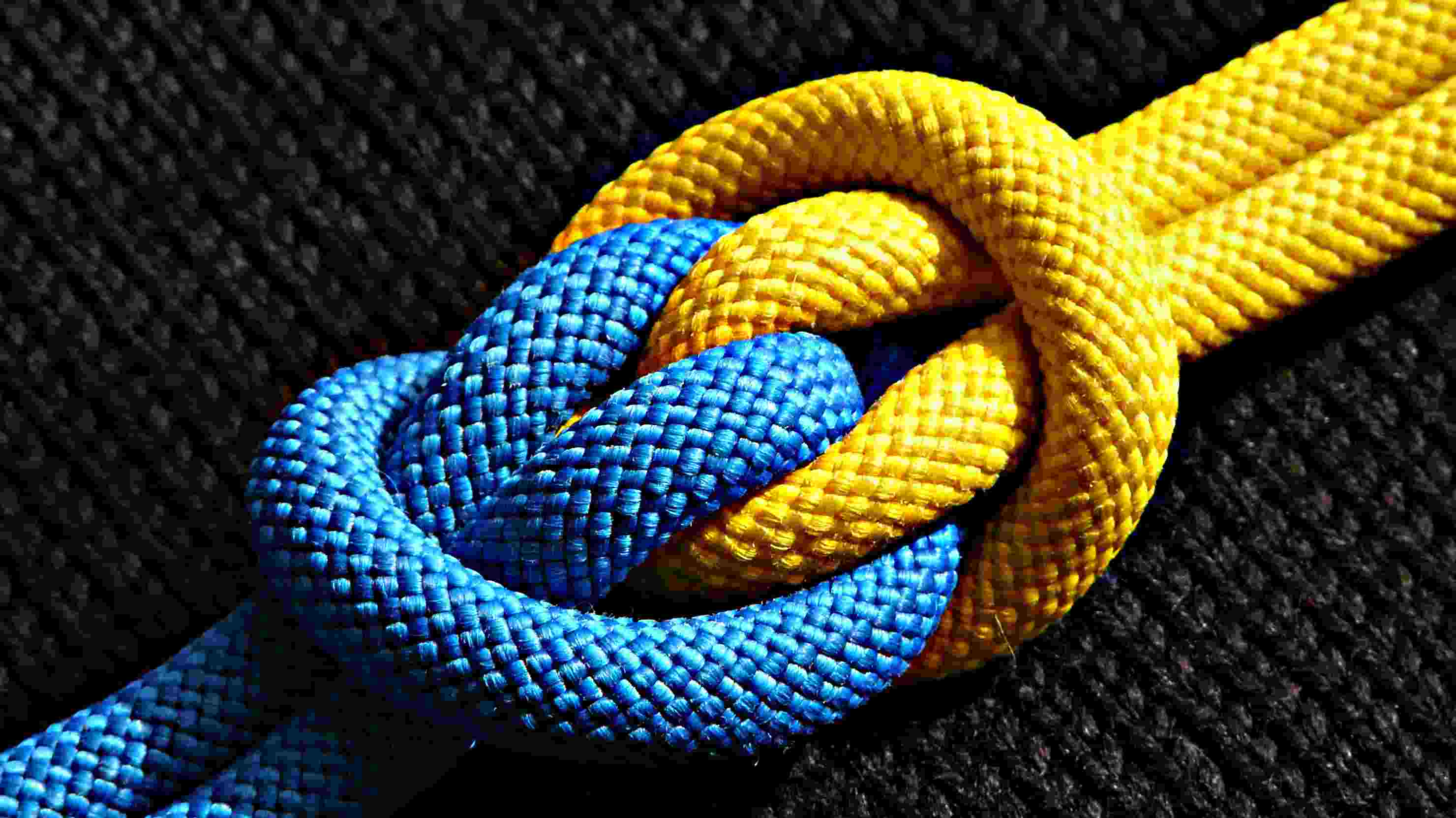
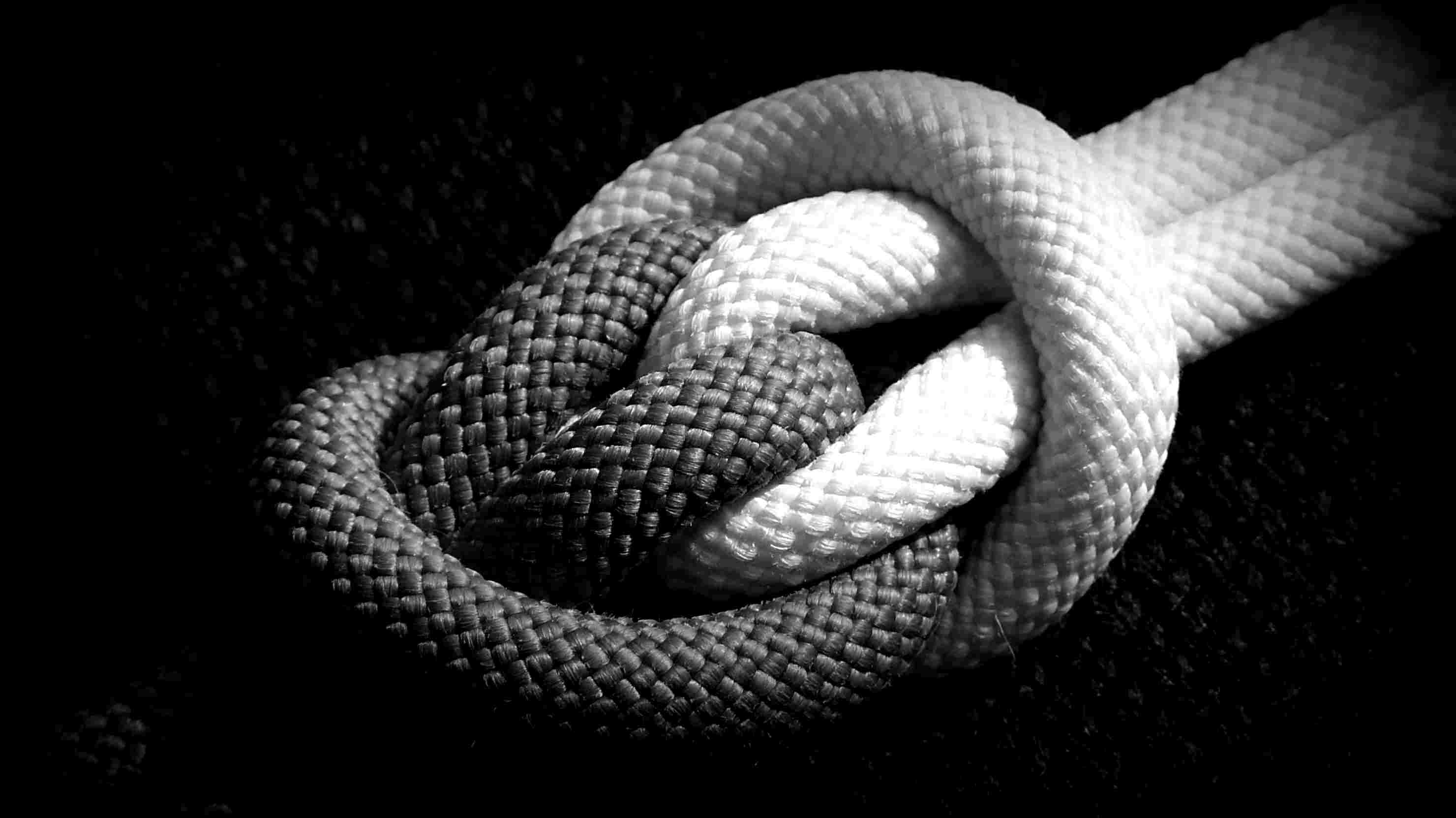
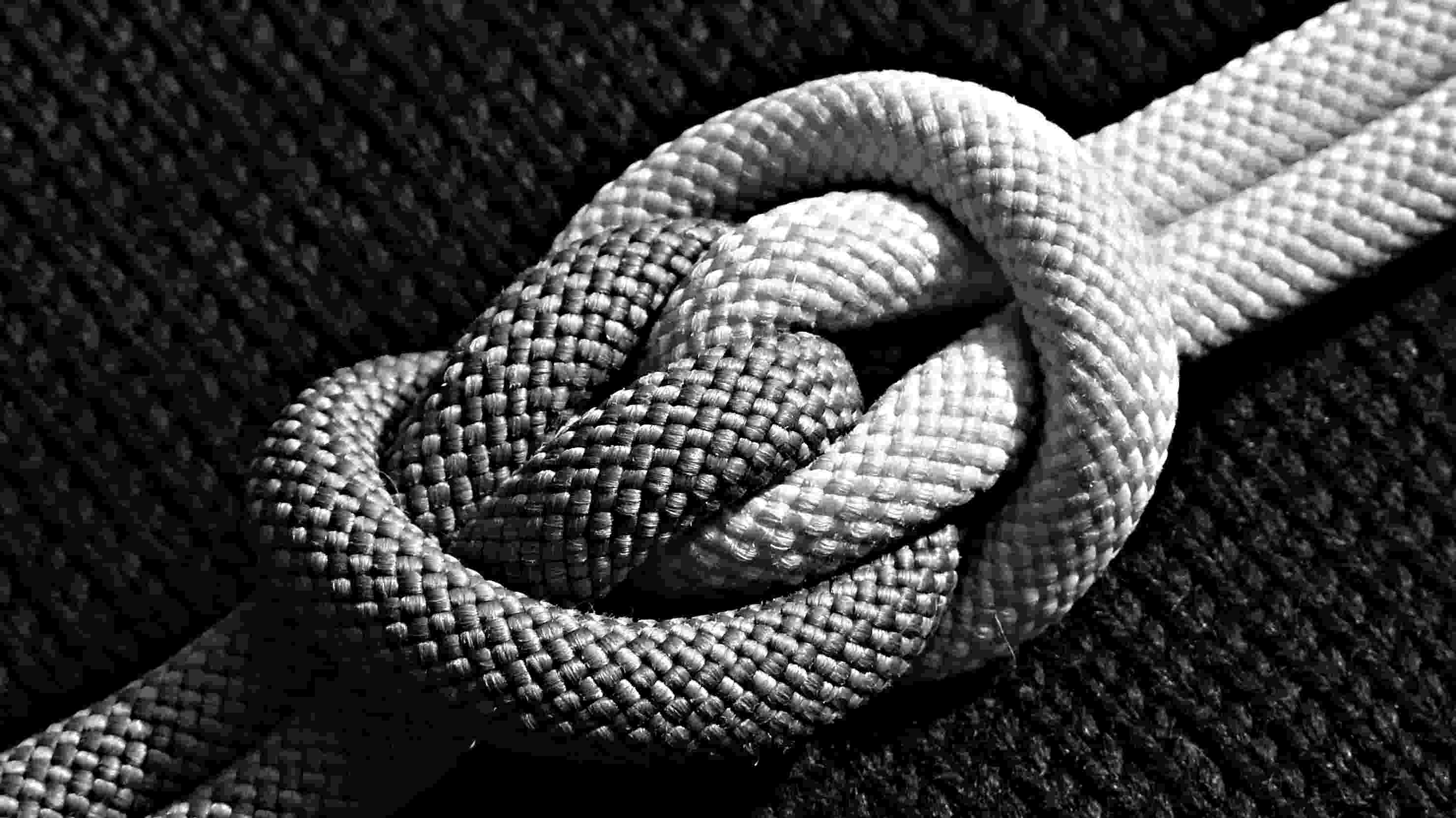
Last night I tied a bend that I have never tied before, and I took some quick and dirty B&W pictures of it - I do not like the reflexions of the flash on glossy surfaces of objects, especially in colour pictures.
However, at the end I did nt like the appearance of even those B&W pictures, so, waiting for the sunrise, I spent my time editing them with various special effects of Picassa. I was lucky, because two of those modified pictures helped me chose a temporary name for this bend… . During today s most sunny and warm winter day, I took some new pictures, and I modified them a little bid, because I see that nobody is enlarging or downloading my pictures, so they should better show the best they can in small scale. I post all those pictures at the next posts, and I would be glad if any member who cares about the pictures of the knots, at least, tell me which of them he likes more - so I will keep those and delete all the others.
Speaking about the photos: In general I like the bright ones best, as they look more real to me. And this real look gives better aid to visually tracing the routes taken through the knot, to me.
All are of excellent quality and you’ve hit upon the best light source.
I would say that if the simplest/easiest pictures do the job, don’t invest the time and and effort, unless you like doing it.
I generally do not click on the black and white pictures.
As for the knot itself, I have not played with it yet, but I will when my hands thaw out.
I have not shown the free ends, and I have not mentioned anything about this, on purpose ! I had hoped that somebody would ask, and that this would offer me the opportunity to comment on the issue.
I have a theory, which I have repeated a number of times, but which I was not able to submit to the revealing, and relieving oftentimes, torture of the experiment : I think that the defence against slippage should be arranged as a defence against the enemies ( the tensile forces ) coming from outside with their full power ( from the Standing End, loaded with the 100% of the total load ), towards their final destination, where they would, hopefully, be totally absorbed ( to the Tail End, where the load would be diminished to 0%, otherwise the knot would slip ). As anybody who has visited a medieval castle knows, the defence is gradual, arranged in steps, the next harder to be outflanked than the previous one (1). This way, even under a lighter than the maximum loading, there would be fewer or no parts of the Standing part which would not be tensioned / which would remain slack, so, most of the time, almost no the part of the tighten knot will not contribute in the absorption of the tensile forces.
If we have this theory in mind, we can distinguish the Standing from the Tail ends in a glance. Which ends are nipped more efficiently as they come out of the knot ? Those are the Tails.
There is a yet another theory, which also has been neither proved nor disproved by experiments : We use to say that the continuations of the Standing ends should enter into the core of the knot s nub following curves as wide / smooth as possible. So, we try to make the paths of the Standing parts as gradually bending towards the centre of the knot as possible. So, in this bend, which ends follow wide paths as they enter into the nub ? Those are the Standing ends.
Now, do I KNOW that this way of loading the bend would result in a less slippery and less weak knot ? Noope ! Who knows how this knot will “fold”, when it will tied on a most slippery material…Who knows where the “weak link” of the knot will be, and where the line will break…
So, all that I can do for the time being, is to wait patiently for the brave knot tyer who will test all the simple knots, to test this bend, too, in its “normal” AND in its reversed form. On ordinary materials and moderate loads, there was no slippage, and, of course, no breakage.
Maybe someone wants to tie all possible permutations, but for the rest of us, and for clarity of discussion, can you tell us which are the intended free ends of the normal form?
I believe we are talking about symmetric bends, at least 99% of the time - so, the frightening “all possible permutations” is the smallest natural number after 1, the 2 !
I have already answered which should be considered the “normal” form, in two ways ! ( The rationale about the Tail ends, and about the Standing ends ). The pictures speak for themselves, IMHO.
Knot tyers who do not know, but also do not wish to learn, therefore they can not understand what the different roles the Standing and the Tail ends have to play, should better NOT look at images neither of me, as you say ( “your images”(sic) ), nor of any knot !
I have tried to explain this theory - about the Standing part better been nipped harder at latter than earlier places - in the same thread, in a previous post of the one I had referred to :
If the brave knot tyer would test both versions, and finds the “normal” inferior to the “reversed” one, this would be great ! I would had dispensed with a one knot and one conjecture about knots, at one go ! My knot toolbox would become lighter !
I think that I met this knot once previously, with
some whimsy of rambling around and going What
if … ?! --never know where that’ll lead.
(It did not lead to such intriguing imagery as here!)
This can be seen as Ashley’s #1452 with the
tails drawn out of the collars; it enables a change
of geometry that is fascinating (and jamming).
Or one might pull on the other parts,
or go asymmetric in loading --the 3rd way, here.
I’ll surmise that the first is as intended.
I just illustrated an end-2-end knot and showed
it with tails that had been intended as S.Parts
when fiddling it --it was in that way, a securing,
a S.Parts-twist-extending variation on the reef
(I’d wanted to keep the initial twist of S.Parts,
but to soften their U-turns seen in the reef.)
But I came to it in material in which that wasn’t
obvious, and I found the tails-loading (though
at the time I wasn’t sure of which …) to be
more appealing!
–dl*
ps : I’m relieved that what we have here is an
excess of one knot’s images and not of soooo
many more knots for me to be held remiss in
not analyzing, testing, and commenting upon!
(A unicorn has just the single marlinespike to
poke around with, and all.)
Actually, good sir, it is better than this : it is “forcibly loosenable” !! --pulling the tails of the
“jammed” (it does jam securely vs. loosening)
knot will pull in S.Part material and loosen it!
And loaded opposite to how you, good sir, thought
best, above, one finds shakehands or the like coming
into form! --what an interesting transformation.
(Yes, vague memories are being stirred.)
By what mystical lacings does this Xarax seek to bind
us in mental tangles of our own weak perceptions?
–dl*
ps : I’m now slightly less relieved in that what we have
here is some echoed images of a tangle that holds more knots than one might suspect!
Or ( in the supposedly “weaker” reversed form ) Ashley s #1451 s symmetric cousin with the tails drawn out of the collars.
And I say “cousin”(*), because its mechanism is exactly the same with the ABoK#1451 s, only its tails are leaving the knot towards opposite directions ( as they should : the Standing ends are converging / approaching / coming / entering from opposite directions, and an end-to-end knot is but a knot, not a permanent union/merge of lines ! - so the “natural”, and prettier, IMHO, thing, is Tails diverging / distancing / leaving / exiting towards opposite, too, directions. In this sense, the re-tucked through the collars ABOK#1452 is also a streamlined, pretty ABoK#1452… ).
What I wish to hint is that ( in its supposedly “stronger” normal form ) this knot is Ashley s #1452bowled-over-by-retucking, not bowled-over-and-re-tucked, as the knot presented in (1).
Many knot tyers say “retucked”, and mean “retucked through the central opening”, and they believe that this is the more secure and stronger retucking of all the possible ones. ( That is wrong, and, among other things, it may even be a cause to miss important knots…). Stronger it may well be, because it increases the volume of the central core, around which the Standing parts will make their first turns. However, regarding security against slippage, the convenient retucking-through-the-central-opening can be weaker !
The tails can be driven through any of the openings the 'parent" knot presents, “collars” being two of them. In fact, the central opening may offer some “protection” to the choking of the Tails, because of the amount of material swirling around, which can absorb, by its inner friction, a great portion of the forces that are meant to play the role of the last line of defence against slippage. ( I am speaking about the behaviour of ordinary, and rather stiff, material here, of course, not about the easy flattened slippery Dyneema…). The same reasoning had lead me to question the security of some forms of “Link” bowlines, where we have exactly the same situation, with two O-shaped interweaved nipping loops :
(*) Curiously, it is also the reverse of “Carrick s cousin”, named by H. Asher ( The Alternative Knot Book, p.63-64 ) - so, is a cousin of both :). Miles calls it “Spherical bend” ( M. A14), and says that it “forms the most ball-like” of all the symmetric bends he presents in his book - but I really wonder why ! Even in its capsized form, in which he shows it in p.104, it does nt look soOo spherical to me…
The interested tyer would see that, when he will load the knot the one way ( the way suggested in Reply#7 ), the two collars at the “top” side would move towards the middle of the knot and would approach each other, so they would be transformed into two obliquely placed - in relation to the axis of the knot - rings encircling the pairs of adjacent ends ( resembling the rims of the overhand knots in a properly tied fisherman s knot ), and they would finally “kiss” and become parallel and adjacent to each other. When he will load the knot the other way, it will remain more flat, in a state resembling, more or less, the dressed but unloaded knot shown in the pictures. As I had also mentioned at the same reply, I have no idea whatsoever about which way of loading the bend would result in a less slippery and less weak knot…
Having tied this again just now in the form of a sling, with the tails in the lower position (as presented in the original photos) I find that when using some 6mm accessory rope that is firm, round, and rough, that after I have snugged it reasonably tight the the tails continue to feed into the nub under tension. (Arm and foot applied.)
My assumption is that this doesn’t bode well for the slippery materials.
When pulling on the tail ends (same sling), the the movement does not seem to be as great though I suspect the load profile in the nub may be too sharp and cause a local high pressure area that has been noted elsewhere to be the bane of that material.
It has been shown that Dyneema performs less than favorably when a sling has a knot in it and then subjected to a dropped load, as shown here > http://dmmclimbing.com/knowledge/knotting-dyneema-vid/.
And then there is creep to consider for constant loads, which could exasperate matters, especially the untying.
Not all usage will be slow pull, in fact I believe that most usage will not be of this kind. There has been some writing about the failure of knots in this material (and other materials as well) during repeated load cycling, and so this needs to be considered in any kind of test scenario that can possibly mimic reality.
There is a reason I deliberately avoid the “step by step” presentation of knots, which, most of the time, means offering just a tying recip : to my view, knots should first be understood, in their workings, and then they should be memorized and remembered as 3D geometric objects. The tying sequence is only secondary, and the images it is accompanied with are often misleading. People tend to identify a knot with one particular of the many ways of tying and dressing it, and this opens the door to the well-known tradition of knots parroting and knot tyers brain washing…
A possible way is shown in the attached pictures. Start with two hooked bights, where the Working End of each goes over-under-over any segment it encounters. Then, tuck them through the central opening, so they will be crossed, continuing the alternating sequence of their over/under paths at each crossing : by now the working ends have gone over-under-over-under-over. Last, re-tuck the Working Ends, which are now the Tail ends, through the collars, so they become parallel with the Standing Ends.
Now, at the the end of the second step, what you have tied is a well-known bend, composed by two interlocked overhand knots : so, the last “retucking”, through the collars, is, in fact an un-tucking : the overhand knots of each link become topologically un-knotted ( i.e., topologically equivalent to the un-knot ). We have two interlocked “Pretzel” shaped links, which are “simpler”, topologically, to two interlocked overhand knots.
 . During today s most sunny and warm winter day, I took some new pictures, and I modified them a little bid, because I see that nobody is enlarging or downloading my pictures, so they should better show the best they can in small scale. I post all those pictures at the next posts, and I would be glad if any member who cares about the pictures of the knots, at least, tell me which of them he likes more - so I will keep those and delete all the others.