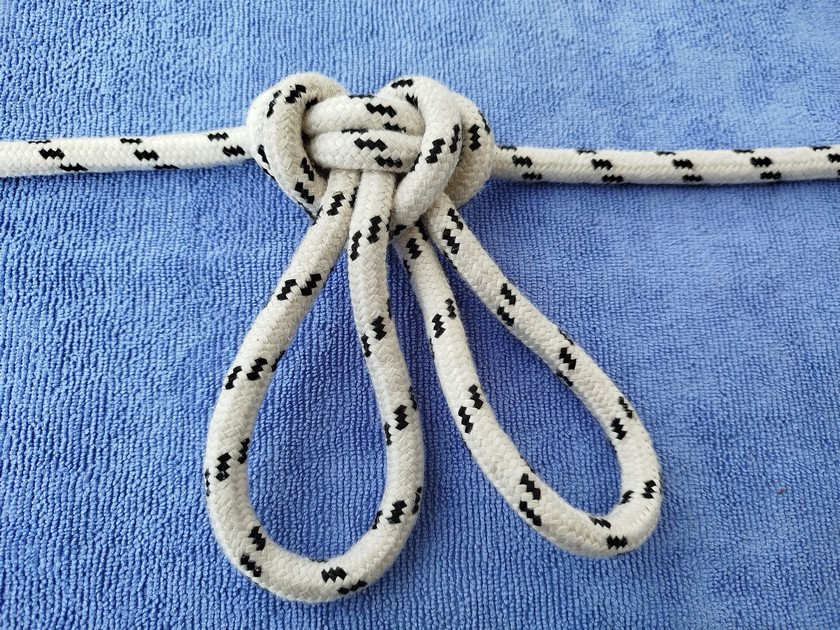
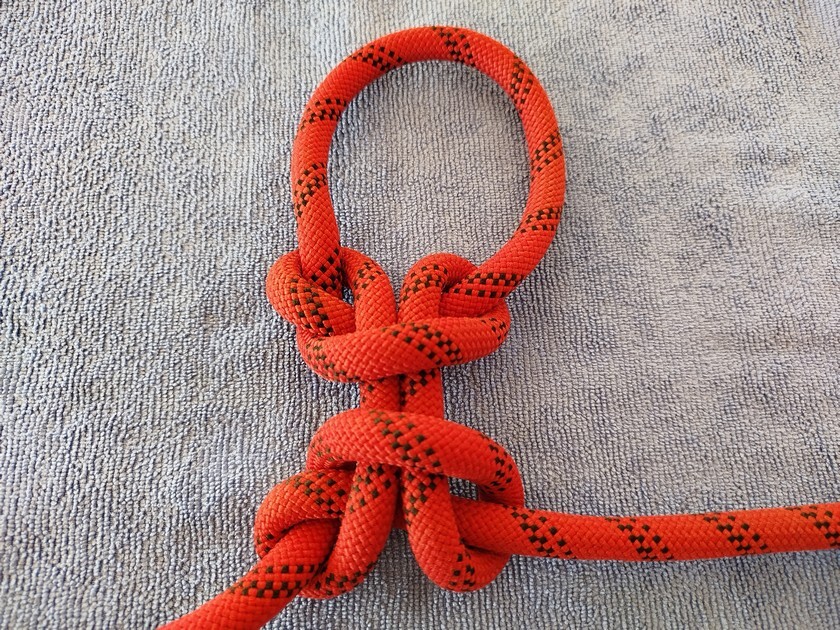
Yet another midline eyeknot

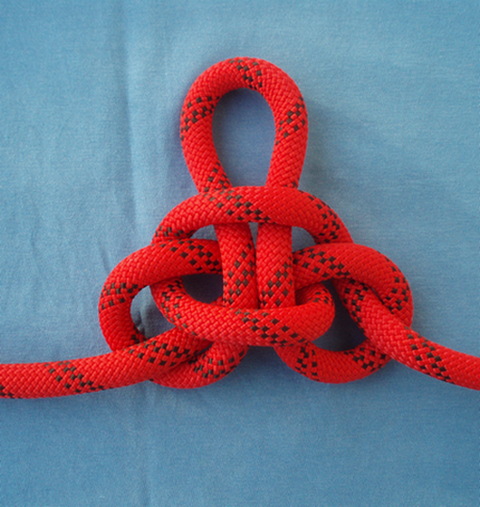
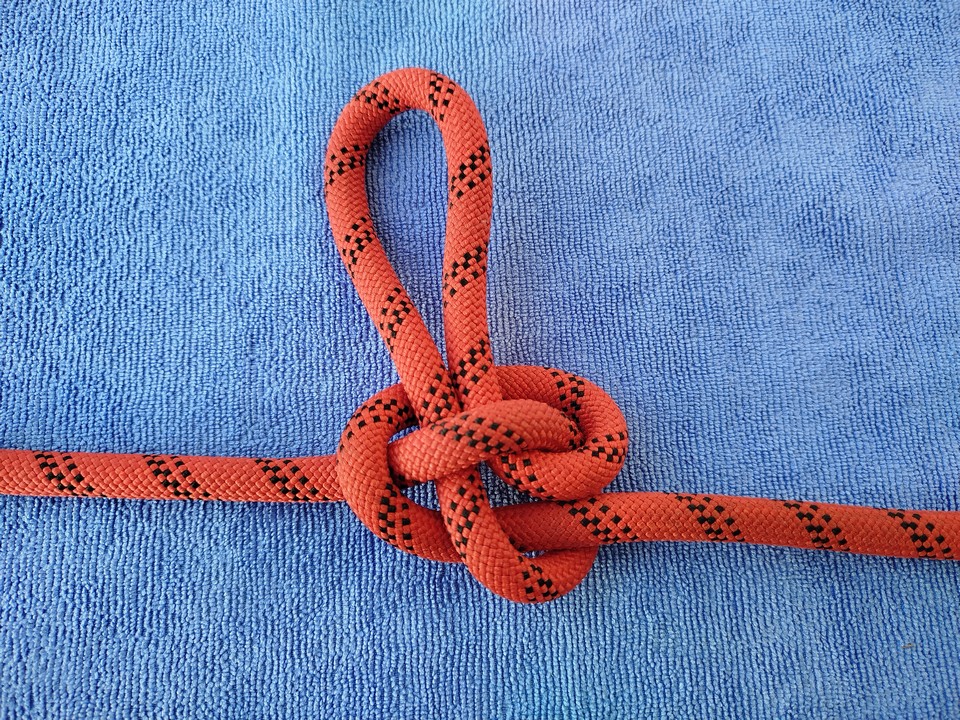
By the same token, i could subsequently make the claim that Abok#1054 farmer’s loop, is also a similar function, carrick-like, knot.

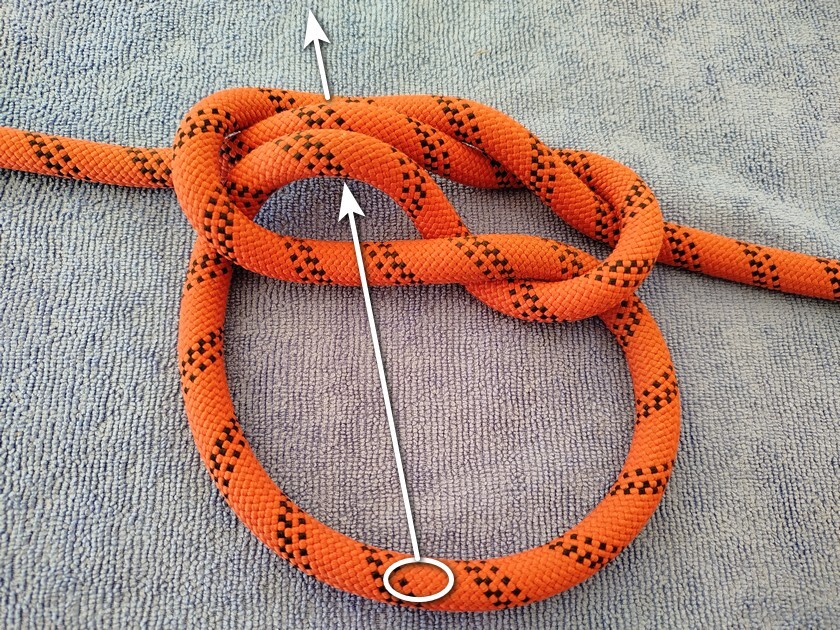
More specifically, if someone observes closely the details of first image, which illustrates two different loading profiles of the same core, he would probably establish the correlation between the end of line Cowboy M of Mobius and midline Abok#1054 farmer’s loop (1054 = midline version of cowboy M bowline).

This very, 1054 farmer’s, profile, had also been presented in the following thread, more like an end termination, TIB, Carrick like structure, but i’m mostly inclined to classify it as midline.

https://forum.igkt.net/index.php?topic=7261.msg47307#msg47307

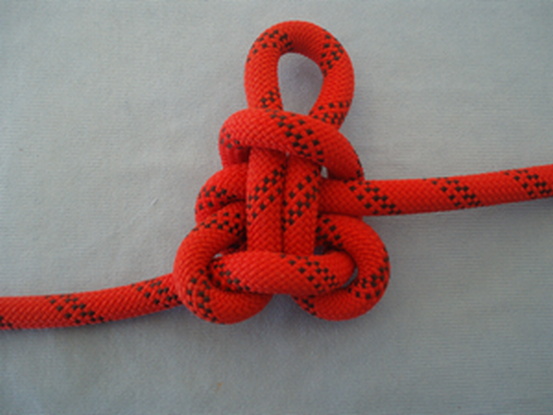
As known, there are two TIB tying methods of farmer’s loop in Ashley book of knots because Abok#1054 and Abok#1056 are the same knot structures.

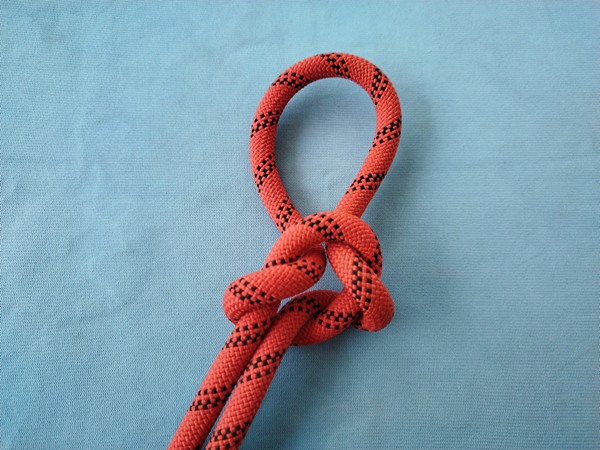
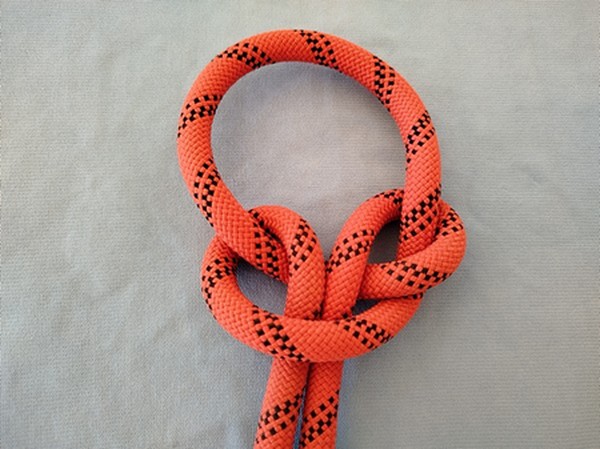
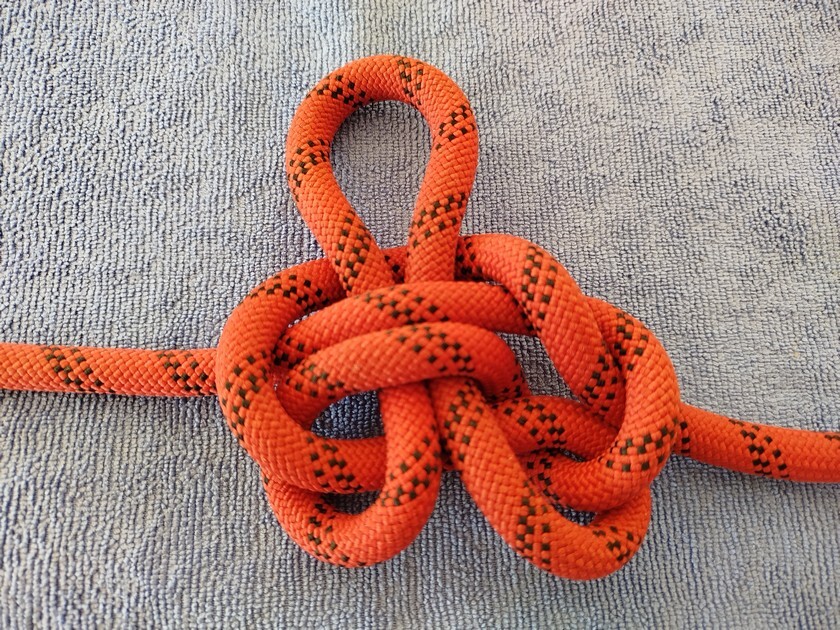
Now there are three, according to the second attached image. This method is almost the same with the one described at previous reply with a slight difference at the second step, whereon the bight on the right SP continuation takes now the form of an S loop, which is threaded down through the small centered loop.

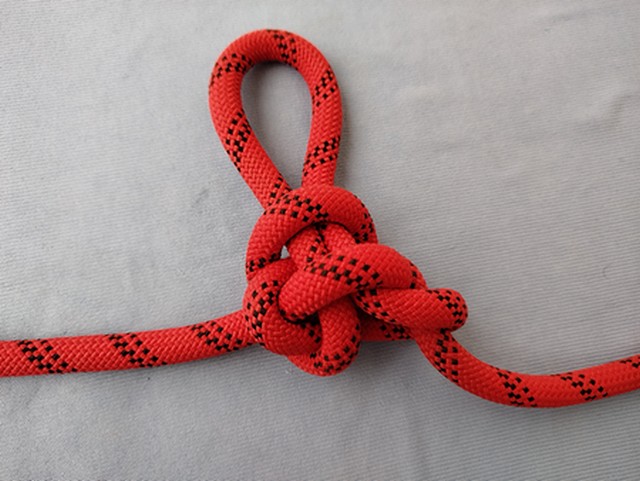
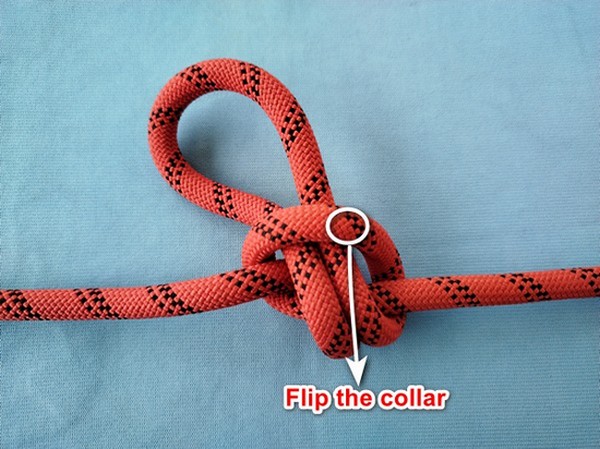
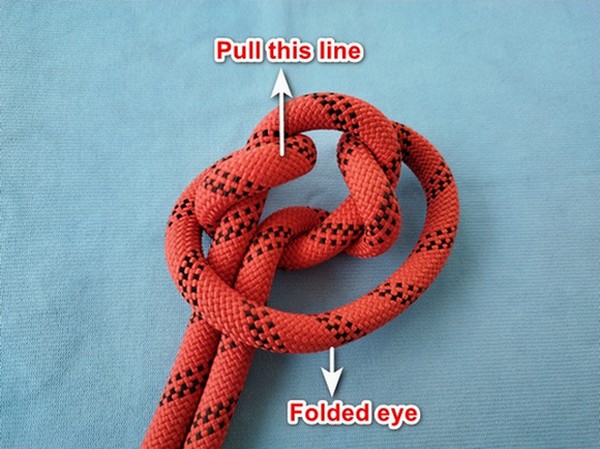
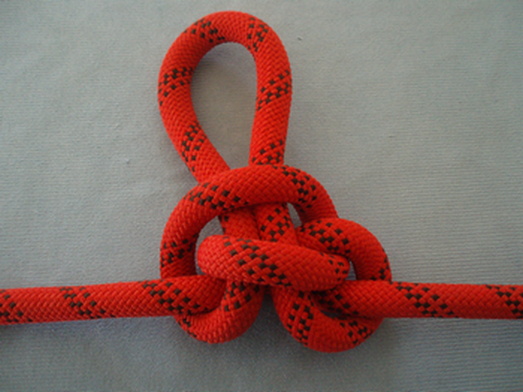
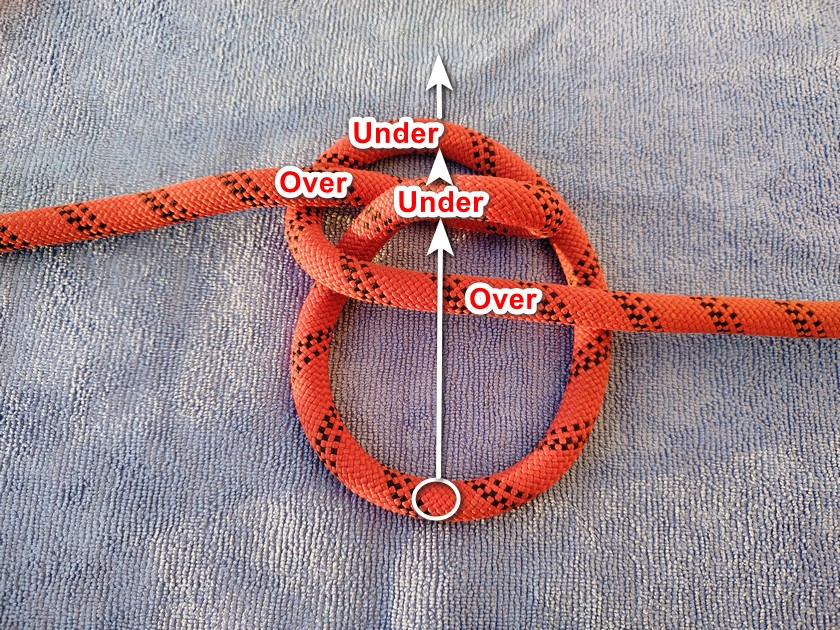
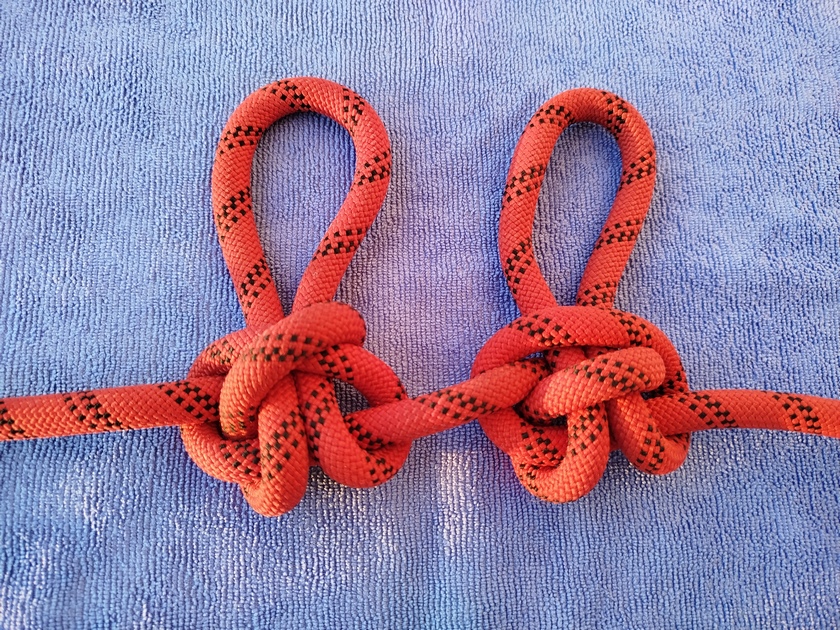
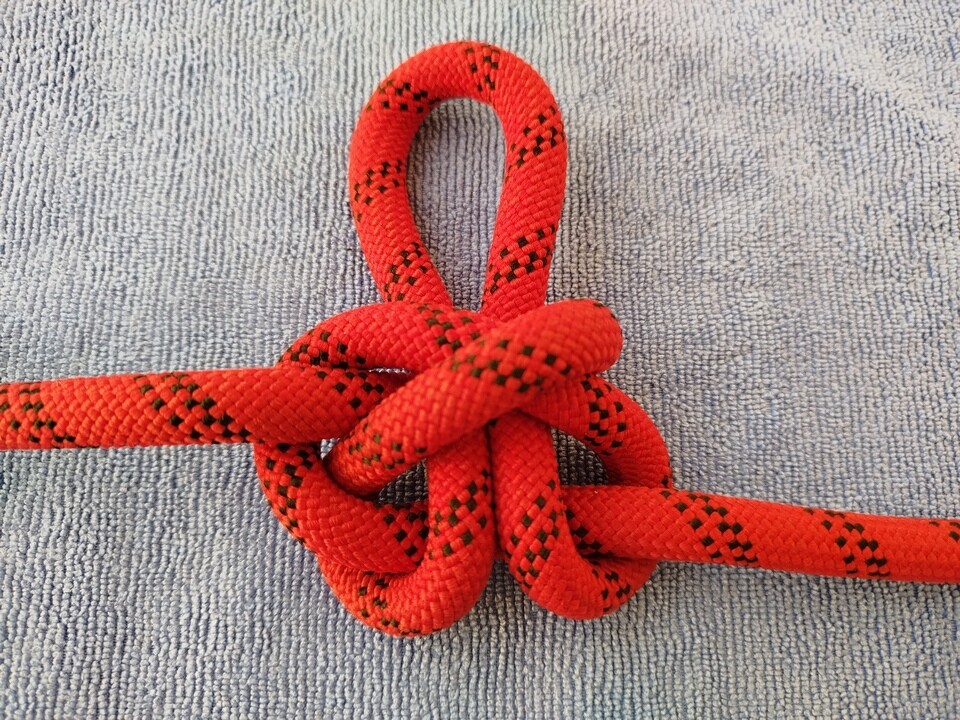
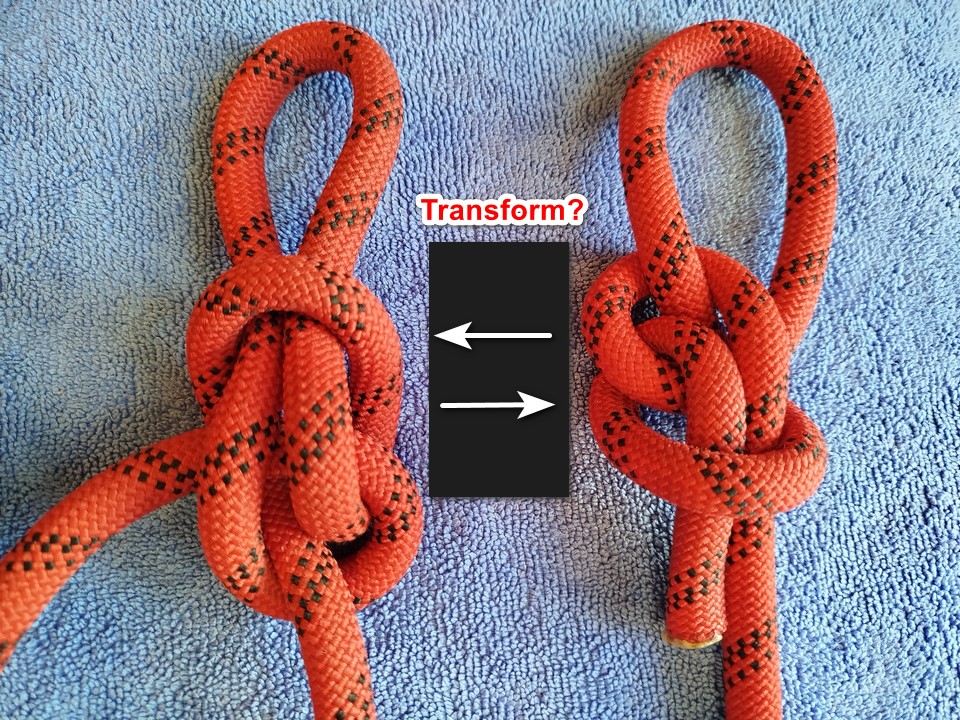
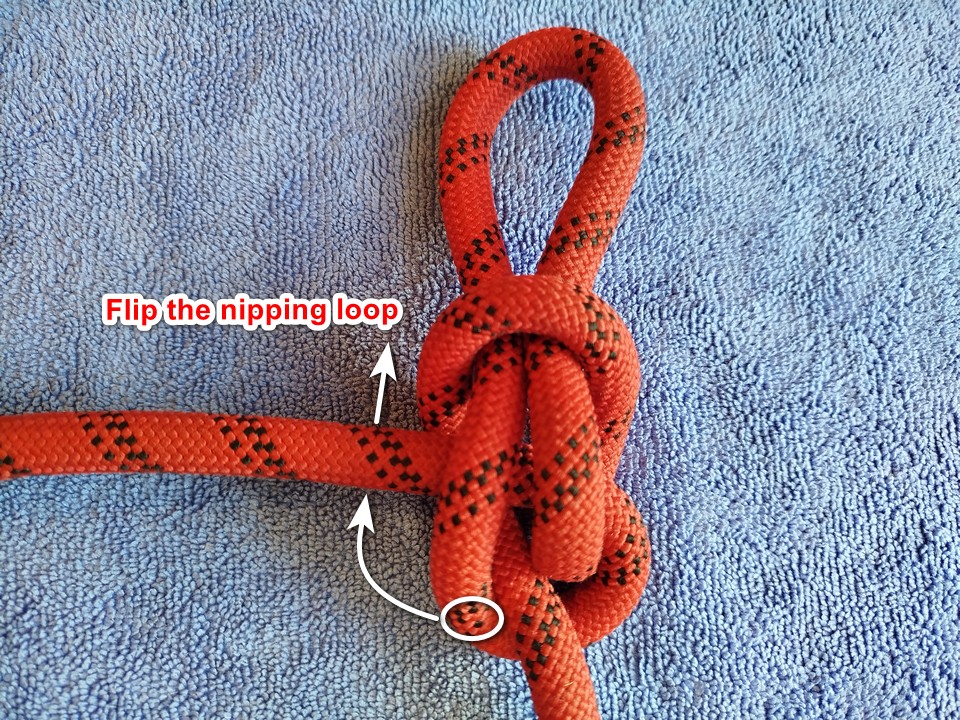
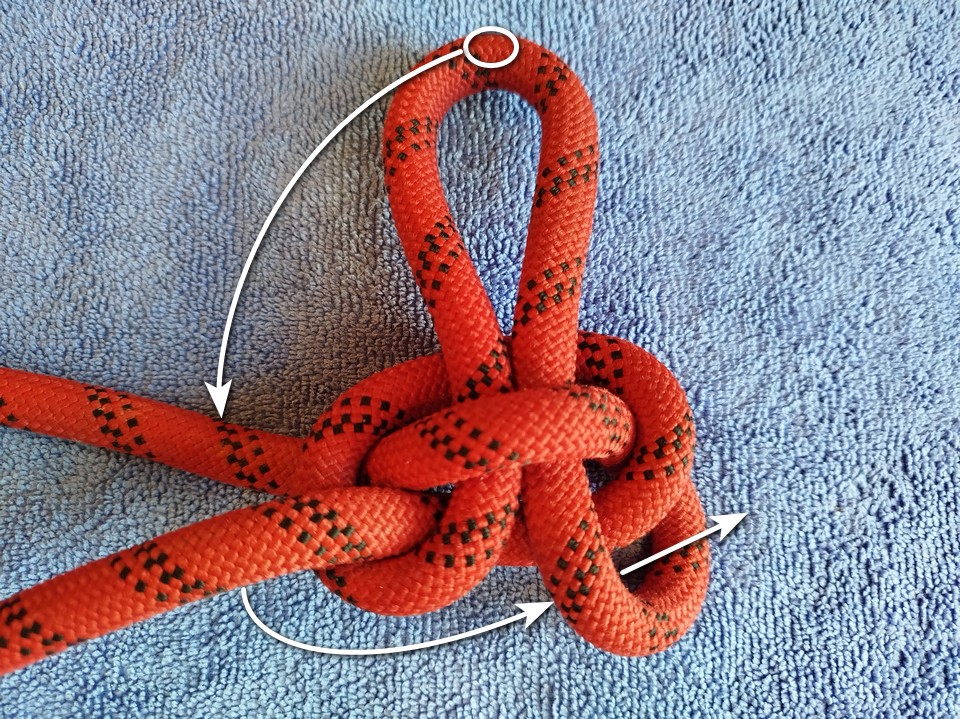
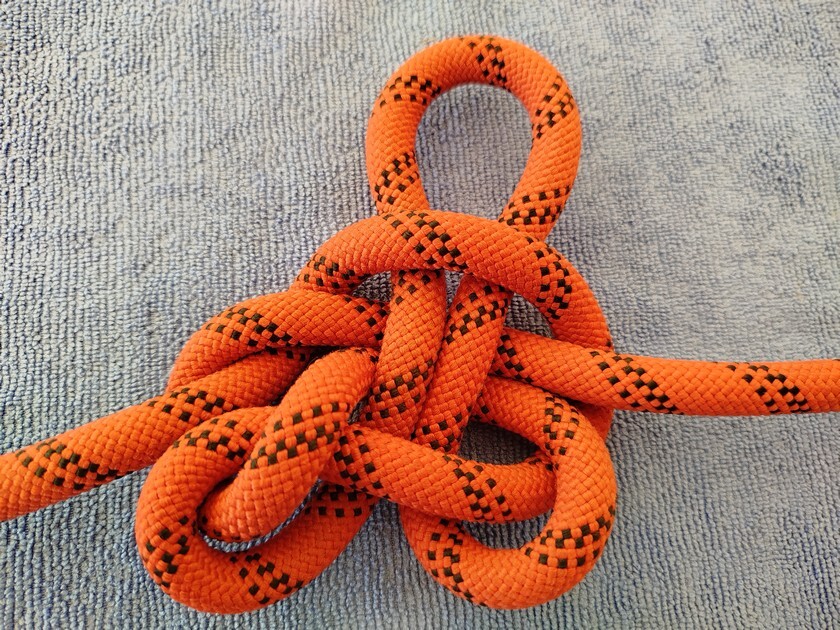
Now, for the deeply initiated, besides the correlation with Xarax’s plait loop, i shall demonstrate another dressing state of farmer’s loop (third image), which is formed by flipping the nipping loop and changing the SP directions.

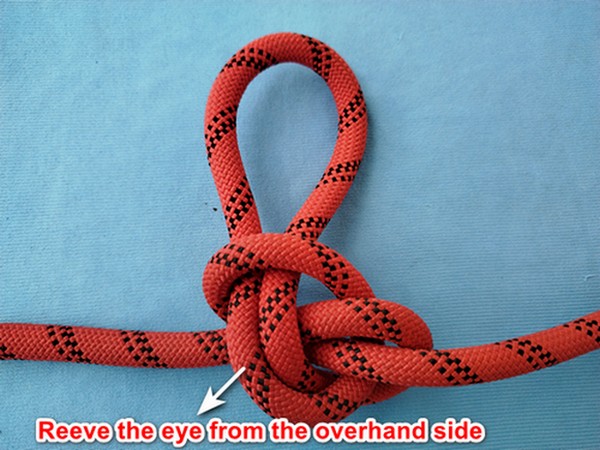
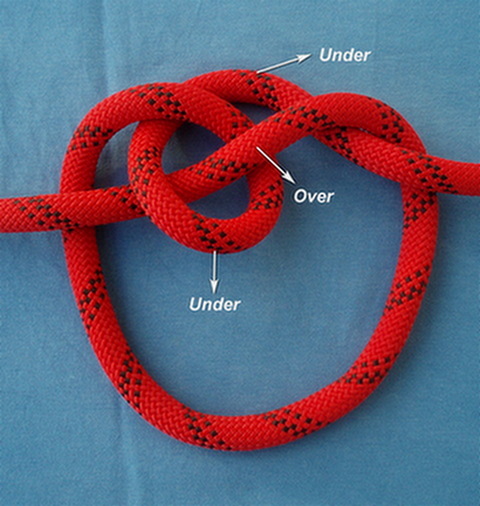
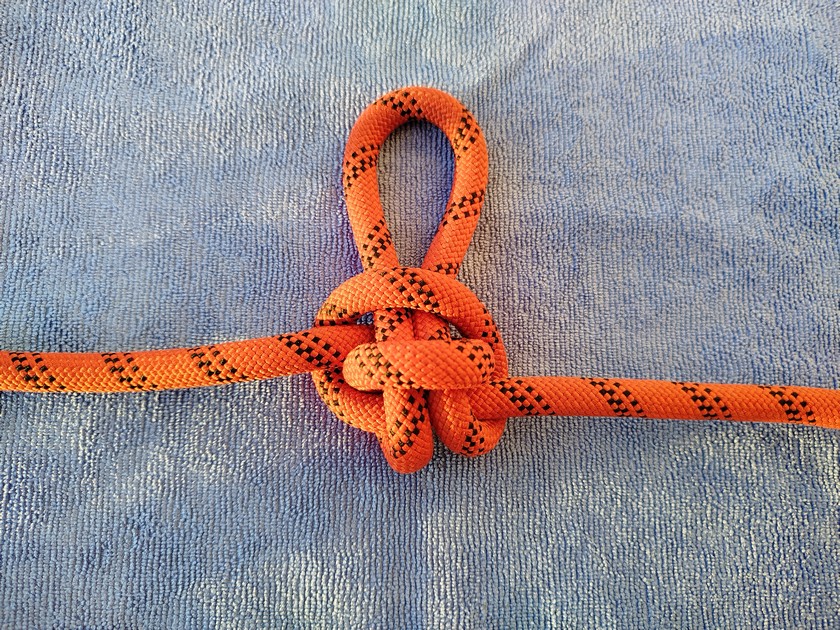
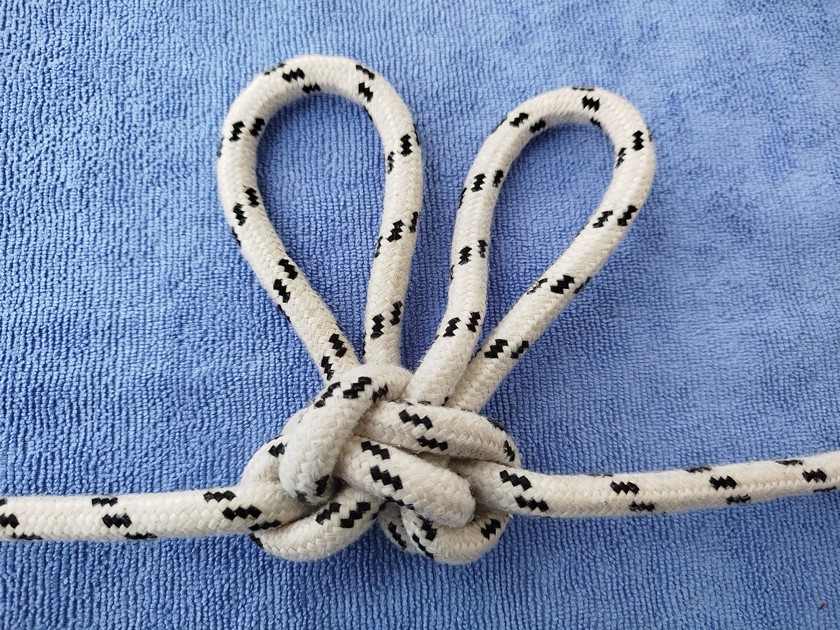
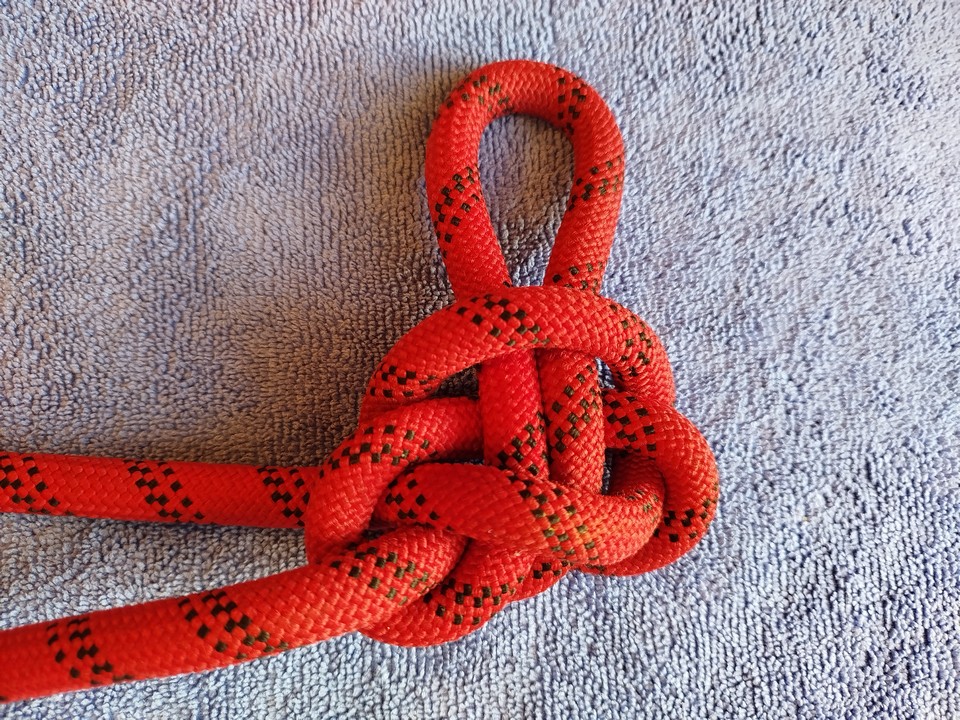
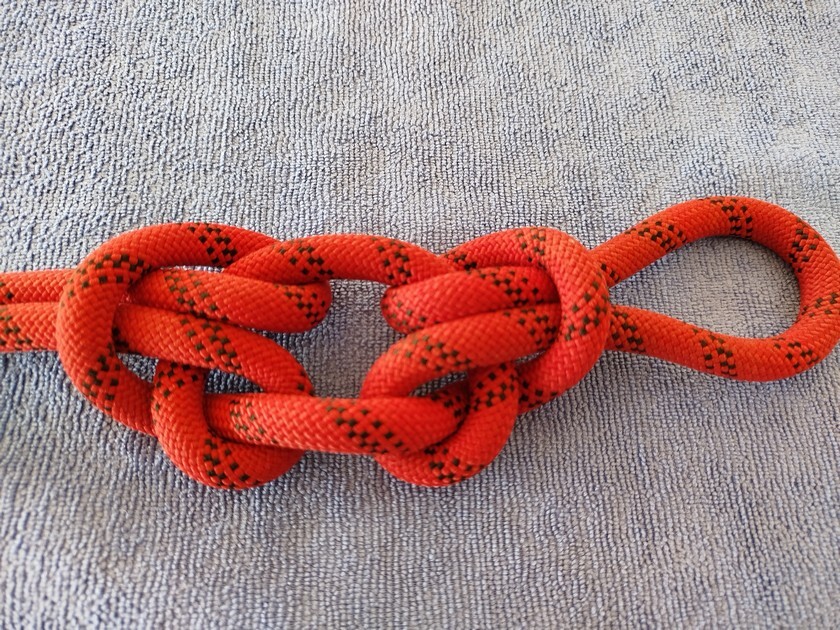
This very state, besides some bi-axial loading stability that does not interest me, is the most appropriate geometrical form, in order to subject it to a cask-like operation, as shown in fourth image.

Not as pseudo symmetrical as the original Cask, but the knot gains extra, eye loading stability and pliability of course with the cost of this additional, collar extension.
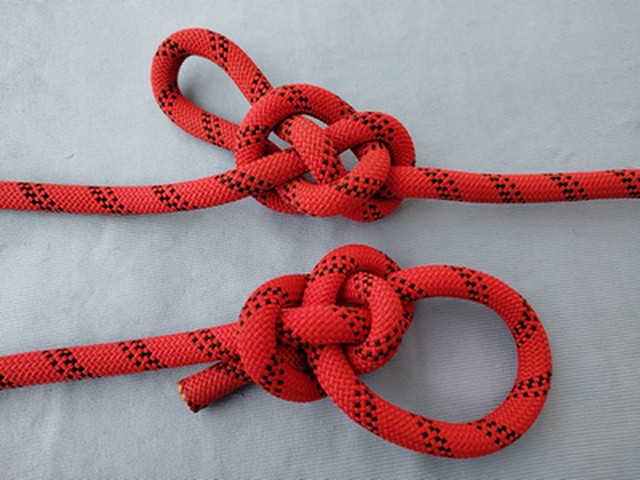
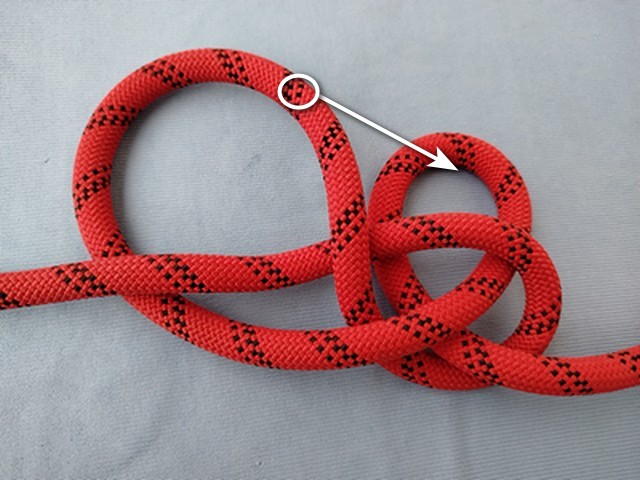
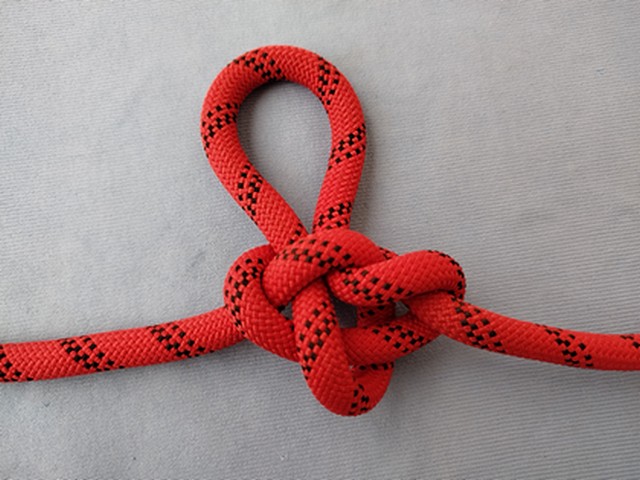
If i was to define the simplest, most foundamental, TIB, fixed eyeknot, knotting module, that would be the Harness core, in the sense that it is not feasible to be simplified to a fixed loop with a lower level of complexity.

A TIB pactitioner might argue, within the meaning of harness reduction to a parent, simpler knotting object with the lowest nesting level, the simple noose. That’s all very well but the noose is not a fixed eyeknot.

I use the term “core” because the harness is a structure with pseudo symmetrical components, therefore, it features four equivalent topologies with the potential of progressing from one to the other with just core maneuvering and none eye manipulation employed.

These formations comprise 1050, 1051, and their eye leg,end, swapped forms, thus inline TIB 1010 and TIB 1010 respectively. Once one is formed, the other three can be easily obtained.

Τhe exploration of elementary TIB, fixed loop objects, requires in-line conversion because there are additional, elementary, TIB modules with no symmetrical status, for example, TIB cowboy and flash bowline, which is another primary TIB module pair, with fixed eye characteristics, where the transition from one to the other is not so obvious, requiring eye manipulation.

Moreover, a topological correlation between the aforementioned (cowboy) core and the harness can be tracked, of course, as long as there would be no unknotted line in the transformation proccess.

Also the M core that was analyzed in previous replies, is another primary TIB, asymmetrical scheme, with a low level of maneuvering for its formation, which might also point to the harness core through a TIB route.

Many are those who might consider the butterfly core as the ultimate, TIB, fixed eye module, being the “queen” of all knot structures.

Indeed, it is stable and symmetrical,but it requires more complex components (overhands) and it is feasible to simplify it to a fixed eye form, with a lower nesting level.

Of course, the TIB enthusiast would suspect that there is a TIB pathway between the butterfly and the harness core.

In conclusion, would the bowlinesque, harness core, happen to be the most important TIB, fixed eye module, parent, king and queen to all TIB knots?

What does “nesting level” mean please?

I was searching for a synonym of the word “enthesis” which in English is a medical term, but in Greek it could mean “place something inside something else”, so the term nesting came up.

For instance, your tools are nested inside the toolbox, your credit card, or your cash are nested/inserted/embedded in your wallet’s sleeve.

Your money or your cards are at the same level of nesting, but the matryoshka russian dolls feature different nesting levels of decreasing size, placed one inside the other.

Also terms like insertion, embedding, implantation or interpolation might fit in here but the nesting term seemed conceptually closer to what i wanted to describe.

Back to knotting, form the butterfly core that i mentioned in my previous reply and thread the eye out of the nearest overhand turn (it’s a simple maneuver, but sorry no photos available at the moment).

Dress the knot properly swapping the eye legs and you will find that you have generated ABOK#1059.

You have actually reduced knot’s complexity because now your components are, one nipping loop with one rope diameter passing through, and an overhand but you still have a TIB, symmetrical, eyeknot with fixed eye characteristics of a lower nesting level.

From there on, it is feasible to simplify 1059 to the lowest nesting level by deactivating the other overhand too, tnansforming it to a TIB cowboy structure, or 1034 1/2 with its tail tucked back through the collar if you like.

Anyway, 1059 core is a very big TIB project maybe i will save it for another reply.

Another example: Of course you are familiar with the Cask knot, because you have developed it independently, so form the Cask core with your own tying method, and just remove the collar that encircles the eye legs.

Some additional slight dressing and fiddling with it, reveals the harness core.

A closer look at Abok#1059

I have seen on various internet sites, Abok#1059, being promoted as a good option for an eye loaded knot structure, formed in the middle of the line.

Ashley, also points out the absolute symmetry of this knot and the lack of irregularities.

What’s totally unclear in my view, unless it is self evident, in both cases, is that no one mentions which is the loadable SP line in an eye loading scenario.

If the knot is loaded from the nipping loop side, (left SP of first image), there is a serious risk of SP flattening where the knot might function as a noose, and this is an unwanted behaviour.

Knots having nipping loops with only one rope diameter passing through, are not exactly known for their stable response (see also 1050).

On the other hand, if the overhand side is the alleged good loadable side of the knot, which,again, is not clearly defined, a jamming effect is more than possible due to overhand activation from both lines.

On that ground, i’m not really sure, where this optimism about the practical use of Abok #1059 comes from.

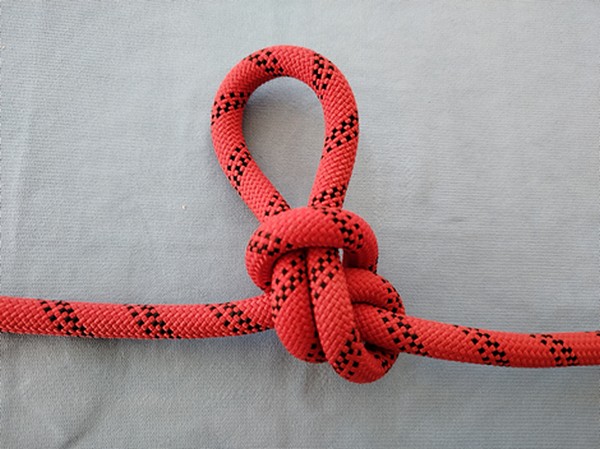
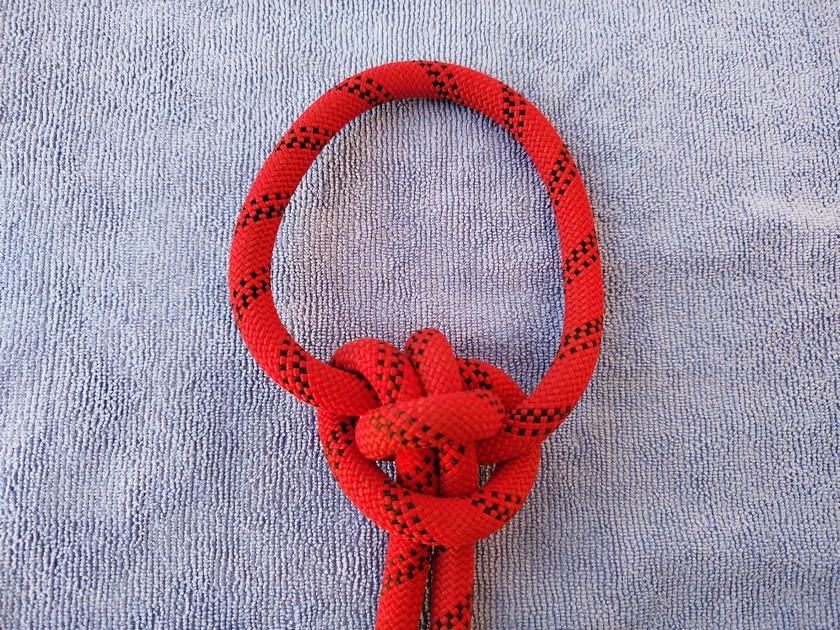
However, a simple rearrangement of the eye legs, leads to Abok#1044 formation (second image), a maneuver which at least makes apparent the loadable side of the knot. Ashley marks it as a compact loop usable in the end only. Evidently, he means that it can not be used in a through loading scenario (from SP to SP), or be loaded from the non- overhand side.

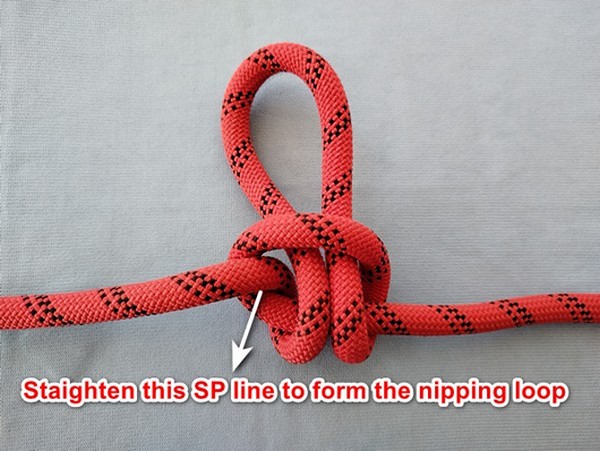
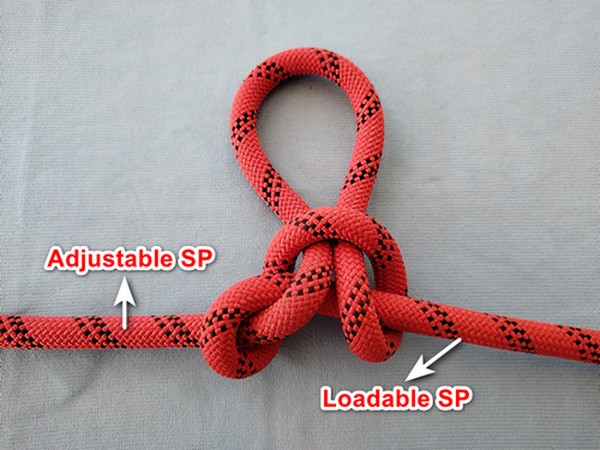
If i was to move a step further topologically, i would flatten the less complex SP to a straight line, which would bring the overhand link side in a form “nipping loop + crossing knot”, a more manageable topology at heavy stress conditions (third image).

Now, it is absolutely clear which SP side is the loadable side of the knot, plus there is also the merit of the adjustability feature, which is a rather exceptional characteristic for an inline knot.


1059 continued…

The tying method for Abok#1059 based on the constrictor formation, is quite enticing.

As a bonus, another simple TIB method is offered, which is tailored to the third knot of previous reply in the first place, leading also topologically to the other two knots, 1044, 1059, by extension, as described previously.

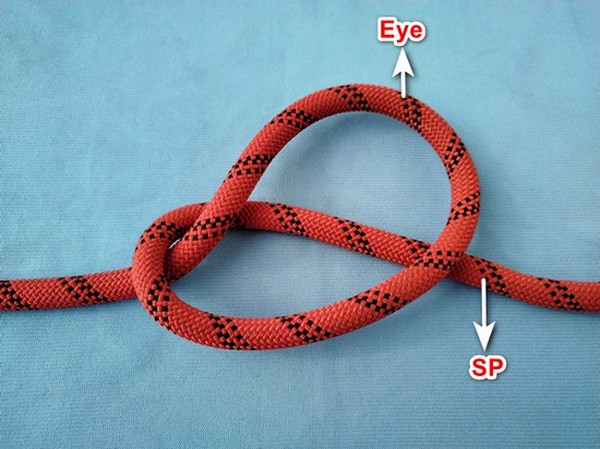
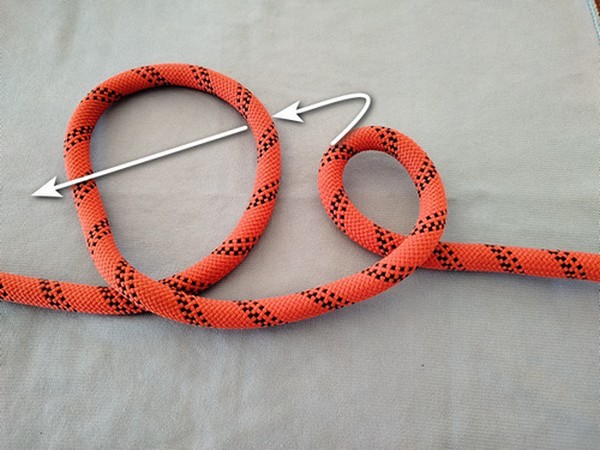
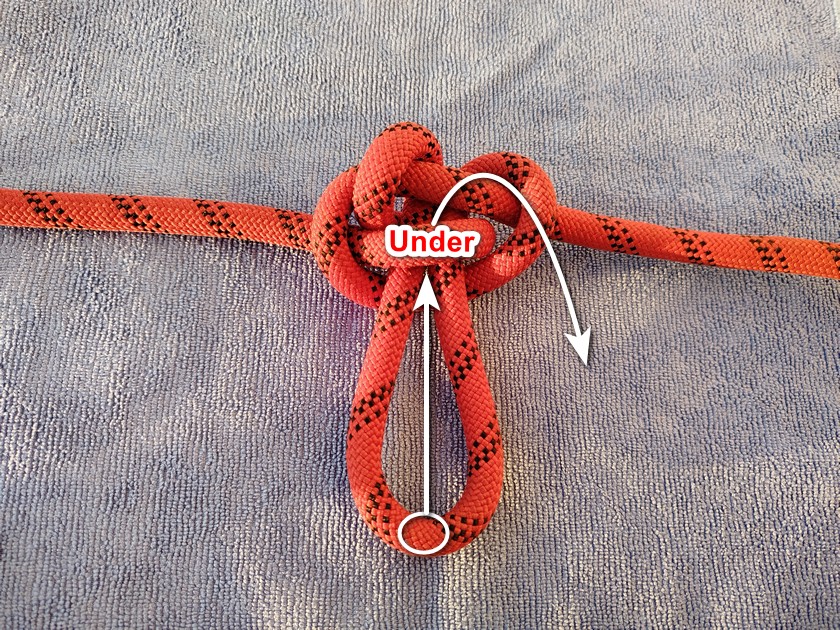
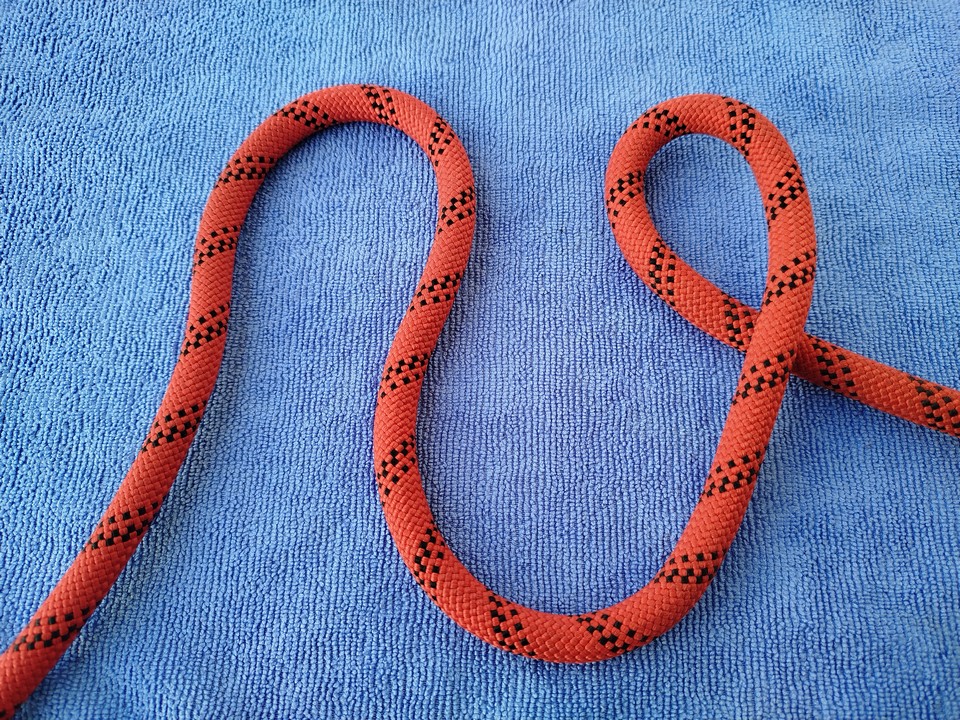
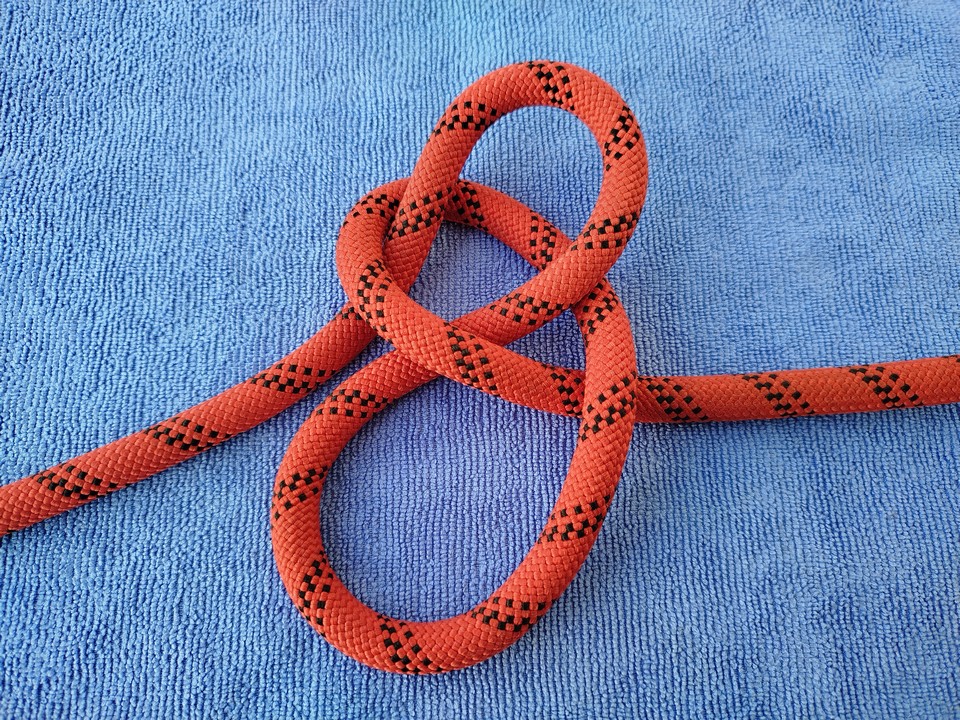
  1. Suppose that we hold the rope in the middle of our line and the loadable SP is designated to be the one at the right side.Then, a crossing knot is formed with a two times twist towards right, as shown in first image (for left loadable SP, two times twist towards left).

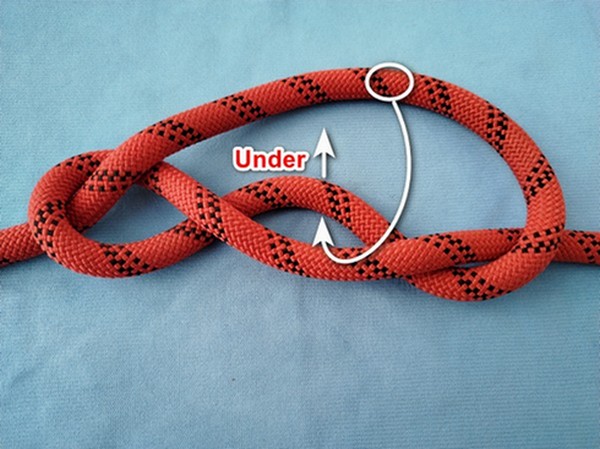
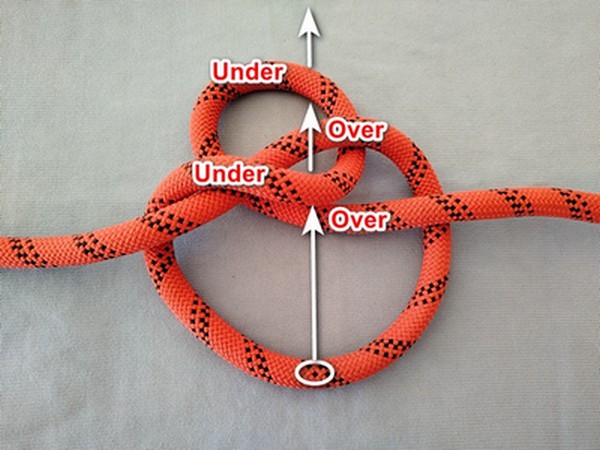
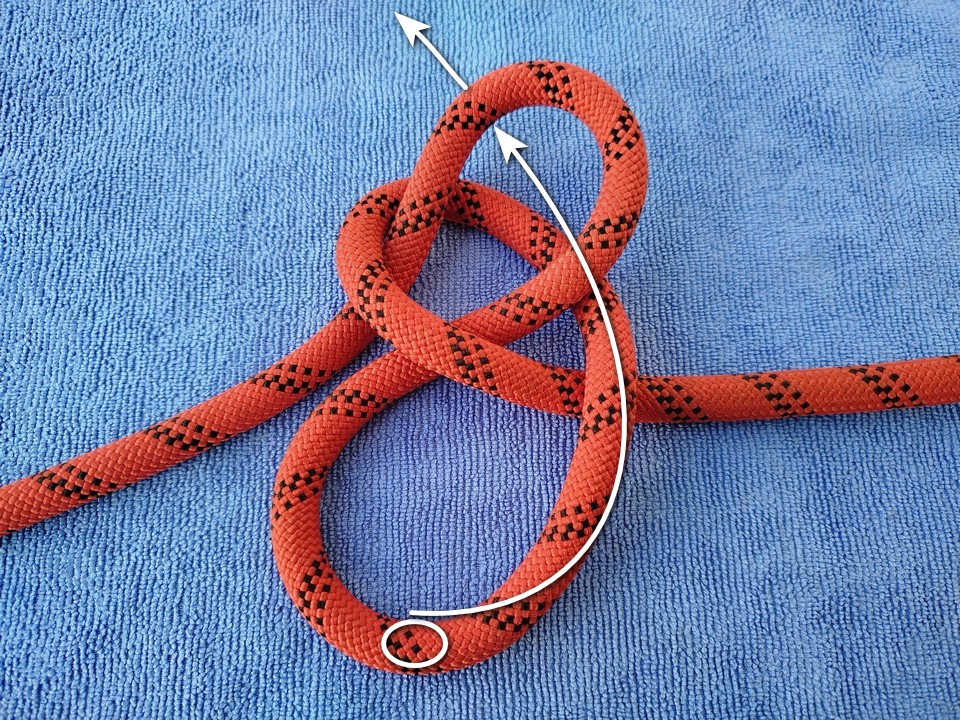
  2. Pass the crossing knot collar continuation under the right SP, and feed the eye under this line (second image).

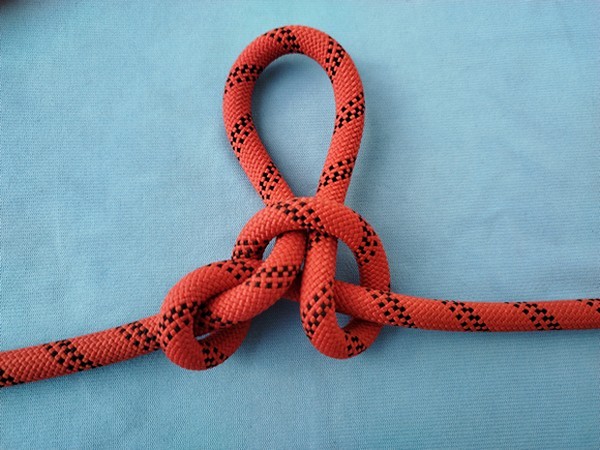
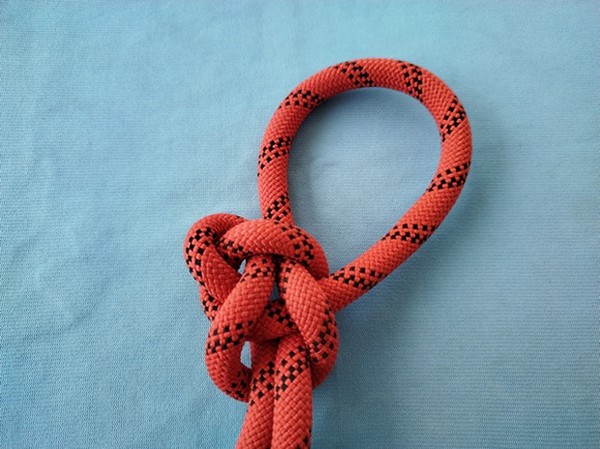
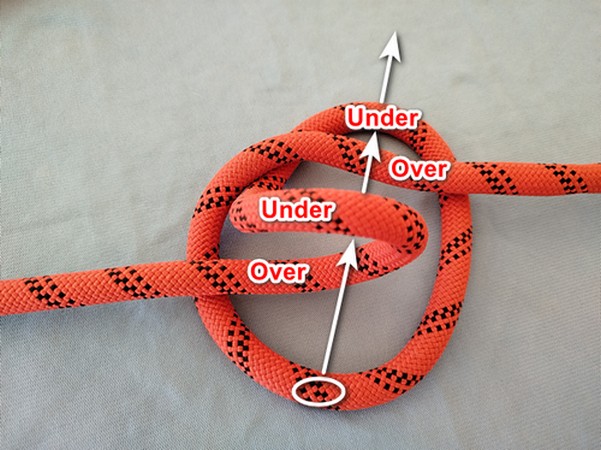
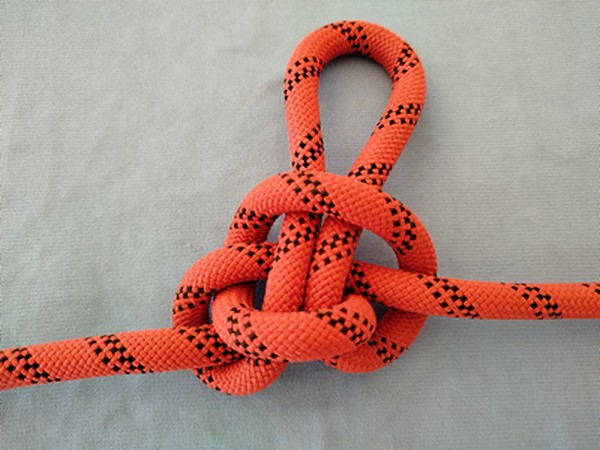
  3. Dress to complete the third image formation.


1059 continued …

The symmetrical status of Abok#1059, enables to continue its core analysis one more step and transition from inline level, to the corresponding end of line profiles for all three, previous structures.

From there on, only eye manipulation maneuvering has to be employed, in order to continue the TIB exploration and all its derivatives, which i assure you are too many.

For instance, if the collar of 1044 is flipped, the resulting knot , could be modeled into a cowboy Scott’s locked, TIB configuration, if originally subjected to the conventional fold and pull up action, as shown in the series of the attached images.

Not yet sure, if Scott’s locking turn, has to reside inside the eye area for more security, but the outer returning lock provides the TIB property, with exact the same level of complexity.

Of course, this is not an inline knot, but closely related to Abok#1059, TIB analysis.

1059 continued …

There are two ways to enhance Abok’s#1059 core stability. Both ways, or even a combination of them, require increasing the complexity by one order, getting second order knots which is generally an acceptable level.

  1. Add another overhand by reeving the eye from the non-overhand (nipping loop ) side of the knot.

More specifically, thread the eye through the non-overhand link of 1044 in order to get Abok#1053 butterfly knot or,

thread the eye through the nipping loop side of 1059 in order to get the false butterfly knot (not illustrated but left as an exercise to the interested TIB practitioners).

  1. According to the second alternative technique, which i forward in this reply, the existing overhand is deactivated, while the nipping loop is being fed with an additional rope diameter for more stability.

The 1059 dressing state of first image, which is achieved with the appropriate eye leg rearrangement, is one of the suitable forms to fulfill the above requirements, if and only if the eye would be reeved through the overhand side of the knot.

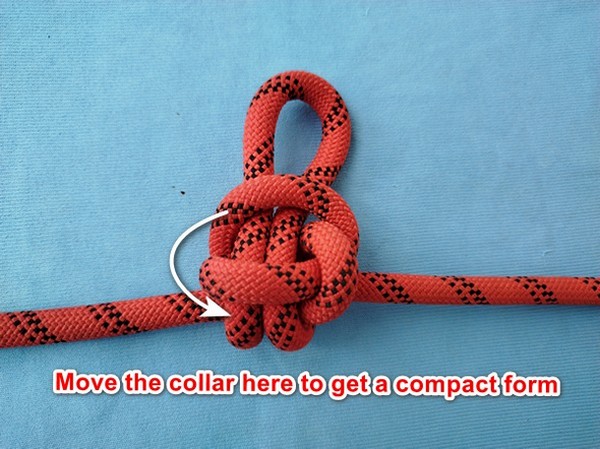
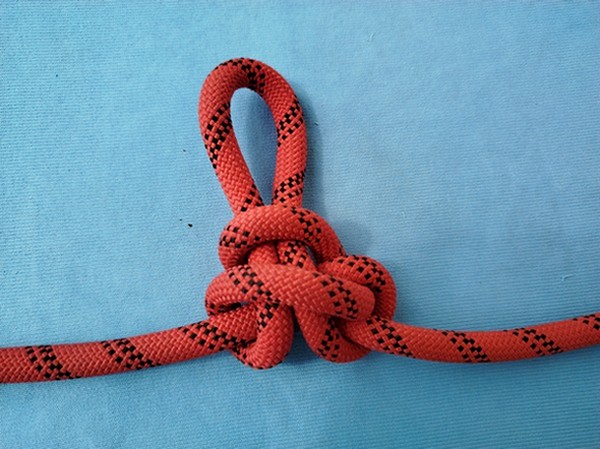
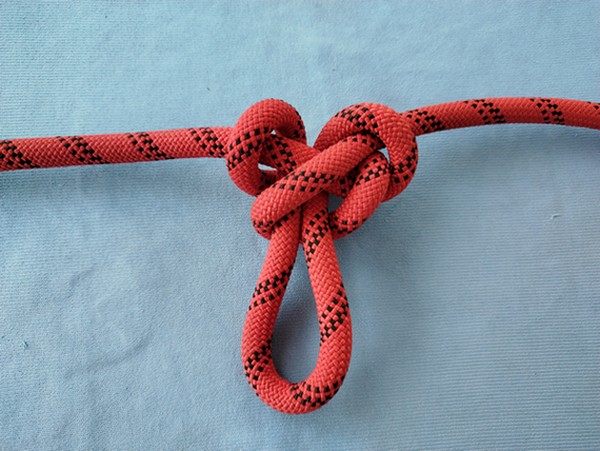
This deriving state of second image, has a rather strange appearance, however, the proposed collar movement, makes the knot more compact, with distinct bowline characteristics (third or fourth image).

It is not the first time i come accross to it,(have tossed it somewhere else, in another thread without a tying method), but i had not then discovered this correlation with 1059.

Abok#1059 continued….

In offering a seamless transition, here is a synopsis about the knotting that took place in previous reply.

Abok#1059, was transformed into a bowlinesque inline knot, with a technique of reeving the eye through the overhand link after some proper eye leg rearrangement of the initial 1059 knot (for more details check the previous reply)”.

One possible objection would be developed into the following form…….

Fine, the nipping loop stability is enhanced with the two rope diameters passing through, but the overhand link is being replaced by the constrictor, which is also a hardly releasable component in heavy strain conditions.

  1. That’s all very well, but this time the nipping loop is very loadable and stable in contrast to 1059, and i usually recommend to load such bowline-like knots from this very nipping loop SP continuation.
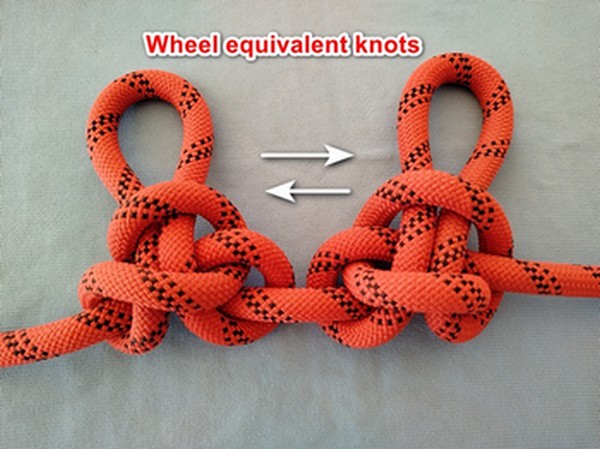
  2. There is a topological equivalence with some other core, Enhaut’s wheel midline knot, which, IMO, is more manageable if pushed to higher loading zones.

This amazing equivalence, would be realized using some pure TIB, core manipulation magic, whereby, the complex link (constrictor) of the first wheel knot is morphed to a nipping loop, with the complexity being pushed to the other link, generating the second, more pliable, Enhaut’s core.This is quite interesting for TIB practitioners, and is condensed in the following image.

This reply mainly highlights the correlation of the above knots with 1059, but i’m taking this opportunity to demonstrate individual TIB tying methods, for completness’ sake (perhaps were shown elsewhere) for both those wheel, inline knots.

Left wheel knot

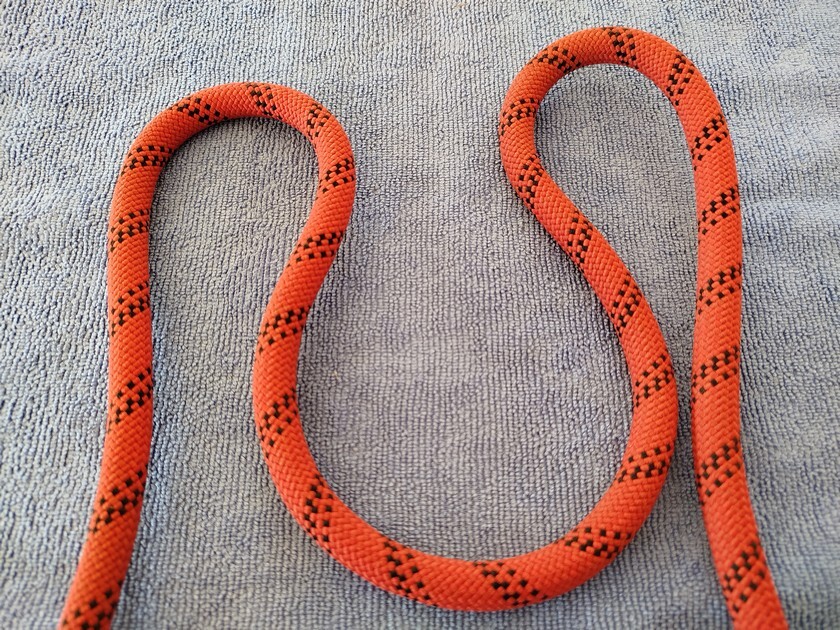
  1. Form a large Z loop, and a smaller S loop as shown below and feed the smaller up through the larger one.

  1. Flipp the large loop under the x- axis and feed it through the resulting configuration as shown in the next image.

  1. Dress to reveal the first wheel knot.

Right wheel knot,Enhaut’s prototype

Two attached images condense all the tying instructions.

So, two bowlinesque knots instead of 1059, with no overhand components, and an indirect correlation with TIB mother knot ABOK 1050 harness loop that will be discussed in next replies.

1 Like

Abok #1059 continued

The notion of correlation between “TIB knots” might designate a TIB route transition from one to the other, without access to ends, on condition that there would be no unknotted line throughout this transformation procedure.

Beyond that, there is no other geometrical or functional correlation, since the slightest geometrical change, leads to a completely different knot, from a functional perspective.

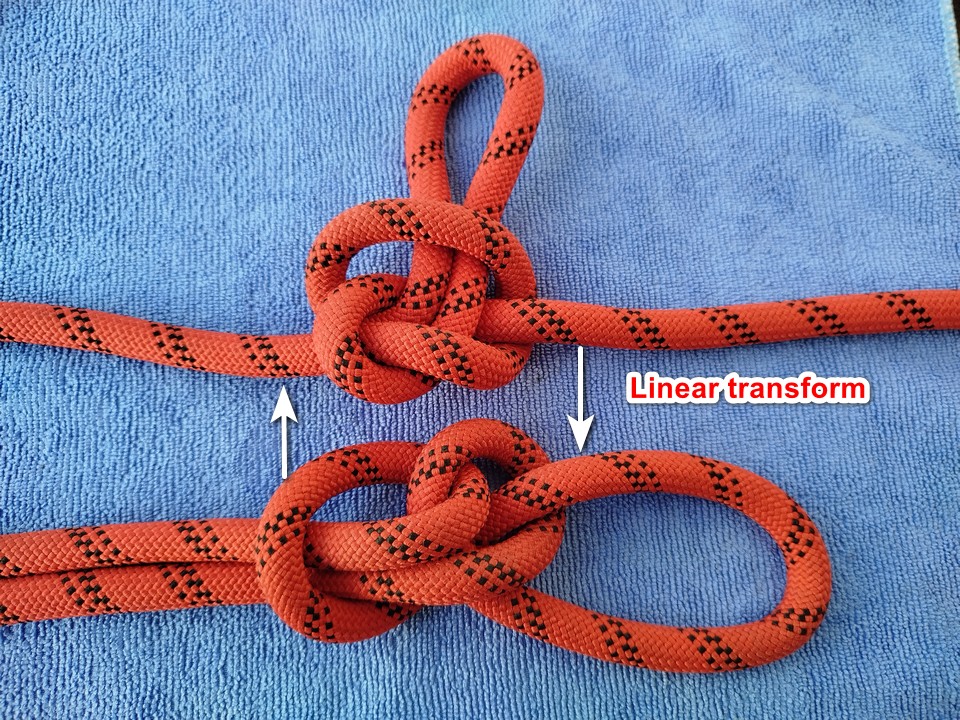
Of course, there is also the notion of topological equivalence between two knots, which i would conceptualize as a “linear transformation process” that encompasses only core manipulation, with absolutely no impact on knot’s complexity/ order.

On the flip side, if eye manipulation would be intergrated in the TIB transition process, by way of eye collapsing or eye reeving, that i would mark as a “non-linear transformation”, with significant effect on initial knot’s complexity/order/and functionality by extension.
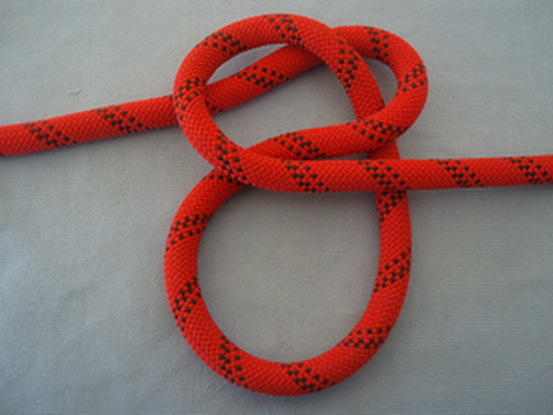
Xarax would had provided a more meaninful description or definition of this concept, therefore, an example is more needed than ever for a more thorough understanding.

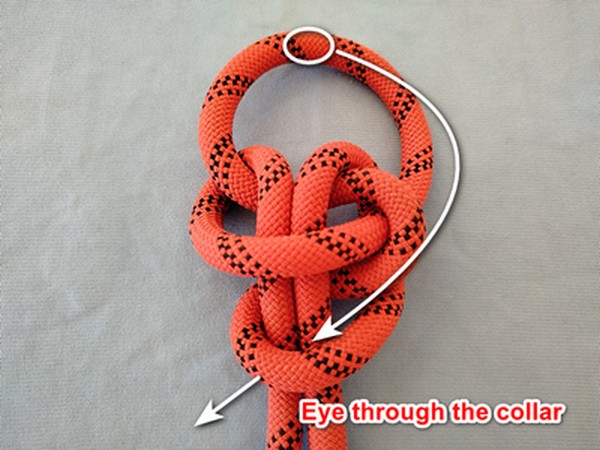
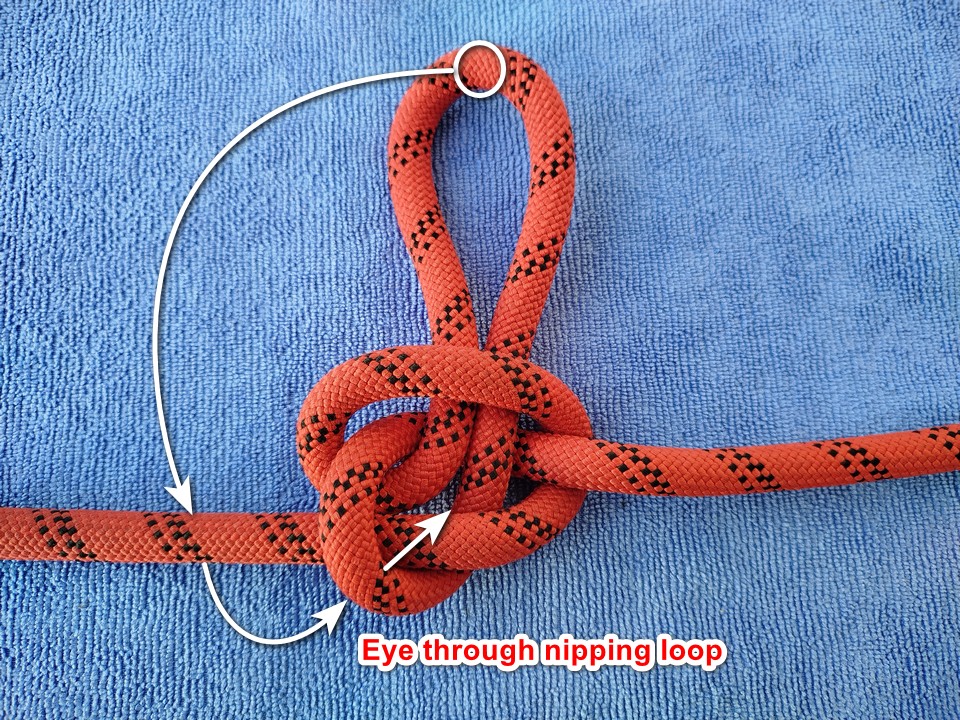
More specifically, the following attached image, illustrates the linearly configured, end of line instance, derived from Enhaut’s wheel inline knot, using only core maneuvering in order to progress from the inline, to the end of line field.

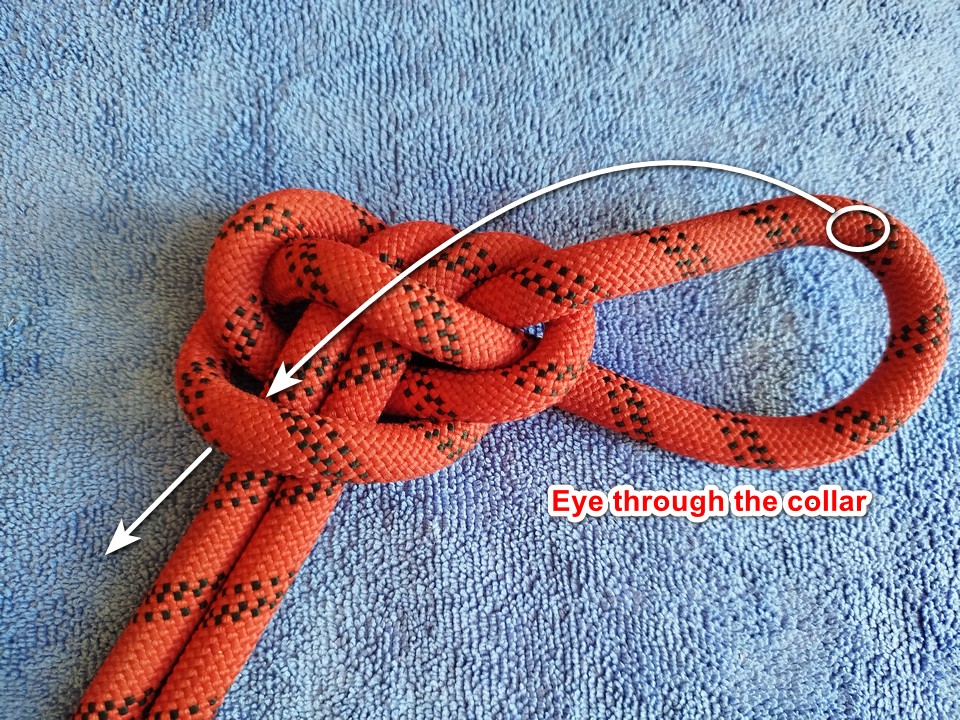
Now, feeding the eye through the collar, as the white arrow indicates, that would, non-linearly, simplify the knot to the minimum complexity level of Αbok#1051 or parallel, linear progression to the inline level of 1050.

In conclusion, if one has been following all these consecutive posts about 1059, he might be able to establish a TIB route, between 1053 butterfly knot and 1050 harness , through linear or non-linear transformation methods, additively or reductionally, in terms of the induced complexity.

The reduction method, as much more easier, would be realised descriptively with the following consecutive transformation stages….

  1. Start with 1053 butterfly knot, and feed the eye through the nearest overhand to get Abok#1044 (non-linear).
  2. Dress 1044 as 1059 rearranging the eye legs appropriately (linear).
  3. Feed the eye through the overhand link of 1059 to get the first wheel inline knot(non-linear).
  4. Move the complexity to the other link using only core manipulation in order to get the second wheel, Enhaut’s inline knot (linear).
  5. Get the harnessque end of line form of previous wheel knot (linear).
  6. Feed the eye through the collar to get 1051 (non-linear).
  7. Progress to the inline field of 1050 (linear).

Abok#1059 continued …..

I think it’s time to wrap up this 1059 project but not before i mention the four last derivatives.

The first three have been posted at a previous time, but the last is probably a new comer with some highly interesting properties.

All four, share a common feature, under which, they can be subjected to a reduction process to Abok#1044 (or 1059) profile, in just one stage, (e.g reeving their eye through a collar).

  1. If the collar of inline Lee’s link bowline is removed, what remains is a dressing state of 1044. There is a tying method on Alan Lee’s youtube channel https://www.youtube.com/watch?v=Hf2iFit3iVI

  1. In a similar vein, the knot behind the collar removal of the following knot, is also another dressing state of 1044.

  1. Last but not least, at reply#95 of this thread, by the same token, one might locate the corellation of the following instance with 1044, by eliminating the colar that encircles the eye, in one single maneuver. The central bight is to be reeved with this order, over, under,under,over in the next attached image.

  1. That leads me to the fourth knot, that has never made an appearence before, at least in this thread. I am quickly advancing to the tying method, that includes two components, a crossing knot and a Z loop, and is condensed in the following three images (tying, front, back).

As shown in third image, feeding the eye under the left SP line, obviously, 1044 takes form again.

So, what’s so special about this knot, and where does this “bear” name come from?

If the above bear eyeknot would be subjected to a linear core transformation, then it would be configured directly to its end of line form (next image), which means that the knot is symmetrical.

As a matter of fact, despite its any knotting value, it’s been quite a while since i’ve come across a symmetrical inline profile, after the cask knot.

Symmetrical inline profiles include, 1053 butterfly, false butterfly, 1050 harness, 1059, cask knot and that’s all, at least to the best of my knowledge.

The “bear” moniker, emerged from the corresponding Enhaut’s instance, because of core structural similarities easily detected in the next two images.

Well fed overhands in both cases with three rope diameters passing through, more stability for the left through all loading directions but easier access to the overhand collar, along with the symmetry property for the right, i would point out in a quick analysis and comparison between them.

Still searching for an easy TIB tying method for the left, any help appreciated.

I’ll examine your presentations when I find spare time…

In the interim, in line with the title of this topic thread (“Midline Eye knot”)

Found this video link while searching for new variations of Butterfly eye knots for my upcoming paper on the Butterfly (Ashley #1053):

Link: https://www.youtube.com/watch?v=lAinVtddfQo

I don’t know if this mid-line through loadable eye knot has been presented before? The content creator refers to this knot as a “Counter Directional Double Butterfly Knot”.

[image captured from youtube video - created by Oleg Volsky]

Note: There is an interesting variation of this knot - tied it, but haven’t got time to photograph it at the moment… I’m sure interested readers will find this for themselves!

Based on a preliminary assessment, yes that’s a great find!!

Very stable through all loading directions, and definitely of butterfly origin.

The core is a bit bulky, but not messy, all the interweaving lines are well arranged inside it.

On this basis, i would reckon that it might qualify for intergration in your upcoming butterfly paper.

The tying method is decent, perhaps ideal for some others, but i wouldn’t be able to remember all thιs wrapping around the palm maneuvering, therefore, i prefer starting from the well known, simple 1053 butterfly and then progressing to the double eye formation.
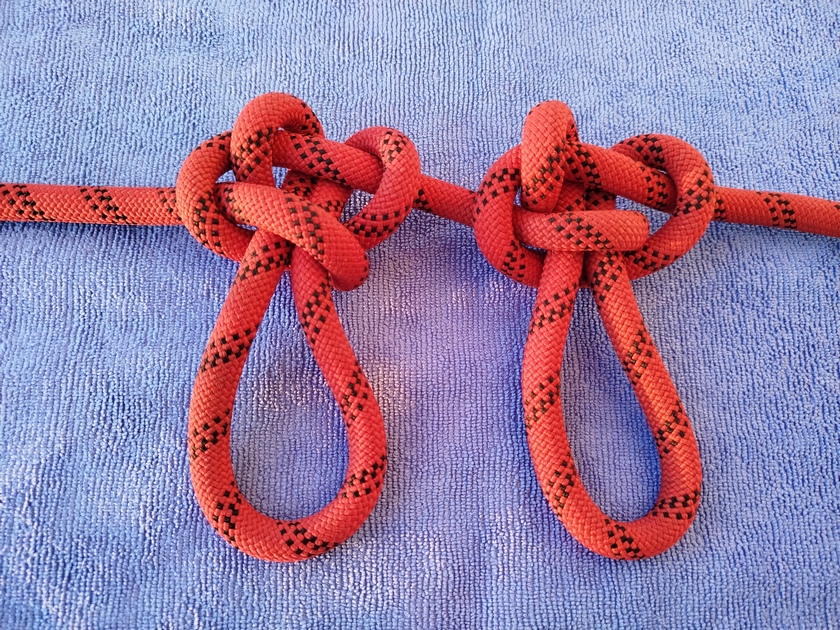
Doing so, i believe the way is being paved for some additional variations which i also didn’t get a chance to .photograph, hopefully,soon.
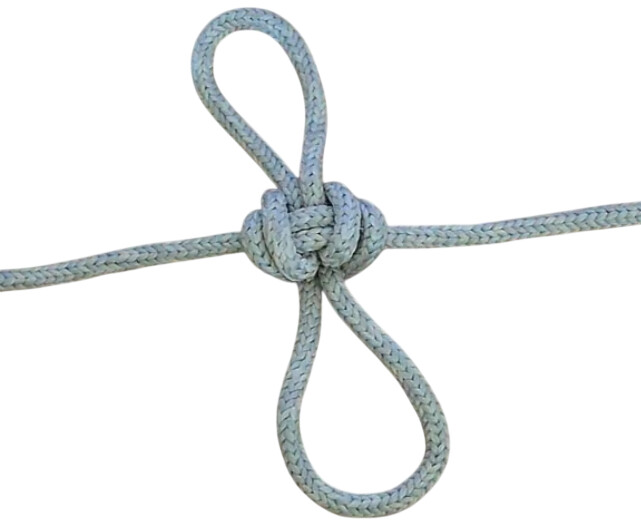
Here below, i have attached a 1053 conventional butterfly knot, in Mobius dressing, with the two SP lines parallel inside the core.

Extend the lower SP line (the one near the eye), to form another bight, in such a way, so as not to disturb the parallelism of the lines within the nub.

Twist the new bight anti-clockwise and reeve it under those SP lines, as indicated by the red arrow of the following image.

Note : If the bight is to be reeved in no twisting action directionally or in counter direction with the initial eye, then the resulting configuration would not meet stability standards through all possible loading combinations.

So, that’s another stable derivative double eye knot, if one follows the methodology of Mr.Volsky, with the difference that, both eyes are positioned on the same side.

For Mr. Volsky’s prototype, use the same method with the upper line.

Back in the previous concept of reply#111, tying the left bear(Enhaut’s) loop in a straightforward TIB method, would be very difficult for me to depict, so i’m going to use an indirect method of tying, whereby, a low level TIB fixed eyeknot, in this case, the TIB cowboy bwl, is transformed to the requested bear knot.

  1. The scheme, left bight, central bight, S loop is used.

  1. Feed the left bight up through the right S loop.

  1. Central bight through the left bight

I’m quite sure that i’m not the only one to come across this inline knot, perhaps some other inline knot explorers have generated it in some way, but it certainly has no presence in Abok.

Well, it holds some interest if loaded from the nipping loop side (left SP), but loading it from the right SP, it will deform to a helical eyeknot.

Also it worths noting the linear equivalence with the TIB cowboy bwl, shown in next image.

Hence, the tying method described above, could be considered as an alternative/indirect TIB method of tying the cowboy bwl.

Now, the maneuver of feeding the eye through the nipping loop, exactly as depicted below, forms the required overhand, and with some slight dressing, the bear knot.

TIB correlation of asymmetrical knots

It is well known that symmetrical inline knots, if subjected to a linear core transformation, they can be easily shaped to their geometrical end of line form (such as 1050 harness or 1053 butterfly).

However, in the case of a pair of asymmetrical knots, which might be the process of transition from midline to end of line field or vice versa? Consider that the linear, core transformation procedure, does not appear to establish this transition.
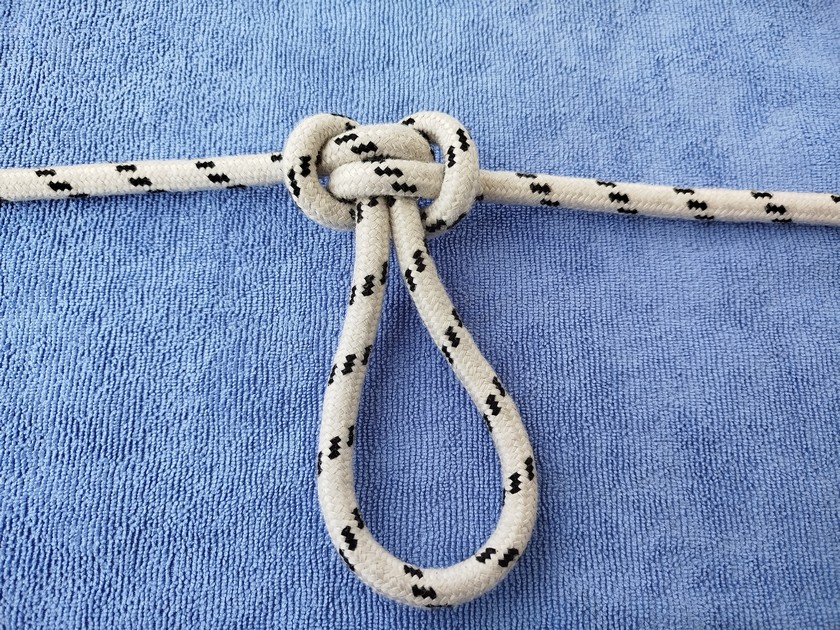
Having worked with such pairs, i would point out that the knots have to be converted to some symmetrical form, which would function as the intermediate link between the two states.
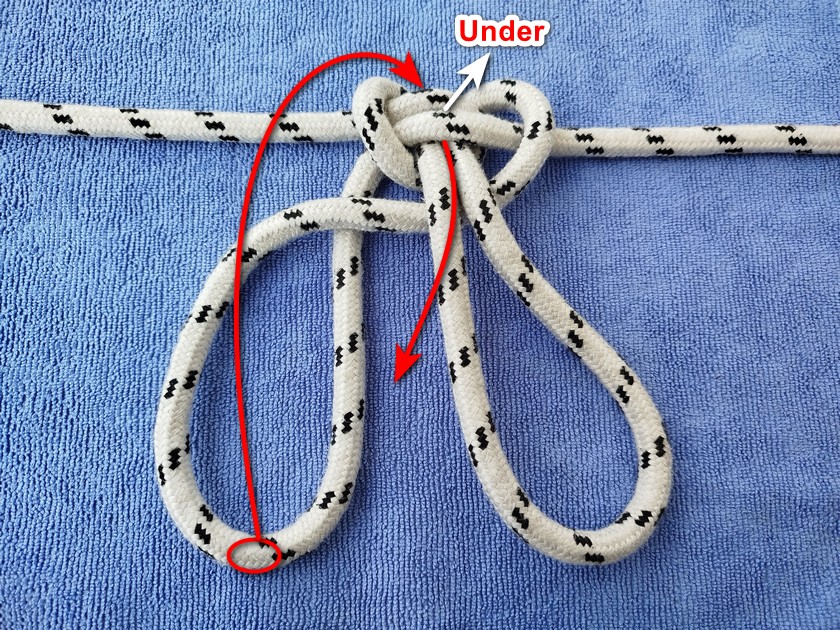
More specifically, let’s consider the following transformation scheme of the well known knots of flash bwl and cowboy bwl from left to right, which constitutes an asymmetrical pair of inline/ end of line, loading profiles.

I guess we would like to have access inside the black box for a better understanding, so starting from the left knot of flash bwl, the nipping loop is subjected to a flipping process as shown below.

The generated inline form is subsequently subjected to a non-linear eye reeving up through the nipping loop.

I guess this is a similar method of forming the cask knot directly from 1050, therefore i have named the following knot as inline cowboy Cask knot. Note the asymmetrical directional SP orientation, a distinctive feature that excludes it from the midline knot group.

Now, we can linearly transition to the end of line field, where we observe the symmetrical status of the knot that we were actually looking for in the first place.

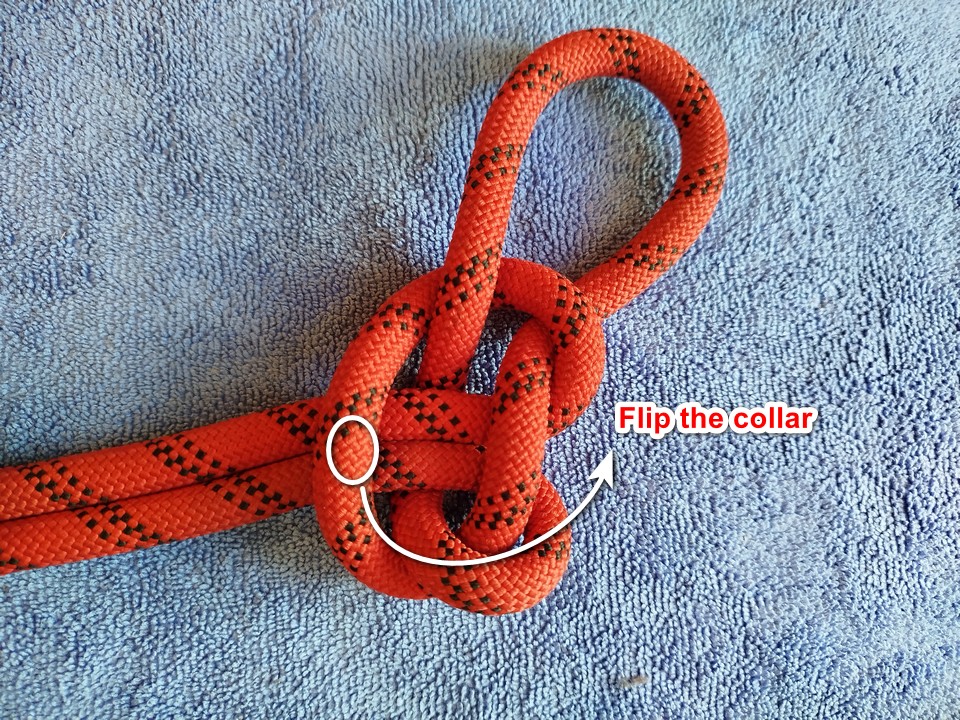
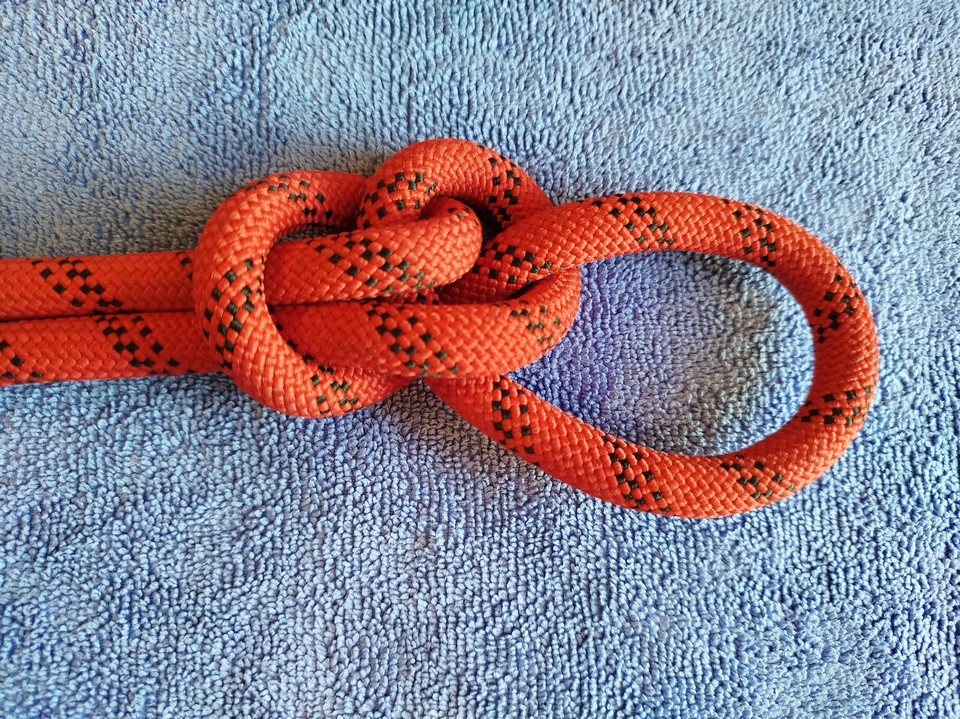
Finally, feeding the eye through the collar (as indicated above), and performing the last collar flip maneuver, as below,

we obtain the requested cowboy bwl knot.

1 Like