Analysis of Bowlines paper uploaded for review and comment (PACI website)

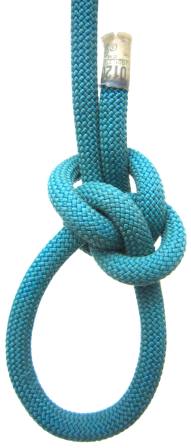
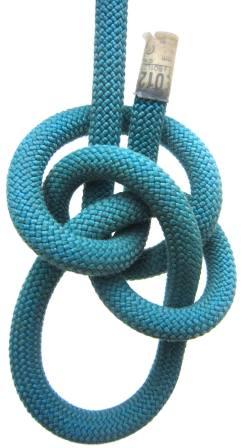
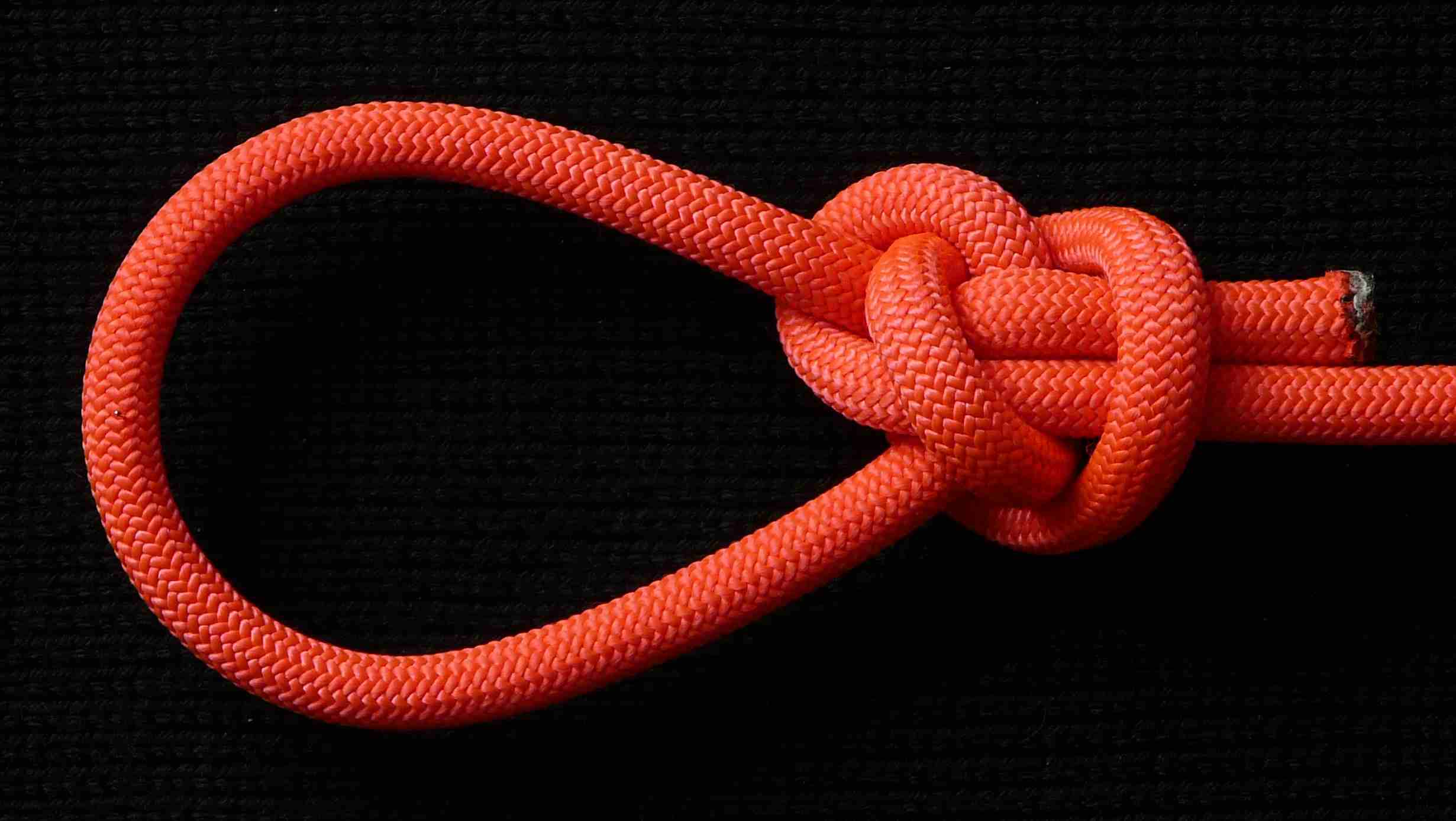
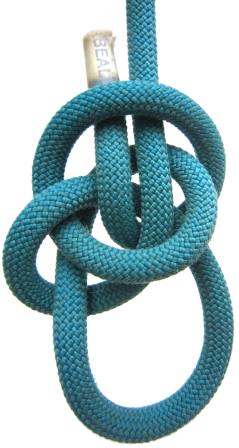
Another Eye Knot (Bowline based around the so-called ‘Myrtle maneuver’ - I hate that moniker) that I finally found time to photograph (in better quality than my previous attempt)…
Note: I used the term myrtle manoeuvre, and not ‘collar’

Its just a modification of one of Alan Lee’s brilliant existing work.

No other comments from me at this point in time.

I'll just point out the obvious, that you don't have to tie it that way, either TIB or in the end. You can start with the loop already short-circuited

Tex, have you got any photos or diagrams to lend assistance? I am struggling with work (in real life) and other issues at the moment. An uphill battle for every step forward..

Speaking of which, I'm not sure if any pretzel-nip bowline has made the list yet, for what it's worth.

Working on it… time is against me at the moment (sorry).

Mark Gommers


EyeKnot_Single-Helix_Myrtle_Front_Loose.JPG

EyeKnot_Single-Helix_Myrtle_Rear.JPG

EyeKnot_Single-Helix_Myrtle_Rear_Loose.JPG

There is no Myrtle collar here ! The first leg of the collar exits from the nipping loop from the same side the second leg enters into - as it happens in the “proper” collar, of the classic bowline.
The main disadvantage of this eyeknot is that the “Tail Part” ( = the last part of the Stranding Part, before it exits the nub and becomes the Tail End ) is not secured very tightly : First, it passes through the centre of those two interlocking loops ( the main nipping loop and the loop of the “link” ), where it is “protected” rather than squeezed by the surrounding segments, which act more like a cocoon ( an armour ) rather than constricting structure ( a corset :slight_smile: ). The stiffness of the climbing ropes make this central opening a “soft” spot, a segment which we need to secure tightly should rather avoid. (*) Second, it passes through through the bight of this very round and very wide collar almost freely…
However, it does have a great advantage, which makes it interesting, and which should always be explicitly mentioned, and appreciated. It is TIB. (1)

(*)

  1. http://igkt.net/sm/index.php?topic=4695.msg30329#msg30329

1.jpg

agent_smith:

(quoting Me:)
I'll just point out the obvious, that you don't have to tie it that way, either TIB or in the end. You can start with the loop already short-circuited

Tex, have you got any photos or diagrams to lend assistance? I am struggling with work (in real life) and other issues at the moment. An uphill battle for every step forward..

A_S it’s not a big deal to me. Tied in the end, I think it’s obvious how to short circuit the second loop, when you start retracing the bowline, taking the end around the main loop(s) the second time, you just go around as little as possible (and not through your harness for example).

as for tying the BoB in the bight,
normally, as a baseline instruction set for your reference, so you understand me, you

  1. fold rope in half
  2. make nip with both lines together
  3. pull tip of double-folded rope through nip a little and do the collar manoeuvre with it.

To short circuit one loop instead, step 3 becomes:
3) pull a bight from ONE SIDE of double folded rope through the nip and do the collar manoeuvre with it.

You should pull that bight from as close to the nip as possible.

I think you should prefer to pull the bight from the side related to the tail, not to the standing end, but it probably doesn’t matter much, just adds that much more security to the tail.

Still progressing this work…one step-at-a-time.

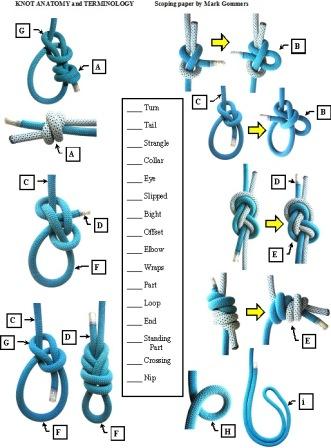
Part of the paper will include a discussion on knot terminology/anatomy.

I have attached a scoping document to obtain opinion on correct terminology for each structure/segment/part of a knot structure.

I would appreciate any replies.

Format for reply would be:

A your answer
B your answer
C your answer
D your answer
E your answer
F your answer

You may choose from the list of descriptors provided (or feel free to add your own) and so on…

Hopefully the image is readable (difficult to get reasonable image quality with 100KB size limit)

Thanks,

Mark


Knot_Anatomy_Scoping-paper.jpg

Well, not wishing to contradict Xarax, but this

http://igkt.net/sm/index.php?action=dlattach;topic=4480.0;attach=18912;image

certainly looks like a Myrtle core to me, with the tail reworked into a collar around the load line and tucked through the double nipping loops of the Myrtle.

How can anyone not see the simple Myrtle core?

@Mark do you find any significant advantage from the final tuck under the collar?

Follow the shading

xarax notes earlier that the knot is TIB, this being the advantage of the final tuck. xarax also discusses that the final tucks are not tight. For this reason the knot does not load very well in my opinion, I trialled this knot a few months ago along with two other TIB loops of a slimilar a vain. Load sharing wise the last few tucks do very litlle and the knot, though secure, distorts (it kind of rolls) too much for my liking.

Cheers,

mobius

Hi Mobius,

Unless TIB has changed its meaning since last I was on here, it means tied without access to the ends, which would totally preclude the ability to make ‘the final tuck’.

The other alternative would be to tie the knot ‘with’ a bight which effectively forms a doubled knot, which this clearly is not.

If we ignore the diversion of the collar and final tucks of the end, this is simply a Myrtle Loop knot. The Myrtle resolves to the basic knot form of 5,1 and it is impossible to make the 5,1 ‘in bight’ resorting only to our rather restricted three dimensional space.

Dependent upon the cordage, the Myrtle can range from the most exquisite simple little knot, to a rather risky beast. despite having two counter locking nipping loops, it has nothing else to keep the nipping loops working. The slightest slack induced into the knot and the whole thing can fly open if unloaded. The final embellishment however, of wrapping the end to make another nipping loop (albeit non loaded), makes a significant difference to the knot stability.

I find this ammendment to the Myrtle loop to be a significant improvement, hence my question to Mark to see if he had similar experience.

Derek

Then try the reverse : UNtying w/o access to the ends.
I think that you’ll be able to do this, and change your mind!
:wink:

Dependent upon the cordage, the Myrtle can range from the most exquisite simple little knot, to a rather risky beast. despite having two counter locking nipping loops, it has nothing else to keep the nipping loops working. The slightest slack induced into the knot and the whole thing can fly open if unloaded. The final embellishment however, of wrapping the end to make another nipping loop (albeit non loaded), makes a significant difference to the knot stability.

I find this ammendment to the Myrtle loop to be a significant improvement, hence my question to Mark to see if he had similar experience.


I prefer the anti-bowline similar knot (bring tail
into S.Part’s turNip from the opposite side/direction),
and finish by tucking the tail out closer to the eye
–the Myrtle tucking out away … .
AND put in a 2nd tail-wrap. for added security and that
3rd (better rounding) diameter in the turNip’s grasp.
(But this isn’t TIB..)

And, yes, one can add in a collar to such things (to which
Agent_Smith is bound to Yosemite-tuck the tail! ;D ).

–dl*

Well, today, thanks to Dan, I was treated to a surprise.

I tied the knot exactly as per the image - a Myrtle plus an extra wrap and tuck.

Then I fixed the ends and started to decompose the knot. It progressed nicely and rapidly to - The Unknot…

So, I stand corrected - this knot can indeed be TIB.

More research needed…

Thanks Dan - I think!

Derek

Derek the dunny man returns!

@Mark do you find any significant advantage from the final tuck under the collar?

This Bowline variant intrigues me.
Am still unsure of its proper name?? Xarax used the ‘link bowline’ term I think…? I remain unclear of the significance of ‘link’ in the descriptor… maybe someone can chime in to assist with the background to the choice of terms for naming this structure?

I also think the knot structure is largely attributed to Alan Lee - as it shares much of the wonderful ‘Lee Zep X Bowline’ structure - but then deviates in how the tail is maneuvered.

It ticks a few boxes for me:
stable
secure (which also includes slack shaking security)
resistance to jamming
verifiable (like any knot - you need to learn how to tie it and then develop pattern recognition skills)

and… it has 3 rope diameters inside the ‘nipping loop’. Proponents of this theory suggest that the MBS of the knot is raised because the radius of the SPart as it enters the core/nub of the knot is increased.

I have not yet ‘field tested’ the knot in actual climbing or rescue applications.

But I do like it - and it certainly is deserving of further study… perhaps a candidate tie-in knot for CTOMS with their 6.0mm technora cord?

Mark

From Dan…

Then try the reverse : UNtying w/o access to the ends. I think that you'll be able to do this, and change your mind!

Yes - indeed.

I have found that ‘reverse engineering’ a knot by untying it step-by-step (without access to any end) is a valid tool to assess whether it is ‘TIB’.

Mark

Indeed, I often use the technique when seeking components or tying methods, but finding that a collar and a tuck could turn a 5,1 knot into an Unknot was quite a shock. In hindsight, perhaps it should not have been such a shock, because I can tie the ‘Slipped’ Myrtle Loop TIB. I put slipped in single quotes because it refers more to the tying method than the final knot itself which is most definatley not ‘slipped’. I don’t know if you use the Constrictor method for tying the Myrtle or not, but I fold a Constrictor, pass the Wend around the fixing point, then pass the end into the Constrictor. Then I collapse the Constrictor with its contained ‘end’ and it winds itself into the Myrtle. However, if I am making it TIB, then I fold the Constrictor, but, instead of the end, I pass a small bight through the constrictor. When this is collapsed, it likewise gives an extra wrap, plus four diameters through the nips. For me the advantage if making the knot this way is economy of cord. I only cut the cord after the knot is complete, rather than having to guess the required cord length before tying.

Derek

LOL, No Mark. I never went away, I just CBA with being told endlessly that my opinion was wrong.

But back to the ‘knot in hand’. For me a Bowline is a loopknot with a loaded nip and a partially loaded, nipped stabilising collar. I am sorry, but I just cannot bring myself to include every loop knot that contains a nipping turn into a giant family of Bowline-esque knots.

The knot in hand, yes, it is a loop knot, and yes, it has a loaded nipping turn, but it’s claim to being a Bowline, for me, ends there. Instead, it’s function is derived from a second co-nipped nipping loop. Together, these two co-stabilising nipping loops constitute the functional heart of this knot The amendments of an unloaded collar and a third wrap to give a tucked, nipped end, enhance the durability of the knot, but do not change its core functionality of co-stabilising twin nipping loops.

Dave Root spotted this basic knot in the wild quite some time ago now, holding up a Myrtle Tree, and after some discussion it was given the name of Myrtle Loop knot. Unashamedly, I plagiarised the name to call the self-stabilising twin nipping loops a Myrtle C Component, where the ‘C’ denotes it as a compound component.

I have known this knot from my childhood on the farm, but like so many knots in use, it did not have a name. However, one thing was for sure, tied in hairy bailer twine, it did not so much ‘jam’, rather, with a couple of sharp snaps, it virtually fused… over time, with weather and abuse of use, you might be forgiven for thinking it to be some form of organic splice. But then, that was down to the cordage, I have also seen it slither open as if it were some living snake when made with some nice firm shiny polyester braid.

Unfortunately, all the attributes you ascribe to it, even in this ‘embellished’ form, are essentially dependent upon the cordage it is made in, and with the array of climbing ropes growing in profusion, classifying a knot without reference to its cordage might soon become a dangerous process.

I have not tried the new 6mm Technora cord yet, but I do have some cord samples that I would only trust in very long splices, they just flow so easily under load. They just seem immune to frictional amplification via turns and nips…

Derek

Well, that really is quite amazing.

http://igkt.net/sm/index.php?action=dlattach;topic=4480.0;attach=20262;image

I have confirmed that the Myrtle C Component at the heart of this Myrtle Loop knot is a 5,1.

Yet only one tiny modification is necessary to destroy this, and render it into the Unknot.

It is not the collar, nor the tuck under the collar. Just the action of passing the end back into the nip, means that this knot can then be be TIB.

Well done Xarax… I bow to your observation.

However, have you been able to reverse the reversal, and create the knot ‘In Bight’ so to speak?

Derek

Hi Derek,

Interesting background knowledge regarding the knot’s name, thank you.

If you are interested, my recollections of the TIB knot Mark shows was that under load the final tucks definitely do add structure to the linked component and the knot was secure and stable after rolling a little. Rolling sounds bad, however ‘leans over’ might be a better description. I have some images at home which I could share after my holidays.

Cheers,

mobius

Hi Mobius,

I hope the holiday is going well, back here in England we are ‘enjoying’ seemingly perpetual rain and wind, and I don’t mean the wind occasioned by Christmas sprouts and chestnut stuffing.

Yes, I would be interested in your findings on this structure, but please do not forget to include the nature of the cordage used in your tests. With this knot, it matters…

Derek

Something else I’d like to add is that this knot is (in my opinion) well suited as a tie-in knot for lead climbing / mountaineering activities. It is a more ‘efficient’ eye knot than my other tie-in knot… the EBSB Bowline. It also meets Xarax’s preference for no sharp turns within the structure (ie there are no sharp U turns or full turns of the working end around a single rope segment/cross-section as it winds its path to conclusion).

I am sorry, but I just cannot bring myself to include every loop knot that contains a nipping turn into a giant family of Bowline-esque knots.

The knot in hand, yes, it is a loop knot, and yes, it has a loaded nipping turn, but it’s claim to being a Bowline, for me, ends there.

This of course depends on what your definition of a ‘Bowline’ is.

Per Dan Lehman, the key component of all Bowlines is the ‘nipping turn’ (which Dan likes to refer to as a ‘TurNip’). A poll was taken on this some time ago and the consensus view was ‘nipping loop’. While I am not a parrot - and certainly knot parroting Dan… I have considered his proposition and concur.
The ‘nipping loop’ is loaded at both ends and compresses all material encircled within its helical structure. The absence of a nipping loop excludes other eye knots (eg #1047 F8 eye knot) from the Bowline family. The collar is also an important component - and it must not experience load - to the extent that it is likely to jam. Indeed, when untying a Bowline that has been under very high load, it is the collar that is the easiest segment to manipulate initially when untying. The nipping loop (which must be loaded at both ends - the SPart providing 100% of the initial entry load and the ongoing eye leg providing the opposite 50%) + the collar, together are the structural requirements to fulfill the definition of a Bowline. The 2 components are holistically paired.
NOTE: This is my view of a Bowline - and it captures the essence of Constant Xarax and Dan Lehman…:
Dan Lehman: The nipping turn is the essence of all Bowlines
Constant Xarax: All Bowlines have a collar structure (he also posited that a nipping loop must be loaded at both ends - the SPart at 100% and the ongoing eye leg providing the other 50%).

I think the IGKT still cant agree on the nomenclature of a knots structure - evidence for this is that several IGKT members still use their own names - and they appear to all differ.

Ashley places Bowlines in the category of ‘loop knots’ - and yet, there has been some general consensus that ‘eye knots’ is a better descriptor. Support for use of this descriptor can be found with eye bolts and eye splices. For example, would an eye bolt be better described as a loop bolt and an eye splice renamed as a loop splice?

Instead, it's function is derived from a second co-nipped nipping loop. Together, these two co-stabilising nipping loops constitute the functional heart of this knot
I respectfully disagree that there are 2 nipping loops in this knot. The second 'loop' which you refer to is not loaded at both ends and so it does not fit the definition of a 'nipping loop' [loaded at the SPart end and loaded at the Ongoing eye leg end].

Since this knot also has 3 rope diameters captured within the nipping loop - it might be a candidate tie-in with 6.0mm technora cord (ie the CTOMS ‘TRACE’ system).

Hi Mark,

I would not dream of contradicting anyone’s opinion, and this is very much the area of these comments. Hopefully though we can constructively debate our various perspectives in order to better understand each others basis for their stances.

I would agree that making this knot is very efficient, especially if using the Constrictor fold method, followed by a wrap and a re-tuck to form the collar and the final third diameter in the nip.

I think there is room to debate the term ‘sharp’, as the loaded line executes a full 360 degree turn (around 3 diameters) and is loaded 100% one side and -50% the other, unlike knots at the other end of the spectrum such as the Fig 8 where the loaded line executes several partial turns, gradually transferring force in the process. For me, the term ‘sharp’ also contains an element of ‘concentration’. In the 8, load is transferred through a series of segments, through a series of cords, from the load cord to the two loop cords. Transfer is ‘distributed’ over quite a length of cordage. However, in the Myrtle, the load is born in a single component, the ‘Turnip’ as Dan would have it. 100% load is applied one side, then 360 degrees later it meets -50% loop load and in the passage around the nip. it meets the other -50% from the return leg of the loop. There is massive meeting of force here in this single small component featuring little more than 9 diameters length of cord. This, combined with the distortion from a full 360 degree tight turn, is, for me, a recipe for cord failure, and is a more rational consideration of the function of this component than to resort to the use of disputable terms such as ‘sharp’

Indeed, Dan does hold that the ‘Key’ component of the Bowline is the nipping loop, However, how he manages to argue that, in a two component knot, either of the two components is more ‘key’ than the other, I do not know. Certainly, the Turnip is the major load processing component, but we must not dismiss the load processing function of the collar, even though I do acknowledge that the major function of the collar is to stabilise the orientation of the Turnip.

While I concede that knots without a ‘Turnip’ should not be classified as Bowlines, I equally insist that knots without a structurally stabilising collar likewise cannot be classified as a Bowline.

’ When is an Eye not an Eye? Answer - When it is a loop…’

Obviously, both an Eye, and a loop are both loops, but, while all Eyes are loops, not all loops are Eyes… While a tiny loop only one or two diameters across can be safely be referred to as an Eye, a large loop tens or hundreds of diameters across does not really lend itself to being called an ‘Eye’. Where is the grey zone when a loop also becomes an Eye? I don’t know, but I would feel a bit daft calling a loop of more than 5 or 6 diameters and Eye.

So, as the Bowline functions with any sized loop, it is clearly a ‘Loop knot’ that can also be made right down to Eye knot size. So, once again, I am with Ashley on this one. The Bowline is a Loopknot…

I would agree with you on this one were it not for the fact that a nipping loop does not have to be externally loaded on both ends in order to function. For a nipping loop to function, all that is required is for one end to be secured, the round turn frictional amplification is then sufficient to transfer the applied load into the nipped core.

This end gripping function is achieved in the Myrtle because each Turnip grips and holds its companion once the knot is dressed and set.

By way of demonstrating this argument, consider the Constrictor, a two turn nipping loop arranged to self nip and hold its ends. After dressing and setting, neither end requires any load application for the nipping loops to function perfectly.

Perhaps we could look a little closer at your definition of ‘Nipping Loop’

Derek
Derek, I have amended my previous post to include explanatory notes to further elaborate on my proposition. In particular, the reference to sharp U turns and other turns which force the rope into tight radius turns… I should have been clearer to point out that it is sharp turns around a single rope diameter/cross section. This is what Xarax did not like - turns around 2 or more rope diameters were viewed as preferable. For example, the ‘Yosemite finish’ to secure a Bowline forces the ‘working end’ to wind around a single rope diameter.

The presence of a nipping loop (loaded at both ends) is a key concept - advanced by Dan Lehman.

The presence of a collar structure - is a key concept advanced by Constant Xarax (he actually used the term ‘proper collar’ - which I think meant to include the concept of a ‘capstan effect’ created as the collar makes a 180 degree U turn around the SPart).

Xarax also posited that the nipping loop must be loaded at both ends:
one end is formed from the SPart
opposite end is formed from the ‘ongoing eye leg’.

The concept of an ‘ongoing eye leg’ and a ‘returning eye leg’ was advanced by Xarax.

The opposite end of a nipping loop must have load supplied by the ongoing eye leg.

I think Xarax was trying to tell us that the nipping loop acts to compress material captured within the helix - that is, it is a compression zone.

Following this strict definition, the second nipping loop which you referred to in the ‘Myrtle/link Bowline structure’ is not loaded at each end by the respective SPart and the ongoing eye leg.

Dan Lehman examined #1033 (Carrick loop) - to see if it would fit the definition of a Bowline.
#1033 has a collar structure and it has a nipping loop that is loaded at both ends. The source of one end is the SPart and the source of the other end is the ongoing eye leg. There is also a collar structure.

This in my view fulfills the definition of a ‘Bowline’.

Ashley of course did not examine these structural components in detail as is now done in the 21st century at the IGKT. Ashley was content to catalog as many knots as he could using the resources available to him at that time in history. We now have the benefit of social media to connect many minds from around the world - something that Ashley did not have the benefit of. We are now able to dig deeper and examine structural details of knots that Ashley did not contemplate.

I think this subject definitely remains open for healthy debate - it is far from a complete theory.

I wish Xarax would weigh in with his comment…

Where is the grey zone when a loop also becomes an Eye? I don't know, but I would feel a bit daft calling a loop of more than 5 or 6 diameters and Eye.

I dont believe that scale enters into the definition of an ‘eye’.
In my view, it comes down to purpose (function). What is the purpose of an ‘eye’? It is to allow connections. It is a connective interface.
When I tie #1047 (F8 eye knot) or #1010 (R’hand Bowline) - I have want/need to make an attachment of some sort. For climbers/mountaineers, this would be to a carabiner. Irrespective of how large an ‘eye’ I tie, it still allows me to make a connection (eg to a carabiner or to slip down over a post/bollard).

And of course - the eye is fixed, it is not a noose.

Theoretically, I could manufacture an eye bolt with an eye many diameters in size…it is still an eye bolt (just a very large eye bolt). Same can be said of an eye splice - the ‘eye’ can be as big as you want - it does not alter the fact that it is an eye splice.