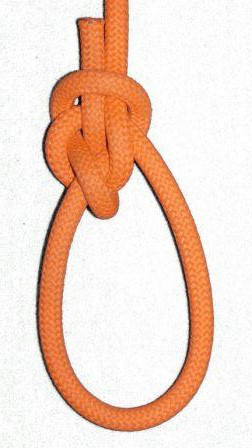
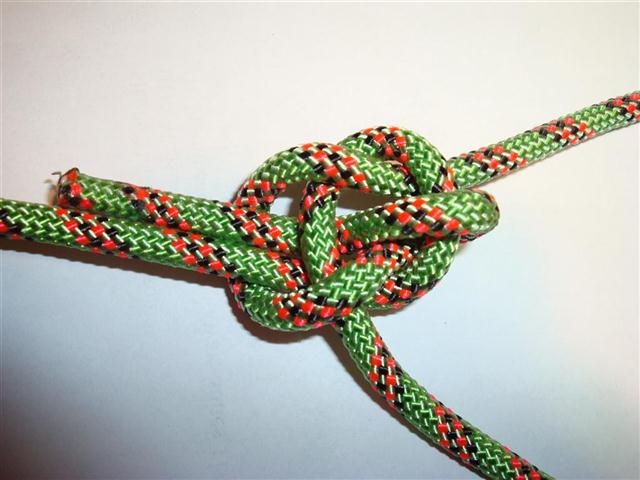
To answer your question, yes - I would be happy to release the ‘Analysis of Bowlines’ paper to the IGKT.
This would free me up as I am soon to run out of time (unfortunately, I have to work to earn a living and survive). Normally, this time of year is my busiest (work) period but there has been an economic downturn which has slowed me down too (worrying). Whilst I don’t have a particular end date in mind per se - each day I spend working on knotty stuff is a day less spent on securing my work / income future.
I feel I have set a reasonable baseline for others to continue this work…
My preference is to upload the source document (which is in Bill Gates Microsoft Office Word format …‘filename.doc’ - not the newer ‘filename.docx’ format). Hopefully, there are a few people in the IGKT that use Microsoft Word software?
The source file is close to 50 MB in size.
One way to do this is for me to upload it to a free ‘cloud’ storage site such as ‘Dropbox’. I could upload it to ‘Dropbox’ and share the file with a list of IGKT people.
Thank you for your response to my inquiry.
I would be interested in being a recipient of the file when you’re done with it.
I am not familiar with Dropbox, but if that is what it takes I’ll learn about it.
As for the IGKT being the repository for it, I was just asking ahead of time about the possibility.
I think we can all understand the “unfortunate” need to earn a living. So, I would like to publicly thank you for investing so much of your time to this. I personally appreciate the work.
Hi Mark,
I’ll be working on that over the weekend, and of course you may use any images (copyright and royalty free). I must say you’ve set a high standard with your images.
While one can read of some rockclimbers testifying
to the loosening of a strangle tie-off, such that
I’ve mused about suggesting a double strangle (as it
will get one full round turn clear of changing direction
in tucking back through the nub), a well-set strangle
should hold. BUT, (1) it doesn’t ensure that the bowline
doesn’t itself loosen, all so well --it’s not easy to tie
the strangle snug to the bowline, though one
can work it so by means of pulling on the collar, after
the knot is tied (but that will enlarge the eye)–;
and (2) if tied around an eye leg, it fills an area that
might not have much room (the small eye of the
climber’s tie-in comes to mind) --in this case,
the tail can be pulled away and tied off to the
SPart. (A point you make, too.)
Similarly, when people try to make a double fisherman's knot less jam-prone by putting a reef knot in the center, it really reduces overall security.
???
How can the (so-called) [i]"square fisherman's"[/i] be even AS
insecure --let alone more so-- than the [i]squaREef knot[/i] itself?!
(I do have some inclination to recommend that the center
knot be the [i]thief[/i], in thought that it will slip until
pulling those back-up "safeties" (i.e., the [i]strangles[/i])
into the nub and getting them greater security, thus;
one needs to have pretty evenly distanced back-ups
so they abut simultaneously the center knot.)
One can simulate this sort of coiled/wrapped looking
with the tail, tucking back through the turNip for
the finish --the tail’s wraps bind the (two, not just
one eye legs) and it in turn is nipped-gripped by
the turNip, which is effectively a half-hitch in this
function. --i.e., a sort of strangle knot wrought of
the two parts and not a single strand. In some cases,
taking the tail back through its own wrapping makes
for the surest looking binding; but it might just run
out the central nipping loop (aka “turNip”) to be
roughly parallel-to/beside the SPart.
There are various ways to instantiate this tail-wrapping
tactic, wrapping away and reaching back to tuck,
or reaching and then wrapping back (much as though
tying a strangle). The former might be best
with the tail tucking back through the wraps,
so that’s the more difficult one to tie,
vs. reaching and wrapping back and simply tucking
through the turNip --unless you want to tuck
now back eyewards through those wraps (which
indeed looks good!).
All those things are more complex than any of the simple “locks” we have, to enhance the security re. slippage of the Tail Common bowline - and require a minimum understanding of how the bowline works in the first place, in order to be understood, and not just be tied by parroted tying methods. If one decides to spend some hour to study the bowline, he will not need any such naive lock, as a double or triple or quadruple Strangle on the eye or the Standing end…He will just tie a Janus bowline, for example : much easier, much faster, much simpler - one whole knot, not one compound knot formed by the addition of a naive ( half-clever" = dumb ) thing. on top of a marvellous ( ingenious ) thing !
I disagree : rather, this tail wrapping (a) is much like
the tying of the back-up strangle knot, but it takes
a different course in (a1) binding the eye legs together
–which effects the locking of the turNip– and (a2)
incorporates the two parts vs. the single strand (but
the tyer need not consciously remark at this);
and (b) it isn’t merely fighting “slippage of the tail,”
but is --as noted above-- securing the turNip against
its loosening –that is the important aspect!
a1, a2, b… I wonder how many letters one should had used, in order this “much like” becomes “like”, and then “not like” and then “different”, and then “much different” - because that is the real relation between the Janus-like lock, on the one hand, and the naive x-turn Strangled overhand knot lock around the eye leg or the Standing end, on the other = they are much different !
In a previous post (1) I had proposed that we should mention - indeed, we should emphasize - the fact that the Lehman s locked bowline is TIB - but I had not said the same thing for the slight variation of the Scott s locked bowline, shown in the same post, and suggested in (2). Why ? Simply because I had NOTnoticed that till now ! I was so sure it offered a slight advantage over the original Scott s locked bowline (3), -due to the fact that the Tail is not forced to make a sharp turn around one rope diameter when it collars the rim of the nipping turn-, that I had not examined any further. As I had said many times, it should be expected that with stiff ropes, such a sharp turn can work as a spring, and drag the Tail out of the main collar around the Standing end - or, in a less tightened knot, it can be left in place as an “eye wide open”, around the nipping turn s rim. However, I had never seen, till now, that this slight variation offers another advantage - which might be considered as MUCH more important than the “no-sharp-turns” one that had made me tie it in the first place ! A locked safe bowline, which is also TI,. is a very versatile knot. We do not have sooo many, that we can ignore the ones we meet, by design or accidentally !
( I am very curious how the inventor of the Scott s locked bowline will respond to this property / advantage of his own knot ! )
Perhaps it is because the inventor/artificer/discoverer/conjuror, knotting adventurer thought it self evident.
As for stout ropes resisting this particular “locking”. I have not been able to fail it with any rope I have.
Attached is a picture of the single locked bowline tied using nearly 3/4 inch diameter, very old and recalcitrant “bullrope”.
I dressed it, then tightened it using force on the loop with foot and hand on SP. The picture was taken after shaking and beating (while unattached to anything) and the knot exhibits no loosening. The parts working together keep it locked and I am sure that if the loads approximated the working strength of the rope it would hold through out the task.
It is NEVER self evident to all people, the fact that a knot is TIB or not…I had not believed that the Eskimo double eye bowline on a bight would really be TIB, although they have told me so ! Each inventor knows MUCH more than the user, so he should never suppose that something about his knot is self -evident ! I had discovered the TIB fact just a few hours ago, although I had tied the knot many times ! It had just never crossed my mind…and I believe that it will not cross the mind of most members, if the inventor think it is self-evident !
So, now I believe the inventor will, at last, ask Mark Gommers to include in his " Analysis…"this TIB version of his knot, and mention, emphatically, the fact that it is a TIB bowline… because he has NOT done it till now ! ( I still see the first / old variation, with the sharp around-one-rope-diameter turn, in page 19. )
You suppose that the ( old variation of your knot ) will always be tightened, so it will be able to keep the around-one-rope-diameter “springy” turn around the rim of the nipping turn, in place. However, BEFORE this happens, and before it gets “locked”, the knot will remain slag in this point. The “orange” rope I have used in my pictures is the Speleo 11mm from Edelweis (1), a not-so-stiff rope, which does not stretches - so it can not make the one-rope-diameter turn of the old variation and remain “closed”, without a substantial pre-tightening of the knot. The same happens with my newer “orange” rope, a BEAL Pro-Canyon 10.7 mm. They are no Anaconda-like ropes, but I am no Hercules to pre-tighten them as hard as you do either !
Well, some of us (one) thought it was “self evident” because the general contributors to the thread are so astute.
Perhaps Mark will read this and determine that the other attributes are to be added to his paper.
This particular statement is troubling: “You suppose that the ( old variation of your knot ) will always be tightened, so it will be able to keep the around-one-rope-diameter “springy” turn around the rim of the nipping turn, in place.”
First: The “old” version is the version I recommended. It is simple and efficient.
Second: I suppose that the person(s) tying this knot will become proficient at it with very few tries. They can tie a standard, baseline bowline, get it formed and dressed loosely and then reeve the tail into place. Then dress it as it needs as you would need to dress any knot. I don’t presume that you can tie any knot loosely and it will self dress. Some do, some don’t.
This locking happens to work, even with that “slag”. So what does one do when they have unwanted slack?
I truly believe that you or anyone who can tie the 1010 bowline can tie this simple lock with your eyes closed and even dress it so you won’t have to see it unclothed.
Yes, but the working end turns around ONE rope diameter, the rim of the nipping turn. Not good.
The “newer” version is EXACTLY as simple as the “old”, EXACTLY as efficient as the “old”, and…
AND…
AND, it is TIB !
Yes it is good. It works and works very well. I think the one diameter turn in this regard is not only sufficient, it is efficient and perhaps even better than a two diameter turn. I wanted the sharp turn/bite to be there.
The “old” version PET TIB as well, I am just not ijn need of tying it that way for my own use. I see the interest, theoretically, but I doubt I will have a use for the TIB for this knot.
And I did forget. ;-))) Though I did not give that tie higher kudos.
One makes the turns wider, so the working end encircles more rope diameters, and it is driven smoothly from one place to the next. Especially near the end of the line, at the Tail, where we can not force it to follow a sharp curve by a tensile forces coming from both ends / limbs. The same happens in the “End bound” solutions… However, there the turn encircles more rope diameters, so it will not have the tendency to remain slack, or spring out.
Mark Gommers shows two bowlines, in p.17 and p.24 of “Analysis…”, which suffer from the same disadvantage. On the contrary, the Lee s locked bowline has solved this problem, by the re-tucking of the Yosemite s Tail through both collars around the eye leg of the Standing Part.
Personally, I will always prefer a compact, dense knot, with no slag, where the segments of the rope fill the emty spce within the knot s nub as much as possible. Why ? Perhaps because of Horror Vacui : "Nature abhors Void " . I do not say that such a knot will be more secure or stronger than a knot that is spatially extended, and/or some parts of which will remain slag all the time. We have seen that the “Mirrored” bowline should better not be dressed very tightly, because the deflexion point where the Standing end meets the first, “higher” collar should not be able to harm the rope too much.
A compact, dense knot is always easier to inspect, because any mistakenly placed segment will disturb the ordered, tight arrangement of the others, and will be spotted instantly, like a fly in the ointment. Also, it will not present a wide outline / cross section, so it will not run the danger to be caught up somewhere, as a spatially extended, loose knot can. An “eye wide open” can always be caught up in a protrusion, and drag the Tail along with it, out of the knot s nub. Perhaps I am exaggerating the dangers, but if we can as easily tie a similar, yet more compact knot without slag parts, why we will not do it ?
Several changes, including changing all of the figure numbers denoting each knot.
Change log:
foreword edited
TIB expanded upon (and small symbol added to denote if a particular bowline is TIB)
added some double eye bowlines
added an image of a closed helix
Improved ‘Eskimo’ bowline images
expanded on explanation of right hand versus left hand bowlines
improved a few images in general
improved explanation of what a ‘parallel’ bight is (versus a crossed bight) - also changed ‘Myrtle’ image on page 10
page 18 changed - shifted knots around (enhanced the Lehman locks and added strangled double overhand lock)
removed a few images - due to feedback suggesting they were redundant (the yosemite variations to variations)
enhanced water bowline image on page 22 (figure 21)
made space for new additions
I think you’ve lost sight of your original objective. Correct me if I’m wrong, but I don’t think you have a problem with the security or stability of a Figure Eight Loop.
So if you find a loop with security and stability equal to or better than the Figure Eight Loop, you probably should be cutting the loops that go yet another layer/step beyond this which hurts rope consumption, adjustability, memorability and inspectability.
…which was the examination of more secure forms of Bowlines ! Which is the title ? " An analysis of Bowlines". Is it "An analysis of eyeknots " ? Nooo ! Are bowlines a special kind of eyeknots ? Yeees ! Why ? Because they are post-eye-tiable ( PET ), and they can be tied and untied very easily, in one stage, without requiring any knot that has to be tied on the Stranding Part BEFORE the tying of the eye, and/or requiring a knot that has to be untied AFTER the untying of the eye.
Of course, some people, for unknown reasons, will never be able to understand the difference between a PET and a not-PET eyeknot… and they will keep claiming that it suffices to tie an overhand knot or a fig.8 knot on the Standing Part, and then attach the tail on this overhand knot or fig.8 knot, by another overhand knot or fig.8 knot, tied on the eye leg of the Tail this time… Ingenious, perhaps, yet inconvenient - to say the least. However, this naive idea will always seduce some people that can not understand what a bowline is - it is a sad fact of life with which we should learn to live…