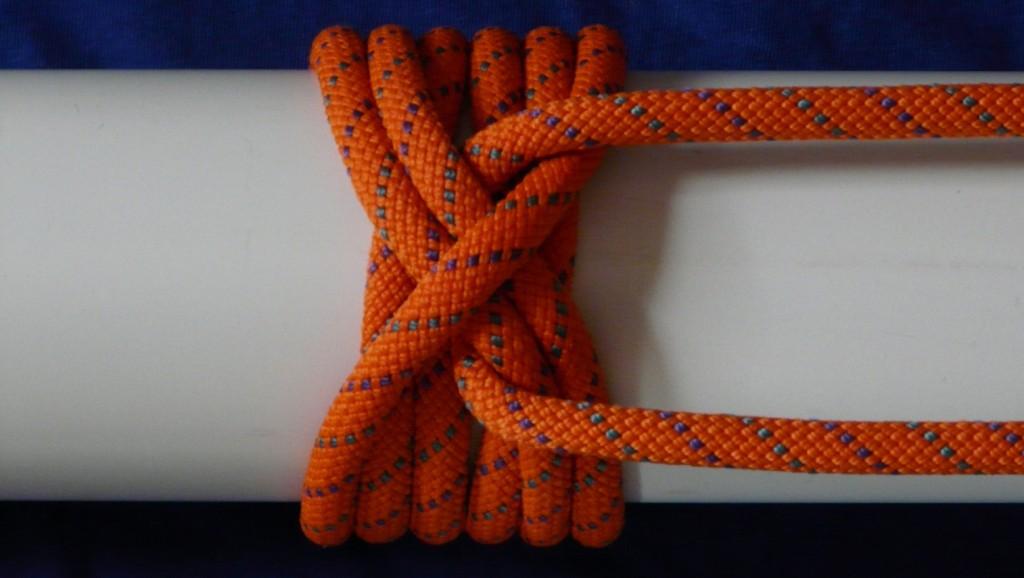
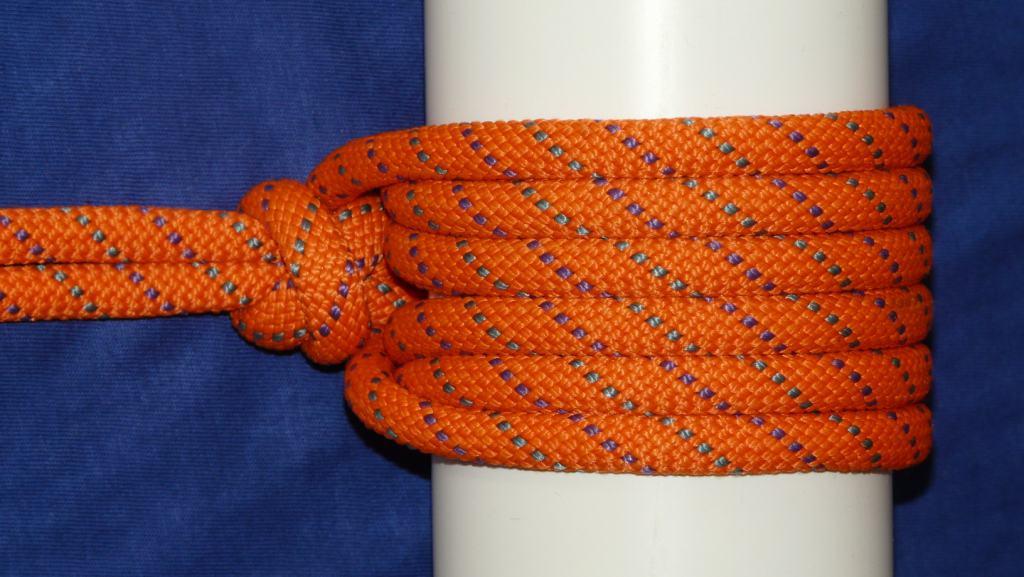
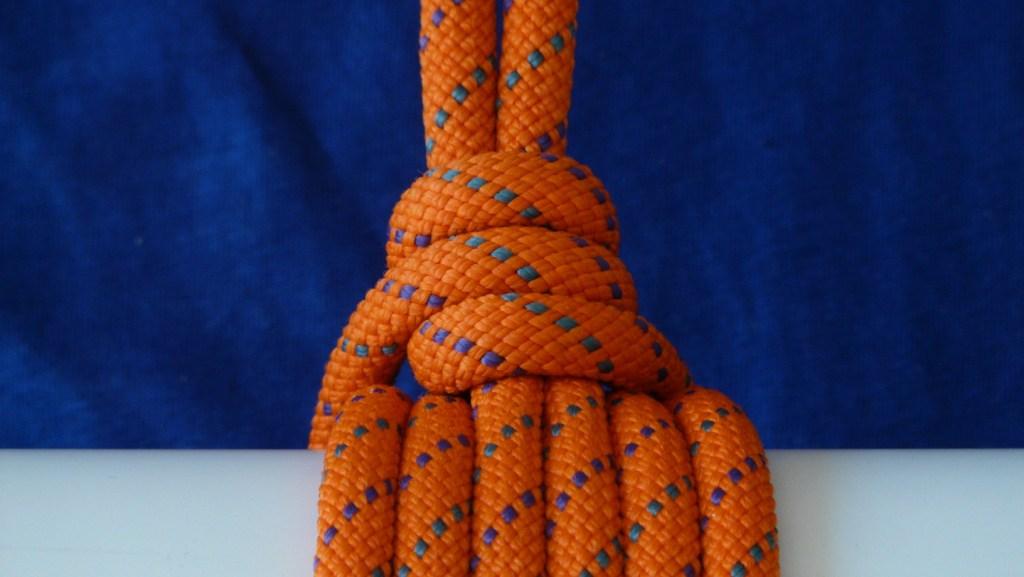
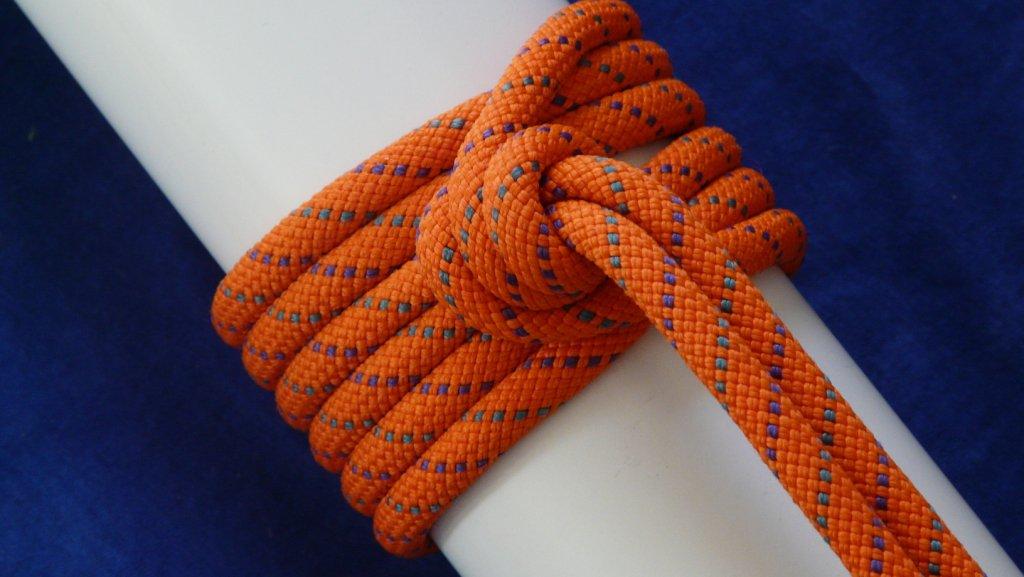
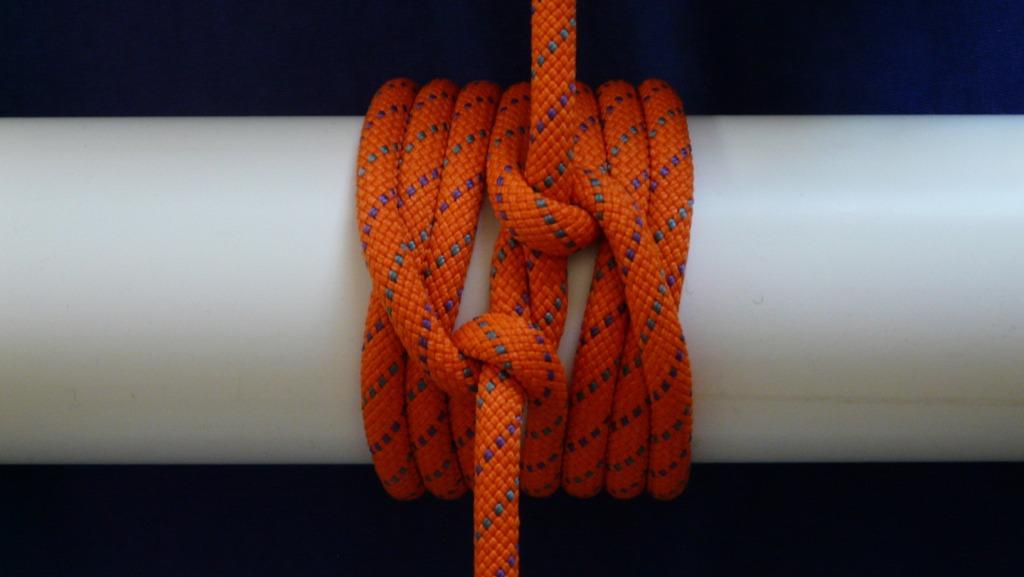
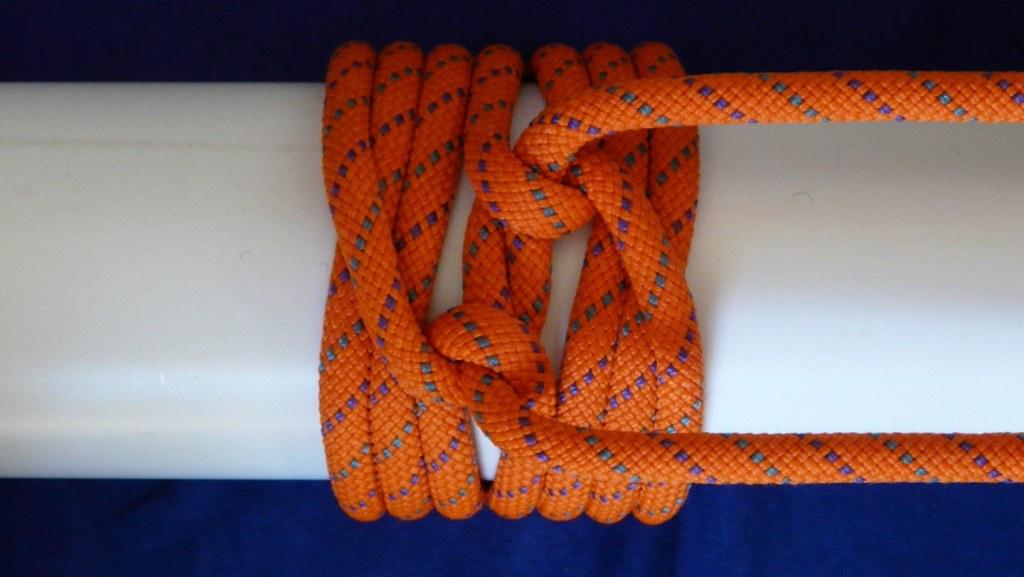
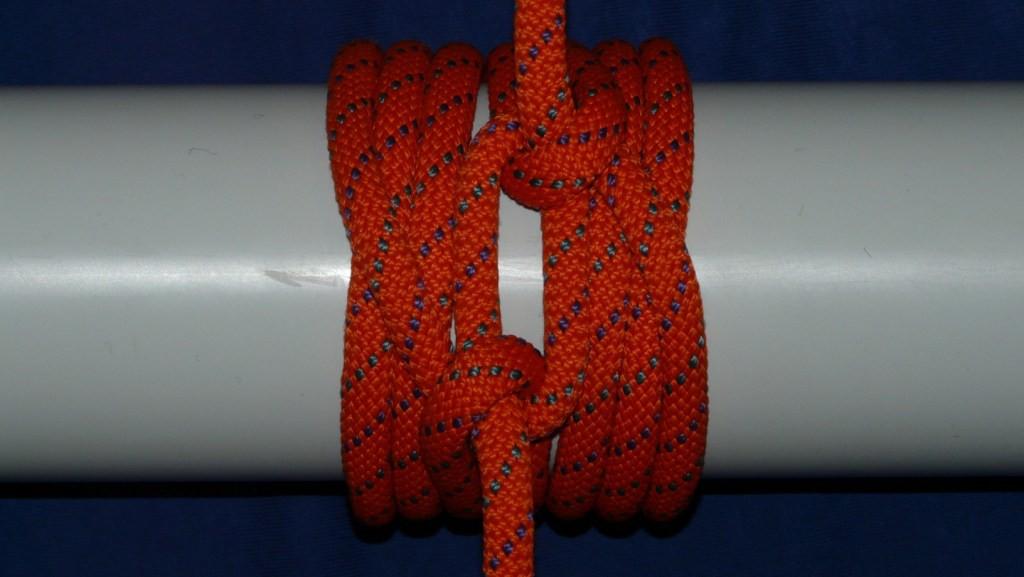
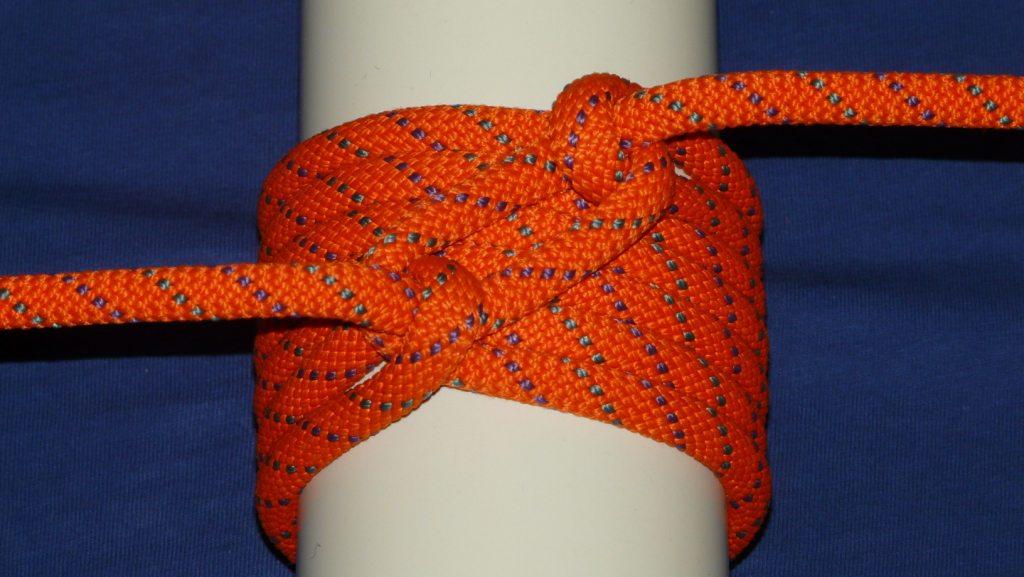
One might well ask ? "Why don t you just call this hitch as a "multi-coil Clove hitch? " Well, I have thought of this for a while, but I was not convinced by the evident similarity… As I have said, this hitch works because the “diagonal” pushes the coils the one onto the other, so, once they have been tensioned and elongated a little, they remain in this state by the friction forces imposed on them by their neighbour coils.This is not happening in the common Clove hitch. Now, the mechanism is different, but ,given the fact that the tying method and the form are so similar, we may well call it “multi-coil Clove hitch” - if “Steroidal Clove hitch” does not sound formal enough…  I do not really know, I always leave the (secondary) matter of the “name”, the label, to the knot-tying community - provided the given name is not a totally misleading one.
I would like to mention that the optimum number of coils is depending upon many things :
- With a nylon rope, which can be elongated a lot, we need fewer wraps than with, say, a polyester one. Also, with ropes that are very slippery, we need more wraps.
- On a pole with a slippery surface, it s easier to pre-tension the coils, so we need fewer of them to achieve the same result. On the contrary, on a pole with a rough surface, we may not be able to pull the ends forcefully enough, and elongate the segments of the coils along their entire length. Of course, on a slippery pole we always need more wraps than on a rough one, in general - so those two contrasting requirements need to be balanced.
- If we can pull the ends, the one after the other, while pushing the pole ( with our feet, for example), at a right angle with the axis of the pole, then we can apply a stronger force, so we will be able to pre-tension them more, and so we will need a fewer number of them.
- The “diagonal” should be diagonal enough, that is, its angle should be adequate to ensure that the “upper” and the “lower” coils would be pushed towards each other , so the friction forces between adjacent coils would be sufficient to prevent any accumulated tension from escaping through the ends. So, with a rope of larger diameter, relatively to the diameter of the pole, we need fewer coils - because in such a combination the angle is about 45 degrees -which, as I reckon. is a sufficient inclined diagonal. (See the attached pictures for such a hitch, where two only coils of a larger rope wrapped around in a thinner pole, lead to a 45 degrees angle.)