To my audience of one - Dan!
So as not to de-rail another topic thread, I've started this new topic.
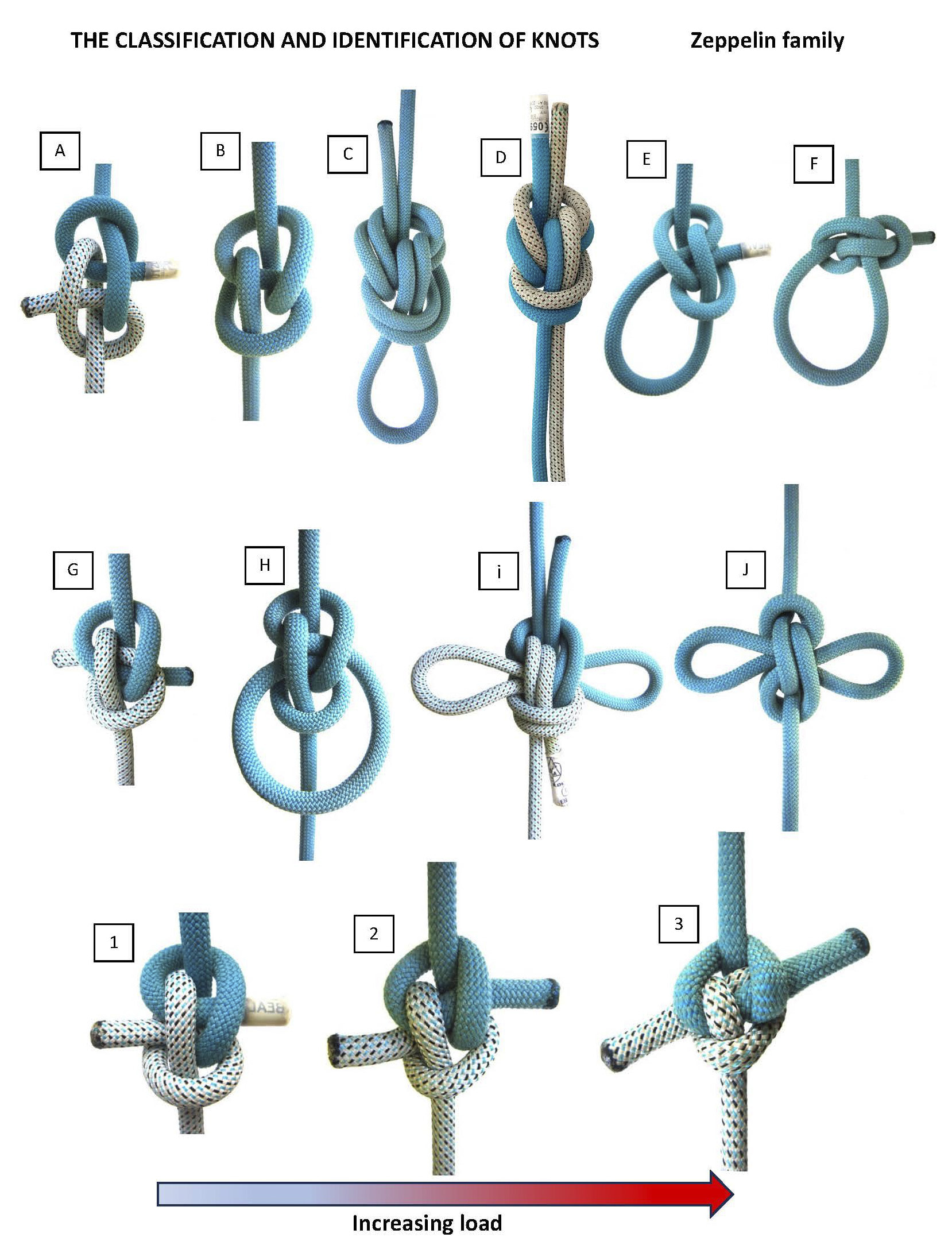
Please examine all of the knots in the image below.
I am introducing the idea of taxonomic knot classification.
This is conceptual stage only, very much a work in progress!
Domain: Knots
Class: Fixed eye; Joining; Hitch
Order: End of line; Mid-line; Movable/Adjustable
Family: Symmetry (Symmetric, Asymmetric, Structure, Shape and Form)
Genus: Load response (behaviour under various loading profiles)
Species: Individually identifiable knot (eg Zeppelin bend)
Mapping example:
Domain: A Zeppelin bend is in the domain of 'knots' - its a knot.
Class: It is a joining knot (end-to-end joint)
Order: End of line - joining knots are formed in the ends of ropes/cordage (ends are united)
Family: Symmetric
Genus: Non jamming
Species: Zeppelin bend
.................................................................
In the image below, figures 1,2,3 show response to load. All are Zeppelin bends at varying stages of compression and deformation, yet they are still identifiable as Zeppelin bends. In other words, figure '1' is the same species as figure '3'.
In the case of figure 'A' and 'i' - we can make the claim that they both are from the same class, order, family, and genus. But, are they the same 'species'?
'A' is the same species as '1'.
However, 'A' is not the same species as 'G'.
Happy to discuss and thresh out the semantics and concepts...
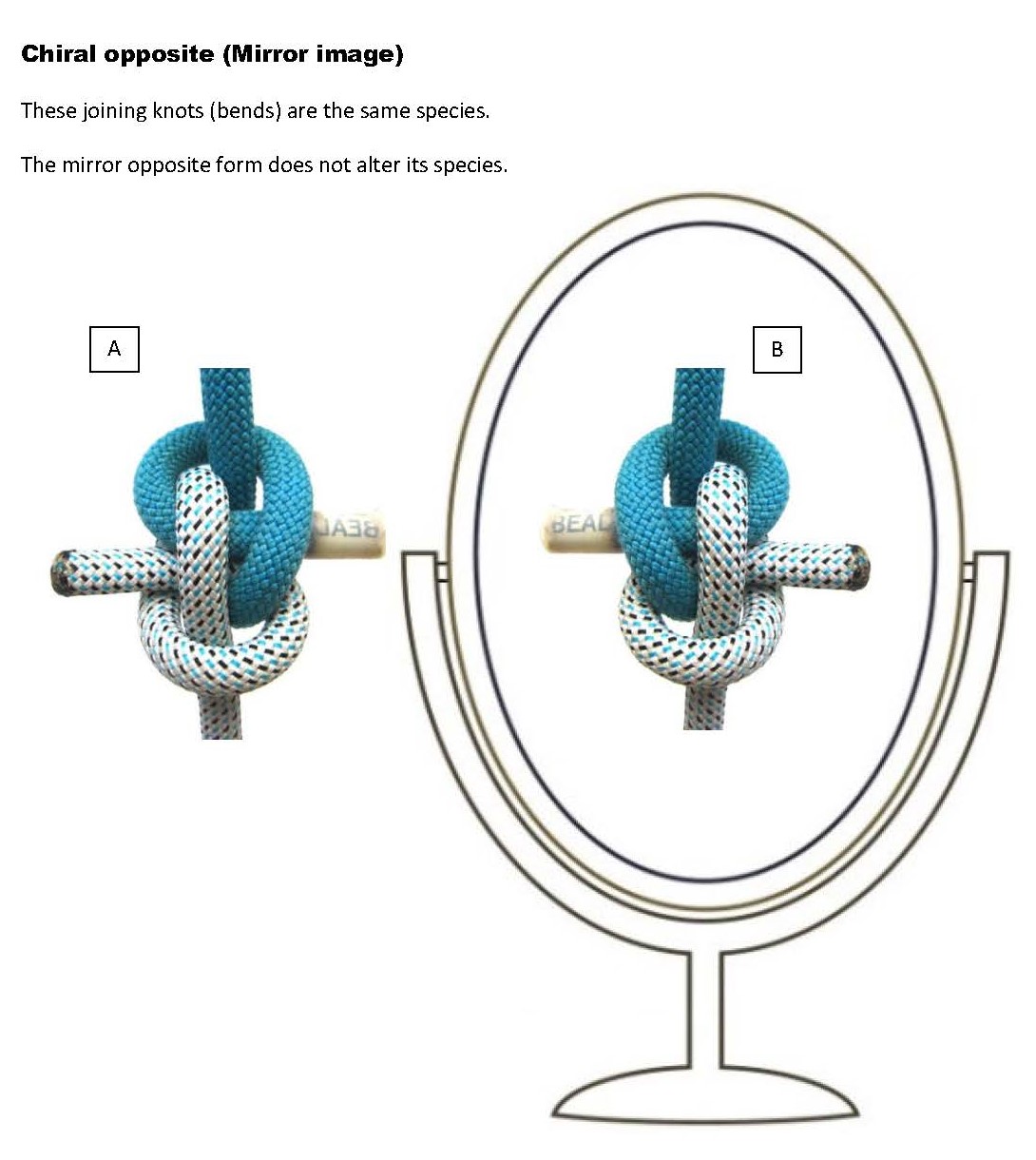
In the lower image:
'A' is the same species as 'B'. A chiral apposite (mirrored form) is the same species. If chirality was an issue, all knot book authors would show 2 versions of every knot - thereby virtually doubling the volume of their publication. Ashley appears to only show right-handed chirality 'Bowlines' (with few exceptions) - although I will need to thoroughly check this.