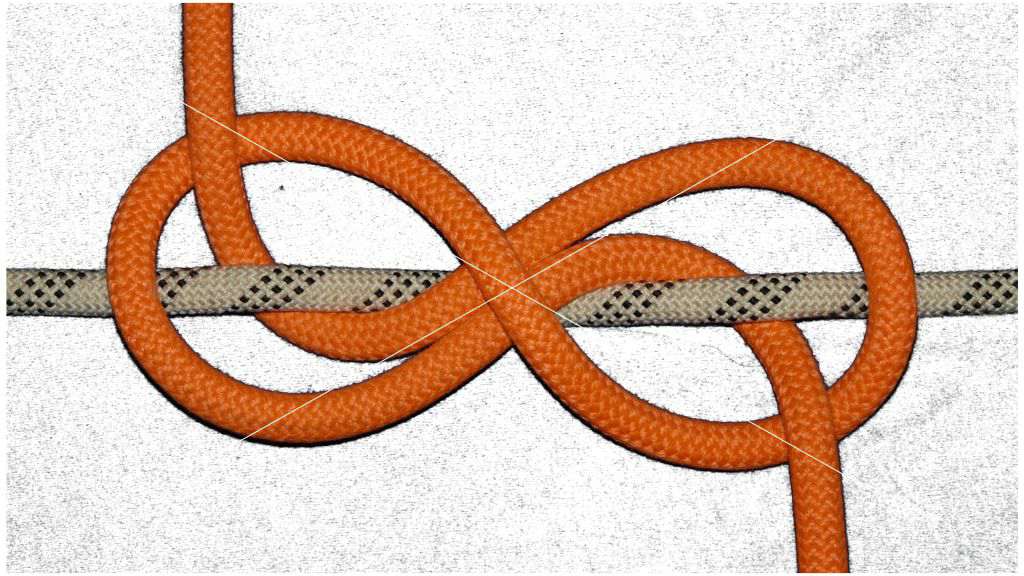
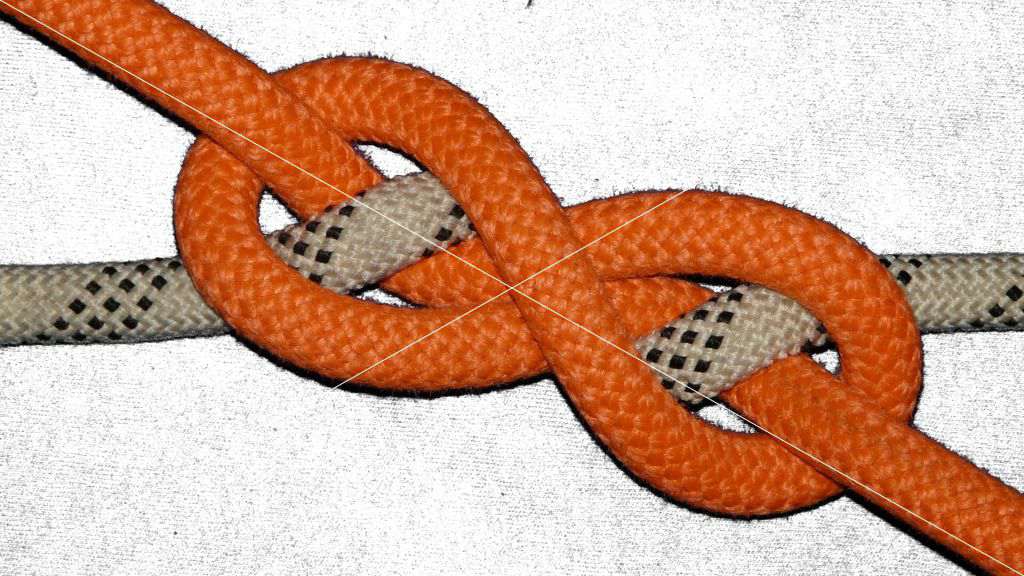
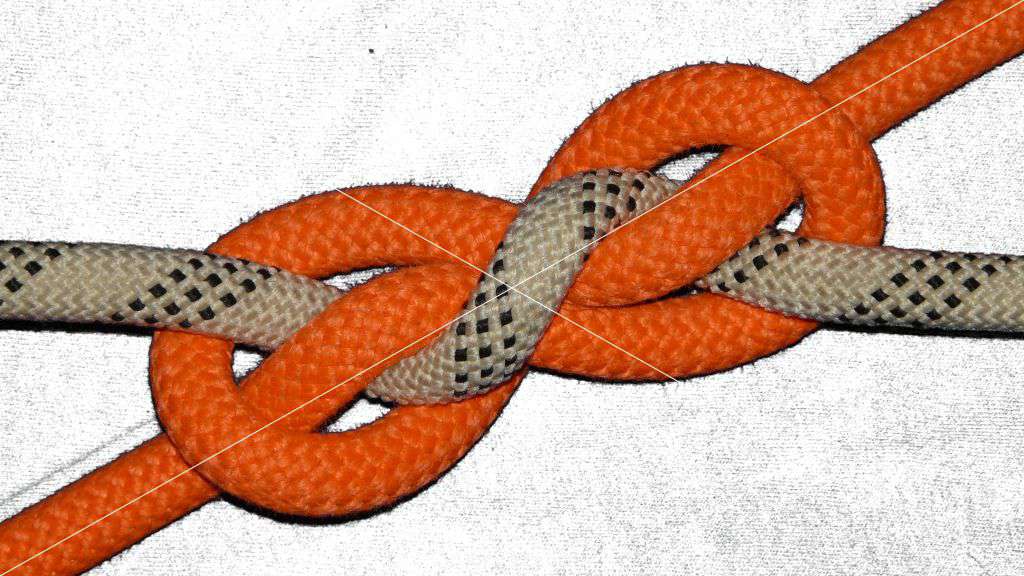
In general --i.e., in netting, in general–, such knots are mesh knots
or net knots, as a class. In appearance (from your images), these
look to be mid-line hitches --i.p., overhand hitches around the
crossing line. In actuality, we might find that the apparently hitching
line at one point is reeved through the lay of the crossing line
–which helps to stabilize location of the joint.
I think I saw a pussy cat… ( or a puppy dog  ) complaining about the complexity of tying the Adjustable Constrictor loop…so I tried to figure out a simpler knot, based on the same idea. It comes out that if we wish to use a less cnvoluted ( than the Constrictor ) knot on the attached line, we have to use more than one coils on the main line- otherwise our knot will slip alongside the direction of the pull. See the attached pictures for such a simpler loop. Given the simplicity of the knot on the attached line - just two non-entangled bights, each one tied as a collar around each pair of ends - we now need at least two coils to secure the knot - and it might even turn out that we better use three, if we use a very slippery material.
Nevertheless, the knot is as simple as it can be, and I have named it so one can not forget how to tie it, even if he does not try to remember it…Form two coils on the standing part, then pass the working end/tail through them, in order to form two collars. To have as secure a loop as possible, and depending upon the material used, you might have to pull the two ends of the collar pair at the end, so the knot on the attached line is shortened, and the coils on the main line approach, even touch each other. The interested reader is called to try this knot with a variety of materials, with two or three coils, and with a more or less shortened knot, and report his findings.
This line of though can be explored even further, I believe, as I have already mentioned at the first post of this series:
" I have only recently realized that, if we have a complex enough, effective enough structure on the attached line, we do not need a closed nipping loop on the main line !
… it turns out that any curve… can, in fact, be utilized to prevent any slippage of the attached line alongside the main line.
… I am sure we can find even simpler midline bends than the one shown here… and the interested reader is called to try his own hand. "
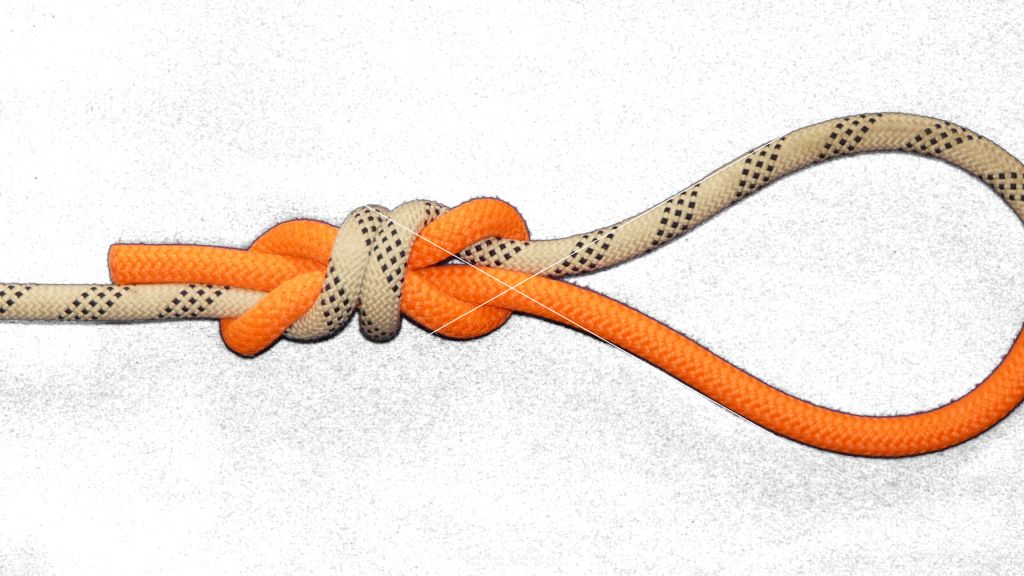
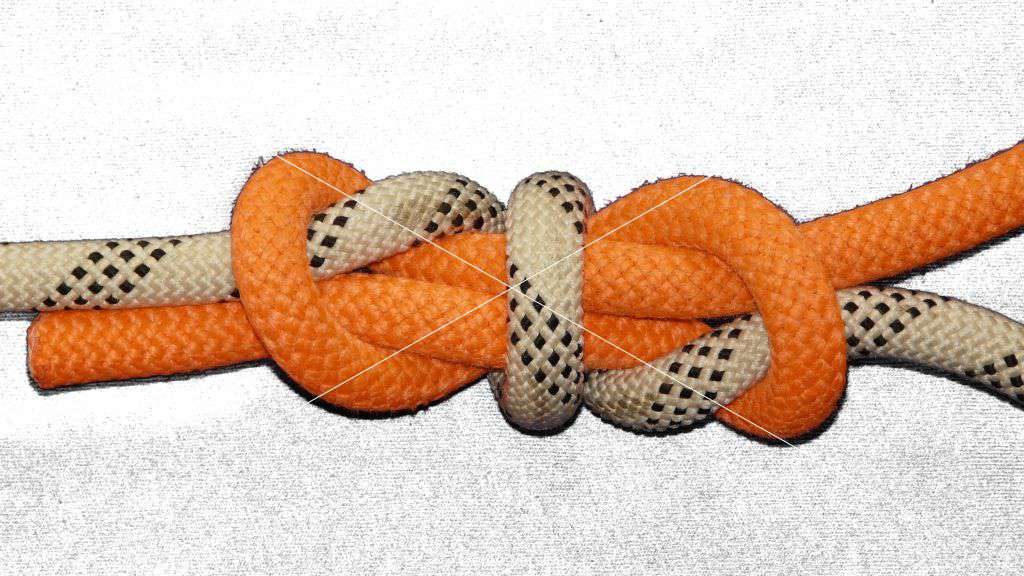
One might well ask : why do we need this “2 coils-2 collars” bowline-like loop in the first place, that may be quite simple and easy to tie, but it is more complex and more difficult to tie from the common bowline itself nevertheless - or even more complex and more difficult ti tie from the “Janus” 2- collars versions of the common bowline ?
I admit that I have a hope I have not mentioned , because I thought it would have been a little premature… I hope that this loop will be stronger than the common bowline or the 'Janus" 2-collars versions of it…because of the gentle curve the standing part follows as it enters the knot s nub. This wide helical path, without the self-intersections we have when we use closed nipping loops, might be proved beneficial for the overall strength of the knot. Of course, I keep my fingers crossed on this… and I wait the results of the destructive tests I plan to perform, on the sooo many bends and loops we already have…
Four Corners Knot is one of the most elegant solutions to the OP.
I am afraid I do not remember or know this knot…Could you please help me here ?
A diagram, picture or reference would be most welcomed.
Four Corners Bend
http://i1221.photobucket.com/albums/dd468/iq201/Public/Bend-FourCorners.jpg
I got the idea of the knot from this video:
http://www.youtube.com/watch?v=dhm9UIOvQV0
Here’s another reference including pics:
http://www.westernhorseman.com/index.php/articles/web-extras-mainmenu-151/item/84/asInline.html
I’ve used this on a scarf a few times but never heard of it by that name before, only as a “cross knot”. Interesting to use it as a bend, I’d never thought of that.
Barry
Thanks. Yes, I know this knot pretty well, under other names…
My understanding is that it is too simple, and it is rather unstable. ( I have said the same thing for a bowline-like loop based on this knot, by Lee. ) If one of the four limbs is loaded much more than the others, this knot runs the danger to be badly deformed - and it will not return at its initial, symmetric state afterwards.
My gut feeling is that this knot needs to be beefed up a little, but I have not tried anything yet.
It is also known as the start of a four strand crown (square) sennit. One will have to have access to one end, especially if using two cords middled. This bend will be very subject to distortion if the loads on the four strands is uneven.
SS
The Four Corners Bend must be fully tightened before loading. Even then, I was able to get the knot to capsize badly with rude and unpredictable loading combinations. It looks cool though.
For the problem in the OP, I’d probably use the Butterfly I described above, no access to ends needed.
http://igkt.net/sm/index.php?topic=3020.msg21724#msg21724
Tie an overhand on a bight in one rope. Retrace overhand with other rope. (It’s a water knot kinda.) Three ends will extend from one end, and one end will extend in the direction of the bight. Brief testing, it works but seems jam-prone.
…It’s not my favorite solution of this thread.
I do not like this bight hanging around without any active role in the hitch… The same can be said with solutions based on the midline sheet bend. You consume more rope to make a "base’, on the main line, and less rope to anchor the attached line on this “base”. I think that we should better do the opposite… I have seen that any curved segment on the main line, ( even an open, helical coil), can serve as a firm “base”, and prevent the attached line from slipping alongside the main line - provided that the knot on the attached line is a hitch tight enough - as the constrictor, for example. So, we really do not need all this material and volume of the overhand on a bight, for a firm base…
Your general idea seems to be this ; You use a tight, convoluted knot on a bight tied on the main line, and you somehow entangle the attached line into the nub of this knot - by retracing the path of the main line, for example. I believe that any such solution will be less economical, and more bulky, than the other bowline-like solutions presented in this thread.
I don’t like it either, but it’s better to know a few solutions for this awkward problem. A modest change in material and/or rope sizes can make certain solutions here less than worthless.
Well, that’s one general idea, not mine. So, within that general idea, what’s the simplest and/or most elegant?
I do not know ! However, I promise I will try to investigate this line of thought shortly -after I go till the far end of the exact opposite :). Read the next posts, and, please, tie and try the knots presented there, which are based upon a very simple, helical structure on the main line, and a shape “8” structure on the attached line.
We have seen that, in order to attach the end of a line ( the “attached” line, or the eye leg of the bight of a loop ) on a certain mid span point of another line ( the “main line”, or the eye leg of the standing part of a loop),
- We do not need to anchor the end of the attached line on a pre-tied overhand knot on the main line. So, we do not need to transform a clever, beautiful, symmetric interlocked-overhand-knots bend ( as the Zeppelin bend, for example ), to a not-so-clever, ugly, asymmetric loop knot ( as the so-called “Zeppelin loop”, for example). Bends and end-of-line loops are different animals, they should be kept apart from each other. Otherwise, we end with ugly bulky hybrids, or even monsters, which do not retain any of the economy, symmetric distribution of forces and elegance of their parent bends. The main advantage of the bowline, by which this marvelous knot gained the crown of the “king of knots”, is the absent of any overhand knot pre-tied on the main line : a single nipping loop is all that is needed to ensure that the attached line will not slip alongside the main line.
- We do not even need to anchor the end of the attached line on a complex, closed nipping loop structure, like the many convoluted - but not based on interlocked-overhand-knots - bends.
- We do not even need to anchor the end of the attached line on a simple, closed nipping loop, like the nipping loop of the common bowline.
- All that we need, is a curved segment at the main line, that can provide enough friction to block the slippage of an attached line, properly entangled around this segment.
When I realized this fact, it was natural for me to try to balance the missed complexity of the structure on the main line, with an added complexity on the structure of the attached line. So, I tried one of the tightest hitches we know, the constrictor. And it worked fine ! Then, I have started to try even simpler knots, like the 2-collars,2-coils knot. It worked fine as well…Now I go one step further, and replace the Constrictor hitch with a Pretzel or a Strange hitch around the main line - i.e. a less convoluted knot based upon another, simpler shape “8” structure. And I should say that i was amazed by how tight and secure those new knots are - and by the fact that I, for one, have never tied or learned anything like them…
At the following posts, I am going to present some “new” knots based upon a shape “8” knot, tied with/on the attached line, that I think they are even simpler than the ones already known and shown in this thread. I do not know if these knots still deserve to be called mid span “bends”, because of the minimum, very simple knot structure of the main line. ( I do not even know if we can call a helical segment of a rope, a physical “knot” ! ? ! ? ! ? .However, this is another section s question… ) They are "stoppers’, that is for sure, in the sense that they block the movement /slippage of the attached line alongside the main line quite effectively.
I would love if any other member of this forum tie those knots, try them, and report his findings here. I do not have yet neither the expertise, nor the necessary equipments to test knots as I would like to. So I would be glad, and much appreciate, OPT ( Other People s Tests…).
Last, but not least, I would like to state, and make it perfectly clear, that I am not interested very much in mid-line bends ! What brought me here is the search for new loop knots, and the mid-line bends is but a general scheme, a means to accomplish this much more interesting and useful subject. So, the reader should see all these mid-line bends as knots that can be used at fixed or adjustable loops, even when I do not present them as such.
(The last point might come also as an answer to another reasonable question by the interested reader : Why one should prefer a mid-line bend, where the knot tied with/on the main line is much simpler than the knot tied with/on the attached line ? The answer is that, in a loop - which is what interest me most -, the main line / standing end is loaded with 100 % of the load, while the attached line / eye leg of the bight, is loaded with 50% of the load. We should try to make the path of the main line / standing part as straight as possible, so the strength of the knot is as less effected as possible - at the points where it is likely to suffer most.)
Pretzel 1 midline bend
Pretzel 2 midline bend
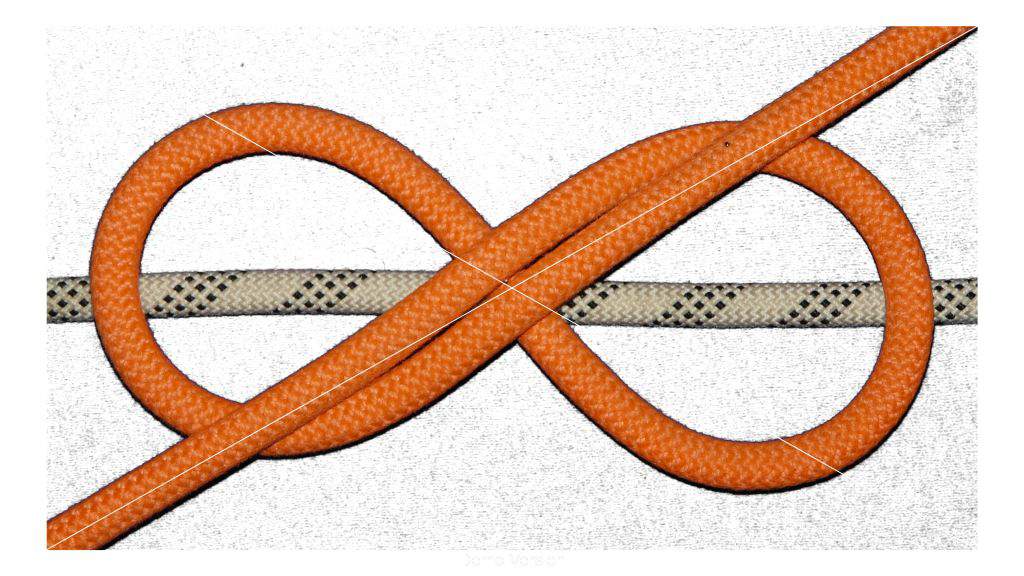
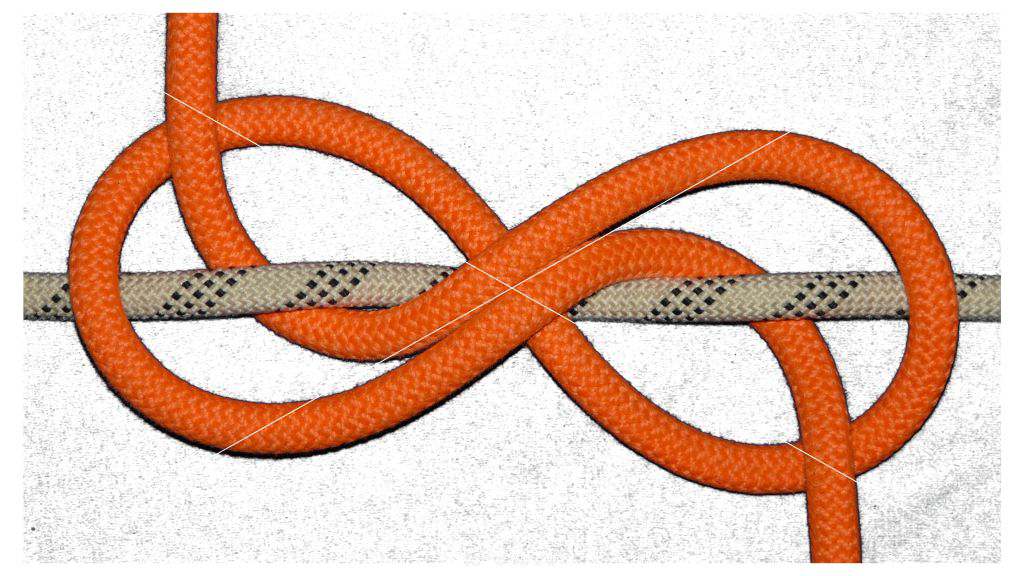
Strangle 1 midline bend
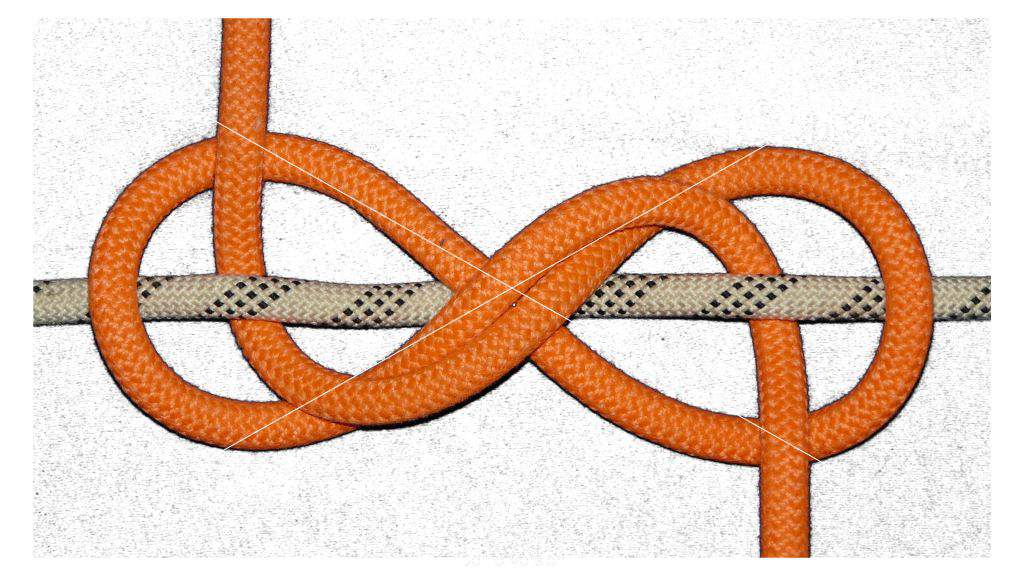
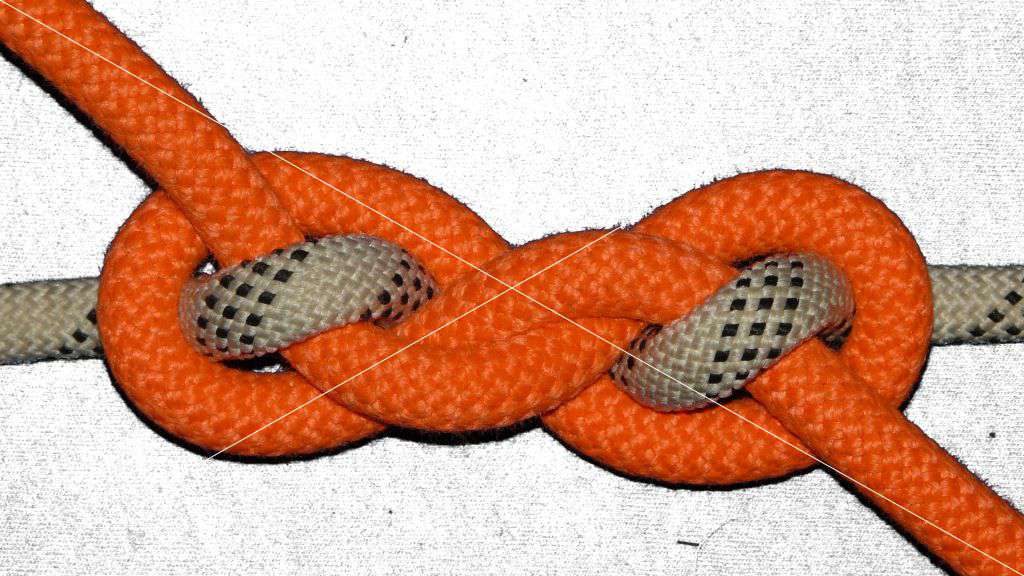
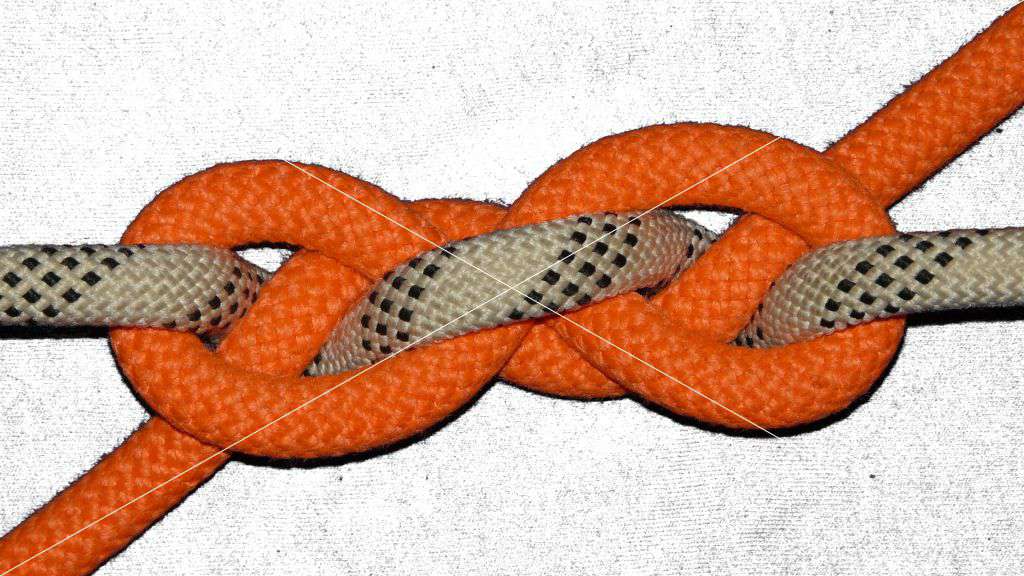
Strangle 2 midline bend