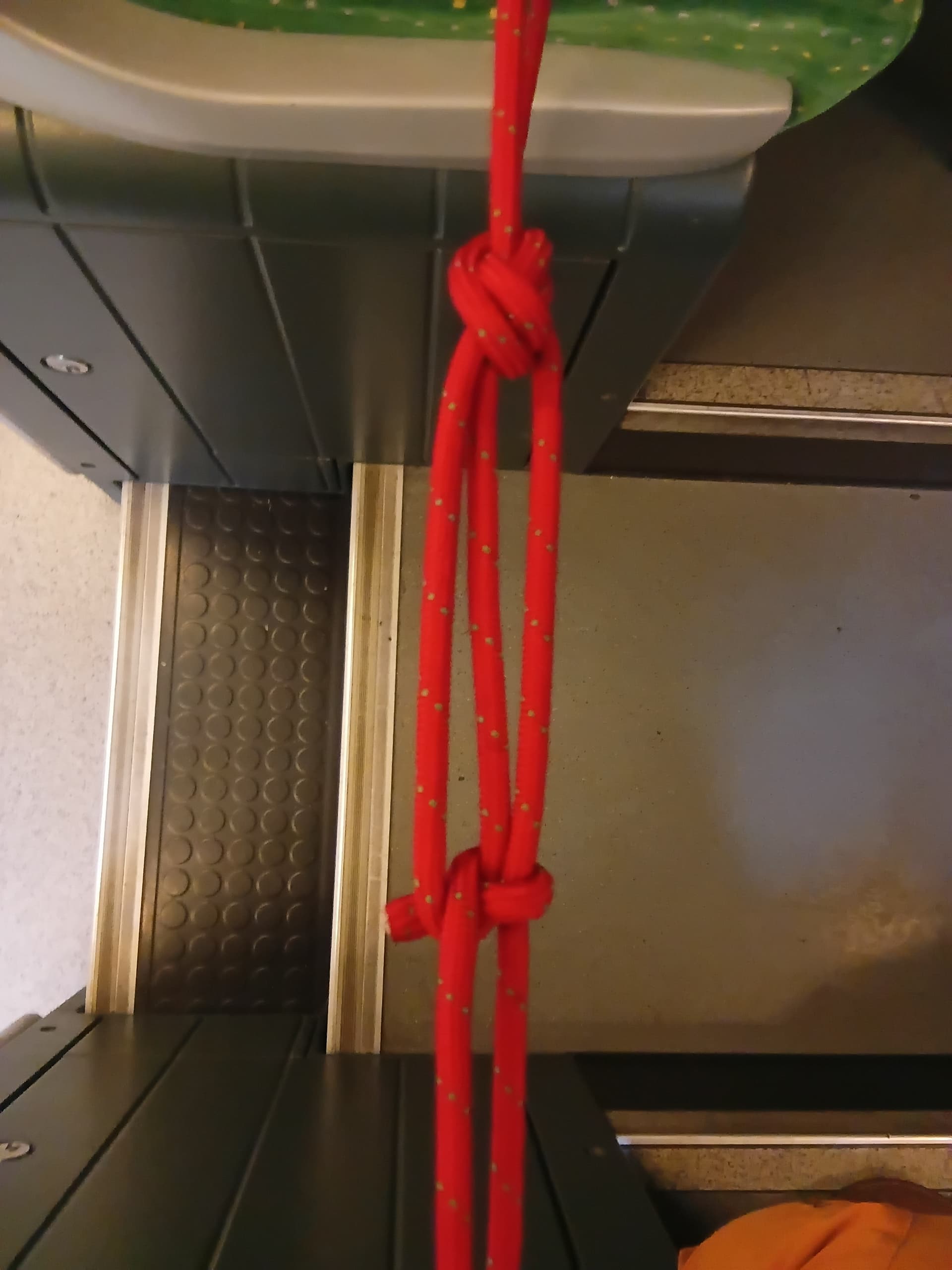
Hey folks—check this out
So I was messing around with some knots—specifically the Bellringer—and I realized something kind of cool. Most of you probably already know this, but just in case: the Bellringer looks like it holds under load, but that’s more of an illusion. Once tension builds, it starts to collapse in on itself, and not in a good way. The more weight you add, the sketchier it gets.
Now compare that to a Bowline. It’s stable and strong—classic for a reason—but once you tie it, you’re not getting a slick auto-release. What I was hoping to find was something in between. Something that holds like a bowline, but lets go like the Bellringer pretends to.
Reverse Engineering
So here’s where it got interesting. In the usual Bellringer setup, the bight wants to collapse away from the standing end and toward the main loop, with nothing really stopping it except maybe some fussy positioning. That’s part of what makes it feel so unreliable under load.
But if you flip the loop—like, literally reverse the direction the bight goes through—and then pull on the standing end while the main loop carries a bit of weight, something cool happens: the bight starts falling toward the standing end instead. That’s the move.
At that point, I tried tucking the bight into the main loop—trying to get the bight to land in just the right spot so that the load pins it into place instead of pulling it free. And sure enough after playing around with the dressing, the load pulled everything tight. The tuck becomes the lock, and the only way to “unlock” it is by removing the tension and letting the bight escape. Just introduce a little slack, and it all comes apart cleanly.
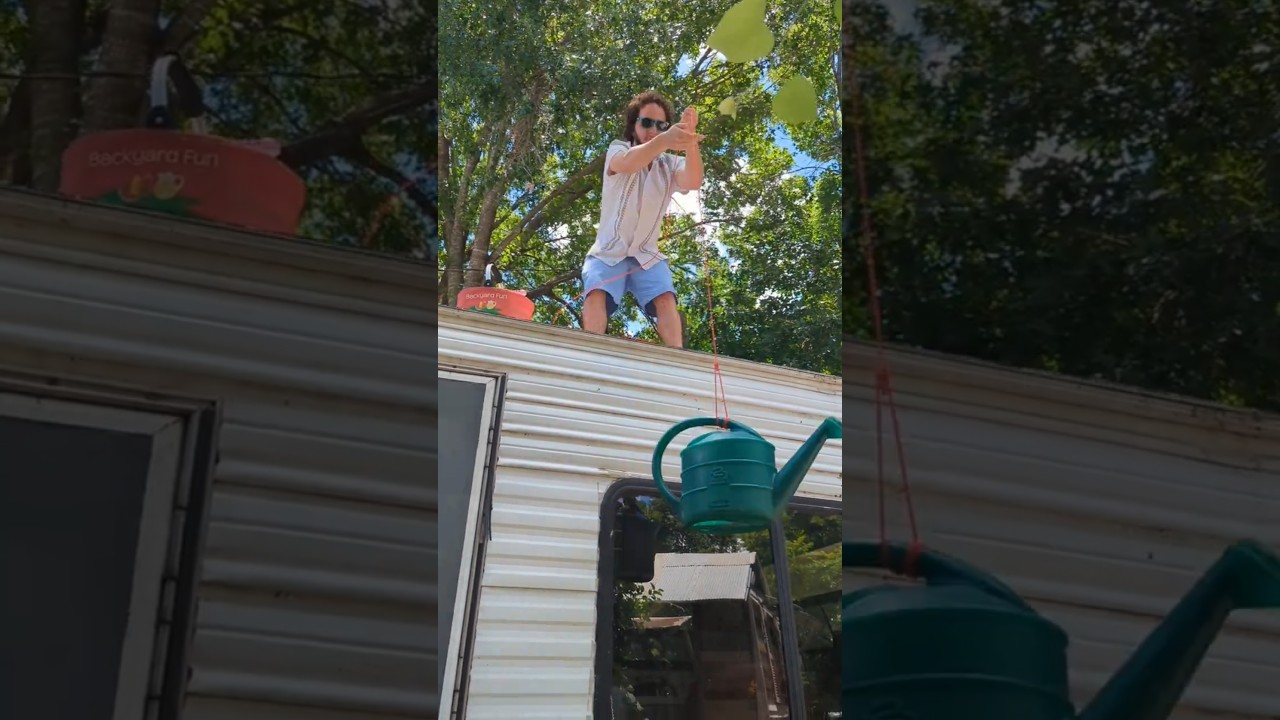
The key was figuring out how to dress the whole thing just right—it’s subtle, but it makes all the difference. I put together a short video to show exactly how I do it.
The video shows the core shape of the knot and its most obvious use case. (It’s perfect for lowering multiple pieces of gear off a roof without having to make trip after trip up and down the ladder.) you cancan make multiple wraps around you object to increase friction, and still dress in fast and reliably.
The Result
So this isn’t some revolutionary invention, but it feels really solid. You get a loop that holds like a bowline—seriously, when dressed right, I even used it as an anchor point for a disappearing trucker’s hitch (non-critical) —and when the tension’s gone, it just… lets go. Like, flick-the-line-and-watch-it-fall-apart easy. It’s weirdly satisfying.
If you end up trying it out, let me and the others know what you think and what uses you find—or if you need help dialing in the dressing to get it to behave just right.
Tips
-
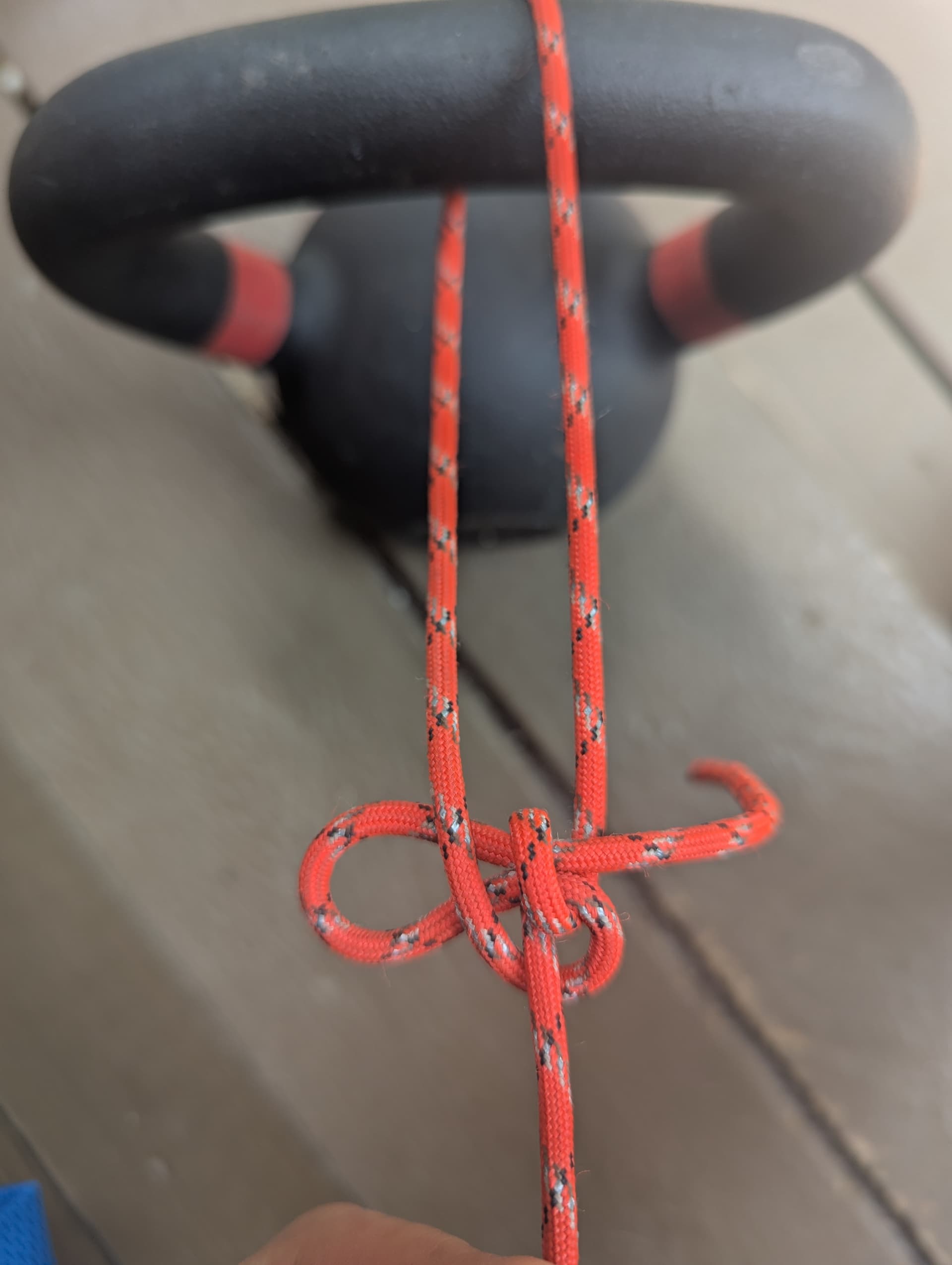
when you pull the bight through pull all the slack out of it int he direction you are going to pull the mainline… before pulling tension on the mainline you should almost be able to pick up the load just by pulling on the bight.have enough tension on the mainline so it doesn’t collapse though.
-
If you have a HEAVY load or want to play around with the dispearing truckers hitch etc.. pull not just the bight, but the loop the bight sits in through the main loop. then dress as normal.(you’ll know when you get it.) if not let me know.
for the just show me the tied knot crowd..
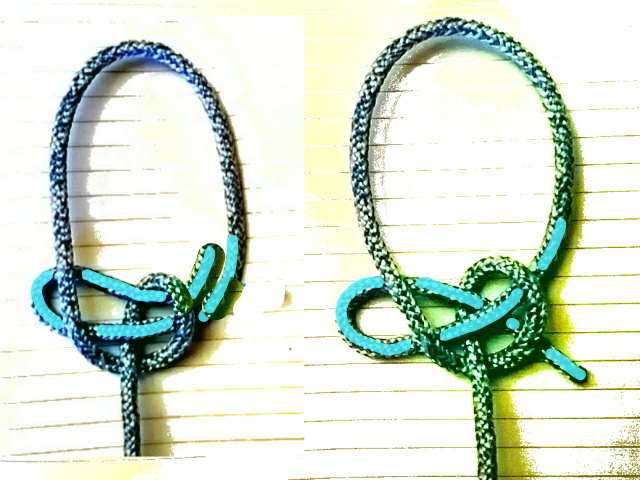


 you had illustrated and demonstrated it just fine, i had misread the photo.
 — sketchyknot for the win!