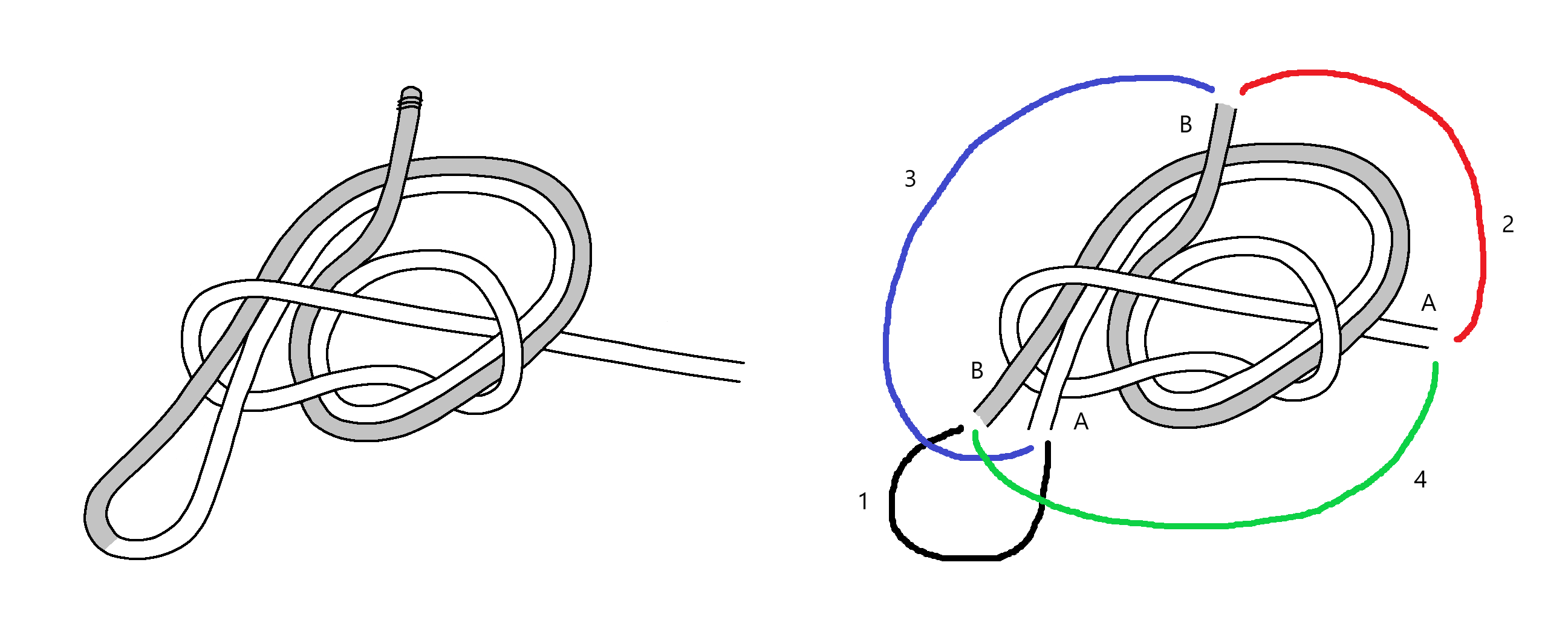
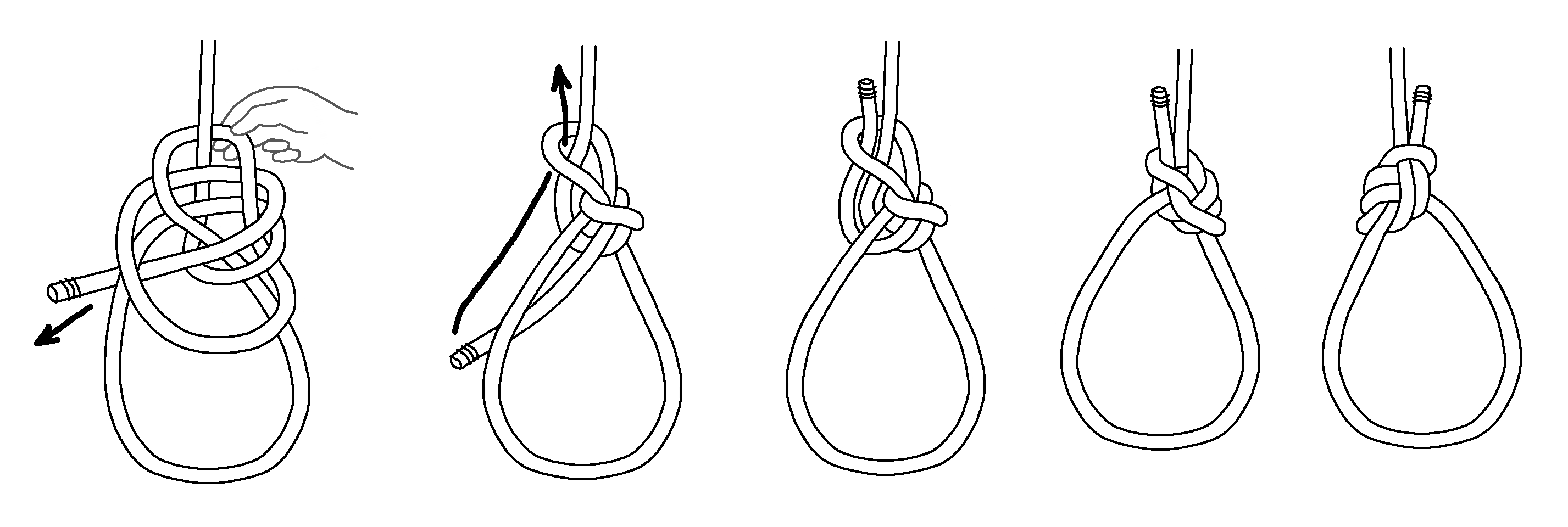
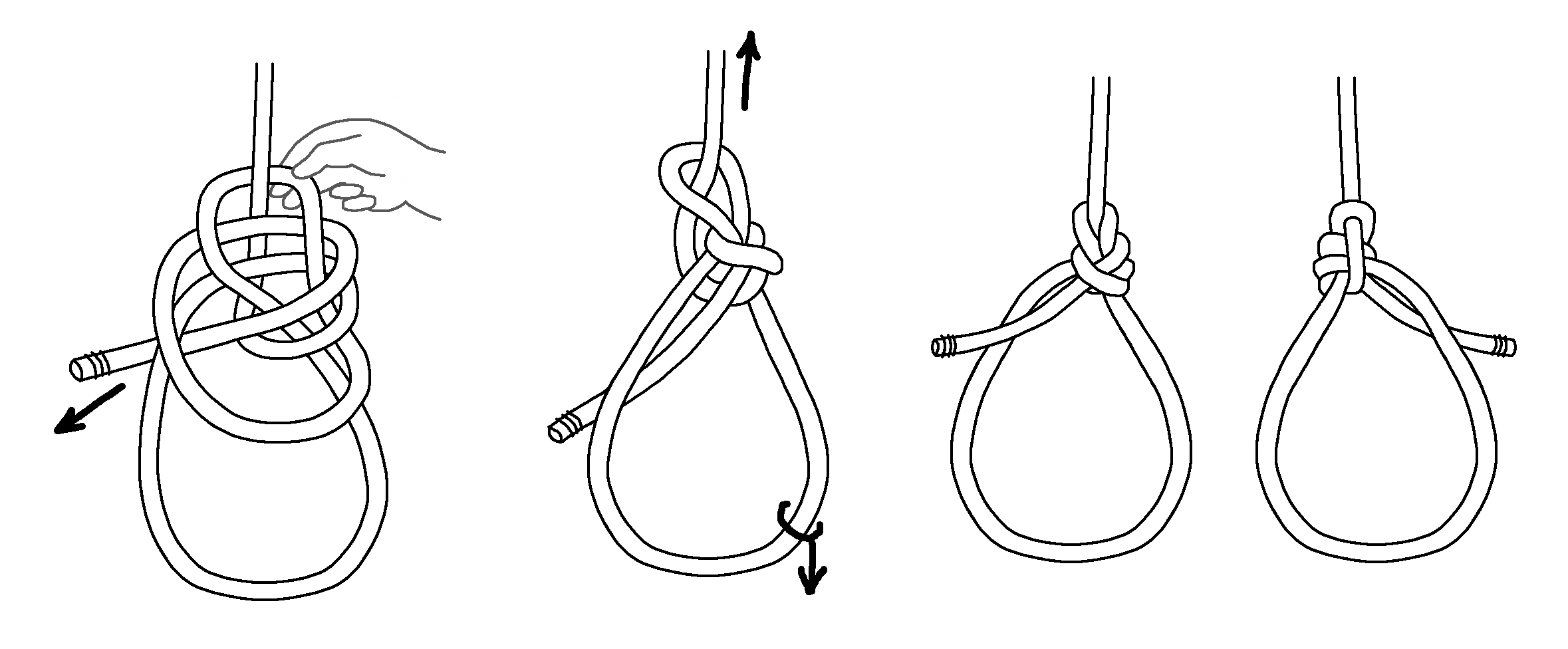
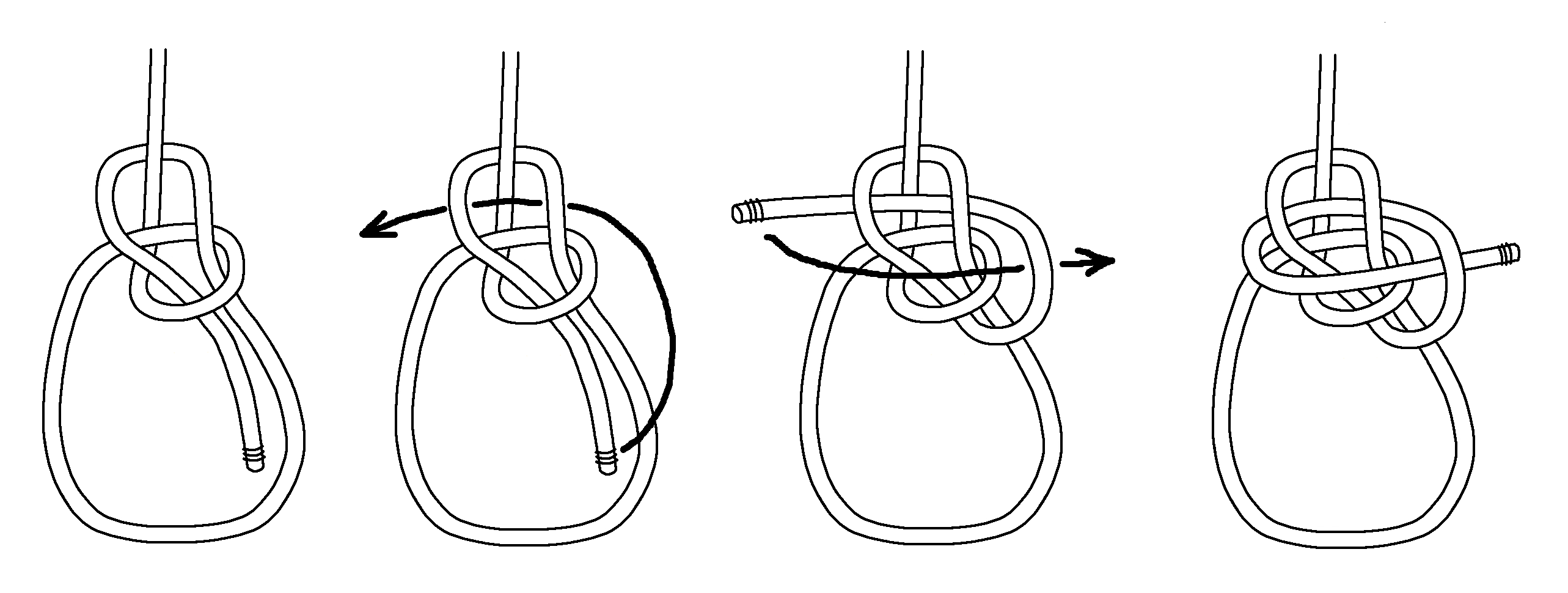
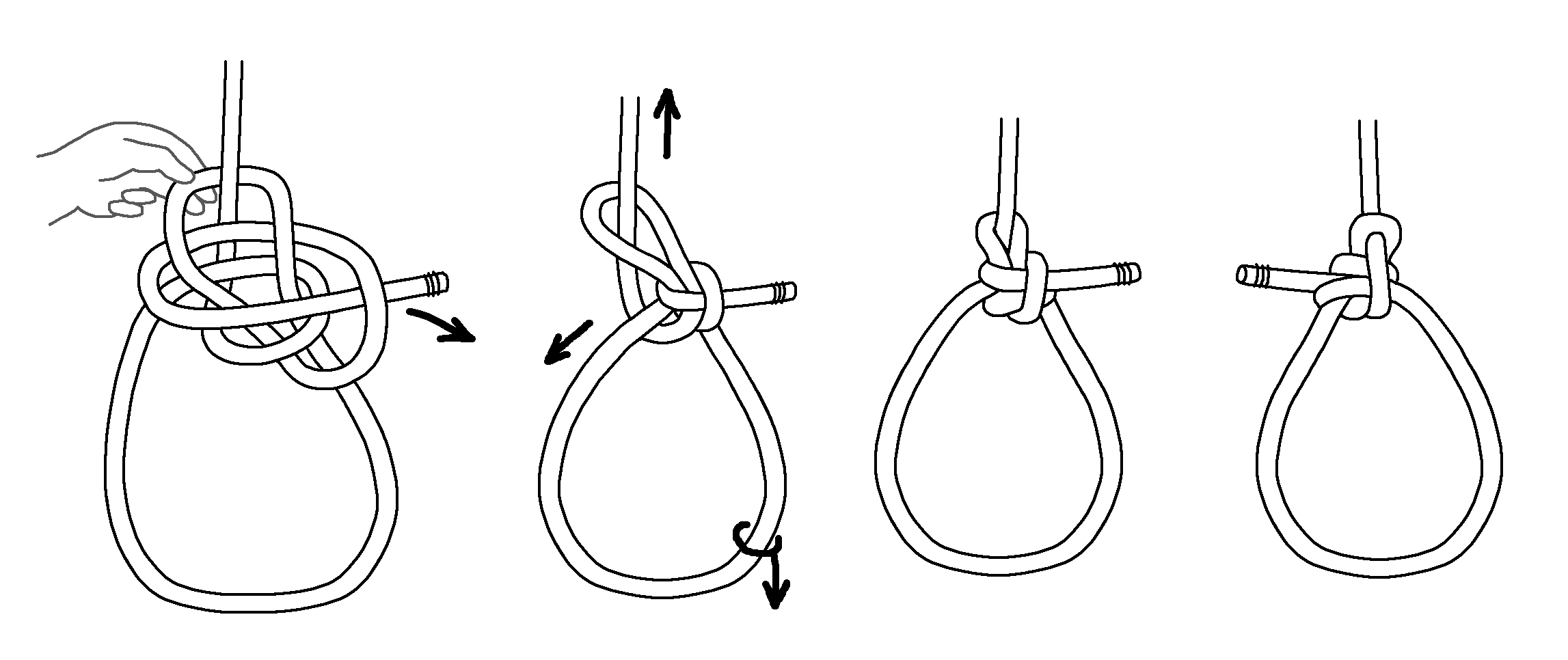
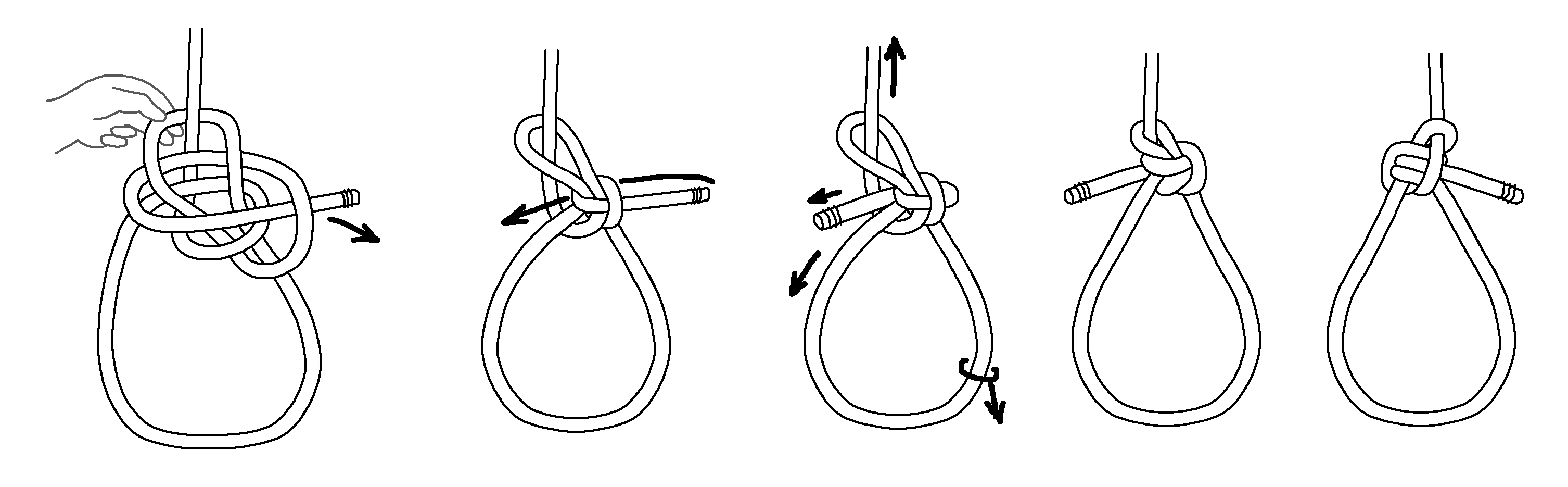
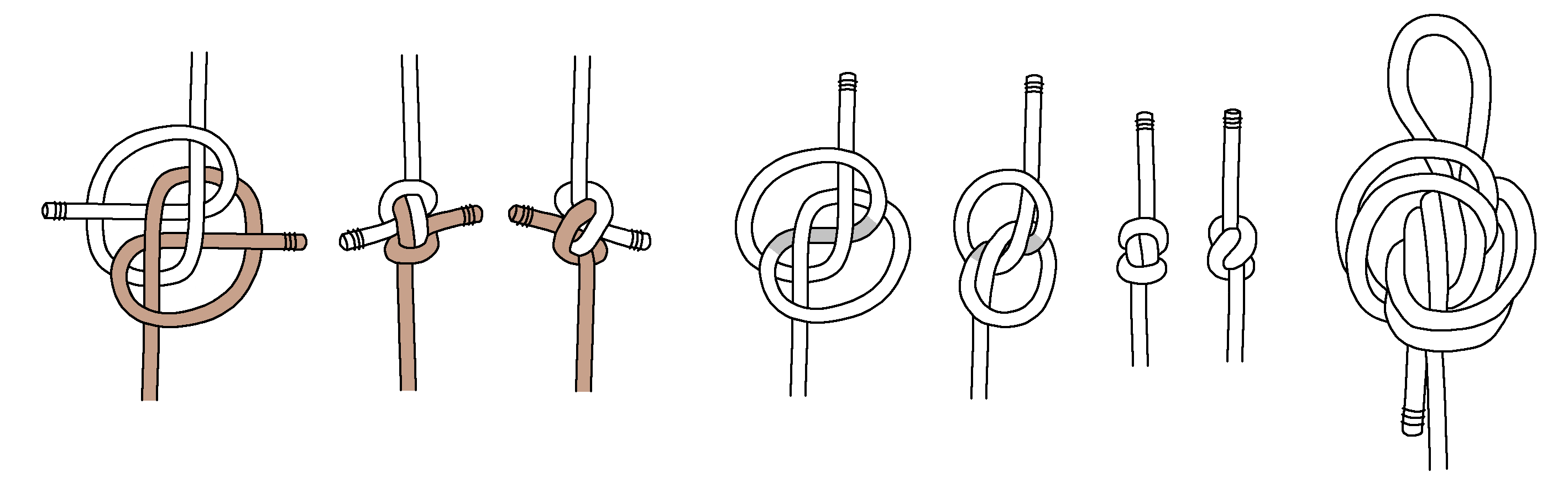
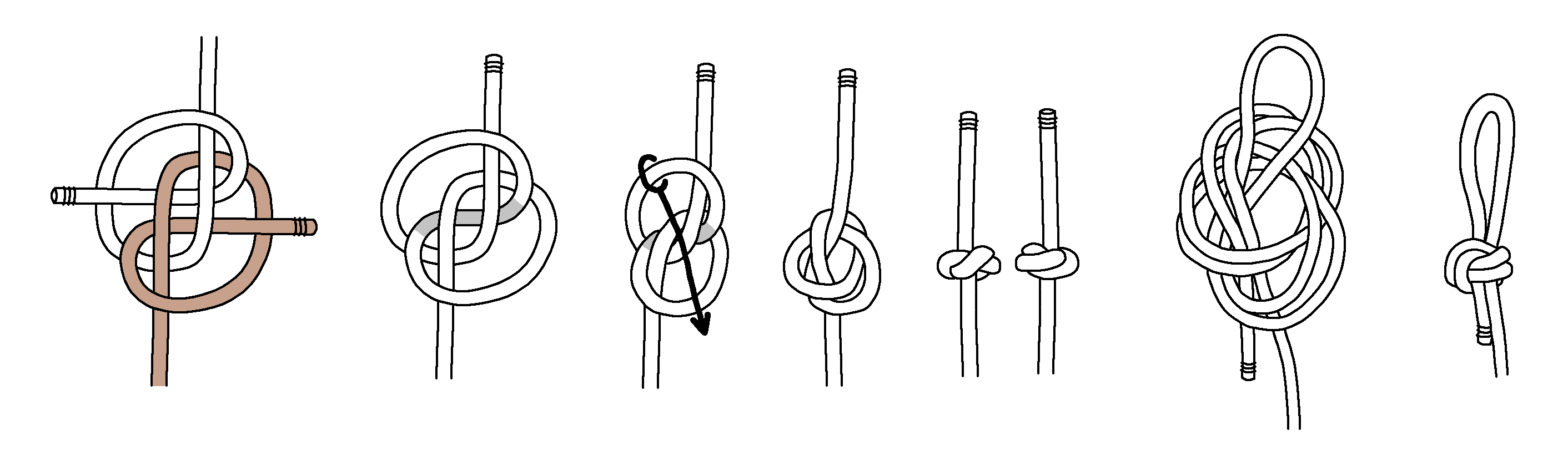
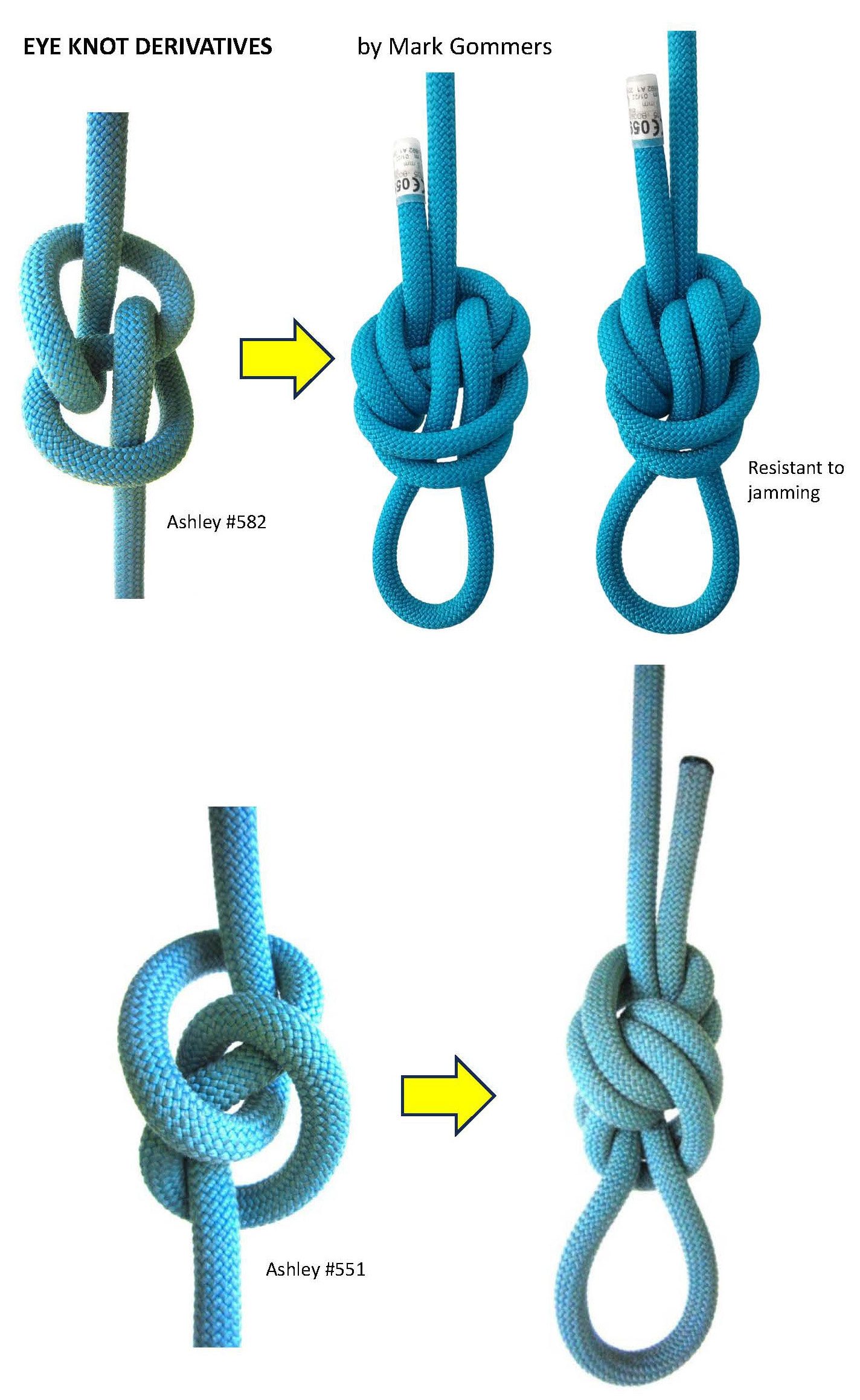
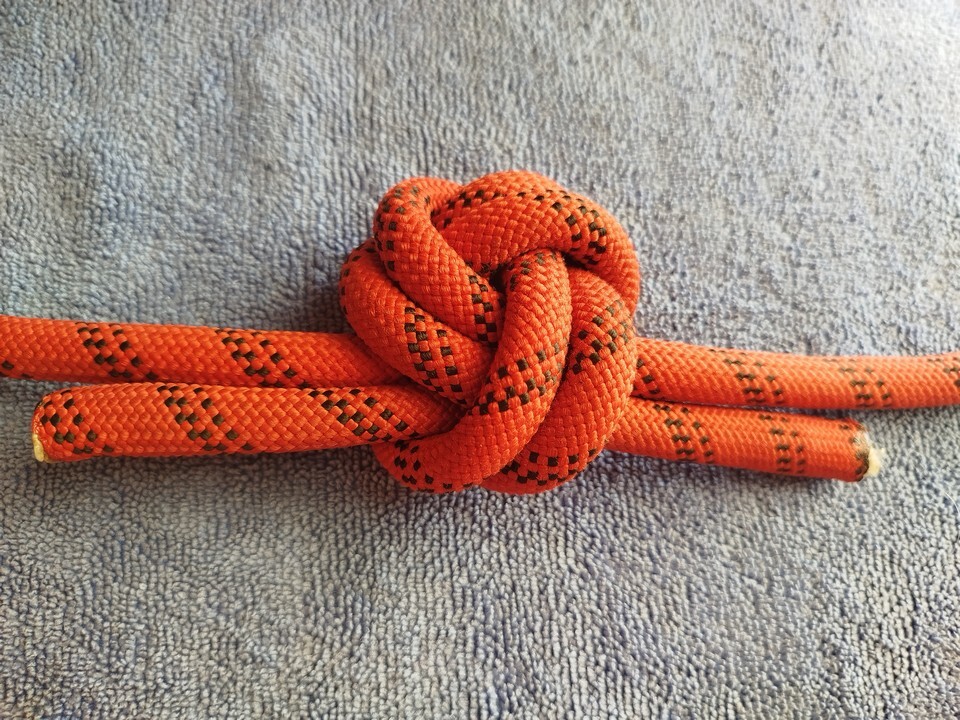
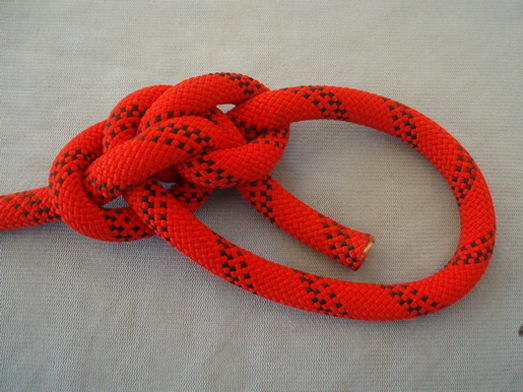
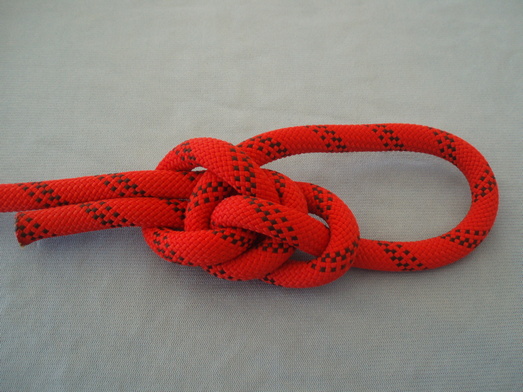
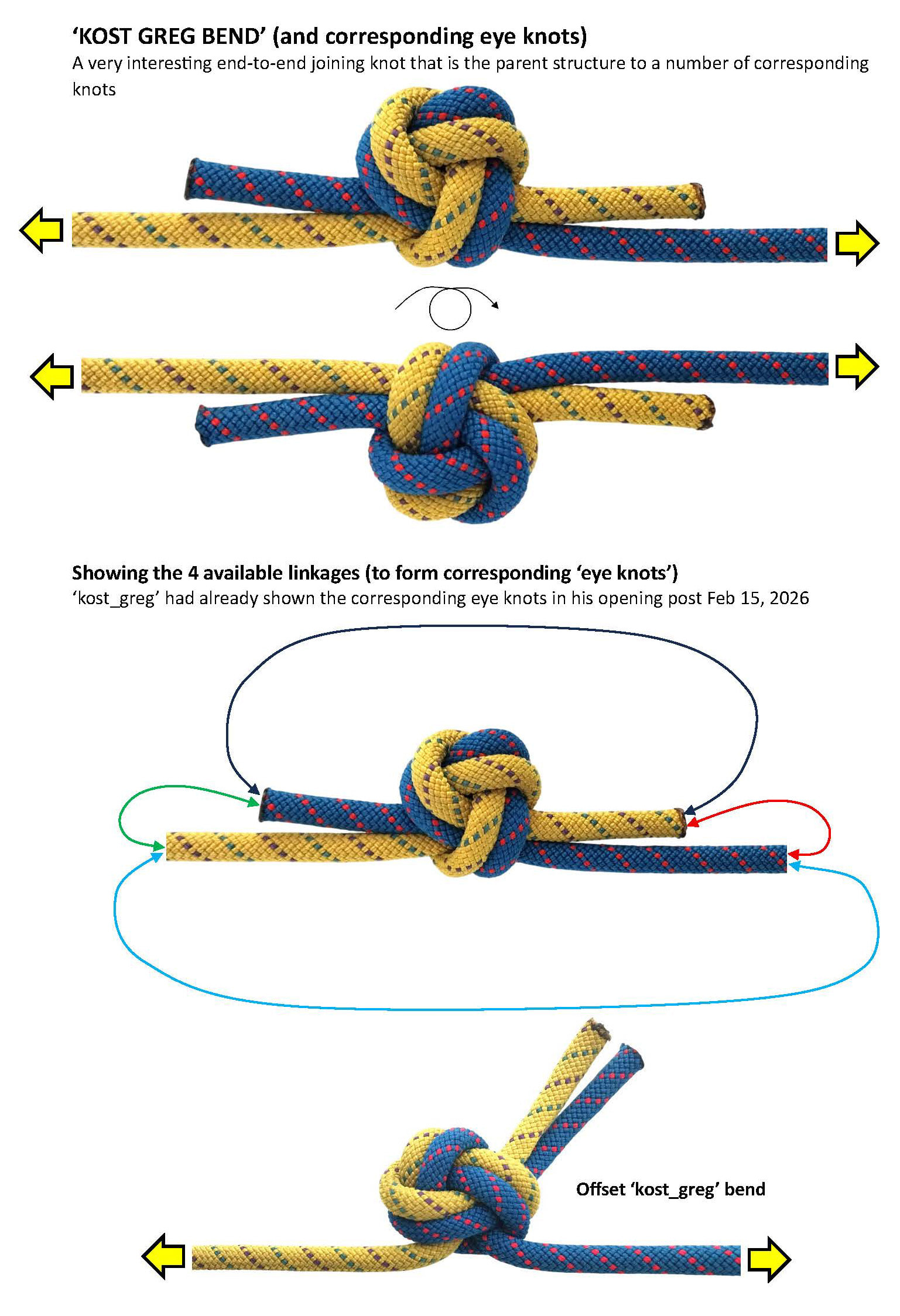
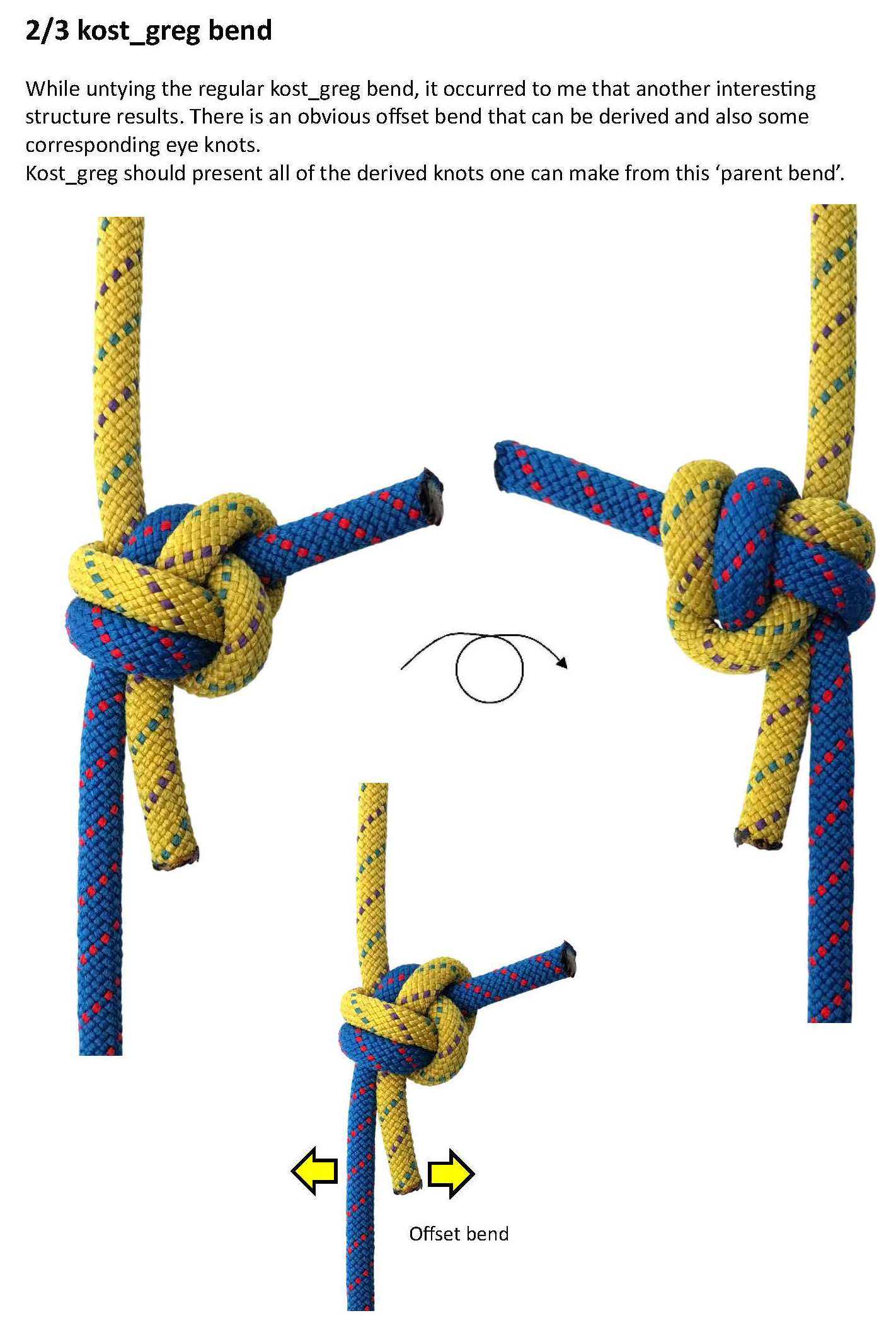
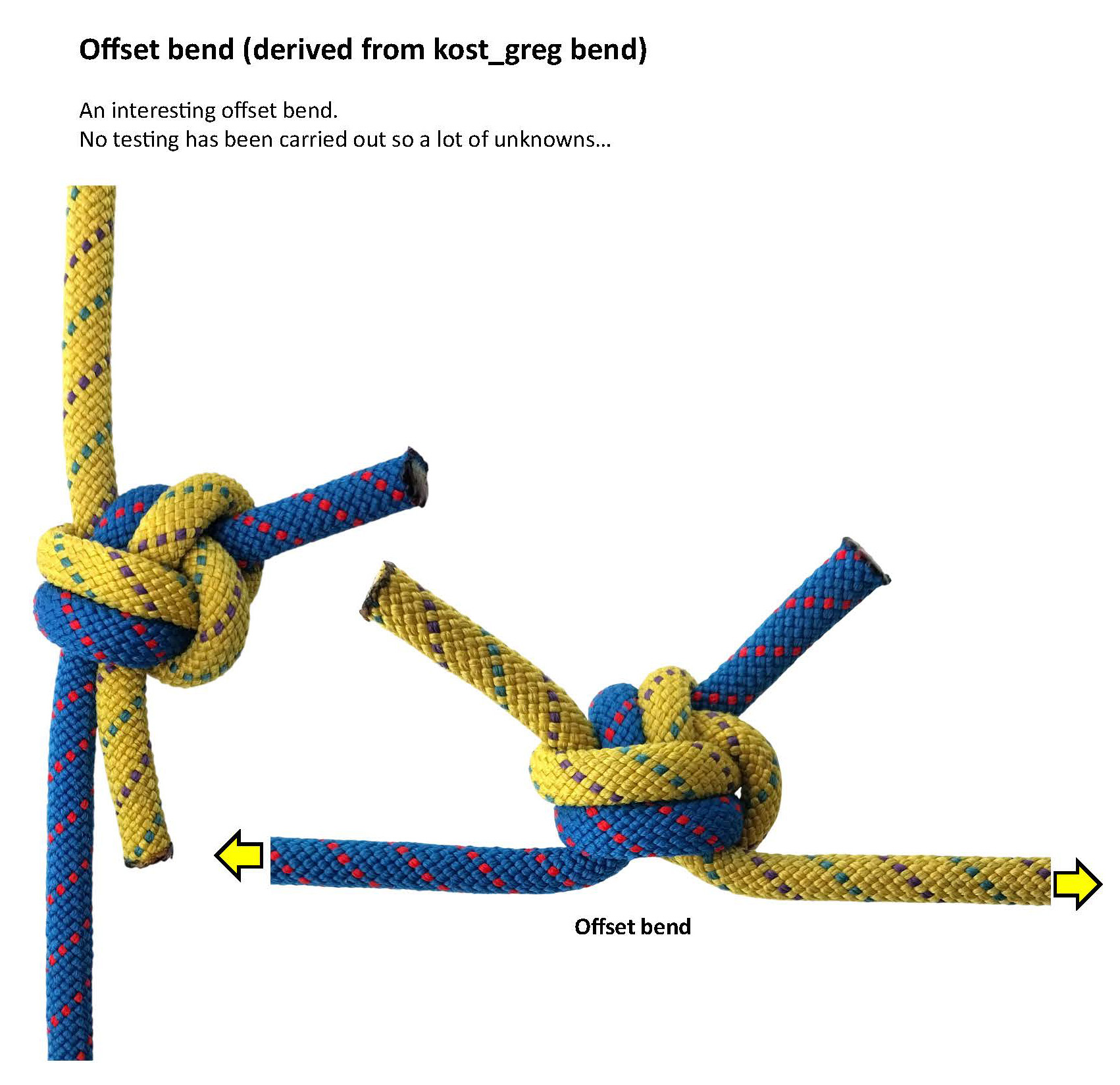
It is time in this discussion thread to move on to a different stopper knot. Here we begin to look for eye knots related to what is now called Ashley’s Stopper Knot [#526]. Ashley suggested in [#518, 531] that you might tie a stopper knot in the bight just to get a larger stopper knot. But he also noted that it is the same construction as a loop knot (or eye knot). First, here is the whole knot tied in the bight. Notice that it resembles a fully Doubled Ashley’s Stopper Knot [#553], and the three rim parts are doubled when used as a stopper knot. The noose part is also doubled.
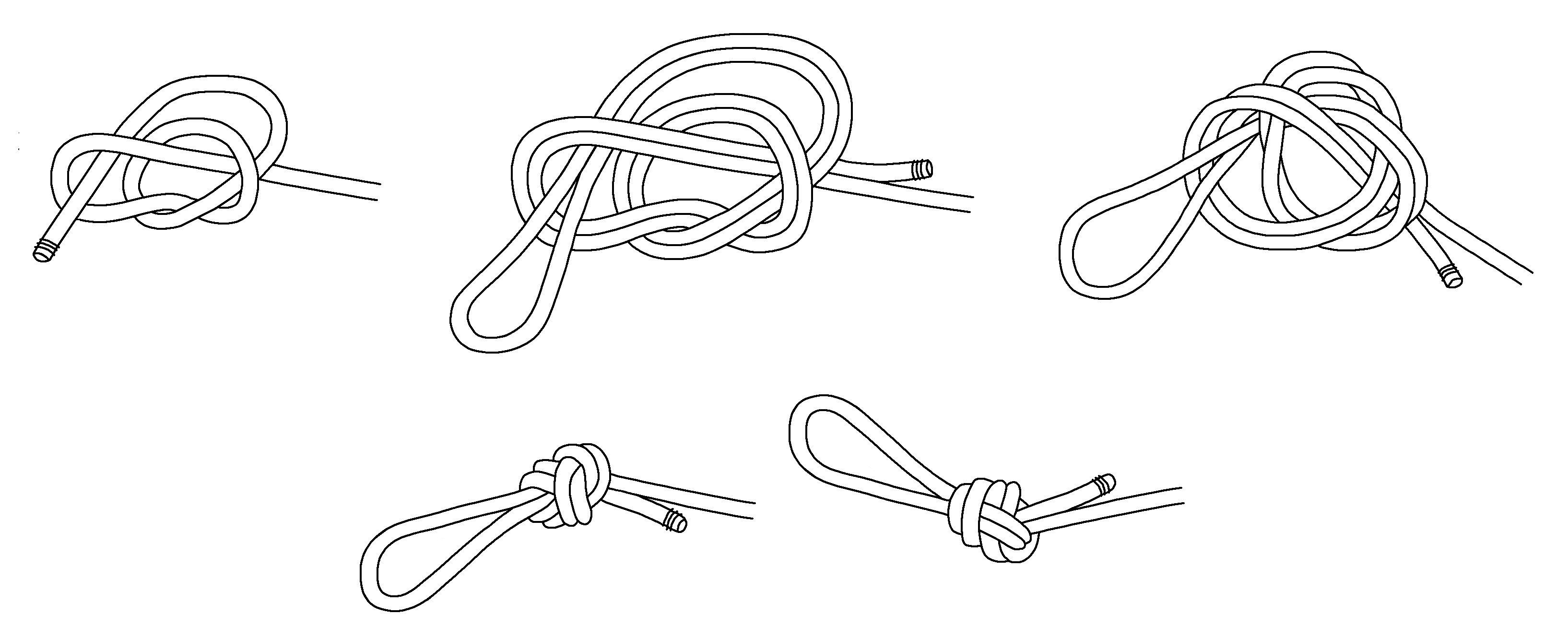
But you do not need to run the bight all the way back. Inspired by Ashley’s partially Doubled Ashley’s Stopper Knot [#552], the part of the noose that pulls in the free end does not need to be doubled. This also gives a larger stopper knot where the three rims are doubled.
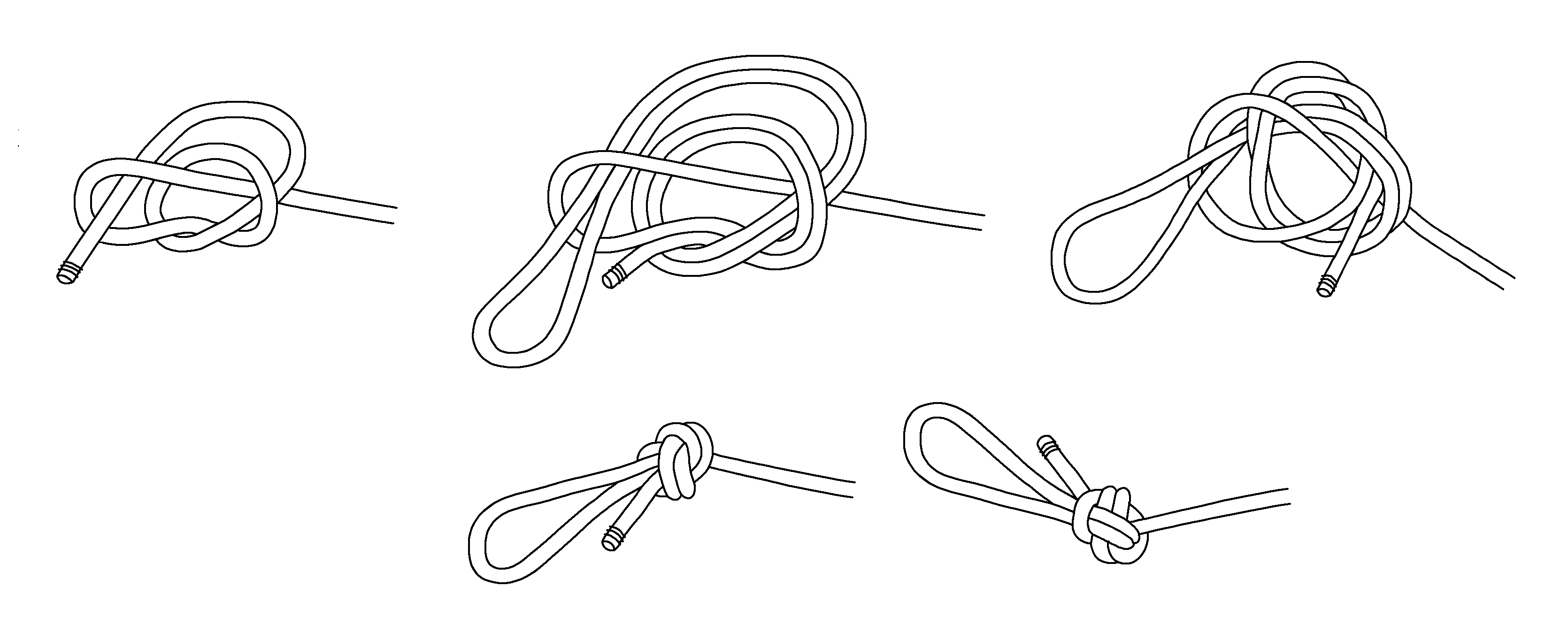
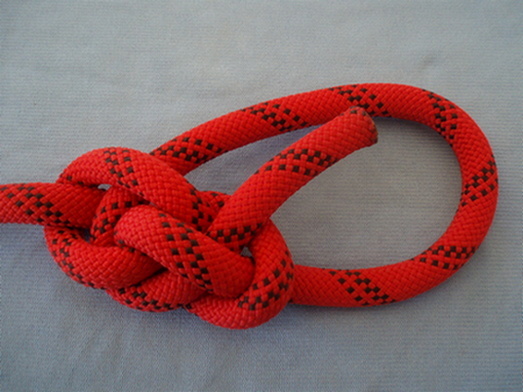
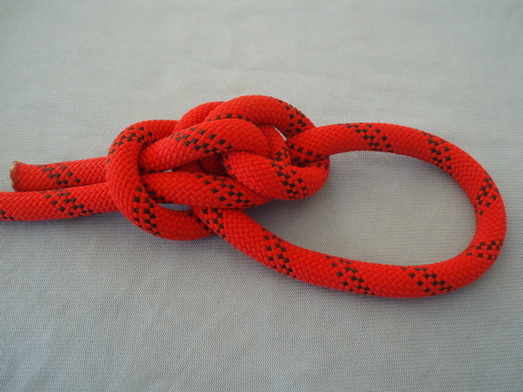
While the above might give a better large stopper knot with the free end away from the standing part, I did not like the fact that the free end comes out so near the loop if I wanted to use it as an eye knot. Thus, I removed one more tuck of the bight to get an eye knot that I liked better. Notice now one of the rim parts is not doubled, so this does not work as well as a stopper knot.
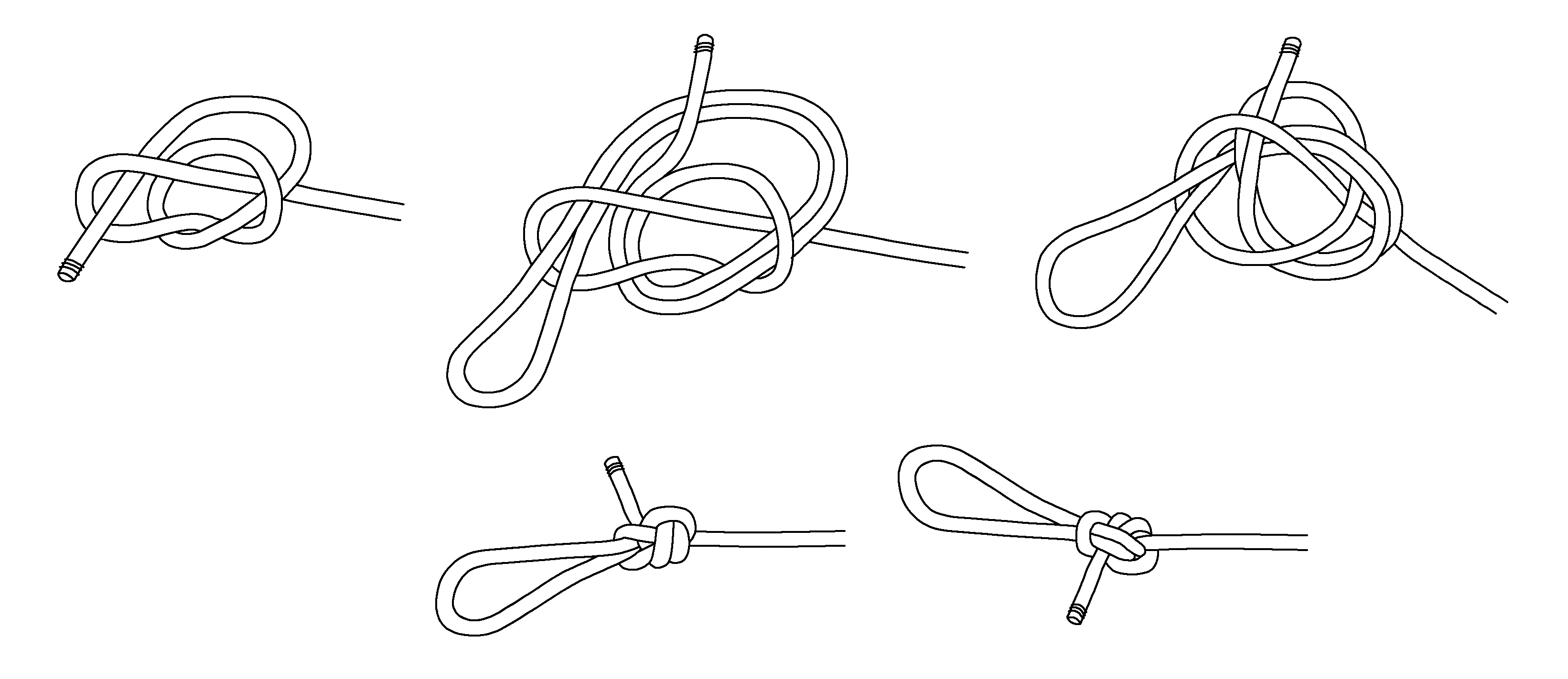
It was pointed out above that we are getting eye knots where the nipping structure is a stopper knot. Usually, we like eye knots where the nipping structure is simpler. The last eye knot above has nipping structure which is an Ashley’s Stopper Knot while the part with the free end is simpler. In an earlier discussion in this thread, it was shown how to get other eye knots from a given structure.
The relationship between ‘bends’ and eye knots - Knotting Concepts & Explorations - IGKT Forum
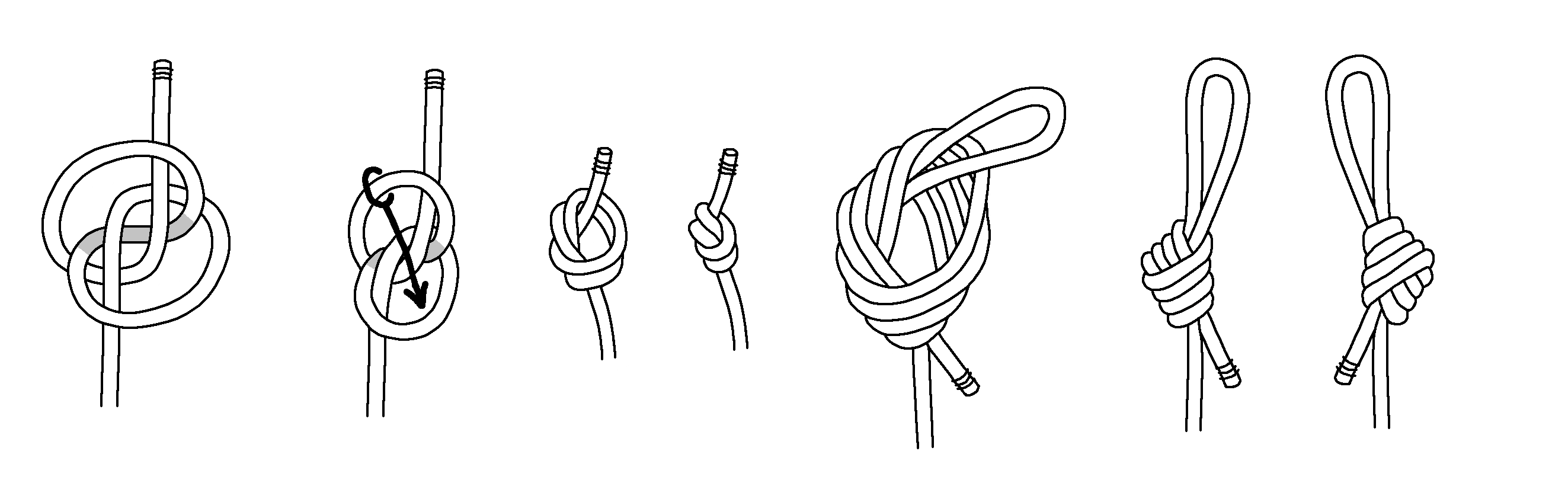
If we look at the structure of this last eye knot (where we have shaded the free end part and labelled it B, while the standing part is unshaded and labelled A), we see the four ways to get an eye knot from this structure.
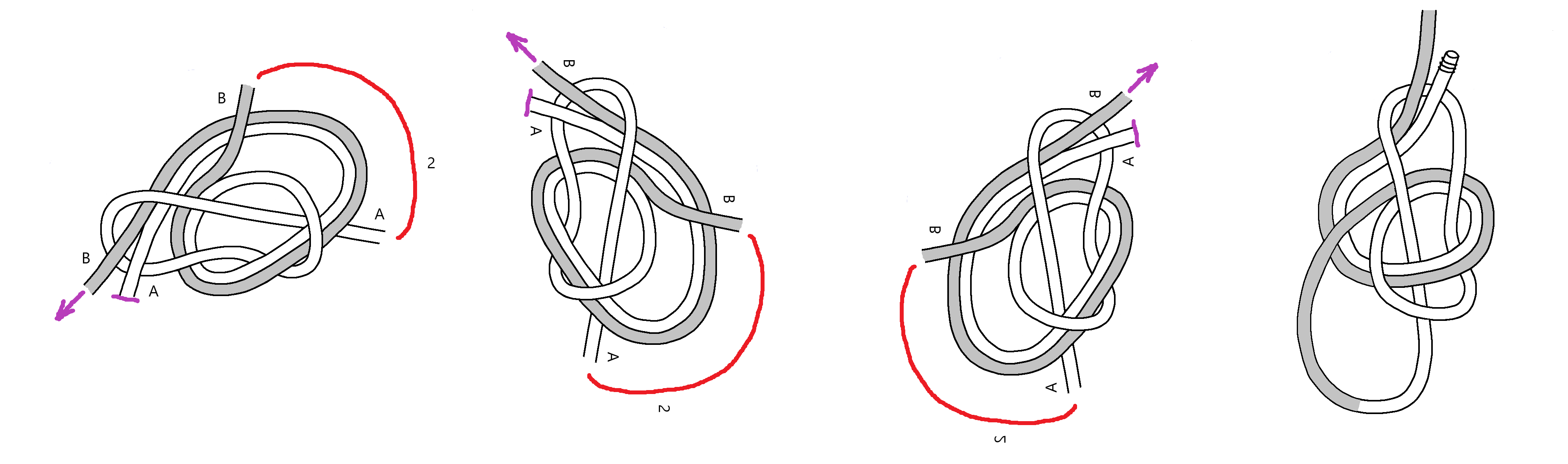
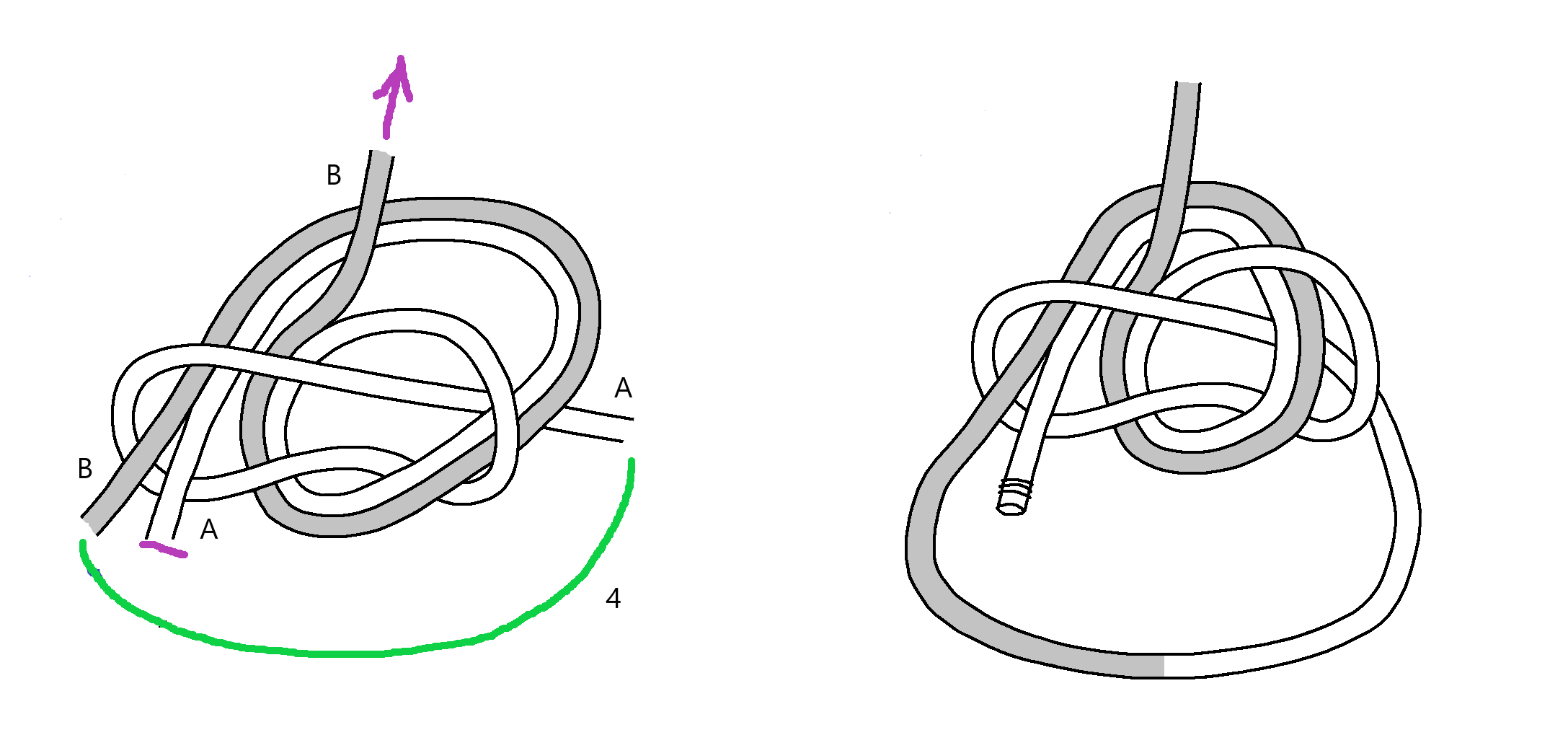
Now for each of these four loops, if we make rope A (unshaded) the standing part, the nipping structure will be the Ashley’s Stopper Knot (including our original). So, we skip these and move on to where rope B (shaded) is made the standing part. Notice that now the nipping structure is a simple loop (or crossing turn). Looking at what we need to do with the free end (unshaded), in 1 and 3, we have to tie the Ashley’s Stopper Knot backwards. Thus, we concentrate on 2 and 4.
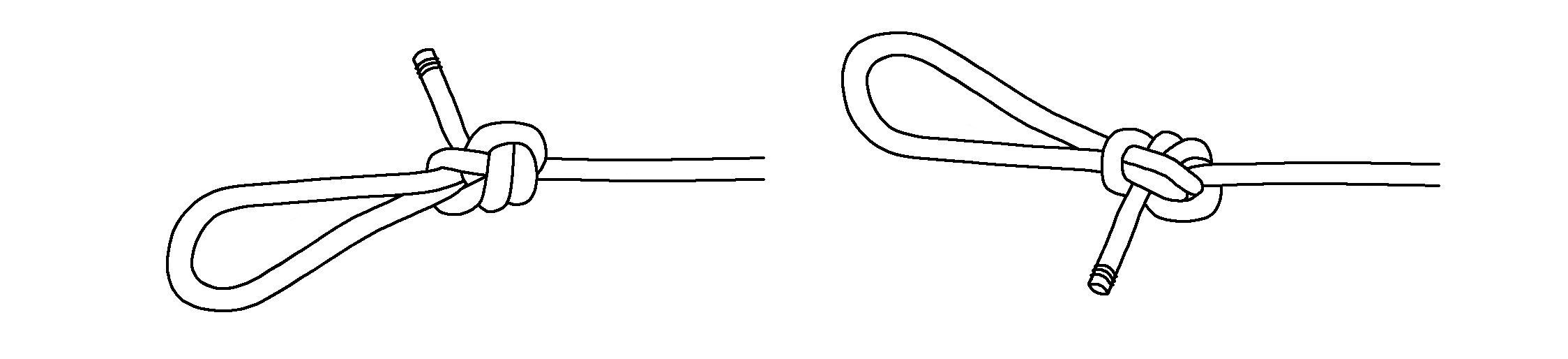
{We have rotated the structure 90 deg and taken the mirror image.} Notice that loop 2 actually gives an eye knot in the bowline family. The noose part of the Ashley’s Stopper Knot gives the collar (which goes around the standing part in the direction of a Cowboy Bowline).
Notice that loop 4 actually gives an eye knot which is in the anti-bowline family. I am not sure how practical any of these eye knots related to Ashley’s Stopper Knot are, but it is a fun knot exploration.
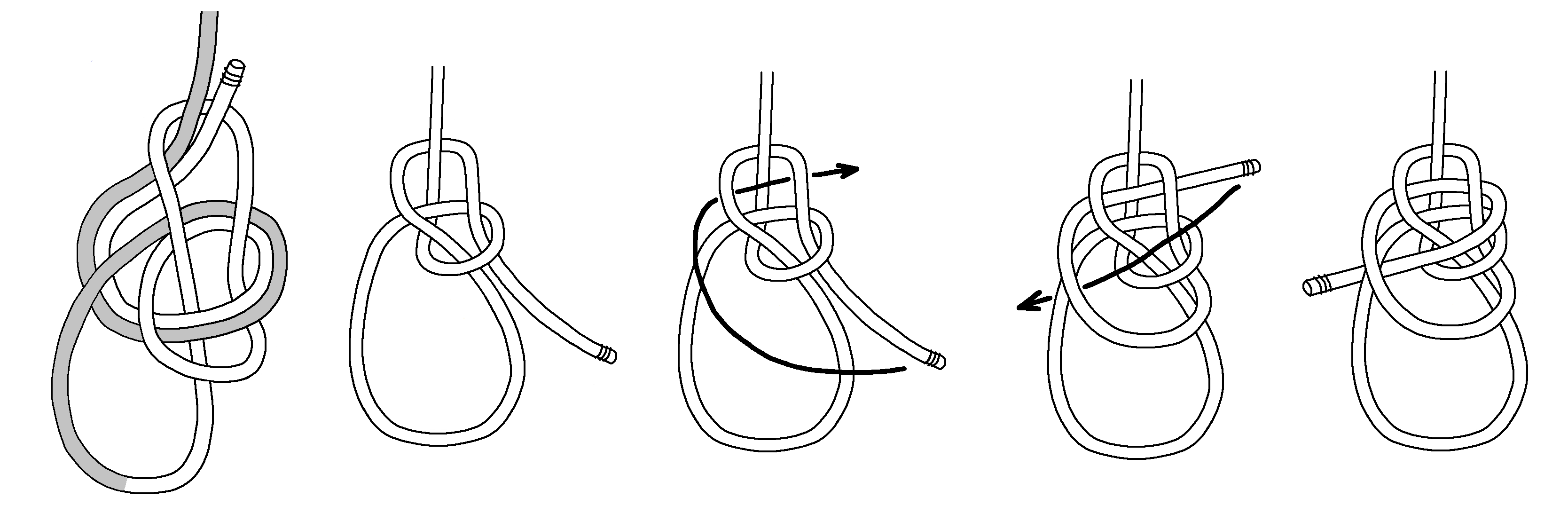
The flat representation for the bowline above with the Ashley’s Stopper end leaves some choices for tightening. Here is one way.
Just as with Ashley’s Stopper, it is best here to tighten the Overhand Knot that has now been tied before finishing the knot.
A variation would be to skip the last tuck, giving a Cowboy Bowline ending in an Overhand Noose.
You can also end a regular Bowline with an Overhand Noose.
If you insist on a final tuck, it does not work very well to try to complete an Ashley’s Stopper by tucking the free end into the collar. Instead, try an Alston tuck { see [#1015]}.
Nice work Dennis_Pence with all the Ashley stopper configurations.
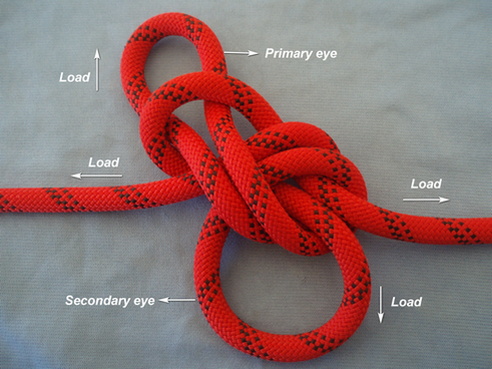
Although #526 is clearly a 1010 bowline with its eye shrinked/collapsed, i did not find any of the deriving topologies as much resistant to jamming as i would like.
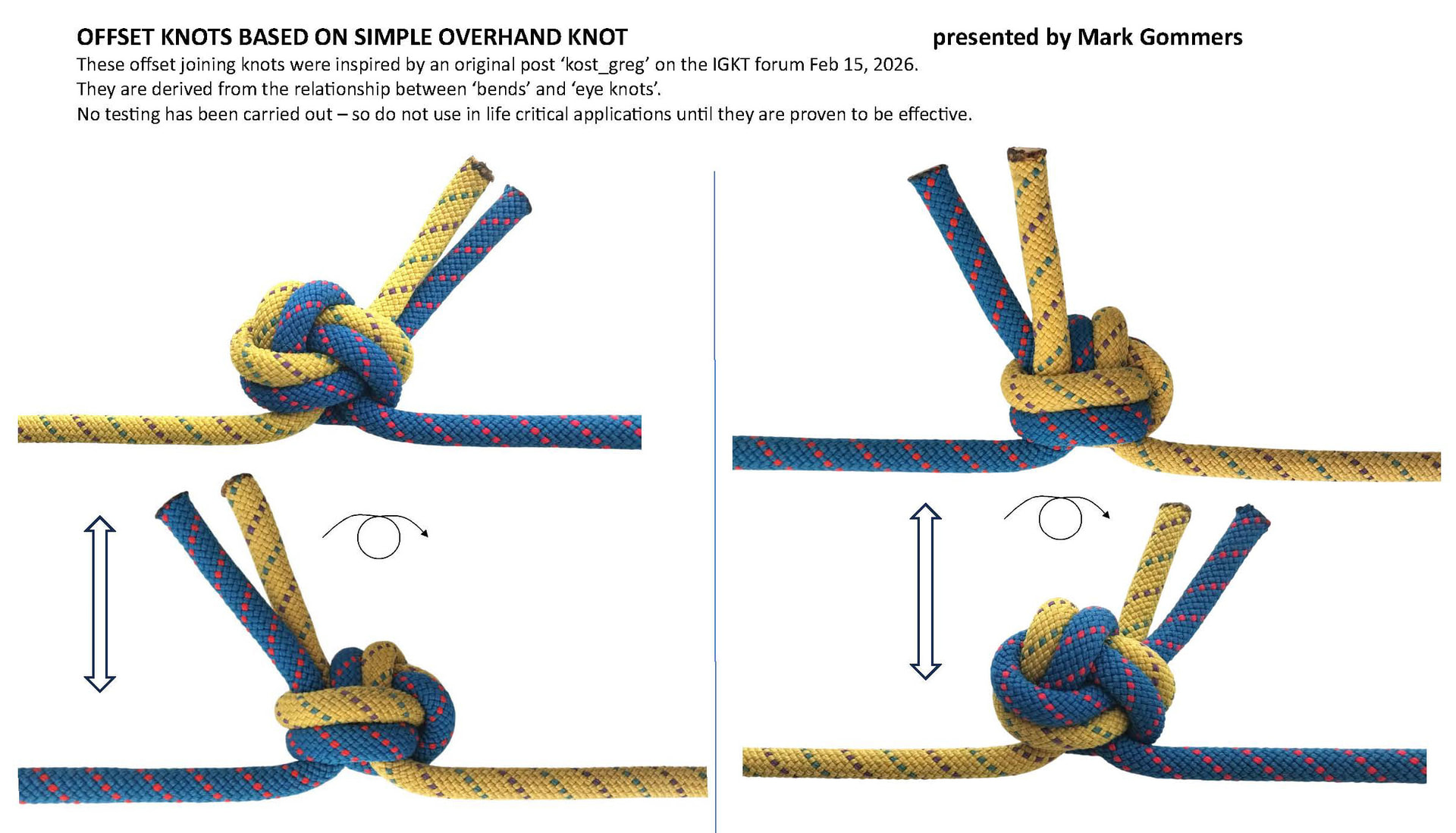
Nonetheless, the specific developments presented here are quite interesting, with particular reference to what is shown below
I would certainly prefer it in a more expanded form, free of any overhands, as i had configured it in an inline format with two eyes.
However, in your approach, the secondary eye is shrinked, and the knot is presented as an end termination knot.