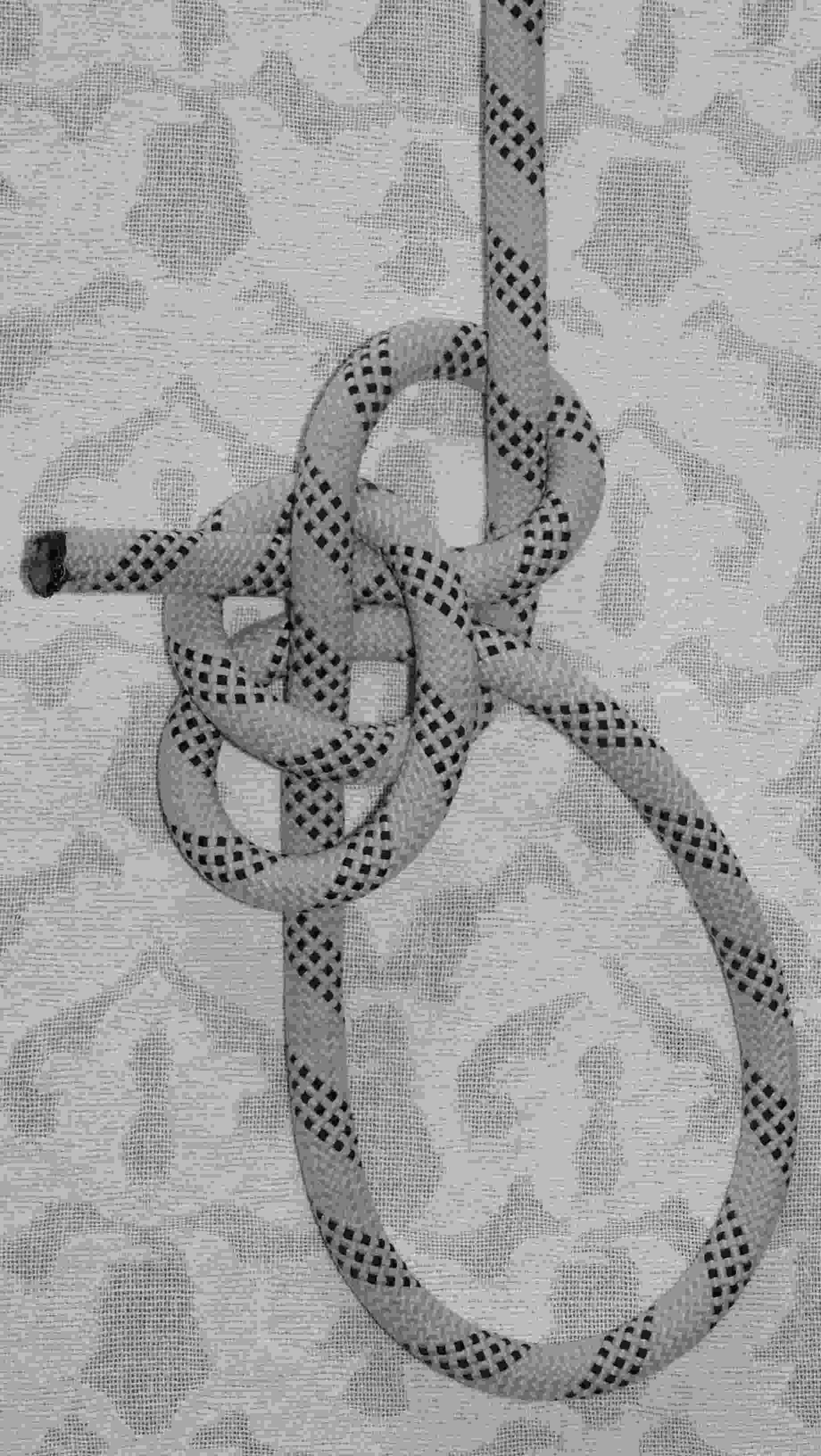
If you read carefully, you will see what I had meant…It was not the length itself of your previous post that bothered me. After all, my posts are 10 times as lengthy ! :). It was the style, which was sarcastic a little bit, like you have just uncovered an obvious mistake of a pupil, and you are proud to reveal this fact piece by piece to the poor boy… Well, you could have said what you said in just 2 lines, and I would have answered in 4. And you should have learned by now that I was not mistaken, so the style missed its purpose…I do make mistakes, A LOT of them, but not sooo silly like a mistake in addition of 50 +50… !  You forgot to take into account the friction between the rim of the turn and the two legs of the collar that penetrate it. If the mechanism could work without friction on this particular point, it could have not been in equilibrium, and the turn would have started walking on the tensioned line, and would have reached the tip of the bight in no time ! So, when the mechanism is encountering yet overcoming friction forces and it is moving, you can not expect a neutral sum of the forces that act on it, like this 50% + 50% = 100% you have stated in your comment. I know that most people would be surprised by a “single turn” component of the bowline walking along the standing part, but this is exactly what would have happened had it be no friction between the turn s rim, the wheel, and pair of the collar s legs, the wheel s axle. If you glue the two legs together, and pass them through a ball bearing, and then roll the turn around this ball bearing, as soon as you load the bight the one leg will wind around the rim of the bearing while the other will unwind , the turn, as a whole, will move towards the direction the collar pushes it, and the bowline will be transformed in a " double turn component" at the tip of the former bight !
Yes, the two " half hitches" will hold almost everything, and the four “half hitches” will hold anything ! A series of “single turns” , where each single turn is not a hitch, behaves like a compound hitch - because the last leg would be completely untensioned, i.e.free.
However, I have to point out this : A sufficiently large number of wraps around a pole, will behave like a hitch also ! I guess that 8 wraps will hold anything, and this has to do with friction and the capstan effect. Should we call a single wrap " a hitch" ? It is exactly the same : When examined in isolation, both the “single turn” and the “single wrap” are not hitches, but a sufficiently large number of then makes them behave like a compound hitch, indeed. I prefer to examine each and every individual component in isolation from the others, that could well interfere with it and generate something new, something that was not expected to happen. If it happens, it happens because of accumulation of friction forces, not because of something inherent in the individual component. So, I will not call “a hitch” any such component, even if their superposition behaves as a hitch, indeed.
Constant