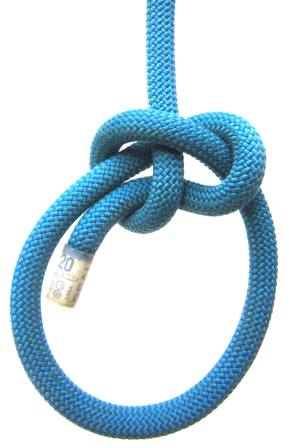
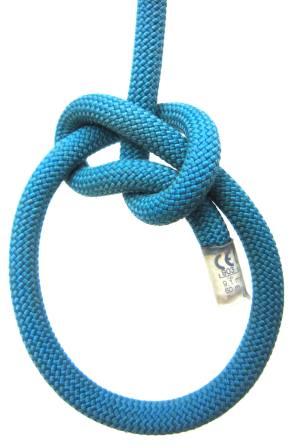
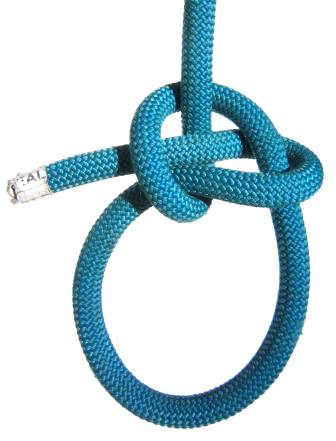
Analysis of Bowlines paper uploaded for review and comment (PACI website)

If you fix your notion of what “simple” is at
a reasonable point, there are some knots that
aren’t so simply tied by the end but which come
easily via a TIB method. I know of such an eye knot
where the tail makes a quite simple half-hitch, 270deg.
passage; but it does this in a rather convoluted S.Part
tangle, which itself doesn’t come easily PET so to
be held and impaled by the tail. So, this eyeknot while
appealing in result and coming fairly easily TIB is not
so happily tied with the tail --where one would be forced
to essentially tied some form around fingers holding it
just so in preparation for the tail’s contribution to making
it complete, stable.

The TIB condition is NOT a "constrain", it is a bonus regarding versatility. And the bright "idea" implied on this sentence, that TIB-ness is not a "practical property ...
When you use it as your litmus test to accepting the knot, it obviously is a contraint. And what is practical is defined by the particular practice --which if [i]TIB[/i] is irrelevant means just that, nevermind that somewhere in some other knotting need there might be benefit to that aspect. And, of course, the same reasoning will support using a [i]TIB[/i] knot no matter whether it is [i]EEL[/i] --a point that you and I defended with the example of wanting to put in an eyeknot for quick, temporary use in a long rope, and having no need for loading both ends; so, some [i]TIB bowline[/i] comes in nicely, even it it would make an ugly thing with both ends loaded; we do not need or want to use the [i]butterfly[/i] here, no.

–dl*

To whom am I talking ? To roo ?
Of course there are - I had said it many times, and I had even pointed out that they may even be tied more quickly, in-the-bight - and even more safely, in the sense that it would be more difficult / rare to tie those knots wrongly, if we follow a TIB method.
BUT THIS HAPPENS TO KNOTS WHICH ARE ALREADY TIB. We can also compare their tying in-the-end method, with tying in-the-end methods OF OTHER TIB KNOTS !
So, the “idea” that we should abandon a TIB knot, that is not as easily tied in-the-end as another TIB knot, or that is not as easily tied in-the-end as in-the-bight, and select a NON-TIB knot instead, is the purest, highest form of nonsense I had ever read ! I could nt had imagined such a thing, even in a thousand years…

Please, read, slowly, the phrase :
ceteris paribus, a TIB knot is, by definition, preferable to a non-TIB one.
Read it again ( repetition is the mother of learning ):
ceteris paribus, a TIB knot is, by definition, preferable to a non-TIB one.
Now, read it in RGB ( that is “colourful” :slight_smile: )
ceteris paribus, a TIB knot is, by definition, preferable to a non-TIB one.

If you had not understood it by now, go to a nice summer place, NOW ! :slight_smile: ( Yesterday, if possible… because your two today s posts, are - how to say it politely ?- entangled ( Erwin Schroedinger s term )
https://en.wikipedia.org/wiki/Quantum_entanglement

Let me try to say the same things, with other words :
We are not talking about choosing a TIB knot which is difficult to be tied in-the-eye, instead of an also TIB knot, which will offer the same things, and will be easy to be tied in-the-eye, of course !
Also, we do not talk about a TIB knot which is difficult to be tied in-the-bight, period. Such a knot will seldom be tied by a knot user as TIB, so why it should be TIB in the first place ? When I am not able to figure out an easy to learn, remember and implement TIB tying method for a TIB knot, I dismiss it immediately - although I keep in mind that, actually, there may be such a method, but I have not learned/discovered it yet…
We are talking about NOT choosing a TIB knot, because it is difficult to be tied-in-the eye, AND choosing a not-TIB knot instead, which is easy to be tied-in-the eye - and this “talking” is a desperate attack on TIB knots, often orchestrated by people who do not know such knots, or do not know how to tie them in-the bight : a typical sour grapes approach, by knot tyers who can not learn anything new, and they try to convince themselves that there is nothing new under the sun, or there is nothing worth learning. Combined with the accidental fact that “I” happen to like to learn and tie TIB knots ( and who “me” is the same person who tie only “random”, or “decorative”, or “overcomplicated” knots, who “steals and nicks other people s images and he posts them”, who is “a charlatan and also a nuisance - a PITA, who largely does not contribute in a constructive way”, who, although is not (yet ? ) “waterboarding” people, nevertheless he is “keyboarding” them, etc, etc. ), made some notknot-tyers here to try to declare that TIB-ness is just an “acronymized” property, without any “practical” importance. The truth is that I am glad they have now reached the end of their line, and they are forced to attack properties of knots, because they can not attack me… Their only next step, is to start defending GLUE, and dismiss knots altogether, just because I happen to tie knots… :slight_smile:
Of course, when/if, in a particular application, TIB ness is not needed, or when-/if it can not be used ( because we have, for some reason, to tuck the free end of a the line through a ring, for example ), TIB-ness will be no factor in our decision ! However, we do not have only knots for particular applications :slight_smile: :). If that was so, we would had thousands, millions of different knots, because we have thousands, millions of different applications. We want knots that can be used in as many applications as possible, because we want to remember, and to be able to tie, dress and inspect quickly and correctly, as few knots as possible. Even if TIB-ness will not be required in a particular application, we will still tie a TIB knot we know and trust, because it will be required in another application ! As I had pointed out whimsically, TIB-ness may be of zero value, but it can not be of negative value ! :slight_smile:
There are few, only, knots which are difficult to be tied in-the-end. And I am not talking about overcomplicated, big knots - we dismiss those knots because they are overcomplicated and big, not because they can not be tied easily ! Most of the simple practical knots we know and use, can be easily tied in-the-end - although few, only, of them can be tied-in-the-bight , and even fewer can be tied-in-the-bight easily enough… However, as we come to appreciate the versatility ( and the beauty, I would add ) of TIB knots, as we learn more about knots, in general, so we can “design” them to meet our demands AND be TIB as well at the same time, and as we learn more about the topological “tricks” regarding TIB-ness ( as the “haltering the collar” tying method ), we find new TIB knot we had not known till now ( or, even if we knew, we had not appreciated ).
I had seen that there are TIB hitches which are BETTER, and tighter, than almost all the not-TIB hitches, and that there are TIB fixed and adjustable loops and binders which offer at least anything any not-TIB loop and binder offers. Of course, there are many people who prefer to die, than to acknowledge the value of ANY of those knots - and the recent attack on TIB-ness in nothing else than a desperate effort to blur the issue, and to throe mud in some beautiful, superb TIB knots they had not been able to tie, and they can not understand or accept why.
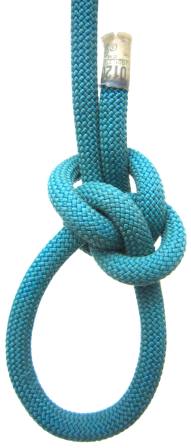
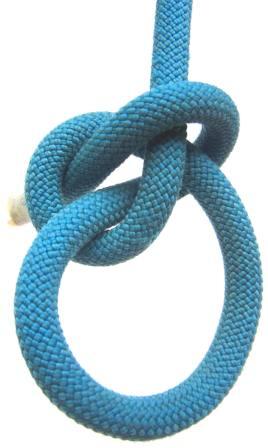
“Literature” [sic] ! (sorry, I’m skipping most, now --time)

We are not talking about choosing a TIB knot [that] is difficult to be tied in-the-eye, instead of an [i]also[/i] TIB knot, [that] will offer the same things, and will be easy to be tied in-the-eye, of course !
But I keep reading that you reject out of hand non-[i]TIB[/i] knots, and yet some might well work.
Please, read, slowly, the phrase : ceteris paribus, a TIB knot is, [b]by definition[/b], preferable to a non-TIB one.
Whose definition? --yours! In fact, if one simply wants a knot in some point of a line --and some mariners do this for marking--, a [i]TIB[/i] knot is [i]by definition[/i] not all so good, as there is some chance of it being untied.
Also, we do not talk about a TIB knot which is difficult to be tied in-the-bight, period. Such a knot will seldom be tied by a knot user as TIB, so why it should be TIB in the first place ?
Because of some desirable properties of this knot for use [u]when finished[/u]; difficult tying might be just an accepted price for performance. --a possibility.

I will suggest that the majority of those rope users who
tie a Yosemite bowline are unaware that it is TIB --at least
I’ve never seen that aspect explicitly indicated. And yet
the knot is much used, much known (to that extent,
but obviously not completely); it does its job. And if one
were to find a version in which some change of crossings
lost the original’s TIB aspect, it would make no difference
to those users; conceivably, the version would improve some
actually needed aspect.

Only if you broaden your range of needs to be open-ended
and somehow imply a limitation on known knots would there
be value to the YoBowl’s TIB aspect --which would provide for
some in-broader-use-domain use of the YoBowl.

I will leave the TIB aspect in some standing as “strength”
–often nice to one’s thinking, but often without effect in practice.
And “better”, often only in some small degree.

–dl*

Dan Lehman, your situation does not improve ! :slight_smile: :slight_smile: :slight_smile:
By the definition of what does ceteris paribus mean ! :slight_smile: :slight_smile: :slight_smile:

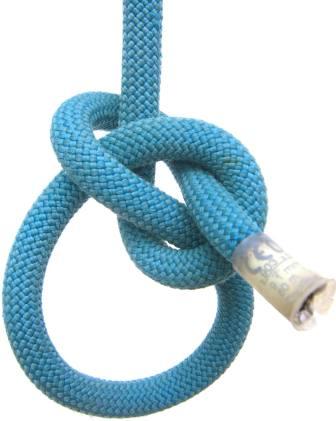
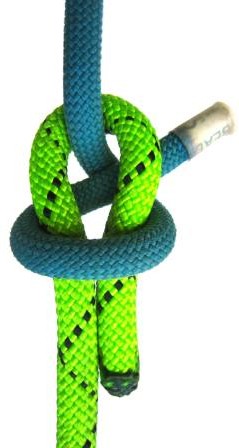
Some more Eye Knots to examine…

These eye knots are (I think) another creation of knotting master Alan Lee… maybe Luca can weigh-in with some history/facts please?

These eye knots contain a single helix nipping structure - however, the first collar-capstan manoeuver doesn’t orient in the same way as the original #1010 Bowline. In a standard/normative Bowline, the 2 legs of the collar structure are parallel and both enter the nipping structure from the same direction. In the ‘Myrtle’, the legs of the collar enter the nipping structure from opposite directions.
It in effect forms a secondary single helix structure - ‘offset’ around the initial helix nipping structure’s crossing point. Then, it continues to form the 'collar-capstan around the SPart to finish.
Of note, is that it places 3 rope diameters inside the helical nipping structure.

I think Dan Lehman originated the term ‘Myrtle’ to describe Bowline-like structures with this type of manoeuver (Luca… check please)? And it seems that a significant sample of Alan Lee’s creations use this ‘myrtle-like’ manoeuver as the basis of the structure?

I have referred to these structures as ‘Eye Knots’ although they do contain a key element (or ‘essence’) of the standard #1010 Bowline - which is the single helix nipping structure. What differs, is the subsequent manoeuvers to eventually form the collar-capstan.

I need some opinion on this ‘myrtle’ manoeuver as it doesn’t create the standard collar-capstan we see in the standard #1010 Bowline.

Specifically, is this type of structure deserving of the title ‘Bowline’ ?

Or is it simply an Eye Knot containing a single helix nipping structure - and therefore closely related to the standard Bowline - but missing the collar-capstan structure?

EDITED: Edited for clarity…


EyeKnot_Single-Helix_Myrtle_Rear.JPG

Related to my post above are detailed images showing what appears to be termed a ‘Myrtle Bowline’ - I am not saying that I agree with this term…(without universal consensus). Morel likely than not, the geometry is a helix within a nipping helix - and offset around its crossing point.

The Alan Lee ‘Bowline’ variants are shown because they are built from the ‘Myrtle:Helix-to-helix’ nipping structure.

I need some opinion/comment on this please…


Bowline_Myrtle-collar_Front.JPG

Bowline_Myrtle-collar_Rear.JPG

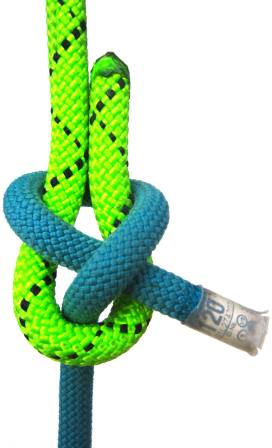
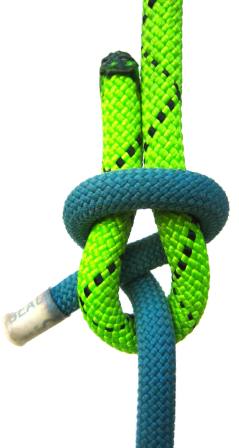
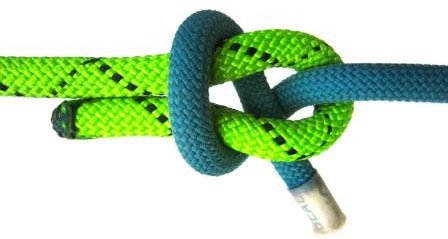
Zoranz, can you please provide comment on the geometry of these Sheet Bends please.

I need a rationale for how best to present knots so that key structures can be observed by readers/viewers/learners.

I have stumbled around looking for descriptive terminology - but have not found any universal agreement/consensus. Maybe you could weigh-in from a ‘descriptive geometry’ point-of-view?

Terms have been tried - eg ‘front view’ - ‘detail view’ ‘aspect A’ - Versus - ‘regular view’ ‘classical view’ ‘normal view’ ‘aspect B’ etc etc

The attached photos have been named ‘front’ or ‘rear’ - but this is only for file-naming purposes on my computer - so I can keep all my knot photos in some sort of logical order (instead of a chaotic filing system)… So don’t let my image names confuse the subject matter of this topic!


Sheet-Bend_Front.JPG

Sheet-Bend_Rear.JPG

More image rotations…

Images uploaded to create discussion.


Sheet-Bend_Rear -Rotated90.JPG

Sheet-Bend_Rear -Rotated180.JPG

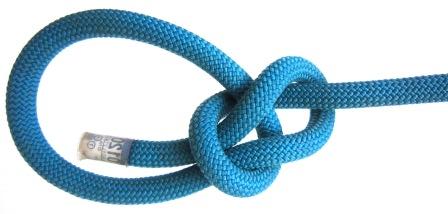
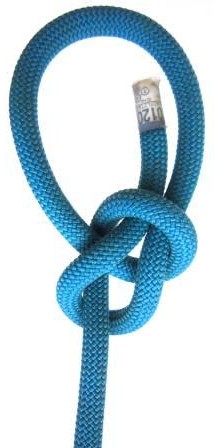
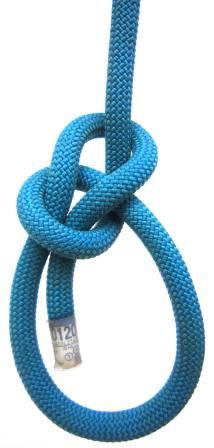
More standard (normative) #1010 Bowline images.

Zoranz - would welcome your expert opinion on these - ie how best to depict the images and more importantly - why (ie sound reasoning for doing so).

Thanks :slight_smile:

EDIT: Note, please ignore my file naming…this is simply so I can save my images in a logical order on my computer.


Bowline_ABoK-1010_Mirror_Rotated90_Rear.JPG

Bowline_ABoK-1010_Rear -Rotated180.JPG

Bowline_ABoK-1010_Rear.JPG

I like the anti-bowline version, which is the reverse
of this myrtle knot. And I like it with a 2nd turn of
the tail through the nipping loop, to give a rounder set
of diameters (a trio) for the S.Part to curve around,
and to give move securing friction against the S.Part’s
turn loosening.

–dl*

I like this post - which is well written, in plain English, with correct, syntactically, sentences even I can understand. Moreover, the poster succeeds in describing verbally yet simply a knot, and expresses his opinion on this knot openly and sincerely, using this verb we should not be afraid to use more often : “I like”. At the end of the day, given that all sufficiently convoluted/complex knot will “do the job”, which knot we will prefer at each particular instance depends on our knowledge ( how big is the set of the knots we know ), our experience ( how many of the members of this set we can tie easil , quickly and correctly ), and, last but not least, which knots we like.

Of course it does !
There are two elements which are distinctive here :
First, the “link”.
As “llnk” I have described any turn tied on the returning eye leg, before of after the “proper” collar, around the rim of the nipping loop. This “link” may encircle the crossing knot of this loop, or may not.(1)(2)
Second, the collar : It may be a “proper” bowline collar, where the continuation of the eyeleg enters into the nipping loop from the “proper” side, the same side it enters into the common bowline s nipping loop, then makes half a turn around the Standing End, and then enters into this nipping loop again, from the same side it had existed from previously ( and the same side it exits from the nipping loop of the common bowline ). Or, it may be a “Myrtle” collar, which, after it makes this turn around the Standing End, enters again into the nipping loop from the opposite side.
( This distinction, between a “proper” and a “Myrtle” collar can be made in the case of the “Eskimo” bowlines, too - where the continuation of the returning eye leg enters into the nipping loop from the opposite side it does in the Standard bowline, and then makes a turn around ( “collars”) the on-going eyeleg, not the Standing End.

I have said it many times, and I will say it again, because it is such a simple thing, but it also a very useful and related to the fundamental elements of the bowline, the “nipping structure” ( the knot which corresponds to the nipping loop of the common bowline, and is tied on the Standing Part before the eye ), and the “collar structure” ( the knot which corresponds to the collar of the common bowline, and is tied in the Standing Part after the eye ).
We should see the geometries of those two structures separately, i.e., we should see how each of those structures would appear, if its pair was not visible : In other word, we should see the bowline as if the “nipping structure” or the “collar structure” was invisible or made from a completely transparent material.
Some of the bowlines you show have yet another characteristic, which can be considered separately : The last part of the Standing Part before it exits the nub of the knot and becomes the Tail End ( we can call this segment “Tail Part” ), is re-tucked through the collar : a very useful addition, which enlarges the curve of the collar, and it may also turn a bowline-like loop into a TIB knot (3).

  1. http://igkt.net/sm/index.php?topic=4314.15
  2. http://igkt.net/sm/index.php?topic=4314.msg26928#msg26928
  3. http://igkt.net/sm/index.php?topic=4695.0

I have always had difficulty with your use of this term:

"proper" collar

And I have been thinking about this for quite some time and cant come up with anything marvelous other than perhaps ‘symmetric collar’.
By ‘symmetric’, I mean a collar that has parallel legs - with both legs entering the helical nipping structure from the same direction.

If the legs of the collar entered the helical nipping structure from opposite directions, it would not be ‘symmetric’. Note that this is my blundering about trying to find something more descriptive than the word ‘proper’.

Also, do you or Dan have a good quality photo of what you refer to as ‘anti-bowline’ structure?

Evidently, you only think that you have been thinking about it ! :slight_smile: :slight_smile: Because you just don t read my lips : Do I speak about “parallel” or not-parallel legs of the collar ? No - and I have a reason for NOT doing this ! I am speaking about the topology of the “proper” versus the “Myrtle” collar, NOT the geometry ! There may be “proper” collars with parallel or with not-parallel=crossing legs ! And the legs of the Myrtle" collar are always crossing each other !
I am only speaking about the sides ( the SIDES ) of the nipping loop the continuation of the returning leg enters into and exits from. A nipping loop has two sides : a line that penetrates it enters into it from one side, and exits from it from one side, ok ? Having this in mind, read again what I have been writing six years now !
My KnotGod ! DO FOLLOW the returning eye leg along its path ! See what its end is doing, as it “moves” within the already formed nipping structure, and as it, in its turn, forms the collar structure. DO NOT see this structure only as it is when it is finished ! DO NOT speak about the geometry of the legs of the one or the two collars !
( There may be more than one collar in the “collar structure”, so there may be more than one pair of “legs of the collar” )

P.S.1. On the contrary, the “proper” collar is a-symmetric, and the “Myrtle” collar is symmetric ( in relation to the nipping loop ).
P.S.2. This is perhaps the ONLY case dL does NOT need to provide a picture ! :slight_smile: :slight_smile:Anti-bowlines” are the bowline-like eyeknots where the continuation of the returning eyeleg enters into the nipping loop from the side it enters in the “Eskimo” bowline. The (four) “Eskimo” bowlines are the simplest “anti-bowlines”. Again, I am talking about the “side” of the nipping loop, NOT about the legs of the collar !

Xarax, evidently you think that what I am thinking is in fact what you think I am thinking when in reality I like to think about things by think-tank thoughts :slight_smile:

I am aware that Dan had favored the ‘Anti-Bowline’ moniker… However, what I remain unclear on is the underpinning reasoning behind choosing the term ‘anti’.

I also acknowledge your reasoning on the collar structure and how it manoeuvers around the SPart or an eye leg. What is needed is some clear content that is presentable in a document that can be easily understood by the general (lay) public (and with accompanying high quality photos to illustrate the concepts).


Bowline_Anti_Kalmyk_Front.JPG

Bowline_Anti_Kalmyk_Rear.JPG

Bowline_Anti_Kalmyk_Lefthand_Rear.JPG

The bowline has two parts : the first, is the knot tied on the Standing Part before the eye, the “nipping structure” - which, in the case of the two common Standard bowlines ( the left- and the right-handed ), but also in the case of the four “Eskimo” bowlines, is a single nipping loop.
Now, when you have formed this part, and you had also formed the eye of the loop, it is time to drive the continuation of the returning eyeleg through the nipping loop. HOW ? By which side are you going to enter into this nipping loop ? This is the moment of truth, regarding what you are going to tie : a bowline, or an anti-bowline. And it is the ONLY moment that is going to determine which of the two you are going to tie. So, it is reasonable that, when you enter from the one side, you call what you tie “the X knot”, and when you enter by the opposite side, you call what you tie “the anti-X knot”.
After the returning eye-leg has passed through the nipping loop, it has to collar something ! What will collar, which “limb” of the nipping loop it can collar, is already determined by the SIDE from which it had entered into, and the side from which it had exited from, the nipping loop. If you had made the X decision, you have to tie a bowline, and to collar the Standing End. If you had made the anti-X decision, you have to tie an anti-bowline, and collar the on-going eyeleg. Therefore, the decision you made in the first place, during the moment of truth, the side by which the returning eyeleg enters into the nipping loop, is critical, and the two possible choices determine the two broad classes of bowline-like loops : the bowlines, and the anti-bowlines.
Well, that is what I think dan Lehman thinks ! :slight_smile: :slight_smile:

My point was to concentrate to the side of the nipping loop into which the “moving” end of the Standing Part, while it is tracing its path though the nipping loop, enters into or exits from. We have to define those two sides somehow. Again, SIDES of the nipping loop, not legs of the collar !

I do NOT agree with the neither the pictures nor the labelling of the anti-bowline you show ! The forms you show them, they are NOT stable knots ! When the on-going eyeleg has been loaded, the Tail End will settle in a position at its one or its other side, and this is of HUGE importance ( topological, geometrical, and structural ) ! How the last segment of the Standing Part ( the segment I call the “Tail part” ) is squeezed by the on-going eyeleg, plays a MAJOR role regarding security and, possibly, strength. Show the “Eskimo” bowlines as they are when they are LOADED, and with eyelegs more or less parallel. Then, you will see that there are FOUR “Eskimo” bowlines - if you wish to use the terms right- and left-handed for them, two of them will be left-handed and two right-handed. Then, you have to distinguish those pairs with yet another term - I am not sure that it is correct to label them as “Kalmyk” and “anti-Kalmyk” … I am not sure which of the four was the original “Kalmyk bowline” ( IFF it was one, only, of them, i.e., if this term was so exclusive, as to it define completely one, only, knot…)

First, the “collar structure” does NOT manoeuvre around anything - simply because it does not move ! :slight_smile: It is the knot tied on / with the Standing Part after the eye.
Second, what you call SPart, is a WRONG term, because anything before the Tail End is Standing Part ! :slight_smile:
The correct term is “Standing End” ( the segment outside the knot, beyond the collar - to distinguish it from the “Standing Part”, the segment inside the knot ) - or any other term you choose, but NOT Standing Part - because an eye leg is inside the knot, so it is part of the Standing Part !


We have also to distinguish the two eyelegs some how - and by using one, only, adjective ! :slight_smile:
For the time being, I use the terms “on-going” eyeleg, and “returning” eyeleg, because I believe that we should better define a direction on all segments of the Standing Part, and this direction should better lead to the Tail End - so the “first” eyeleg is “on-going” ( to the tip of the eye ) and the “second” eyeleg is “returning” ( from the tip of the eye ). I guess that can also choose many other pairs of adjectives, to distinguish / denote the difference between the two eyelegs.

?! --as opposed to the one you have already posted,
to which I noted that swapping tail/S.Part converted
it from bowline to “anti-bowline” ?!

If you want just the base structural parts, you can
show the start-via-tail-leg-return-insertion through
the turNip for the bowline/Eskimo bowline pair
–although in that case, given their respective contin-
uations, those working ends would/should be headed
in different directions; whereas the one above is more
nearly the same, putting in a loop around a loop.
(One could also, re the anti-bowline case, suggest
that there is often more challenge to defend against
–or to tolerate in the loaded knot-- the turNip opening
to a more obvious helix than staying qua “loop”/circle.)

As X. recognized & I confirmed some time ago, my term
anti-bowline” is derived from “anti-cyclone”, which pertains
to orientation/direction of like things --opposite only
in this quality but not in basic nature, or somehow one
the undoing of the other.
And, as I’ve also noted, it is an overloading of “bowline”,
as by a 2nd sense (an other “loading” of the word),
“bowline” is the title for both (pro-)/anti- --i.e.,. that they
share in common the bowlinesque nipping loop and so
on, just differing on direction of tail re-entry.

–dl*

Hi agent_smith.

Just some input for the discussion.

So many variations/orientations to consider!

In the cropped and attached picture (yours) I find that, in my mind at least, if the eye knot contains this basic structure, with the tail outside or as shown, then I consider it in the bowline family. The collar part can make multiple or otherwise convolutions around the standing part. Afterward, the tail can do all manner of things. But, as long as the knot has the basic #1010 element, it is a bowline, IMO.
The exception, perhaps, being the Eskimo family. Maybe included because it is an accepted name(?) only.

SS